

Researchers from Boston University have made a startling discovery: rocks are producing “dark oxygen” in a region currently under exploration for deep-sea mining.
Over 12,000 feet beneath the Pacific Ocean’s surface, in the Clarion-Clipperton Zone (CCZ), ancient rocks, millions of years old, blanket the seafloor. Although these rocks may appear lifeless, nestled between the nooks and crannies on their surfaces, tiny sea creatures, and microbes make their home, many uniquely adapted to life in the dark.
These deep-sea rocks, called polymetallic nodules, don’t only host a surprising number of sea critters. A team of scientists that includes Boston University experts has discovered they also produce oxygen on the seafloor.
The discovery is a surprise considering oxygen is typically created by plants and organisms with help from the sun—not by rocks on the ocean floor. About half of all the oxygen we breathe is made near the surface of the ocean by phytoplankton that photosynthesize just like land-dwelling plants. Since the sun is needed to carry out photosynthesis, finding oxygen production at the bottom of the sea, where there is no light, flips conventional wisdom on its head. It was so unexpected that scientists involved in the study first thought it was a mistake.
Unveiling a New Phenomenon
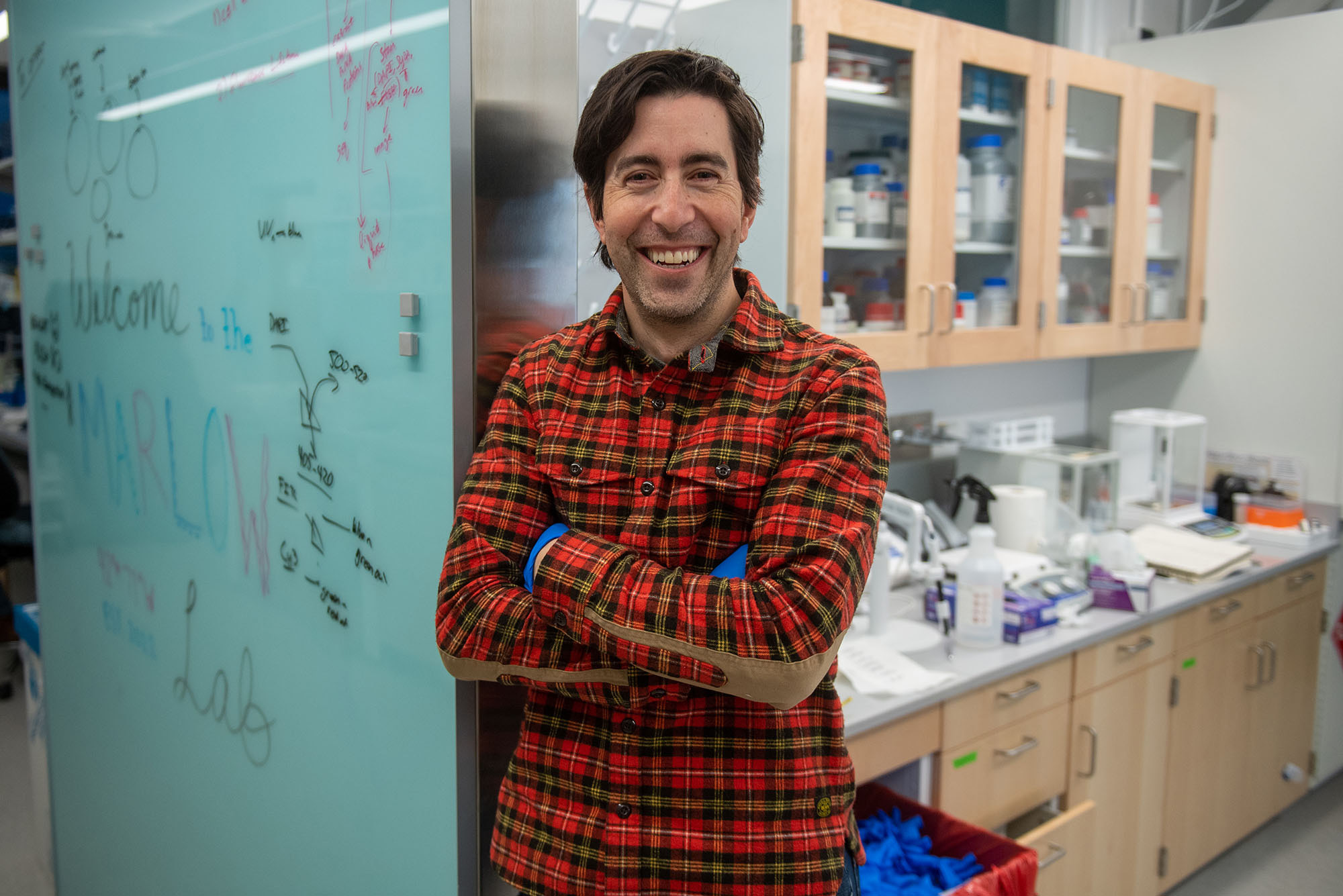
“This was really weird, because no one had ever seen it before,” says Jeffrey Marlow, a BU College of Arts & Sciences assistant professor of biology and coauthor on the study, which was published in Nature Geoscience.

As an expert in microbes that live in the most extreme habitats on Earth—like hardened lava and deep-sea hydrothermal vents—Marlow initially suspected that microbial activity could be responsible for making oxygen. The research team used deep-sea chambers that land on the seafloor and enclose the seawater, sediment, polymetallic nodules, and living organisms. They then measured how oxygen levels changed in the chambers over 48 hours. If there are plentiful organisms breathing oxygen, then the levels would normally decline, depending on how much animal activity is present in the chamber. But in this case, oxygen was increasing.
“We did a lot of troubleshooting and found that the oxygen levels increased many more times following that initial measurement,” Marlow says. “So we’re now convinced it’s a real signal.”
Investigating the Source of “Dark Oxygen”
He and his colleagues were aboard a research vessel tasked with learning more about the ecology of the CCZ, which spans 1.7 million square miles between Hawaii and Mexico, for an environmental survey sponsored by The Metals Company, a deep-sea mining firm interested in extracting the rocks en masse for metals. After running experiments on board the vessel, Marlow and the team, led by Andrew Sweetman at the Scottish Association for Marine Science, concluded the phenomenon isn’t primarily caused by microbial activity, despite the abundance of many different types of microbes both on and inside the rocks.
Polymetallic nodules are made of rare metals, including copper, nickel, cobalt, iron, and manganese, which is why companies are interested in mining them. It turns out, according to the study, that those densely packed metals are likely triggering “seawater electrolysis.” This means that metal ions in the rock layers are distributed unevenly, creating a separation of electrical charges—just like what happens inside of a battery. This phenomenon creates enough energy to split water molecules into oxygen and hydrogen. They named this “dark oxygen,” since it’s oxygen made with no sunlight. What remains unclear is the exact mechanism of how this happens, if oxygen levels vary across the CCZ, and if the oxygen plays a significant role in sustaining the local ecosystem.
Implications for Deep-Sea Mining and Ecosystems
The Metals Company calls polymetallic nodules a “battery in a rock,” and on its website states that mining them could accelerate the transition to battery-powered electric vehicles and claims mining on land would eventually no longer be necessary. So far, mining in the CCZ is exploratory, but the United Nations International Seabed Authority, which manages the area, could start making decisions about mining as soon as next year. The Metals Company is working with the Pacific states of Nauru, Tonga, and Kiribati to gain access to mining licenses, but many other nations in the South Pacific, including Palau, Fiji, and Tuvalu, have vocally supported a moratorium or a pause to mining plans. Environmental activist groups like Greenpeace and Ocean Conservancy are calling for a permanent ban, and opponents of the operation fear it could cause irreversible damage to the seafloor.
In the meantime, scientists have begun studying the potential impacts of disturbing a largely unexplored ecosystem. This Nature Geoscience paper contributes insights about the baseline conditions of the area before any large-scale mining begins.
“We don’t know the full implications, but to me this finding suggests that we should deeply consider what altering these systems would do to the animal community,” Marlow says, since all animals need oxygen to survive.
Astrobiology and the Search for Extraterrestrial Life
The CCZ is also the perfect environment to study the planet’s smallest organisms, such as bacteria and archaea (single-celled organisms) found in sediments and on the nodules. Marlow and his coauthor Peter Schroedl (GRS’25), a PhD student in BU’s ecology, behavior, and evolution program, are especially focused on using microbes found in extreme environments like the CCZ as templates for finding single-celled life on other planets and moons—since deserts, volcanoes, and seafloor vents are the most similar places we have to Mars and Saturn’s many moons. This is called astrobiology, a field that seeks to inform the search for extraterrestrial life by studying Earth’s systems.
“Life in environments like the CCZ provides an opportunity to study ecosystems that developed under distinct evolutionary pressures and constraints,” says Schroedl, who works in Marlow’s lab. Those conditions—the depth, pressure, and aquatic environment—are “analogous to conditions we have measured or expect to discover on icy moons,” he says.
For example, Jupiter’s moon, Enceladus, and Saturn’s moon, Europa, are covered with layers of ice with no sunlight reaching that water trapped underneath. “Who knows—if these types of rocks are under the ice making oxygen, that could allow a more productive biosphere to exist,” Marlow says. “If photosynthesis isn’t required to make oxygen, then other planets with oceans and metal-rich rocks like these nodules could sustain a more evolved biosphere than we’ve thought possible in the past.”
There are plenty of questions to continue asking, Marlow says, about what the dark oxygen discovery means for extraterrestrial oceans and our own.
“For the most part, we think of the deep sea as a place where decaying material falls down and animals eat the remnants. But this finding is recalibrating that dynamic,” he says. “It helps us to see the deep ocean as a place of production, similar to what we have found with methane seeps and hydrothermal vents that create oases for marine animals and microbes. I think it’s a fun inversion of how we tend to think about the deep sea.”
Reference: “Evidence of dark oxygen production at the abyssal seafloor” by Andrew K. Sweetman, Alycia J. Smith, Danielle S. W. de Jonge, Tobias Hahn, Peter Schroedl, Michael Silverstein, Claire Andrade, R. Lawrence Edwards, Alastair J. M. Lough, Clare Woulds, William B. Homoky, Andrea Koschinsky, Sebastian Fuchs, Thomas Kuhn, Franz Geiger and Jeffrey J. Marlow, 22 July 2024, Nature Geoscience.
DOI: 10.1038/s41561-024-01480-8
Adapted from an article originally published by Boston University.
Never miss a breakthrough: Join the SciTechDaily newsletter.
Follow us on Google and Google News.
1 Comment
Initial Thoughts
Pray tell me what is the Building Block of the Universe? Last time I checked it was the Positively Charged Proton .
From Sunlight we have the Positively charged photon doing the needful to produce Oxygen from Water ( Sea water & Fresh Water & ICE and in hotter environments Water Vapor …).
Hydrogen is a great reducing agent and will aid the mini battery on the sea floor continue to release Oxygen in the depth of the Ocean?
The extreme Conditions of Pressure , Temperature and Volume, on the Sea Floor and the Higher Isotopes of Hydrogen in the Sea Water may be possibly undergoing fusion reactions (Cold Fusion?) to produce and supply energy required by the life forms on the sea bed?