
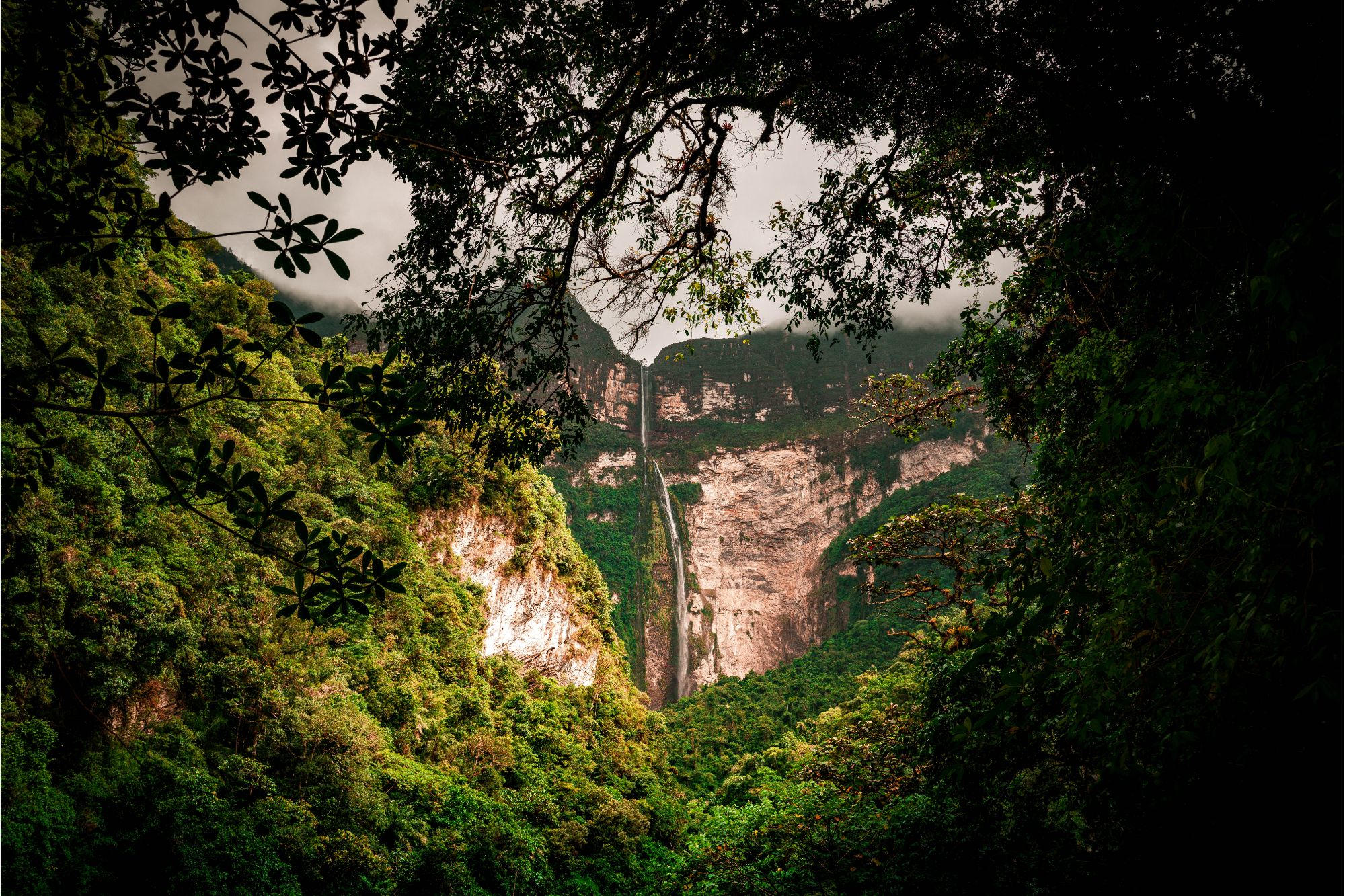
Advanced modeling offers fresh insights into the diverse range of species found in rainforests.
The Amazon rainforest hosts an exceptional array of unique plants and animals, with certain species exclusive to specific regions. The cause of this unique biodiversity has puzzled and divided scientists for many years.
Now a new international study, led by the UK Centre for Ecology & Hydrology (UKCEH), challenges traditional thinking about how the Amazon evolved during the last Ice Age, which spanned the period between around 2.6 million and 11,700 years ago.
It demonstrates the world’s largest tropical rainforest is more sensitive to environmental change than we previously thought, providing a further warning about how the ongoing, large-scale, rapid human-driven climate and land use change presents a threat to this precious ecosystem.
Theories of Amazonian Evolution
Some scientists have argued that, during the last Ice Age, the Amazon had ‘forest islands’ (referred to as ‘refugia’) that were completely isolated, while others have suggested the forest was continuous, covering roughly the same area as today.
The findings of the UKCEH-led modeling study, published in the journal npj Biodiversity, indicate the answer is somewhere in-between: woodlands and savannas connected these forest islands. The authors conclude this allowed some animals, which could travel further and were more adaptable, to move between them, while acting as a barrier to more specialist species that rely on a certain type of habitat.
The make-up of an area’s vegetation and climate influences natural evolution, meaning that while a species may originally have been present across a large area, different species gradually evolved in different areas as animals’ local environment changed.
Study lead author Dr Douglas Kelley, a Land Surface Modeller at UKCEH, explains: “Climate changes in the past played a huge role in shaping how the Amazon forest looked and where it grew. Similar changes are coming very soon and much faster.
“Previously, fluctuations in climate took thousands of years to happen, enabling plants and animals to adapt, but now significant global warming is happening within decades due to increasing human-driven greenhouse gas emissions.”
Advanced Research Techniques
The study involved UKCEH, the Ontario Forest Research Institute, Kiel University in Germany, the Met Office in the UK, INPA in Brazil, and the Field Museum of Natural History in Chicago.
The team used a combination of advanced climate and vegetation modeling techniques with computer-based predictions of the type of plants that grew during the last Ice Age and their location, based on records of fossilized pollen from sediment. Previous research has largely used single research techniques.
The researchers say, unlike previous studies, they considered the gaps that would have existed between the areas where fossilized pollen has been found and whether animals would have been able to move between habitats. Their advanced computer and statistical modeling indicated what type of vegetation would have grown there, verified by the type of plants recorded in any adjoining areas.
Climate Impacts on Amazon Forest Cover
Forest cover was dramatically reduced during the last Ice Age due to the colder, drier climate. There was less carbon dioxide in the atmosphere and the dry conditions restricted tree growth and caused more wildfires that destroyed many forested areas.
Research co-author Dr. Hiromitsu Sato of the Ontario Forest Research Institute, says: “We believe our study, involving integrated modeling methods, provides the best evidence to date on the origins of the rich biodiversity in the Amazon.
“Using land surface modeling to provide crucial information on biodiversity is a new and very exciting innovation that could be used in the future to investigate the history of species where there is a shortage of data.”
The researchers’ next step is to explore when and where species within groups like monkeys, antbirds, frogs, butterflies, and lianas might have diverged from one another over thousands of years.
Reference: “Niche-dependent forest and savanna fragmentation in Tropical South America during the Last Glacial Maximum” by Douglas I. Kelley, Hiromitsu Sato, Michaela Ecker, Chantelle A. Burton, João M. G. Capurucho and John Bates, 11 September 2024, npj Biodiversity.
DOI: 10.1038/s44185-024-00056-4
Never miss a breakthrough: Join the SciTechDaily newsletter.
Follow us on Google and Google News.
1 Comment
Two things: evolution and ancient ages. There is no observed event of evolution. Evolution can not be replicated. Ancient ages, ice ages
And glaciation, can not be supported. Multiple ice ages are
theoretical at best. The earth is young. Animals adapt, speciation
accommodates environmental change, and if there was a World Wide Flood, evidenced by thousands of rapidly laid down sedimentary layers thousands of feet deep, identified all over the known continents, then why say it took millions of years thinking the processes seen today were identical thousands of years ago.
Again, unproven. That makes the geological column a joke…and uniformitarianism a lie.