
Close Menu
    Facebook X (Twitter) Instagram
    SciTechDaily
    • Biology
    • Chemistry
    • Earth
    • Health
    • Physics
    • Science
    • Space
    • Technology
    Facebook X (Twitter) Pinterest YouTube RSS
    SciTechDaily
    Home»Biology»Breakthrough Alzheimer’s Discovery: Scientists Discover New Treatment Path
    Biology

    Breakthrough Alzheimer’s Discovery: Scientists Discover New Treatment Path

    By National Research Council of Science & TechnologyOctober 9, 20242 Comments4 Mins Read
    Facebook Twitter Pinterest Telegram LinkedIn WhatsApp Email Reddit
    Share
    Facebook Twitter LinkedIn Pinterest Telegram Email Reddit
    Exploding Brain Dementia Concept
    A collaborative study has uncovered that astrocytes, through autophagy, can effectively clear amyloid-beta proteins in Alzheimer’s disease, presenting a novel therapeutic target that departs from traditional neuron-focused approaches, with significant potential for future Alzheimer’s treatments.

    New research shows astrocytes can remove Alzheimer’s-related amyloid-beta via autophagy, offering a promising new direction for treatment strategies focusing on these brain cells.

    An international research team has identified a new mechanism involving astrocytes for treating Alzheimer’s disease (AD) and proposed a novel therapeutic target. In their study, the researchers revealed that the autophagy pathway in astrocytes (non-neuronal cells in the brain) removes amyloid-beta (Aβ) oligomers, the toxic proteins found in the brains of AD patients, and recovers memory and cognitive functions.

    The research, led by Dr. Hoon Ryu from the Korea Institute of Science and Technology (KIST, President Sang-Rok Oh) Brain Disease Research Group, in collaboration with Director Justin C. Lee of the Institute for Basic Science (IBS, President Do-Young Noh) and Professor Junghee Lee from Boston University Chobanian & Avedisian School of Medicine, was published in the journal Molecular Neurodegeneration.
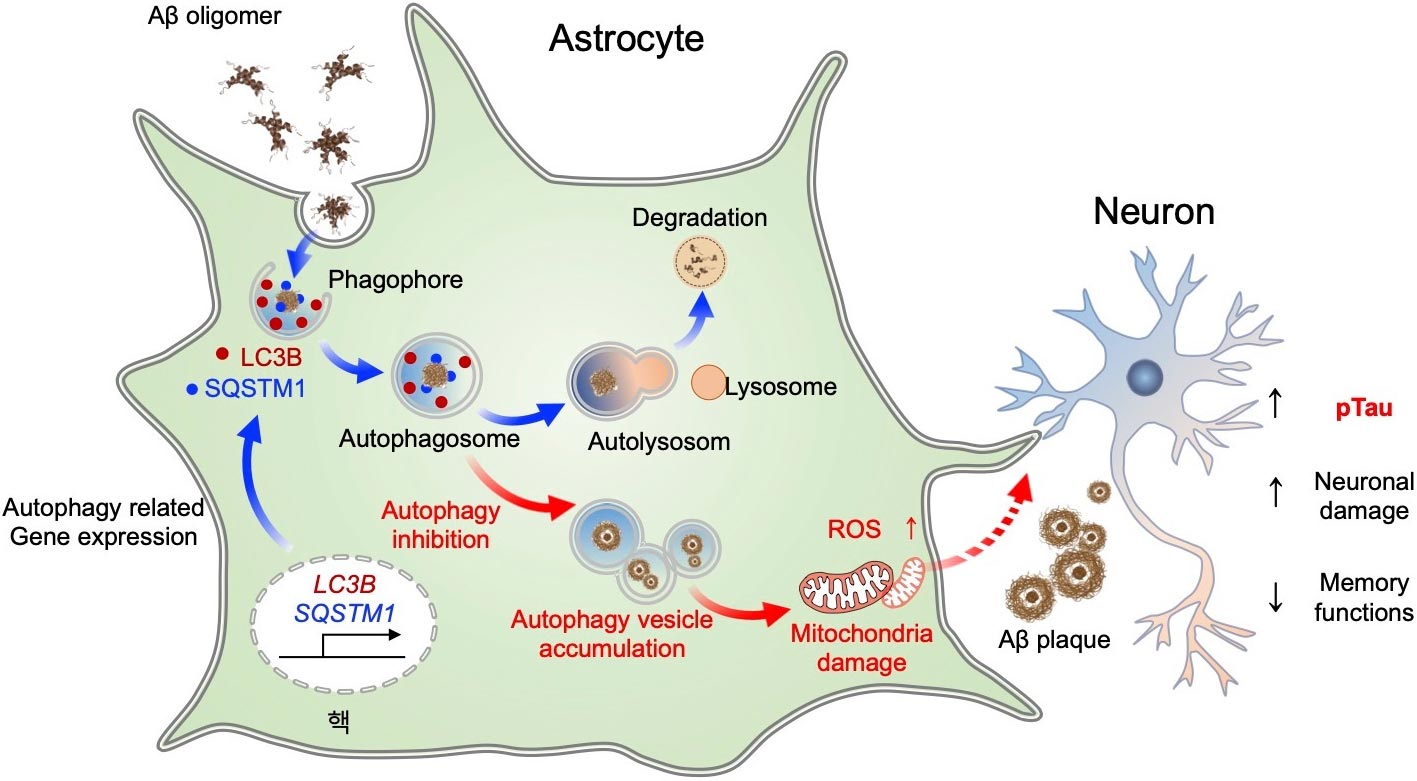
    Astrocytic Autophagy Plasticity Graphic
    The mechanism of astrocytic autophagy plasticity plays a crucial role in AD. When the autophagy-regulating genes (LC3B and SQSTM1) in astrocytes are activated, Aβ is efficiently removed, which is important for cognitive recovery. Credit: Korea Institute of Science and Technology

    Astrocytes’ Role in Neurodegeneration

    AD, a representative form of senile dementia, occurs when toxic proteins like Aβ, abnormally aggregate and accumulate in the brain, leading to inflammation and damage to neurons, causing neurodegenerative disorders. Although the scientific community has long focused on the role of astrocytes in removing toxic proteins around neurons, the exact mechanism remains unclear.
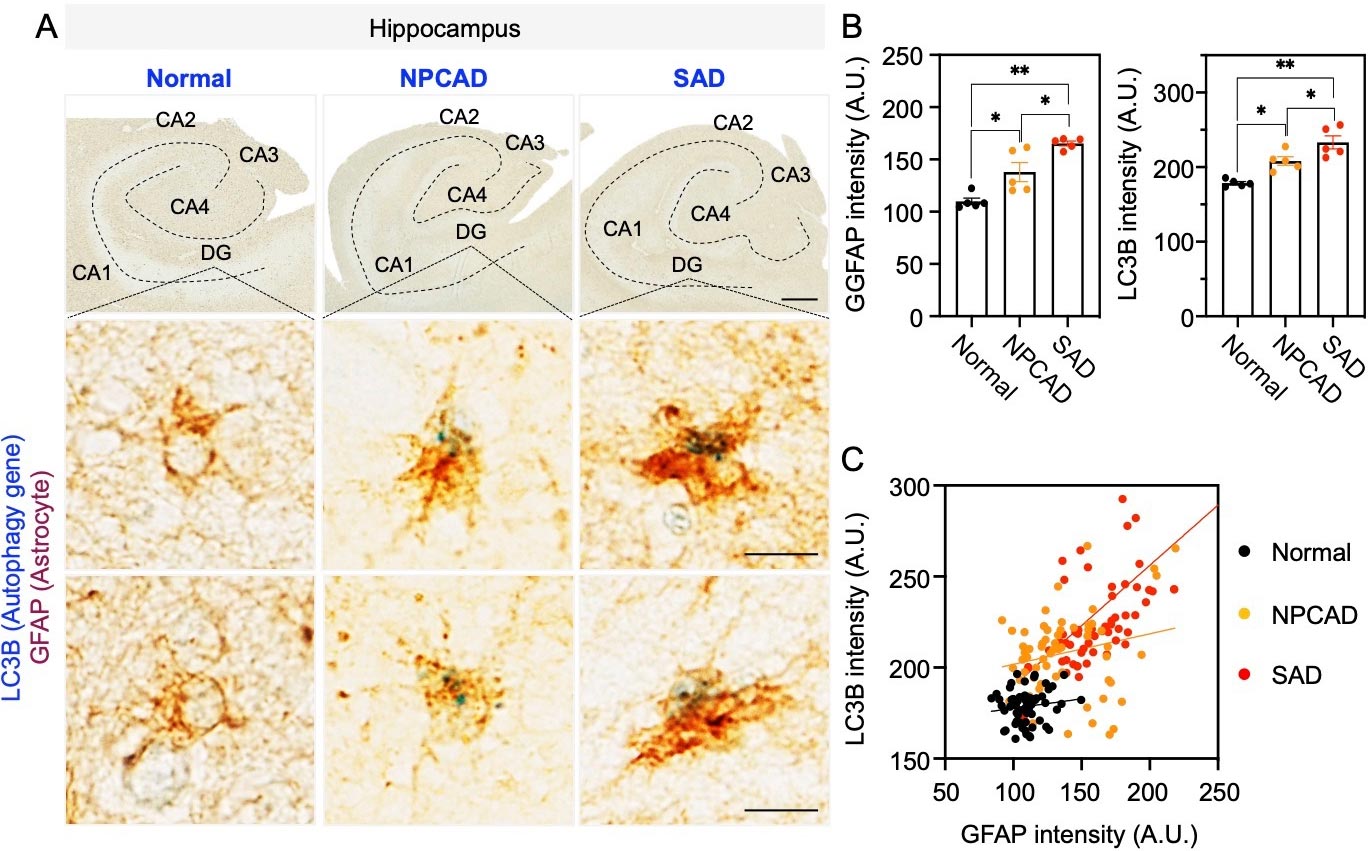
    LC3B in Brain Tissue of AD Patients
    (A) Increased expression of autophagy factors (LC3B, observed as blue dots) in astrocytes (GFAP) in the brain tissues of AD patients. (B) Increases in reactive astrocytes and autophagy gene expression in the brain tissues of AD patients. (C) Correlation between increased reactive astrocytes and autophagy gene expression was confirmed in the brain tissues of AD patients. Credit: Korea Institute of Science and Technology

    Discoveries in Astrocytic Autophagy

    Autophagy is a process by which cells break down and recycle their own components to maintain homeostasis. The research team scrutinized the autophagy process in astrocytes and discovered that when toxic protein buildup or inflammation occurs in the brains of AD patients, astrocytes respond by inducing genes that regulate autophagy. By delivering these autophagy-associated genes specifically into astrocytes in AD mouse models, the researchers observed the recovery of damaged neurons.
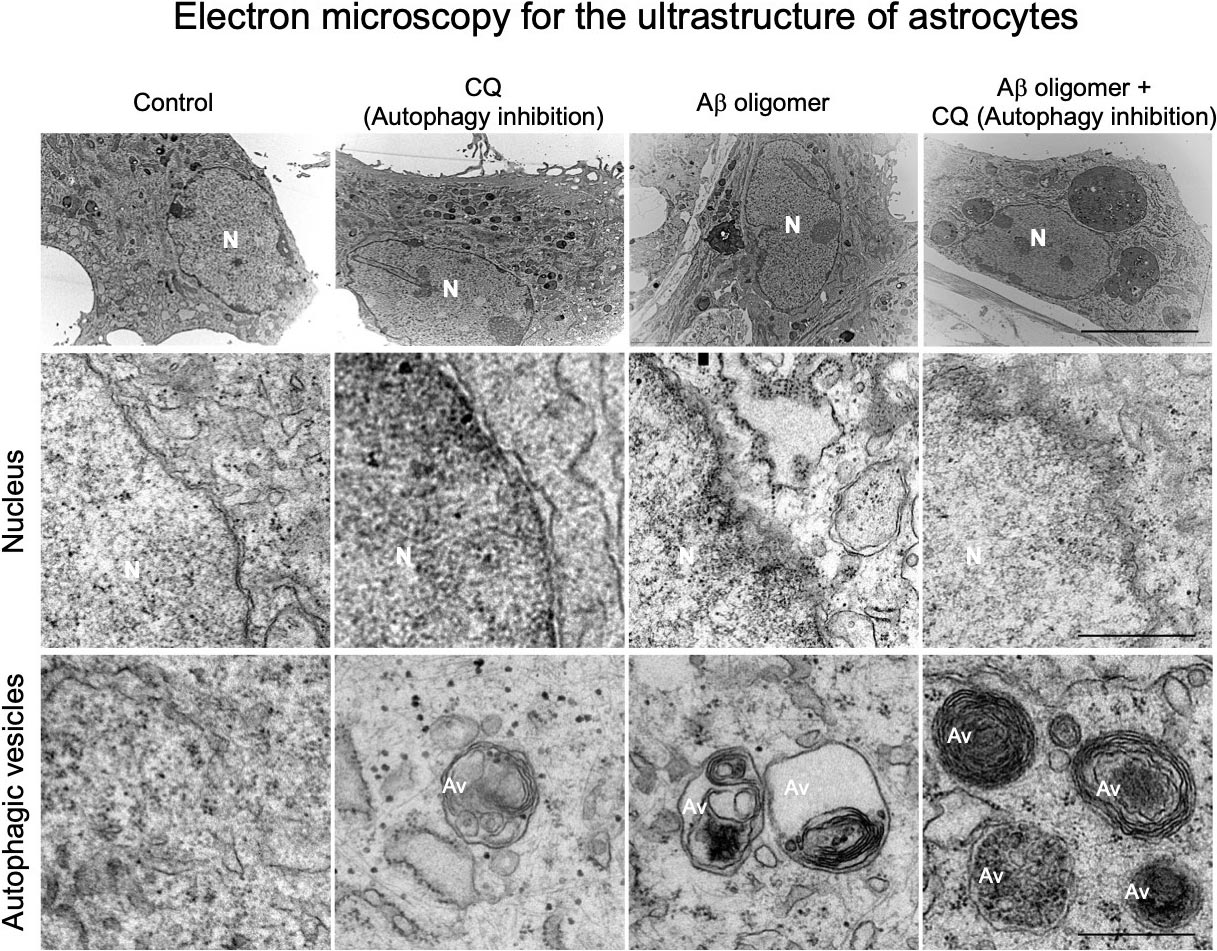
    Electron Microscopy for Ultrastructure of Astrocytes
    Inhibition of autophagy, specifically in astrocytes, prevents the removal of Aβ via autophagic vesicles, which could worsen dementia pathology. Credit: Korea Institute of Science and Technology

    Potential Therapeutic Implications

    This study demonstrated that astrocytic autophagy reduces Aβ aggregates (protein clumps) and improves memory and cognitive functions. Notably, when autophagy-associated genes were expressed in astrocytes of the hippocampus, a brain region responsible for memory, the neuropathological symptoms were decreased. Most significantly, this study showed that the autophagy plasticity of astrocytes is involved in eliminating Aβ oligomers, a major cause of AD pathology, thus presenting a new potential therapeutic avenue for treating AD.

    Future Directions and Impacts

    This research is particularly meaningful as it shifts away from the traditional neuron-centered approach in AD drug development, instead identifying astrocytes (non-neuronal cells) as a novel target for therapy. The research team plans to further explore drug developments that can enhance the autophagic function of astrocytes to prevent or alleviate dementia symptoms and to conduct preclinical studies in the near future.

    Dr. Ryu and Dr. Suhyun Kim (the first author) commented, “Our findings show that astrocytic autophagy restores neuronal damage and cognitive functions in the dementia brain. We hope this study will advance our understanding of cellular mechanisms related to autophagy and contribute to future research on waste removal by astrocytes and health maintenance of the brain.”

    Reference: “Astrocytic autophagy plasticity modulates Aβ clearance and cognitive function in Alzheimer’s disease” by Suhyun Kim, Heejung Chun, Yunha Kim, Yeyun Kim, Uiyeol Park, Jiyeon Chu, Mridula Bhalla, Seung-Hye Choi, Ali Yousefian-Jazi, Sojung Kim, Seung Jae Hyeon, Seungchan Kim, Yeonseo Kim, Yeon Ha Ju, Seung Eun Lee, Hyunbeom Lee, Kyungeun Lee, Soo-Jin Oh, Eun Mi Hwang, Junghee Lee, C. Justin Lee and Hoon Ryu, 23 July 2024, Molecular Neurodegeneration.
    DOI: 10.1186/s13024-024-00740-w

    This research was supported by the Ministry of Science and ICT (Minister Sang Im Yoo), under KIST’s Major Projects and the Mid-career Researcher Support Program (2022R1A2C3013138), and the Ministry of Health and Welfare (Minister Gyu-Hong Cho), under the Dementia Overcoming Program (RS-2023-KH137130).

    Never miss a breakthrough: Join the SciTechDaily newsletter.
    Follow us on Google and Google News.

    Alzheimer's Disease Astrocytes Brain Neuroscience Popular
    Share. Facebook Twitter Pinterest LinkedIn Email Reddit

    Related Articles

    Brilliant Research Reveals How Exercise Boosts Brain Health With Chemical Signals

    Cracking the Alzheimer’s Code: A Groundbreaking New Approach to Visualizing the True Culprit

    How Exercise Protects Against Neurodegenerative Diseases Like Alzheimer’s and Parkinson’s Disease

    Giant “Super Neurons” Discovered in SuperAger Brains

    Scientists Discover New Electrical Function Performed by Nearly Half of Brain Cells

    Researchers Discover a Molecule Critical to Functional Brain Rejuvenation

    Evidence of Sleep-Dependent Brain Activity in Clearing Toxic Proteins and Preventing Alzheimer’s Disease

    Brain Pacemaker Implanted to Treat Alzheimer’s

    Researchers Use FDDNP–PET Scanning to Predict Cognitive Decline

    2 Comments

    1. Maxian on October 9, 2024 7:40 am

      This is great❤️

      Reply
    2. NonKoreanAmerican on October 9, 2024 5:25 pm

      The writer of this article is an embarrassment. It’s the Korea Advanced Institute KAIST. KIST hasn’t existed since 1981. Smh

      Reply
    Leave A Reply Cancel Reply

    • Facebook
    • Twitter
    • Pinterest
    • YouTube

    Don't Miss a Discovery

    Subscribe for the Latest in Science & Tech!

    Trending News

    Why Popular Diabetes Drugs Like Ozempic Don’t Work for Everyone: The “Genetic Glitch”

    Scientists Stunned After Finding Plant Thought Extinct for 60 Years

    Scientists Discover Tiny New Spider That Hunts Prey 6x Its Size

    Natural Component From Licorice Shows Promise for Treating Inflammatory Bowel Disease

    Scientists Warn: Popular Sweetener Linked to Dangerous Metabolic Effects

    Monster Storms on Jupiter Unleash Lightning Beyond Anything on Earth

    Scientists Create “Liquid Gears” That Spin Without Touching

    The Simple Habit That Could Help Prevent Cancer

    Follow SciTechDaily
    • Facebook
    • Twitter
    • YouTube
    • Pinterest
    • Newsletter
    • RSS
    SciTech News
    • Biology News
    • Chemistry News
    • Earth News
    • Health News
    • Physics News
    • Science News
    • Space News
    • Technology News
    Recent Posts
    • Scientists Supercharge “Natural Killer” Cells To Break Through Cancer’s Defenses
    • Simple “Gut Reset” May Prevent Weight Gain After Ozempic or Wegovy
    • 2.8 Days to Disaster: Scientists Warn Low Earth Orbit Could Suddenly Collapse
    • Scientists Uncover How Serotonin May Trigger Tinnitus
    • Common Food Compound Shows Surprising Power Against Superbugs
    Copyright © 1998 - 2026 SciTechDaily. All Rights Reserved.
    • Science News
    • About
    • Contact
    • Editorial Board
    • Privacy Policy
    • Terms of Use

    Type above and press Enter to search. Press Esc to cancel.