
Close Menu
    Facebook X (Twitter) Instagram
    SciTechDaily
    • Biology
    • Chemistry
    • Earth
    • Health
    • Physics
    • Science
    • Space
    • Technology
    Facebook X (Twitter) Pinterest YouTube RSS
    SciTechDaily
    Home»Space»NASA’s Curiosity Rover Views Layered Rock Formations
    Space

    NASA’s Curiosity Rover Views Layered Rock Formations

    By Preston Dyches, Jet Propulsion LaboratorySeptember 13, 20161 Comment3 Mins Read
    Facebook Twitter Pinterest Telegram LinkedIn WhatsApp Email Reddit
    Share
    Facebook Twitter LinkedIn Pinterest Telegram Email Reddit
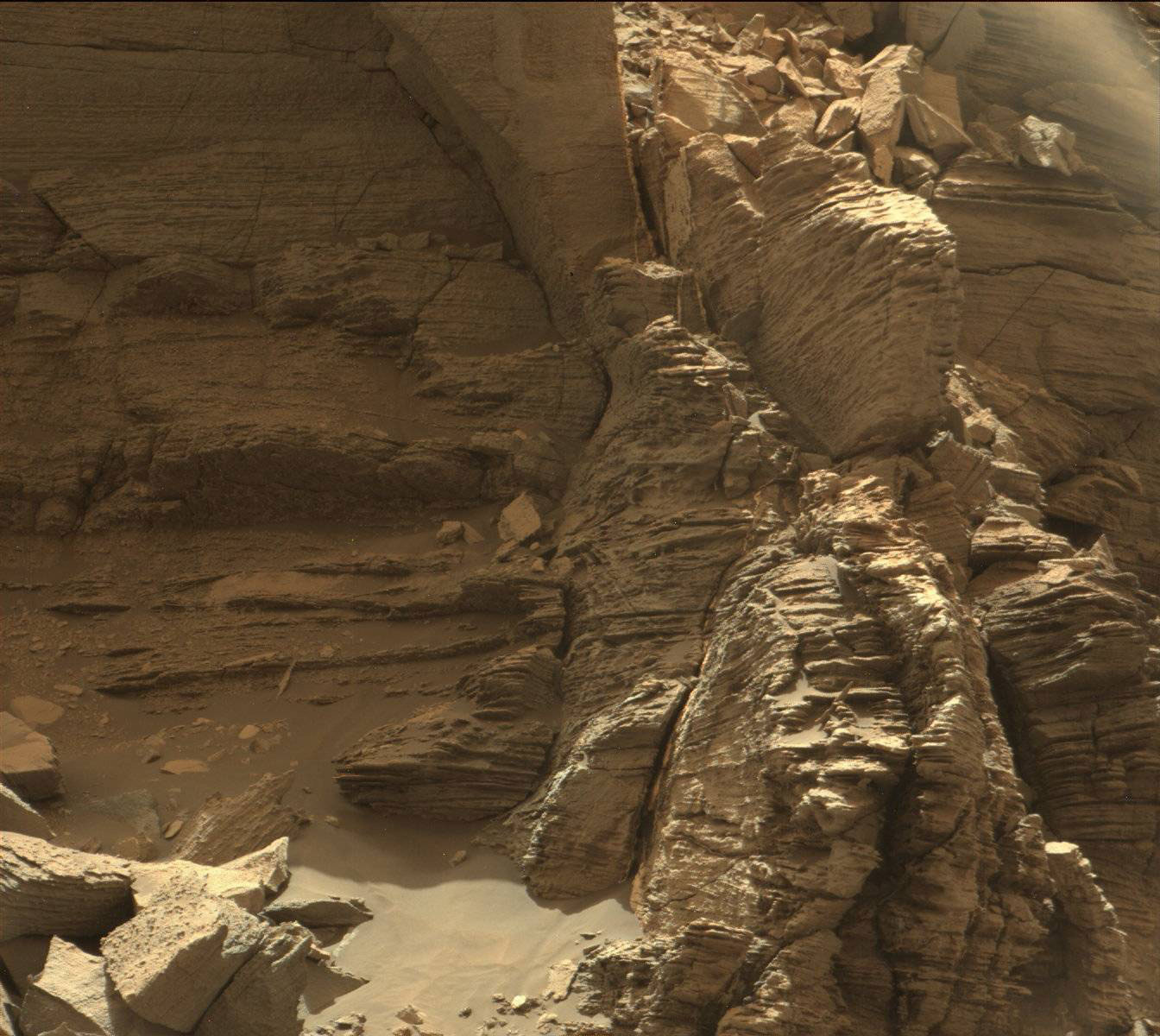
    Farewell to Murray Buttes
    Curiosity got close to this outcrop on September 9, 2016, which displays finely layered rocks. Credit: NASA/JPL-Caltech/MSSS

    The layered geologic past of Mars is revealed in stunning detail in new color images from NASA’s Curiosity Mars Rover, which is currently exploring the “Murray Buttes” region of lower Mount Sharp.

    Curiosity took the images with its Mast Camera (Mastcam) on September 8. The rover team plans to assemble several large, color mosaics from the multitude of images taken at this location in the near future.

    “Curiosity’s science team has been just thrilled to go on this road trip through a bit of the American desert Southwest on Mars,” said Curiosity Project Scientist Ashwin Vasavada, of NASA’s Jet Propulsion Laboratory, Pasadena, California.
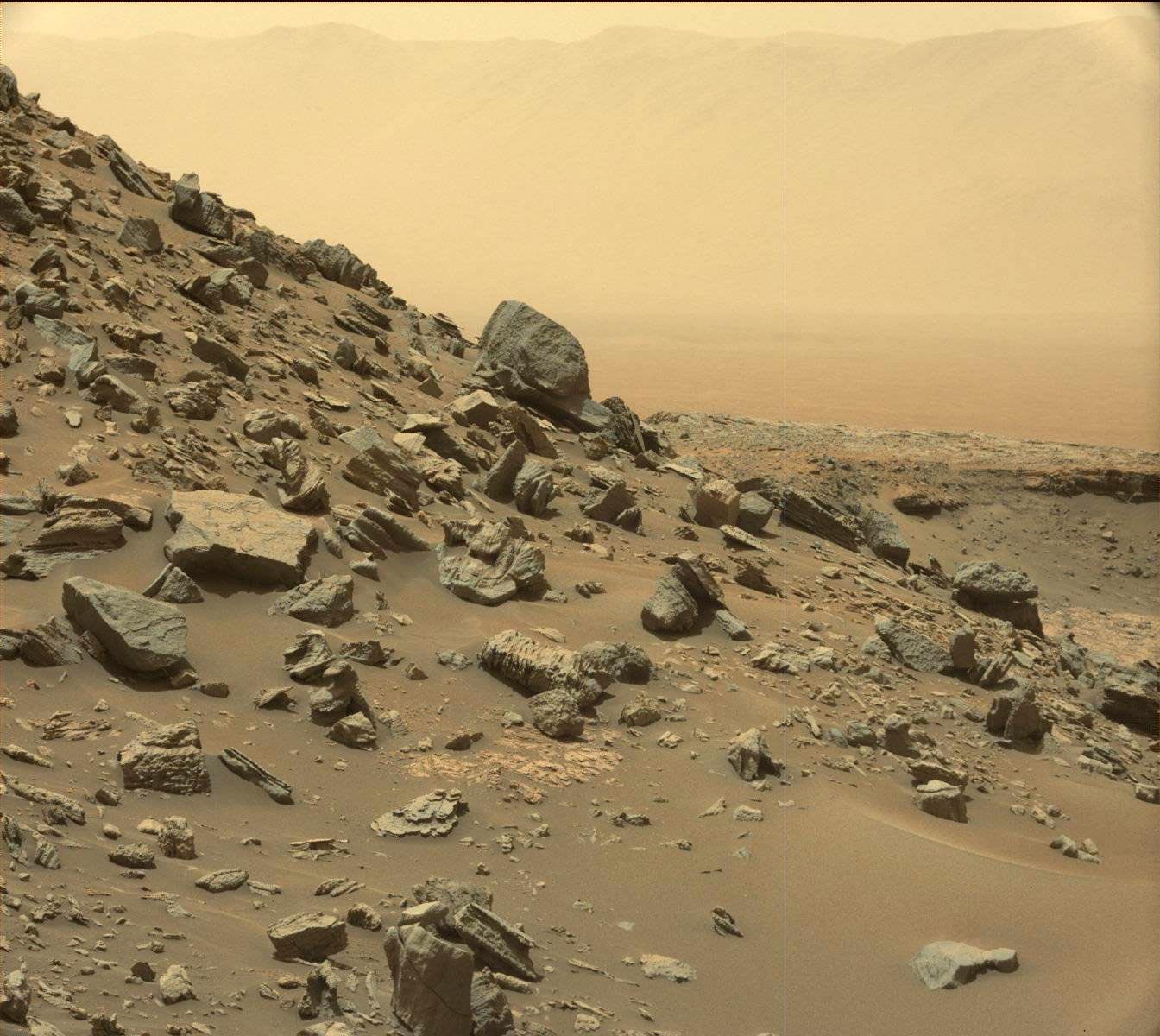
    Curiosity Farewell to Murray Buttes
    The rim of Gale Crater is visible in the distance, through the dusty haze, in this Curiosity view of a sloping hillside on Mount Sharp. Credit: NASA/JPL-Caltech/MSSS

    The Martian buttes and mesas rising above the surface are eroded remnants of ancient sandstone that originated when winds deposited sand after lower Mount Sharp had formed.

    “Studying these buttes up close has given us a better understanding of ancient sand dunes that formed and were buried, chemically changed by groundwater, exhumed and eroded to form the landscape that we see today,” Vasavada said.
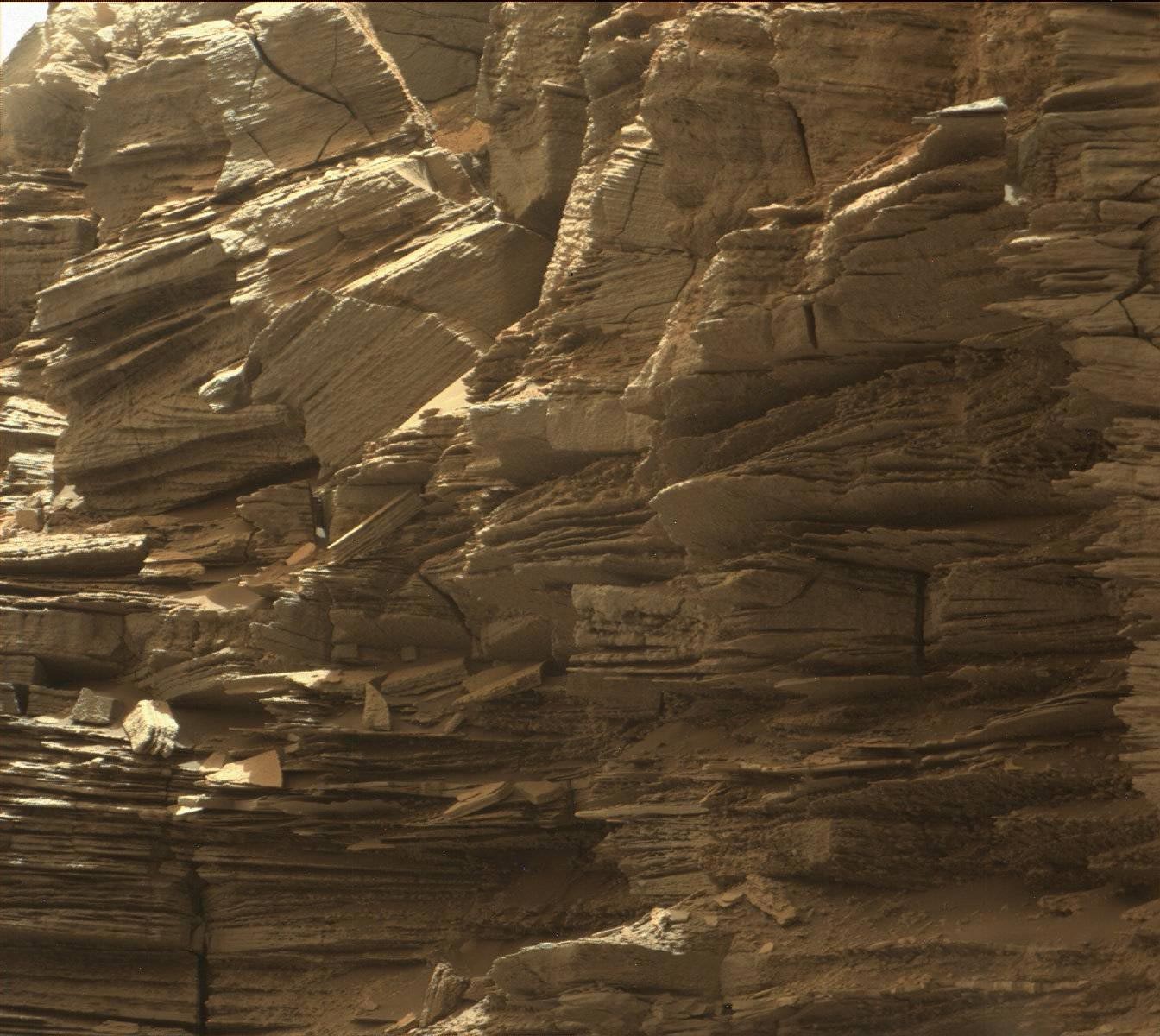
    Murray Buttes Finely Layered Rocks
    This closeup view from NASA’s Curiosity rover shows finely layered rocks, deposited by wind long ago as migrating sand dunes. Credit: NASA/JPL-Caltech/MSSS

    The new images represent Curiosity’s last stop in the Murray Buttes, where the rover has been driving for just over one month. As of this week, Curiosity has exited these buttes toward the south, driving up to the base of the final butte on its way out. In this location, the rover began its latest drilling campaign (on September 9). After this drilling is completed, Curiosity will continue farther south and higher up Mount Sharp, leaving behind these spectacular formations.
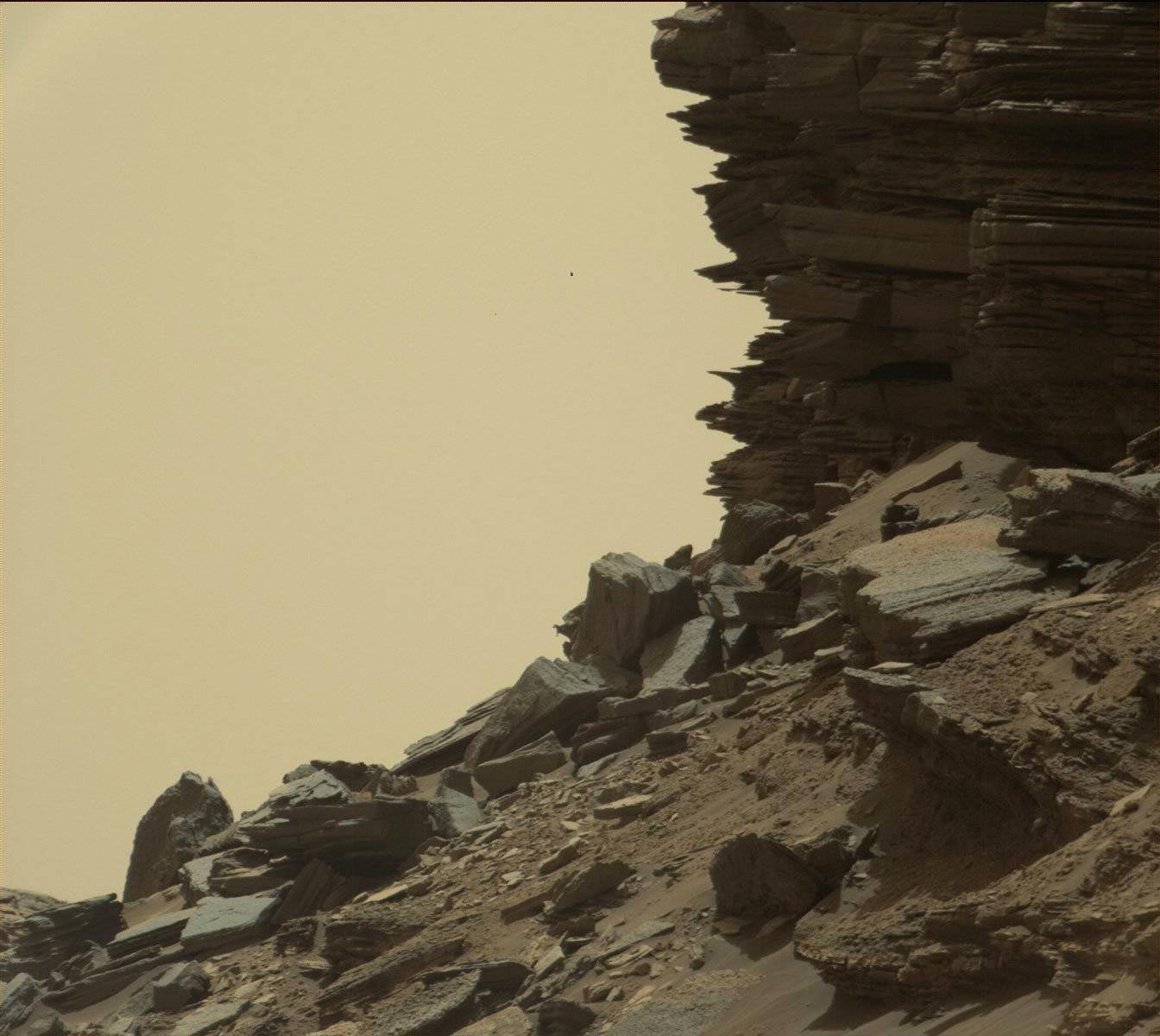
    Curiosity Hillside Outcrop Sanstone Layers Cross-Bedding
    This view from Curiosity shows a dramatic hillside outcrop with sandstone layers that scientists refer to as “cross-bedding.” Credit: NASA/JPL-Caltech/MSSS

    Curiosity landed near Mount Sharp in 2012. It reached the base of the mountain in 2014 after successfully finding evidence on the surrounding plains that ancient Martian lakes offered conditions that would have been favorable for microbes if Mars has ever hosted life. Rock layers forming the base of Mount Sharp accumulated as sediment within ancient lakes billions of years ago.

    On Mount Sharp, Curiosity is investigating how and when the habitable ancient conditions known from the mission’s earlier findings evolved into conditions drier and less favorable for life.

    Never miss a breakthrough: Join the SciTechDaily newsletter.
    Follow us on Google and Google News.

    Astronomy Curiosity Rover Mars NASA Planetary Science
    Share. Facebook Twitter Pinterest LinkedIn Email Reddit

    Related Articles

    Mineralogy of Martian Soil Is Similar to Soils of Volcanic Origin in Hawaii

    Curiosity Rover Photographs Diverse Rocks

    Curiosity Prepares to Take Its First Scoop of Soil for Analysis

    Curiosity Finds Ancient Streambed on Mars

    NASA’s Curiosity Prepares for Use of Its Arm and Tools

    Curiosity Sends Back Radioed Words and New Telephoto View of Mars

    NASA’s Curiosity Readies for First Drive on Mars

    Color HiRISE Image of Curiosity Rover on Mars

    First 360-Degree Color Panorama From NASA’s Curiosity Mars Rover

    1 Comment

    1. Jody Mondor on September 15, 2016 10:28 pm

      This is a documentary about the surface of Mars
      https://youtu.be/tRV1e5_tB6Y

      Reply
    Leave A Reply Cancel Reply

    • Facebook
    • Twitter
    • Pinterest
    • YouTube

    Don't Miss a Discovery

    Subscribe for the Latest in Science & Tech!

    Trending News

    What if Time Isn’t Fundamental? Physicists Just Tested the Idea in the Lab

    Scientists Say We’ve Been Wrong About the Aging Brain

    68 Quadrillion Miles: Scientists Map Earth’s Vast Hidden Fungal Network for the First Time

    Hidden Damage From Youth May Explode Into Disease Later in Life

    Climate Models May Be Wrong About How Trees Store Carbon

    Scientists Discover Brain-Protecting Peptide That Could Change Parkinson’s Treatment

    This Copper Drug Clears Alzheimer’s Brain Toxins and Boosts Memory

    Adults Over 65 Lost Massive Amounts of Weight With Ozempic

    Follow SciTechDaily
    • Facebook
    • Twitter
    • YouTube
    • Pinterest
    • Newsletter
    • RSS
    SciTech News
    • Biology News
    • Chemistry News
    • Earth News
    • Health News
    • Physics News
    • Science News
    • Space News
    • Technology News
    Recent Posts
    • Scientists Discover a Gene That Boosts Youth – but It Comes With a Cost
    • A Decade-Long Physics Mystery May Finally Be Solved
    • AI Cracks the Secrets of How the Universe’s Heaviest Elements Are Forged
    • After 50 Years, Astronomers Finally Found What the Milky Way’s Black Hole Was Hiding
    • Scientists Discover Immune Cells That Can Fight Both Measles and Nipah
    Copyright © 1998 - 2026 SciTechDaily. All Rights Reserved.
    • Science News
    • About
    • Contact
    • Editorial Board
    • Privacy Policy
    • Terms of Use

    Type above and press Enter to search. Press Esc to cancel.