
Close Menu
    Facebook X (Twitter) Instagram
    SciTechDaily
    • Biology
    • Chemistry
    • Earth
    • Health
    • Physics
    • Science
    • Space
    • Technology
    Facebook X (Twitter) Pinterest YouTube RSS
    SciTechDaily
    Home»Earth»Alaska’s Melting Glaciers Fuel Rapid Lake Expansion
    Earth

    Alaska’s Melting Glaciers Fuel Rapid Lake Expansion

    By Kathryn Hansen, NASA Earth ObservatoryDecember 1, 2024No Comments3 Mins Read
    Facebook Twitter Pinterest Telegram LinkedIn WhatsApp Email Reddit
    Share
    Facebook Twitter LinkedIn Pinterest Telegram Email Reddit
    Alaskan Glacial Lakes 2024 Annotated
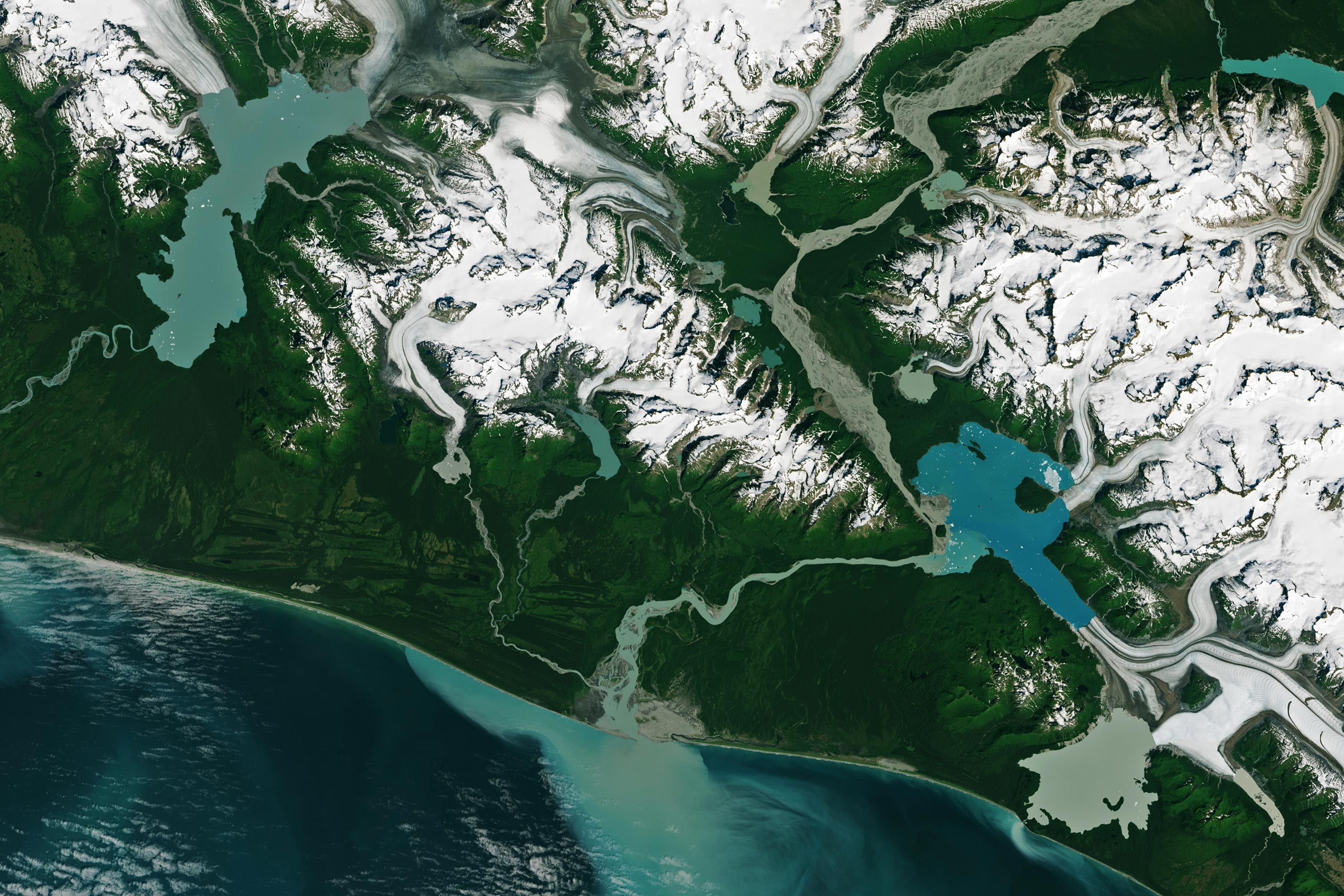
    Satellite image of glacial lakes in southeast Alaska captured on August 4, 2024, by Landsat 8.
    Alaskan Glacial Lakes 1984 Annotated
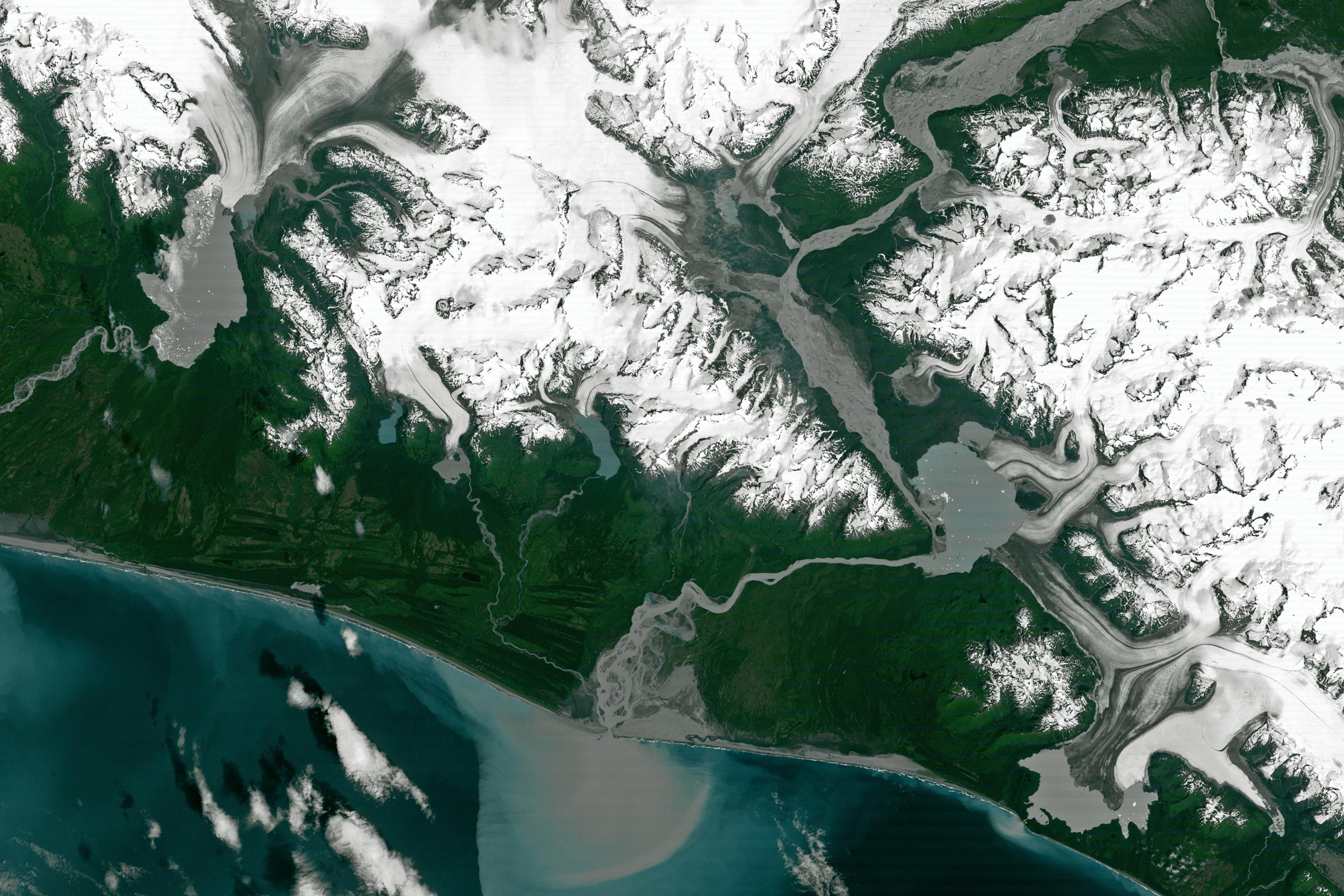
    Satellite image of glacial lakes in southeast Alaska captured on July 5, 1984, by Landsat 5.

    Over the past forty years, three glaciers in Alaska—Yakutat, Alsek, and Grand Plateau—have significantly retreated, leading to the formation and expansion of lakes in their wake.

    This transformation has doubled the size of the lakes, creating a new lake district that rivals the size of New York’s Seneca Lake and represents the fastest lake growth in the United States this century.

    Transforming Landscapes: Glacier Retreat and Lake Formation in Alaska

    In parts of Alaska, melting glaciers are giving way to water. As these massive ice formations thin and retreat, meltwater pools at their edges, creating what are known as proglacial lakes. Mauri Pelto, a glaciologist from Nichols College, has observed rapid growth in three of these lakes in southeastern Alaska over the past few decades.

    The Yakutat, Alsek, and Grand Plateau glaciers flow from inland mountains to the coastal plains southeast of Yakutat Borough, terminating in Harlequin Lake, Alsek Lake, and Grand Plateau Lake. The dramatic retreat of these glaciers and the corresponding expansion of their lakes are clearly visible in summer satellite images captured by Landsat 5 in 1984 (lower) and Landsat 8 in 2024 (upper).

    Glacial Retreat: Dramatic Shifts Over Four Decades

    During this period, Yakutat Glacier’s main arm retreated 7.0 kilometers (4.3 miles), while Alsek Glacier’s northern and southern arms retreated 5.3 kilometers (3.3 miles) and 5.5 kilometers (3.4 miles), respectively. Grand Plateau Glacier’s northern arm lost the most, retreating 7.8 kilometers (4.8 miles).

    Lakes now fill the void left by the retreating glaciers. Collectively, the three lakes more than doubled in size over 40 years. In 1984, they covered about 50 square miles (130 square kilometers). By 2024, they spanned 90 square miles (240 square kilometers). That’s an area larger than Seneca Lake (67 square miles)—one of the Finger Lakes in New York, which also have a glacial origin.

    The Emergence of a New Lake District

    “The lakes that are forming in this region are immense, starting at the mountains and spreading toward the coast, making this a new lake district that is unique in our nation,” Pelto said.

    Millions of other lakes, named and unnamed, dot the state. But this system has grown fast, so much so that Pelto thinks it might represent the fastest lake growth in the United States this century.

    Sediment and Ecological Changes in Alaskan Lakes

    The lakes are also changing in other ways. Alsek Lake appears much bluer in the 2024 image, indicating that the lake is receiving less fine-grained sediment, or “glacial flour,” from meltwater streams. As the lake receives less sediment, it will turn darker blue, Pelto said, allowing more light to penetrate the water and aid aquatic life and fishery development.

    NASA Earth Observatory image by Wanmei Liang, using Landsat data from the U.S. Geological Survey.

    Never miss a breakthrough: Join the SciTechDaily newsletter.
    Follow us on Google and Google News.

    Climate Change Glacier Global Warming NASA NASA Earth Observatory
    Share. Facebook Twitter Pinterest LinkedIn Email Reddit

    Related Articles

    Hektoria Glacier Collapse Reveals How Fast Antarctica Can Fall Apart

    The Long, Troubling Decline of Arctic Sea Ice

    Shrinking Margins of Greenland: At Least 200 Coastal Glaciers Have Retreated Over the Past 20 Years

    The Anatomy of Glacial Ice Loss: Glaciers Are Far More Complex Than Ice Cubes

    The Looming Specter of a Massive Mega-Tsunami in Alaska

    Arctic Sea Ice Reaches Second-Lowest Minimum on Record

    More, Longer, Hotter: California Heatwave Fits a Trend

    Rapid Growth of Glacial Lakes Worldwide Revealed in Dramatic NASA satellite Images

    Research Shows Roughly 150 Billion Tons of Ice Lost Annually

    Leave A Reply Cancel Reply

    • Facebook
    • Twitter
    • Pinterest
    • YouTube

    Don't Miss a Discovery

    Subscribe for the Latest in Science & Tech!

    Trending News

    Sitting Up Straight Could Actually Help You Make Better Decisions

    Never-Before-Seen Vortices Are Swirling Across the Sun

    This Common Amino Acid May Help the Body Fight Cancer and Viruses

    Low-Protein “Longevity Diet” Linked to Fat Loss, Muscle Preservation, and Healthy Aging

    How Prehistoric Poop Changed Earth’s Ecosystems Forever

    This Fossil Upends a Decades-Old Debate About Snake Evolution

    A Blood Test Years Before Cancer May Reveal a Hidden Warning Sign

    Starlink Satellites Reveal a Hidden Atmosphere 300 Miles Above Earth

    Follow SciTechDaily
    • Facebook
    • Twitter
    • YouTube
    • Pinterest
    • Newsletter
    • RSS
    SciTech News
    • Biology News
    • Chemistry News
    • Earth News
    • Health News
    • Physics News
    • Science News
    • Space News
    • Technology News
    Recent Posts
    • A Simple Feeding Change Makes Zoo Lions Behave More Like They Do in the Wild
    • Scientists Discover a Hidden World of Fungi 1,640 Feet Beneath Michigan
    • Where Were All the Tiny Dinosaurs? Scientists May Finally Have an Answer
    • Astronomers Caught a Star Exploding Almost the Instant It Began
    • Empty Space May Not Be Empty After All: Magnetar Reveals a Bizarre Quantum Effect
    Copyright © 1998 - 2026 SciTechDaily. All Rights Reserved.
    • Science News
    • About
    • Contact
    • Editorial Board
    • Privacy Policy
    • Terms of Use

    Type above and press Enter to search. Press Esc to cancel.