

Analysis of Moroccan stalagmites reveals that the Sahara received increased rainfall between 8,700 and 4,300 years ago, supporting early herding societies. This rainfall, likely driven by tropical plumes and monsoon expansion, narrowed the desert, improved habitability, and facilitated human movement.
Analysis of stalagmite samples from caves in southern Morocco has revealed new details about past rainfall patterns in the Sahara Desert. Researchers from the University of Oxford and the Institut National des Sciences de l’Archéologie et du Patrimoine found that rainfall increased between 8,700 and 4,300 years ago, significantly influencing ancient herding societies. Their findings are published in Earth and Planetary Science Letters.
Stalagmites—rock formations that grow upward from cave floors—serve as valuable records of past climate conditions. Their formation requires rainwater to percolate through soil and drip onto the cave floor, meaning their presence indicates historical rainfall. The discovery of stalagmites near the edge of the world’s largest hot desert provided researchers with an opportunity to reconstruct past precipitation trends.
By analyzing trace amounts of uranium and thorium in the stalagmites, the researchers were able to determine when these formations grew, which in turn pinpointed periods of increased rainfall. Their findings confirm that the Sahara experienced wetter conditions during the African Humid Period, between 8,700 and 4,300 years ago.

“It is fabulous to see this research published after years of careful study. It was exciting to find and explore caves in southern Morocco during my fieldwork in 2010. And it is very rewarding that our measurements and interpretations fit so well with archaeological and environmental records from the wider region,” says Dr. Julia Barrott, study co-author, Impact and Learning Officer and Research Fellow at the Stockholm Environment Institute, Oxford.
Climatic Impact on Early Societies
This time period coincides with a rise in the number of Neolithic archaeological sites in the region south of the Atlas Mountains, which then plummeted when arid conditions resumed. The research team believes that this highlights the importance of a favorable climate on these early pastoralist societies, which relied on rainfall for their livestock.

But the impact was not just local; the South-of-Atlas region is significant because the land slopes southwards into the heart of the Sahara. As a result, enhanced rainfall during this period refilled major aquifers and increased river flow in the desert. This would have made it easier for populations to travel into this inhospitable environment to connect with other groups and exchange both goods and knowledge.
The research team also analyzed the amounts of different oxygen isotopes contained within the calcium carbonate stalagmite to investigate the mechanism which supplied the rainfall. They believe that additional rainfall came from tropical plumes, huge bands of clouds in the upper atmosphere, which can transport moisture from the tropics into the subtropics. This is the first study to show the influence of tropical plumes on this region in the past.

At the same time, there is evidence from other sites that the West African Monsoon encroached into the Sahara from the south, and that combined with tropical plume rainfall to the north, this suggests that the desert narrowed significantly in this period. This improved habitability north and south of the central Sahara, increased recharge to rivers, and a narrower desert may have encouraged movement by people across the Sahara, during a key period in the development of land use and animal production.
Contributions to Climate Research
This new record on the northern edge of the Sahara adds vital information for understanding how climate has changed in this region during human habitation. These stalagmites add to information from other climate archives, such as Atlantic ocean cores, to understand variations in the Saharan environment. The ocean cores are located too far away to identify regional changes with precision. Contrastingly, this stalagmite record is ideally located for this task.
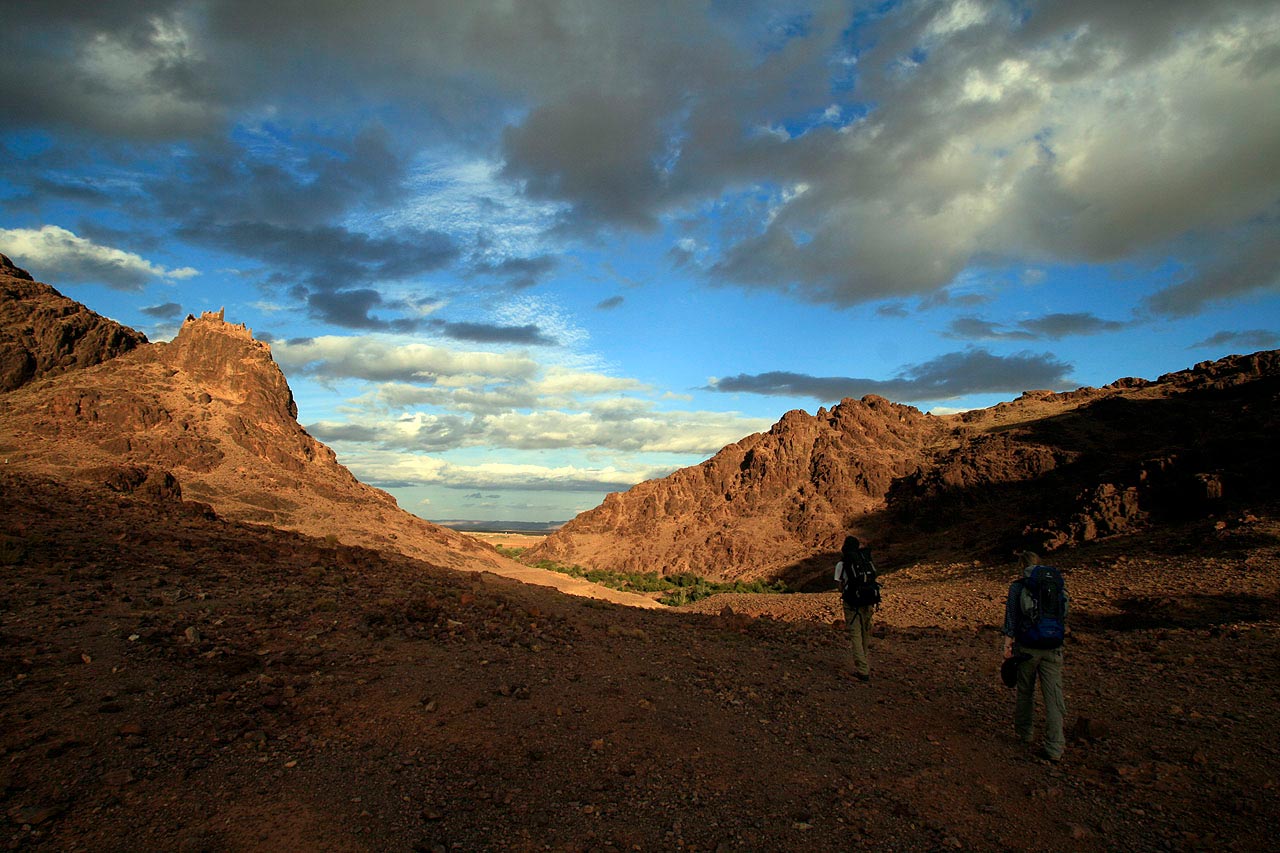
“It has been exciting experiencing how much we can learn from small pieces of limescale that form underground. I worked on the most recent 1000 years of this palaeoclimate record during my master’s project, and now I am working to better quantify the exact levels of increased rainfall during my PhD project,” says Sam Hollowood, study co-author and DPhil student at Oxford’s Department of Earth Sciences.
The evidence of tropical plume rainfall provided by this study is also important for researchers trying to understand how rainfall patterns will change in the South-of-Atlas region in the future. Because tropical plumes brought rainfall to the area in the past, it opens up the possibility that they could do so in the future. The research team is keen to investigate this further by developing more quantitative reconstructions of rainfall amounts in the past.
Reference: “Evidence for the role of tropical plumes in driving mid-Holocene north-west Sahara rainfall” by Hamish O. Couper, Christopher C. Day, Julia J. Barrott, Samuel J. Hollowood, Stacy A. Carolin, Ben Lovett, Abdeljalil Bouzouggar, Nick Barton and Gideon M. Henderson, 9 January 2025, Earth and Planetary Science Letters.
DOI: 10.1016/j.epsl.2024.119195
Never miss a breakthrough: Join the SciTechDaily newsletter.
Follow us on Google and Google News.
6 Comments
Thus just more evidence for what we already knew about the Sahara.
Stalagmites commonly form in limestone caves. For an interesting aside regarding the chronological context, inquirers with an open mind might search for “Were Caves Carved Fast from the Bottom Up? – Dr. Kurt Wise” Full disclosure: Dr. Wise is a young earth creationist whose working hypothesis is that caves were formed shortly after the Biblical flood (which occurred, per Septuagint chronology, ~3183 BC).
Few months ago, it rained heavy in the area and vegetation sprung up… now north sahara is receiving snow time to time… weather patterns seem to be cycling back to 8-10k years ago…one day in 5-6k years the sahara will green…
The always repeating human disease: We knot-heads sit around with blank expressions – when, for one reason or another, we get an idea, pop! – Maybe it’s 2+2 – maybe it’s Jesus, maybe something else, maybe it’s electrons.
Of course, it’s the first notion, it’s new so we don’t know anything about it yet. But we grab onto it for dear life, because we do know that we were a knot-head just a few micro-seconds before that first idea sprang up.
The first idea is always wrong, we learn later – and the harder we hold to that first idea, the longer it takes to acquiescence to the more advanced understanding.
One might consider, there’s always that complete game-changing piece of info hanging out in front of every path – like a carrot on a string. If you keep going, whatever you have been thinking will find a lesson waiting, just up ahead.
This is an eye-opener. Cherry-picking data from a broad range of opinions to make up fairy tales doesn’t work very well. Hopefully, a fuller picture of the latest wet Sahara event will emerge, so internet searches of that timeline will be more accurate for dummies to fantasize about.
Not. That’s a mistake. The oldest living artifacts (bacteria) originate from Antarctica and the Arctic!
Why?
The earth has been constantly cooling since its creation. First, for a short time the Earth was a star. During the early period of the planet (cooling), it was the hottest at the equator, and the coldest (like today) at the south and north poles. Then only there were sufficient thermal conditions for the development of life. That is why we are now discovering the oldest unicellular organisms at the poles, and European people have a genome 300 thousand older than the genome of blacks from the equator.
So, life (plants and animals) moved along with the cooling of the Earth, from the poles to the equator. It is moving even now, only we cannot state that.
This means that the grassy plains in the area around the equator were formed in the last millennia of the planet. It is still early for the grassy Sahara. It will become green in the next millennia of the planet.