
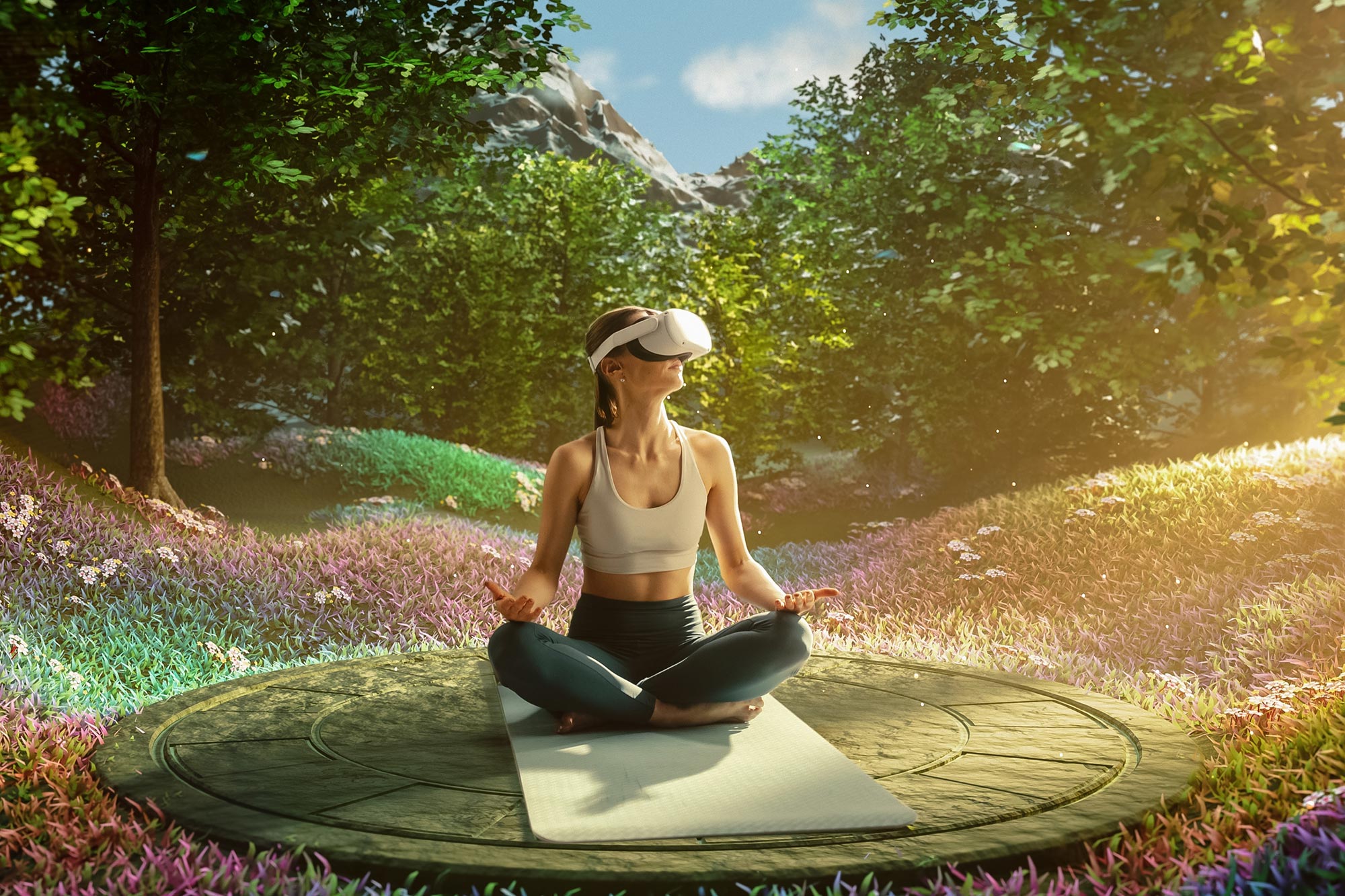
A new study reveals that forest bathing doesn’t have to happen outdoors to be effective—when recreated in virtual reality with visuals, forest sounds, and natural scents, it can ease stress, improve mood, and even enhance memory.
Participants who experienced a fully immersive VR forest showed stronger emotional and cognitive benefits than those exposed to just one sensory input. While real nature remains unmatched, this research opens the door for virtual nature therapy in places like clinics, waiting rooms, and urban spaces where greenery is scarce.
Nature Therapy Reimagined
Researchers from the Max Planck Institute for Human Development (MPIB) and the University Medical Center Hamburg-Eppendorf (UKE) have shown in a recent pilot study that spending time in a virtual forest can enhance emotional well-being, particularly when the experience engages multiple senses like sight, sound, and smell. Their findings were published in the Journal of Environmental Psychology.
In Japan, the practice of Shinrin Yoku, or forest bathing, is already used for therapeutic purposes such as reducing stress and lowering blood pressure. In this study, the researchers set out to explore whether a similar benefit could be achieved through virtual exposure to nature, and whether the impact would be greater when more than one sense was stimulated at the same time.
To test this, they created a high-resolution 360° virtual reality video filmed in the Sonnenberg nature reserve near Parchim, Europe’s largest Douglas fir forest. The video included natural forest sounds and the scent of Douglas fir essential oils. Participants experienced the simulation either as a full multisensory session (with visuals, audio, and scent combined) or in simplified versions that focused on just one sense—visual, auditory, or olfactory. For the audio-only and scent-only experiences, a neutral virtual setting was used to avoid distractions from visual elements and to control for the effects of VR itself.
Multisensory VR Forest Study
More than 130 participants were first put into an acute stress situation using stress-inducing images. Then, equipped with VR glasses, they experienced one of the four forest stimulation/ bathing variants. The results show that the combination of all three sensory stimuli led to a significantly greater improvement in mood and a stronger feeling of connection with nature compared to when individual sensory stimuli were presented. In addition to positive effects on mood, there were also limited improvements in working memory – the cognitive function that enables us to store, process, and retrieve information in the short term.
However, the researchers point out that the effects are area-specific and cannot yet be considered universally valid. Further studies with larger samples are needed to confirm the results and provide a better understanding of the mechanisms behind the restorative effects of virtual nature experiences.
Emotional Impact & Practical Uses
“We can already say that digital nature experiences can absolutely produce an emotional effect – even if they don’t replace actual nature,” reports Leonie Ascone, lead author of the study and researcher in the Neuronal Plasticity working group at the University Medical Center Hamburg-Eppendorf (UKE).
Simone Kühn, head of the study and Director of the Center for Environmental Neuroscience at the Max Planck Institute for Human Development, adds: “Especially in places with limited access to nature, such as clinics, waiting areas, or urban interiors, multisensory VR applications or targeted nature staging could support mental well-being. The images, sounds, and scents of nature offer previously underestimated potential for improving mood and mental performance in everyday situations.” Kühn conducts intensive research into the effects of the environment on the human brain and, together with colleagues from universities in Vienna, Exeter, and Birmingham, was recently able to prove that just from watching nature videos, patients perceive physical pain as less intense (Steininger et al., 2025).
Quick Takeaways
- Forest bathing in Virtual Reality improves emotional well-being and increases connectedness to nature, particularly when several senses (sight, hearing, smell) are simultaneously engaged
- The study used a 360° VR forest video complete with original sounds and the scent of Douglas fir essential oils
- There is potential for application, especially in clinical, urban, and other environments with limited access to nature
Reference: “Multi- vs. unimodal forest-bathing in VR to enhance affective and cognitive recovery after acute stress” by Leonie Ascone, Fariba Mostajeran, Anna Mascherek, Nour Tawil, Thiemo Knaust, Larissa Samaan and Simone Kühn, 27 May 2025, Journal of Environmental Psychology.
DOI: 10.1016/j.jenvp.2025.102637
Never miss a breakthrough: Join the SciTechDaily newsletter.
Follow us on Google and Google News.