
Close Menu
    Facebook X (Twitter) Instagram
    SciTechDaily
    • Biology
    • Chemistry
    • Earth
    • Health
    • Physics
    • Science
    • Space
    • Technology
    Facebook X (Twitter) Pinterest YouTube RSS
    SciTechDaily
    Home»Science»People More Afraid of Catching COVID-19 Are More Judgmental
    Science

    People More Afraid of Catching COVID-19 Are More Judgmental

    By University of CambridgeJune 8, 2021No Comments3 Mins Read
    Facebook Twitter Pinterest Telegram LinkedIn WhatsApp Email Reddit
    Share
    Facebook Twitter LinkedIn Pinterest Telegram Email Reddit
    COVID Afraid Judgmental
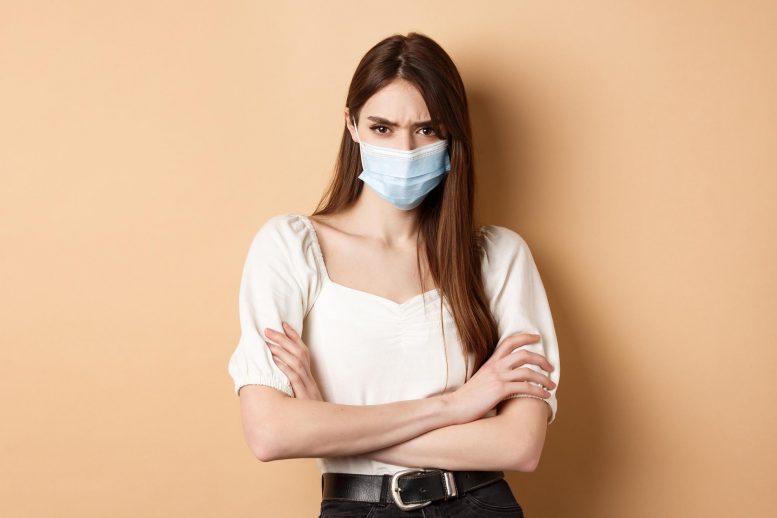
    Concerns about COVID-19 influence people’s moral judgments, showing that morality is shaped by emotions, particularly health and safety concerns, rather than being purely rational.

    Concern over COVID-19 made people more morally judgmental, showing how emotions like fear and disgust can shape ethical evaluations.

    Researchers studying how we make moral judgments found that people more concerned about catching COVID-19 were more disapproving of the wrong-doings of others, whatever they were doing wrong.

    The researchers say their findings are evidence that our morality is shaped by various emotions and intuitions, of which concerns about health and safety are prominent. This means that our judgments of wrongdoing are not completely rational.

    The study, published today (June 8, 2021) in the journal Evolutionary Psychology, did not focus on behaviors relating to the pandemic itself — such as social distancing — but considered a wide range of moral transgressions.

    Between March and May 2020, over 900 study participants in the USA were presented with a series of scenarios and asked to rate them on a scale from “not at all wrong” to “extremely wrong.” This enabled the researchers to measure participants’ responses across five key moral principles: harm, fairness, in-group loyalty, deference to authority, and purity.

    Example scenarios include one of loyalty: “You see a man leaving his family business to go work for their main competitor;” and one of fairness: “You see a tenant bribing a landlord to be the first to get their apartment repainted.”

    Pandemic Fear Increases Moral Severity

    People who were more worried about catching COVID-19 judged the behaviors in these scenarios to be more wrong than those who were less worried.

    “There is no rational reason to be more judgemental of others because you are worrying about getting sick during the pandemic,” said Professor Simone Schnall in the University of Cambridge’s Department of Psychology, senior author of the report.

    She added: “These influences on judgments happen outside of our conscious awareness. If we feel that our wellbeing is threatened by the coronavirus, we are also likely to feel more threatened by other people’s wrong-doing — it’s an emotional link.”

    The findings contribute to a growing body of evidence of a link between physical disgust — an emotion designed to keep us from harm — and moral condemnation.

    “Disgust is an emotion we think evolved to protect us from harm — avoiding a filthy toilet that might contaminate us with disease, for example. But now we apply it to social situations too, and can feel physically repulsed by other people’s behavior,” said Robert Henderson, a PhD student and Gates Scholar in the University of Cambridge’s Department of Psychology and first author of the report.

    He added: “The link between being concerned about COVID-19 and moral condemnation is about risks to wellbeing. If you’re more conscious of health risks, you’re also more conscious of social risks — people whose behavior could inflict harm upon you.”

    Reference: “Disease and Disapproval: COVID-19 Concern is Related to Greater Moral Condemnation” by Robert K. Henderson and Simone Schnall, 8 June 2021, Evolutionary Psychology.
    DOI: 10.1177/14747049211021524

    Never miss a breakthrough: Join the SciTechDaily newsletter.
    Follow us on Google and Google News.

    Behavioral Science COVID-19 Infectious Diseases Mental Health Psychology Stress University of Cambridge
    Share. Facebook Twitter Pinterest LinkedIn Email Reddit

    Related Articles

    A Simple Trick Can Help Couples Weather COVID-19 Pandemic-Related Stress

    Narcissism Linked to Aggression – Study Found Relationship “Across the Board” All Over the World

    Flexibility Paradox: Scientists Uncover Hidden Threat of Working From Home

    Experiencing Childhood Trauma or Abuse Makes Body and Brain Age Faster

    Your Eyes Can Reveal if You’ve Suffered a Traumatic Experience in the Past

    What Kind of People Stockpiled Toilet Paper for COVID-19? Researchers Link Personality Traits

    Study Finds Elite Gamers Share Mental Toughness With Olympic Athletes

    Key Brain Networks Identified That Play Crucial Role in Suicide Risk

    Men’s Stress Increases If Wife Earns More Than 40% of Household Income

    Leave A Reply Cancel Reply

    • Facebook
    • Twitter
    • Pinterest
    • YouTube

    Don't Miss a Discovery

    Subscribe for the Latest in Science & Tech!

    Trending News

    The Universe Is Expanding Too Fast and Scientists Can’t Explain Why

    “Like Liquid Metal”: Scientists Create Strange Shape-Shifting Material

    Early Warning Signals of Esophageal Cancer May Be Hiding in Plain Sight

    Common Blood Pressure Drug Shows Surprising Power Against Deadly Antibiotic-Resistant Superbug

    Scientists Uncover Dangerous Connection Between Serotonin and Heart Valve Disease

    Scientists Discover a “Protector” Protein That Could Help Reverse Hair Loss

    Bone-Strengthening Discovery Could Reverse Osteoporosis

    Scientists Uncover Hidden Trigger Behind Stem Cell Aging

    Follow SciTechDaily
    • Facebook
    • Twitter
    • YouTube
    • Pinterest
    • Newsletter
    • RSS
    SciTech News
    • Biology News
    • Chemistry News
    • Earth News
    • Health News
    • Physics News
    • Science News
    • Space News
    • Technology News
    Recent Posts
    • Scientists Create Improved Insulin Cells That Reverse Diabetes in Mice
    • Scientists Stunned After Finding Plant Thought Extinct for 60 Years
    • A Common Diabetes Drug May Hold the Key to Stopping HIV From Coming Back
    • Ancient “Syphilis-Like” Disease in Vietnam Challenges Key Scientific Assumptions
    • Drinking Alcohol To Cope in Your 20s Could Damage Your Brain for Life
    Copyright © 1998 - 2026 SciTechDaily. All Rights Reserved.
    • Science News
    • About
    • Contact
    • Editorial Board
    • Privacy Policy
    • Terms of Use

    Type above and press Enter to search. Press Esc to cancel.