
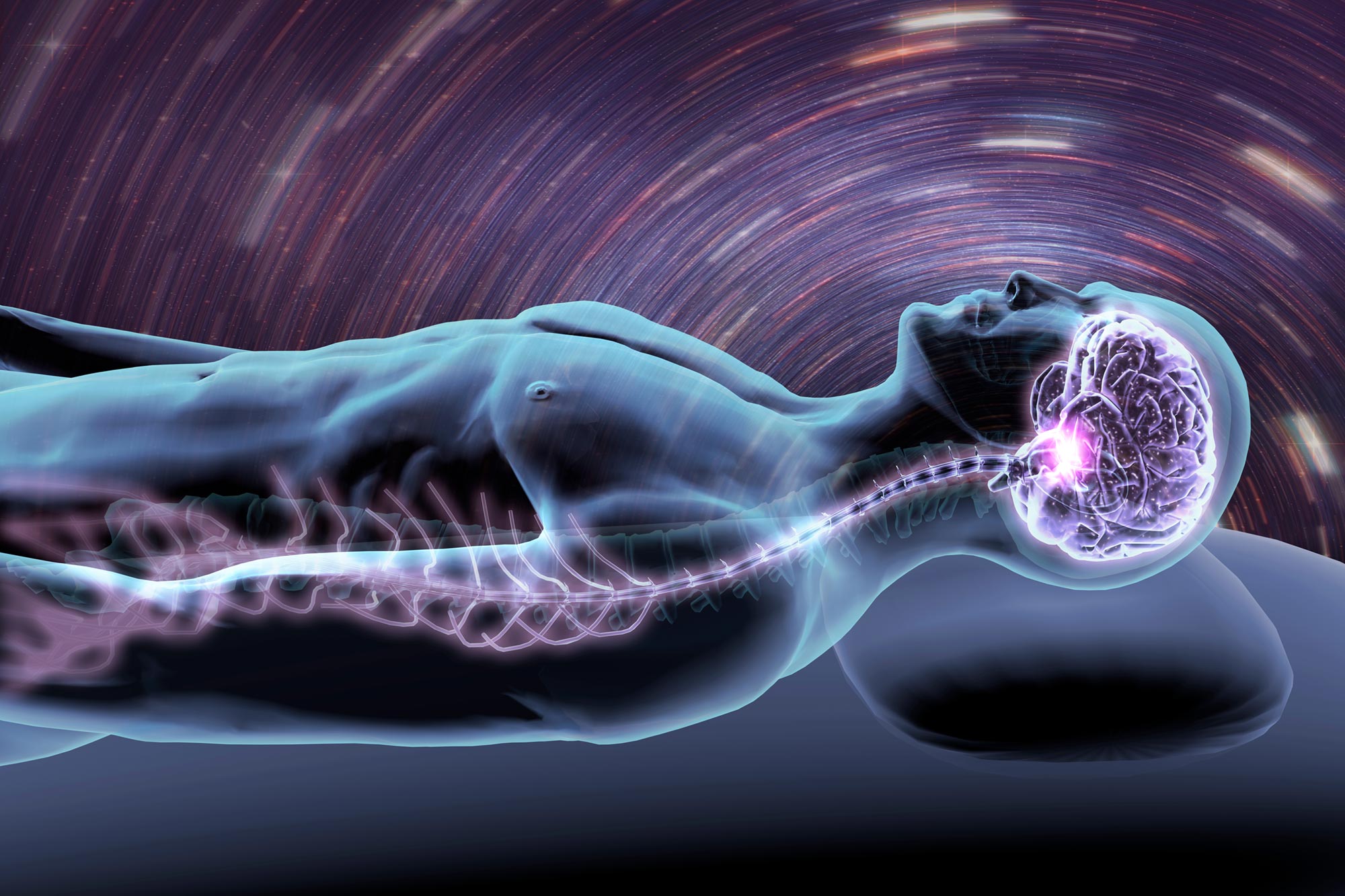
A new study suggests that reproducing a crucial sleep-like brain pattern in awake animals may help preserve memory and learning abilities.
What if part of the brain could get some of the benefits of sleep without the rest of the brain ever going offline? A new NIH-funded study suggests that may be possible. Researchers found a way to trigger a key sleep-related process in specific brain regions of awake mice, helping reverse some of the cognitive effects of sleep deprivation and shedding light on why sleep is so important for learning and memory.
The findings challenge the traditional view that the brain must enter a fully sleeping state to perform certain forms of neural maintenance. Instead, the research suggests that some restorative functions can occur locally, within targeted areas of the brain, even while the animal remains awake and responsive.
“What we’re essentially doing is forcing sleep in a local region of the brain. While that part is solidifying memories and restoring learning capacity, other parts stay aware/vigilant and connected to environment,” said corresponding author Chiara Cirelli, M.D., Ph.D., a professor of psychiatry at the University of Wisconsin-Madison. “Dolphins do something similar, sleeping with only one brain hemisphere at a time.”
Non-rapid eye movement (NREM) sleep accounts for roughly 80% of adult sleep and plays a major role in maintaining the neural connections involved in memory. During this stage, the brain strengthens and preserves important connections, removes less useful ones, and creates room for new learning.
Mimicking Sleep While Awake
Earlier research by Cirelli and her team found that sleep-deprived rats and humans can briefly experience localized slow-wave brain activity, a defining feature of NREM sleep, even while awake. These short episodes were likely too limited to provide significant benefits, but they suggested that inducing longer periods of similar activity might have meaningful effects.
In the new study, researchers used light-activated implants along with genetic modifications to create rhythmic cycles of activity and inactivity in one side of the brains of sleep-deprived mice. The stimulation sessions lasted 30 minutes and were designed to replicate activity patterns seen during NREM sleep.
Afterward, the stimulated brain regions showed lower levels of slow-wave activity during sleep, suggesting those areas had a reduced need for recovery. Additional experiments indicated that the benefit was not driven by an overall decrease in neuronal activity, as some theories have proposed. Instead, it appeared to depend on the specific alternating pattern of activity.
The team also examined whether the approach could improve behavior. In a tactile memory test that depends on sleep, sleep-deprived mice that received stimulation in motor and sensory regions on both sides of the brain performed about as well as well-rested mice. In contrast, sleep-deprived mice that did not receive stimulation performed significantly worse.
Looking Toward Human Applications
Cirelli and her colleagues plan to investigate whether similar results can be achieved in people using less invasive transcranial stimulation methods.
“This research further decodes why we sleep and how we learn, which brings us a step closer to understanding how to better prevent and treat cognitive decline,” said Amy Bany Adams, Ph.D., acting director of the NIH’s National Institute of Neurological Disorders and Stroke (NINDS), which funded the research.
Reference: “Induction of cortical on/off periods in awake mice fulfills sleep functions” by Kort Driessen, Fabio Squarcio, Giulio Tononi and Chiara Cirelli, 8 June 2026, Nature Neuroscience.
DOI: 10.1038/s41593-026-02318-9
Never miss a breakthrough: Join the SciTechDaily newsletter.
Follow us on Google and Google News.
2 Comments
During service, we pilots were briefed that combat missions may cause us to experience long periods of sleeplessness because of stress, and that was normal, and okay as long as we obtained at least a good eight hours of uninterrupted “rest”. Rest being horizonal in bed with limited movement. Our brains may me hyperactive but that was okay as long as our body was resting. This study seems to validate this.
APPRECIATING.