
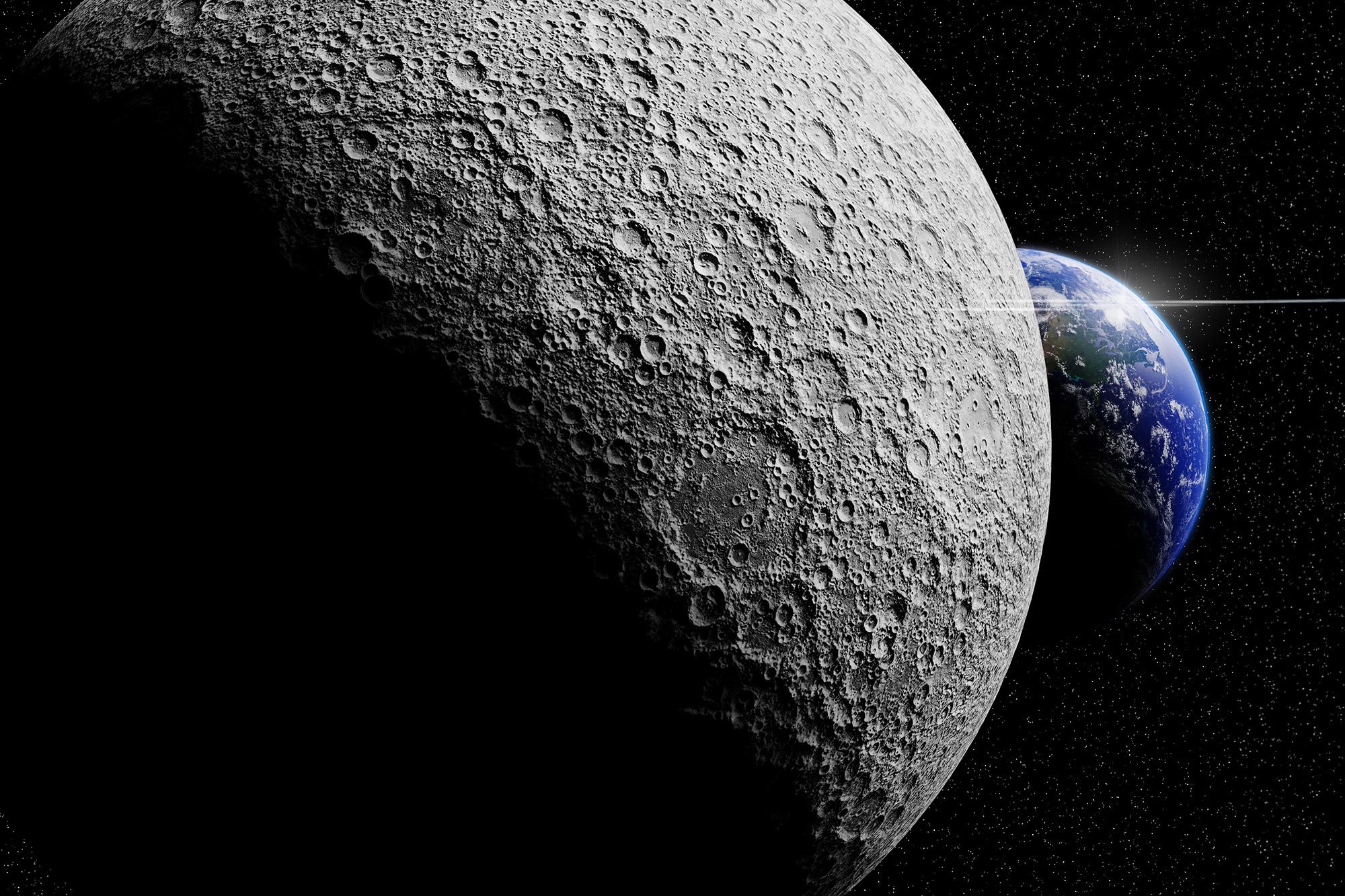
Where does the Moon’s exosphere originate? A study by TU Wien, based on analysis of actual lunar rock, shows that the impact of solar wind ions in eroding the Moon’s surface has been greatly overestimated.
The Moon’s surface is constantly exposed to the solar wind, a stream of charged particles emitted by the Sun. These energetic ions can dislodge atoms from the Moon’s outermost rocky layer, contributing to the formation of a very sparse layer of gas around the Moon known as the exosphere. However, the exact mechanism behind the creation of this exosphere has remained unclear.
Researchers at TU Wien, working with international collaborators, have now shown that a major contributing process, sputtering caused by the solar wind, has been greatly overestimated in earlier studies. This discrepancy stems from previous models overlooking the Moon’s actual surface texture, which is rough and porous.
For the first time, the team used original Apollo 16 samples in high-precision laboratory experiments, along with advanced 3D modeling, to calculate more accurate sputtering rates. Their findings are published in Communications Earth & Environment.
A Thin Atmosphere – But Where Does It Come From?
“The Moon has no dense atmosphere like Earth – but it does have a tenuous exosphere, made up of individual atoms and molecules,” explains Prof. Friedrich Aumayr from the Institute of Applied Physics at TU Wien. “Understanding the origin of these particles remains one of the key questions in lunar science.”
Researchers have identified two primary mechanisms that could explain how particles enter the Moon’s exosphere: they are either expelled by high-speed micrometeorite impacts or released through interactions with the solar wind, which consists of protons, helium ions, and other charged particles continuously emitted by the Sun. However, up to now, there has been a lack of reliable experimental data on how real lunar material responds to sputtering caused by the solar wind.
First Experiments with Real Lunar Rock
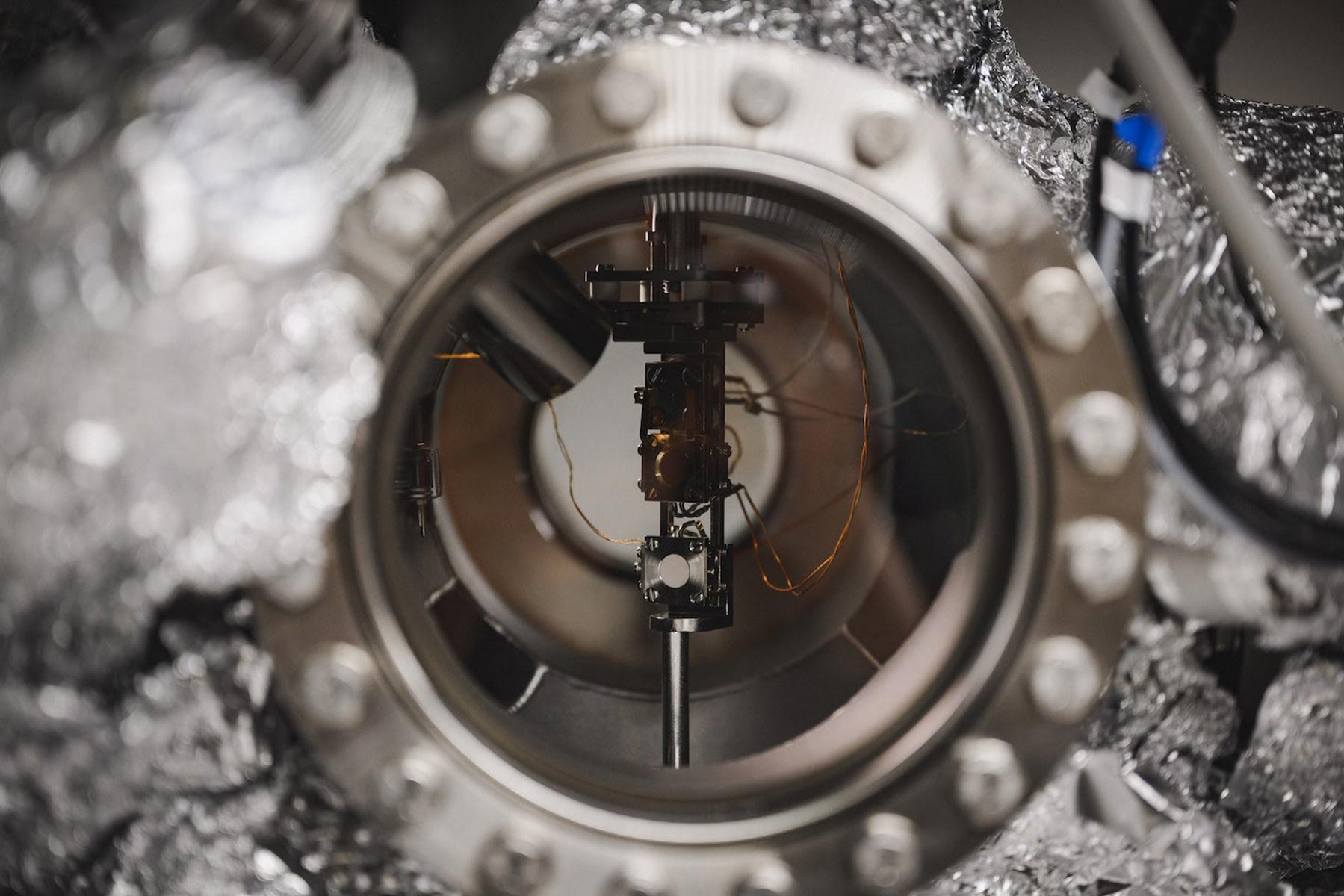
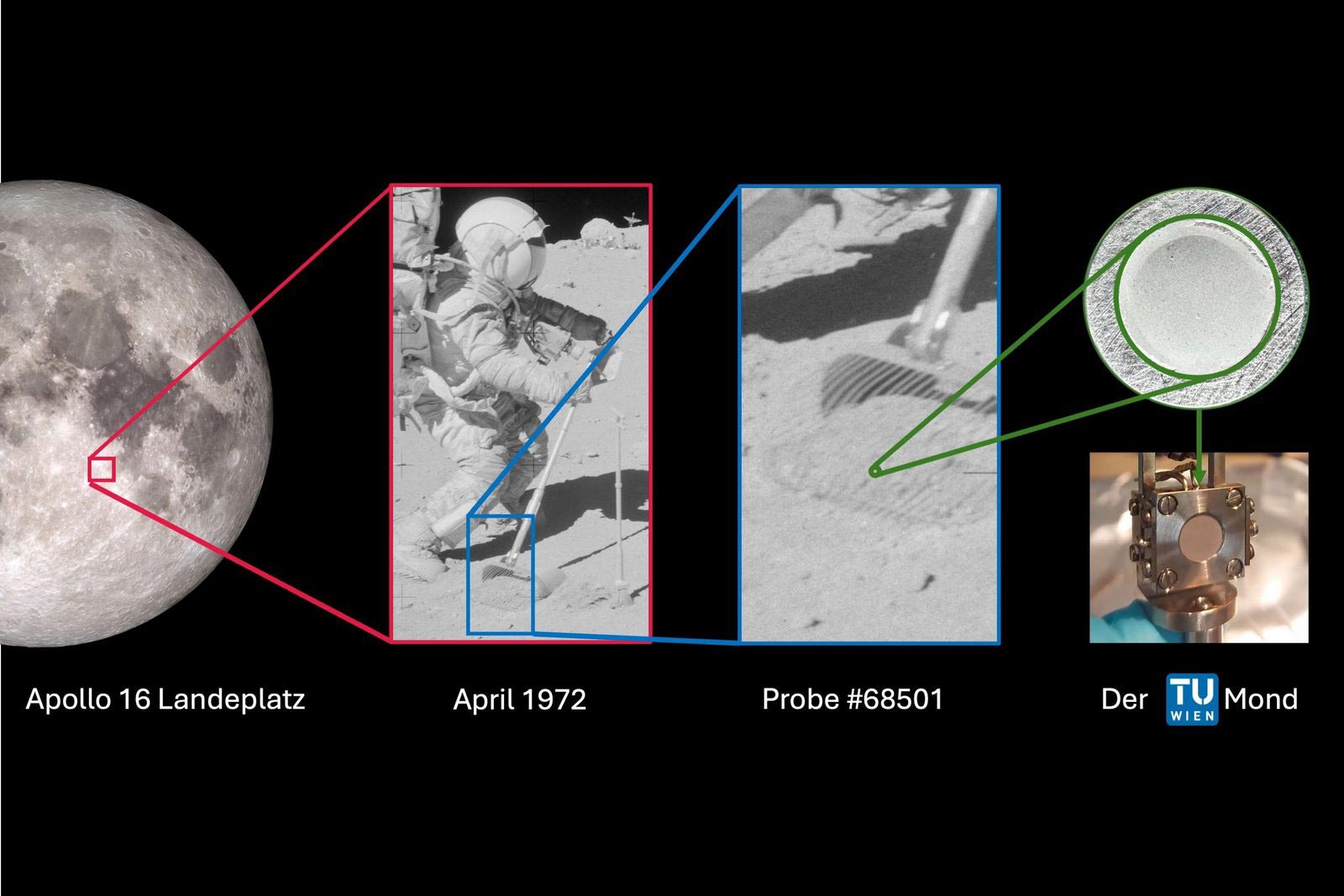
For the first time, researchers at TU Wien have carried out precision experiments using genuine Moon rock brought back by NASA’s Apollo 16 mission. “Using a specially developed quartz crystal microbalance, we were able to measure the mass loss of lunar material due to ion bombardment with extremely high accuracy,” says Johannes Brötzner, a PhD student at TU Wien and lead author of the study.
At the same time, the team ran extensive 3D computer simulations on the Vienna Scientific Cluster, which made it possible to include the real surface structure and porosity of lunar regolith in their calculations.
The result: the real erosion rate caused by the solar wind has been drastically overestimated. The actual yield is up to an order of magnitude lower than previously assumed. This is primarily due to the structure of the regolith – a porous, loosely bound layer of dust covering the Moon’s surface. When incoming ions strike the regolith, they often lose their energy in multiple collisions inside microscopic cavities, rather than immediately ejecting surface atoms. As a result, the sputtering efficiency is significantly reduced compared to a smooth, dense surface.
Micrometeorites Outweigh the Solar Wind
“Our study provides the first realistic, experimentally validated sputtering yields for actual lunar rock,” says Friedrich Aumayr. “Not only does this explain why earlier models overestimated solar wind erosion – it also helps resolve a previously unresolved scientific discrepancy: A recent Science Advances study based on isotope analysis of Apollo samples concluded that, over geological timescales, micrometeorite impacts – not the solar wind – are the dominant source of the lunar exosphere. Our new experimental data independently confirms this conclusion from an entirely different perspective.“
Key Insights for Lunar and Mercury Missions
These results are especially timely: NASA’s Artemis program is advancing in a new era of lunar exploration, and ESA’s and JAXA’s BepiColombo mission is set to deliver the first in-situ measurements of Mercury’s exosphere in the coming years. Interpreting these data will require a detailed understanding of the underlying surface erosion mechanisms – and that is precisely where TU Wien’s research makes a crucial contribution.
Reference: “Solar wind erosion of lunar regolith is suppressed by surface morphology and regolith properties” by Johannes Brötzner, Herbert Biber, Paul Stefan Szabo, Noah Jäggi, Lea Fuchs, Andreas Nenning, Martina Fellinger, Gyula Nagy, Eduardo Pitthan, Daniel Primetzhofer, Andreas Mutzke, Richard Arthur Wilhelm, Peter Wurz, André Galli and Friedrich Aumayr, 16 July 2025, Communications Earth & Environment.
DOI: 10.1038/s43247-025-02546-0
Never miss a breakthrough: Join the SciTechDaily newsletter.
Follow us on Google and Google News.