
Close Menu
    Facebook X (Twitter) Instagram
    SciTechDaily
    • Biology
    • Chemistry
    • Earth
    • Health
    • Physics
    • Science
    • Space
    • Technology
    Facebook X (Twitter) Pinterest YouTube RSS
    SciTechDaily
    Home»Technology»This Game-Changing Laser Is Smaller, Smarter, and Shockingly Powerful
    Technology

    This Game-Changing Laser Is Smaller, Smarter, and Shockingly Powerful

    By Norwegian University of Science and TechnologyOctober 25, 2025No Comments3 Mins Read
    Facebook Twitter Pinterest Telegram LinkedIn WhatsApp Email Reddit
    Share
    Facebook Twitter LinkedIn Pinterest Telegram Email Reddit
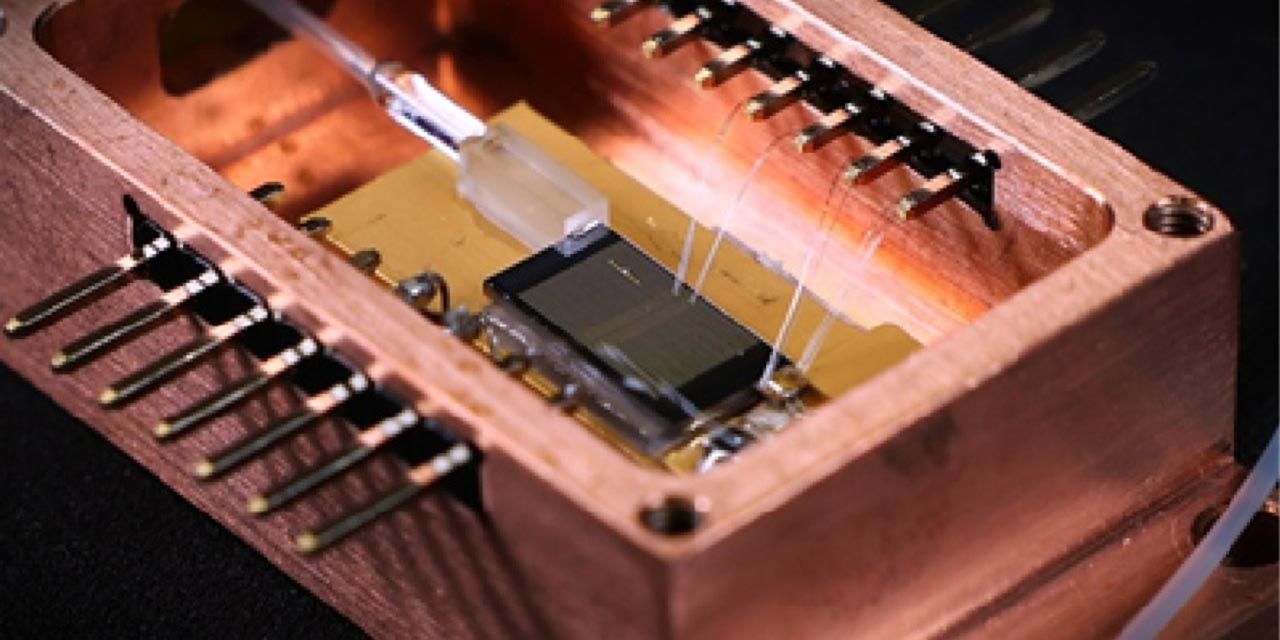
    New Laser Prototype
    It’s not so easy for the rest of us to see, but this humble prototype could result in cheaper and more effective lasers. Credit: Simone Bianconi, EPFL

    A team of researchers has created a powerful new laser that fits on a microchip.

    It’s faster, more affordable, and easier to tune than existing precision lasers. The breakthrough could transform technologies like Lidar in self-driving cars and gas detection systems.

    Laser Light Powers Modern Tech

    Laser technology plays a crucial role in modern science and engineering, especially in applications that rely on precise measurements or rapid data transfer. It is the foundation for technologies such as self-driving cars, fiber optic communication networks, and systems that monitor air quality by detecting trace gases.

    A team of researchers led by Associate Professor Johann Riemensberger from the Department of Electronic Systems at the Norwegian University of Science and Technology (NTNU) has now developed a new kind of laser designed to overcome several of the challenges found in current models.

    Compact and Cost-Effective Innovation

    “Our results can give us a new type of laser that is both fast, relatively cheap, powerful, and easy to use,” says Riemensberger.

    The findings, recently published in Nature Photonics, describe a major advance achieved through collaboration between NTNU, the Swiss École Polytechnique Fédérale de Lausanne (EPFL), and Luxtelligence SA.

    Self-Driving Cars and Air Quality Detectors

    Traditional precision lasers tend to be bulky, costly, and complicated to adjust. “Our new laser solves several of these problems,” says Riemensberger.

    This improvement opens the door for use in self-driving vehicles, which rely on a sensing method called Lidar to detect and measure the distance to nearby objects. Lidar works by analyzing the time it takes for light from the laser to reflect back or by detecting slight phase changes in the returning light wave. The new laser performs these measurements with remarkable accuracy, within roughly four centimeters.

    The researchers also achieved promising results when testing the device for detecting hydrogen cyanide gas in the atmosphere. This chemical, also known as “hydrocyanic acid,” is extremely poisonous even in small amounts, making rapid detection critical for safety and environmental protection.

    Advanced Materials and Microscopic Circuits

    To build the new laser, the team used advanced materials combined with miniature light circuits. The result is a highly stable and powerful beam that can be tuned smoothly and quickly, without abrupt frequency jumps.

    “You can also easily control it with just one control instead of many,” Riemensberger points out.

    Because it is fabricated using existing chip technology, the laser can be produced on a large scale at relatively low cost.

    “Our findings make it possible to create small, inexpensive, and user-friendly measuring instruments and communication tools with high performance,” Riemensberger said.

    Reference: “Ultrafast tunable photonic-integrated extended-DBR Pockels laser” by Anat Siddharth, Simone Bianconi, Rui Ning Wang, Zheru Qiu, Andrey S. Voloshin, Mohammad J. Bereyhi, Johann Riemensberger and Tobias J. Kippenberg, 5 June 2025, Nature Photonics.
    DOI: 10.1038/s41566-025-01687-0

    The work was a collaboration between EPFL (experiments), Luxtelligence SA (chip production) and NTNU (design and simulations). It started when Riemensberger was still a postdoctoral fellow at EPFL. The collaboration continues through an EIC Pathfinder OPEN scholarship called ELLIPTIC.

    Never miss a breakthrough: Join the SciTechDaily newsletter.
    Follow us on Google and Google News.

    Electrical Engineering Lasers Norwegian University of Science and Technology Sensor
    Share. Facebook Twitter Pinterest LinkedIn Email Reddit

    Related Articles

    New MIT/Caltech Ingestible Sensor Could Help Doctors Pinpoint GI Difficulties

    Ultrafast Computers Are Coming: Laser Bursts Drive Fastest-Ever Logic Gates

    Laser Pulses for Ultrafast Signal Processing Could Make Computers a Million Times Faster

    Tiny Wireless Sensors Float in the Wind Like Dandelion Seeds

    A Laser Breakthrough: First Commercially Scalable Integrated Laser and Microcomb on a Single Chip

    Breaking the Power and Speed Limit of Lasers: New Fast, Powerful Compact Laser Invented

    Researchers Develop a Portable Terahertz Laser for Powerful Sensing and Imaging

    Multi-Watt Terahertz Semiconductor “Quantum-Cascade” Laser Breakthrough

    World’s Shortest Wavelength Laser Diode Emits Deep UV Light

    Leave A Reply Cancel Reply

    • Facebook
    • Twitter
    • Pinterest
    • YouTube

    Don't Miss a Discovery

    Subscribe for the Latest in Science & Tech!

    Trending News

    New Study Reveals Why Ozempic Works Better for Some People Than Others

    Climate Change Is Altering a Key Greenhouse Gas in a Way Scientists Didn’t Expect

    New Study Suggests Gravitational Waves May Have Created Dark Matter

    Scientists Discover Why the Brain Gets Stuck in Schizophrenia

    Scientists Engineer “Tumor-Eating” Bacteria That Devour Cancer From Within

    Even “Failed” Diets May Deliver Long-Term Health Gains, Study Finds

    NIH Scientists Discover Powerful New Opioid That Relieves Pain Without Dangerous Side Effects

    Collapsing Plasma May Hold the Key to Cosmic Magnetism

    Follow SciTechDaily
    • Facebook
    • Twitter
    • YouTube
    • Pinterest
    • Newsletter
    • RSS
    SciTech News
    • Biology News
    • Chemistry News
    • Earth News
    • Health News
    • Physics News
    • Science News
    • Space News
    • Technology News
    Recent Posts
    • This 15,000-Year-Old Discovery Changes What We Know About Early Human Creativity
    • 35-Million-Year-Old Mystery: Strange Arachnid Discovered Preserved in Amber
    • Revolutionary Gas Turbine Generates Power Without Air Compression
    • Is AI Really Just a Tool? It Could Be Altering How You See Reality
    • JWST Reveals a “Forbidden” Planet With a Baffling Composition
    Copyright © 1998 - 2026 SciTechDaily. All Rights Reserved.
    • Science News
    • About
    • Contact
    • Editorial Board
    • Privacy Policy
    • Terms of Use

    Type above and press Enter to search. Press Esc to cancel.