
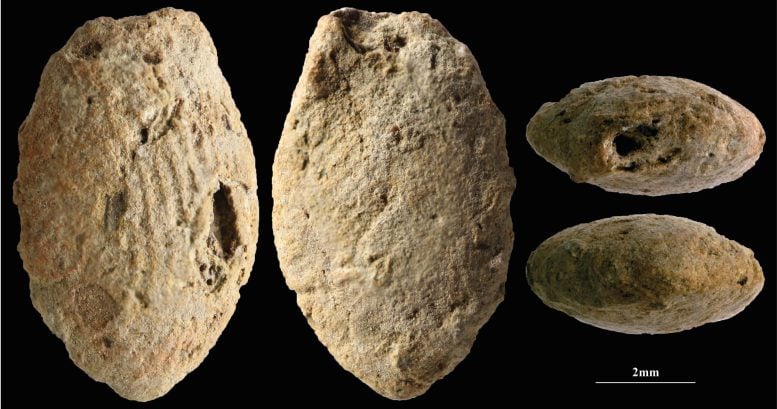
Clay ornaments created 15,000 years ago show that symbolic expression began before agriculture. Evidence suggests both children and adults participated, highlighting early social and cultural development.
Long before pottery or farming emerged, and even before the first villages formed, people in the Levant were already shaping clay by hand. They did so with care and intention, and sometimes with a sense of play. Some of these early creators were children.
A research team led by Laurent Davin, a postdoctoral scholar at the Institute of Archaeology at the Hebrew University of Jerusalem working under Prof. Leore Grosman, has identified the oldest-known clay ornaments in Southwest Asia.
This discovery highlights an overlooked stage in how humans began using objects to express identity and social meaning. Published this week in Science Advances, the study indicates that symbolic uses of clay in the region began thousands of years earlier than previously believed.
The collection includes 142 beads and pendants made about 15,000 years ago by Natufian hunter-gatherers in what is now Israel. These groups were among the first to establish permanent settlements, long before agriculture developed. Until now, clay from this period was not thought to serve decorative purposes. In fact, only five clay beads from this era have been documented worldwide.
Discovery Changes Understanding of Symbolism
“This discovery thoroughly changes how we understand the relationship between clay, symbolism, and the emergence of settled life,” said Laurent Davin.
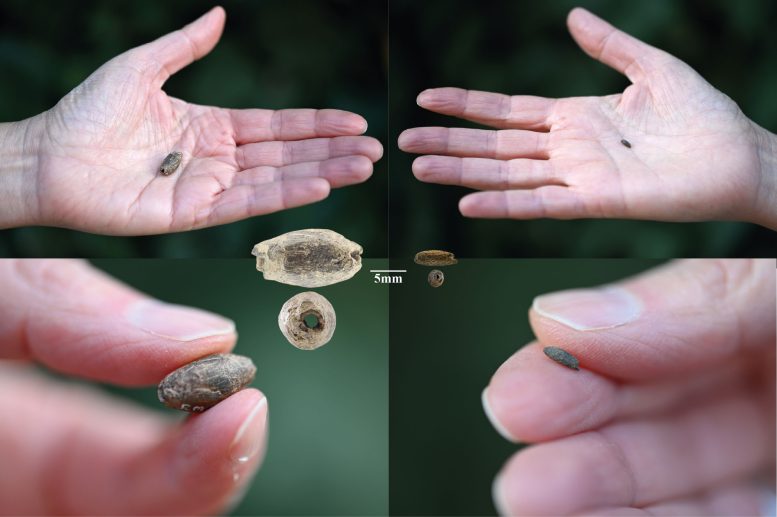
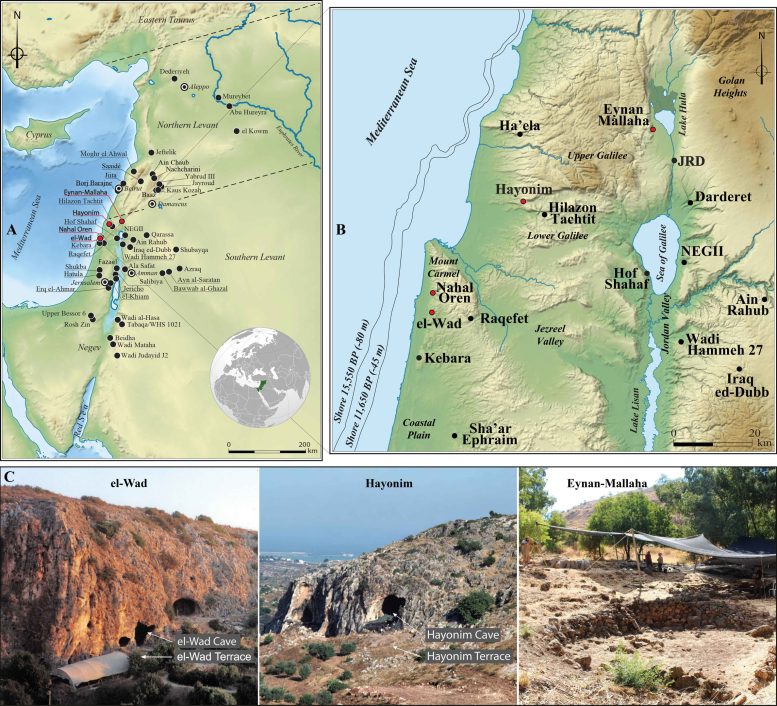
Researchers uncovered the ornaments at four Natufian sites: el-Wad, Nahal Oren, Hayonim, and Eynan-Mallaha, covering more than three thousand years of occupation. The small objects, which fit easily in the palm, were shaped from unfired clay into cylinders, discs, and oval forms. Many were coated with red ochre using engobe, a method that applies a thin layer of liquid clay to the surface.
This marks the earliest known use of this coloring technique anywhere in the world.
Clay as a Cultural Tradition
The quantity and variety of these objects indicate that they were not part of a one-time experiment, but a long-standing practice. Clay had already become a tool for visual communication well before it was used to make containers like bowls or jars.
Researchers identified 19 distinct bead types, many resembling plants important to Natufian life, including wild barley, einkorn wheat, lentils, and peas. These same plants were widely gathered and consumed and would later become key agricultural crops.

Some beads preserved traces of plant fibers, showing how they were strung and worn. This provides rare evidence of organic materials that usually do not survive in the archaeological record.
Nature, Meaning, and Symbolism
Together, the ornaments suggest that plants and the natural world held symbolic importance beyond their role as food sources.
One of the most notable findings comes from the surfaces of the beads rather than their shapes.
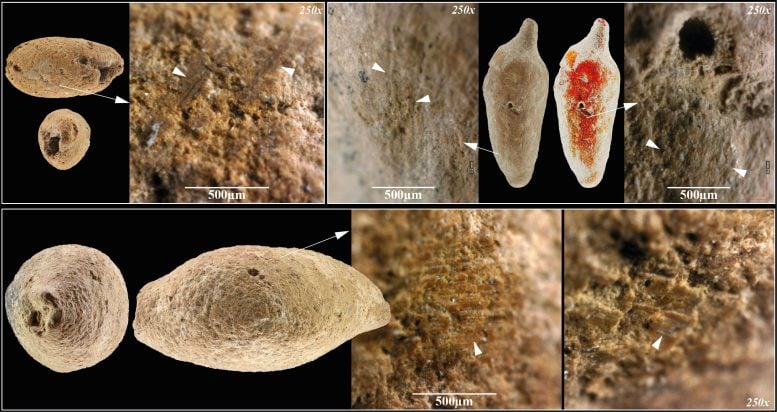
A total of 50 preserved fingerprints allowed researchers to determine who made the objects. The prints came from individuals of different ages, including children, teenagers, and adults. This is the first time archaeologists have been able to directly identify the makers of Paleolithic ornaments, and it represents the largest collection of such fingerprints from this period.
Children and Social Learning
Some items appear to have been created specifically for children, such as a small clay ring measuring just 10 millimeters (0.39 inches) in diameter.
The evidence suggests that ornament-making was a shared daily activity. It likely played a role in teaching skills, encouraging imitation, and passing down social values across generations.
For many years, researchers believed that symbolic uses of clay in Southwest Asia began only with farming and the Neolithic lifestyle. This study, along with the recent discovery of a clay figurine at Nahal Ein Gev II, challenges that view.
Rethinking the Origins of Culture
Instead, the findings point to an earlier “symbolic revolution” during the first stages of settled life, when communities still relied on hunting and gathering but began living in permanent locations. Clay ornaments became a visible way to communicate identity, group connections, and social relationships.
“These objects show that profound social and cognitive changes were already underway,” said Prof. Leore Grosman. “The roots of the Neolithic lie deeper than we once thought.”
By documenting one of the earliest known traditions of clay adornment, the research presents the Natufians not only as precursors to agriculture but also as pioneers of symbolic expression. They used clay to communicate who they were and how their societies were evolving.
Reference: “Modeling identities among the first-sedentary communities: Emergence of clay personal ornaments in Epipaleolithic Southwest Asia” by Laurent Davin, Marion Sindel, Reuven Yeshurun, Mina Weinstein-Evron, Daniel Kaufman, Boris Shklyar, Leore Grosman, Anna Belfer-Cohen, Hamoudi Khalaily and François R. Valla, 18 March 2026, Science Advances.
DOI: 10.1126/sciadv.aea2158
Never miss a breakthrough: Join the SciTechDaily newsletter.
Follow us on Google and Google News.