
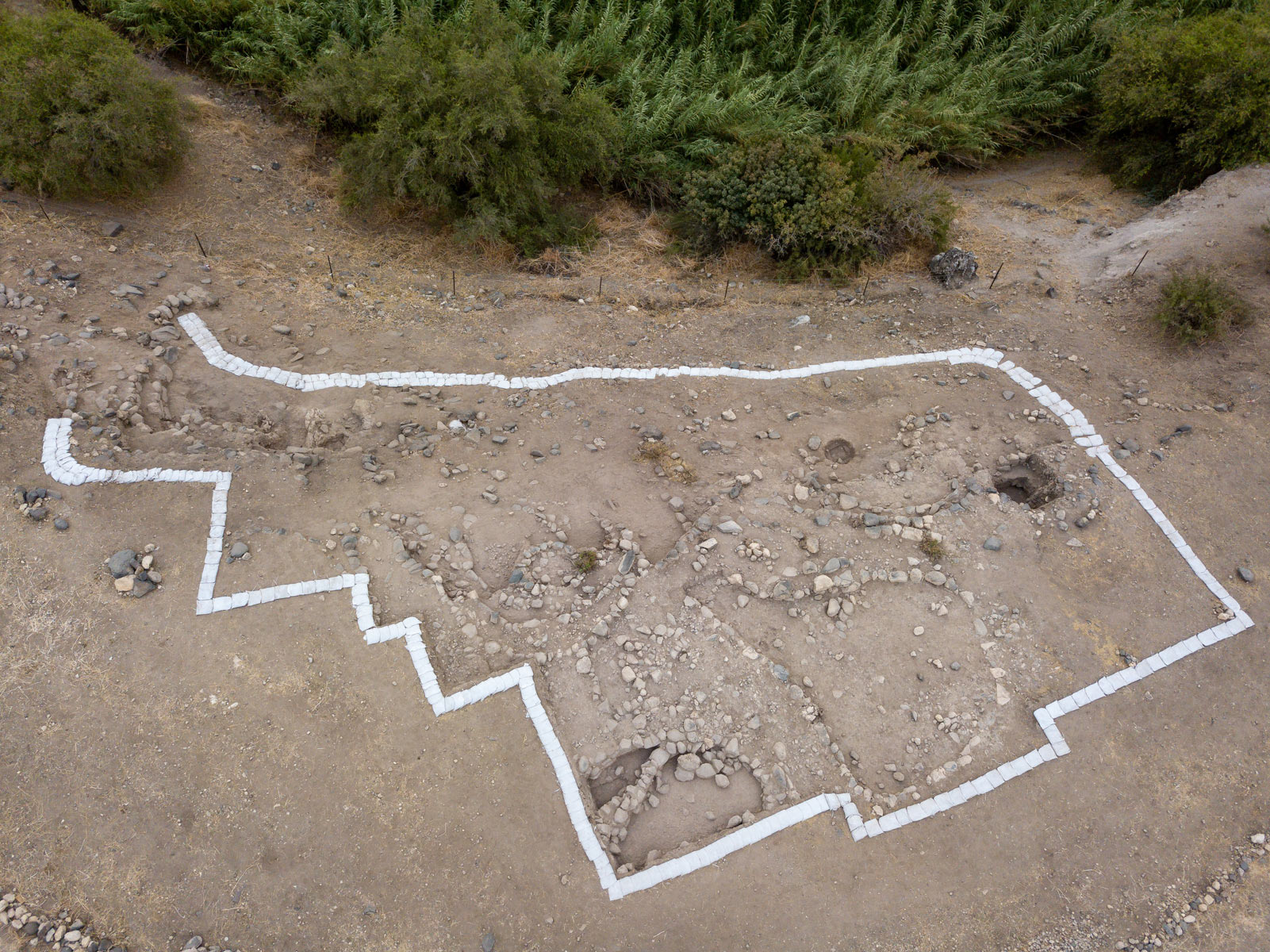
A computational analysis of early Near Eastern architecture reveals advanced building techniques and high variability in forms as early as the Natufian period, challenging traditional narratives.
A new study reveals that early architectural development in the Near East was more sophisticated than traditionally assumed, challenging the conventional narrative of a simple progression from round to rectangular structures during the Neolithic period.
By introducing a groundbreaking computational method to analyze architectural remains, the research offers an objective and repeatable way to examine building outlines. This approach uncovers details that qualitative methods might miss, such as the precise quantification of angles in structures dating back to the Natufian period, indicating that advanced building techniques emerged earlier than previously thought.

The study also highlights the architectural diversity during the Natufian and early Neolithic period, suggesting that building codes and more standard practices had not yet emerged. These findings provide new insights into the social and technological changes accompanying the rise of permanent settlements and agricultural economies.
Innovative Computational Methodology
A recent study led by researchers from the Institute of Archaeology at the Hebrew University—Hadas Goldgeier, Dr. Antoine Muller, and Prof. Leore Grosman—introduces a new computational method to analyze the architectural development of early settlements. By offering an objective and repeatable approach to examining architectural remains, the study gives a new perspective on the transition from round to rectangular structures during the Neolithic period in the Near East.
Architectural forms have long been tied to societal shifts such as changes in social organization, demographics, and economic strategies. However, traditional interpretations of early architecture have relied on qualitative methods, which may oversimplify complex trends.

This study provides a fresh perspective by digitizing building outlines and employing computational tools to objectively quantify their two-dimensional morphology. Using measures like the directionality of normal vectors and minimum angles, the team analyzed 118 structures from 23 sites across the Mediterranean region and Jordan Valley, dating from the Natufian culture to the early Neolithic (15,000–8,500 years ago).
New Perspectives on Early Building Techniques
The results revealed a far more nuanced picture than the conventional “round-to-rectangular” narrative suggests. Structures with right angles, previously associated with later architectural phases, were found as early as the Natufian period, reflecting significant advances in building technology at an earlier stage than previously thought. Moreover, the variability in structure shapes was highest during the Natufian and early Neolithic periods, reflecting a lack of formalized conventions. Later in the Neolithic, however, architectural forms showed greater uniformity, potentially signaling the emergence of codified building traditions.
This study not only challenges traditional interpretations but also highlights the social and technological changes accompanying the transition to permanent settlements and agricultural economies. The computational methodology offers an innovative lens to understand architectural history, demonstrating how quantitative analyses can uncover trends that remain hidden in qualitative approaches.
By emphasizing the dynamic variability and technological ingenuity of early builders, this research sheds new light on the inception of architecture in the Levant and underscores the importance of integrating modern analytical tools into archaeological studies.
Reference: “A computational perspective on the dynamics of early architecture” by Hadas Goldgeier, Antoine Muller and Leore Grosman, 21 November 2024, Archaeological Research in Asia.
DOI: 10.1016/j.ara.2024.100571
Never miss a breakthrough: Join the SciTechDaily newsletter.
Follow us on Google and Google News.