
Close Menu
    Facebook X (Twitter) Instagram
    SciTechDaily
    • Biology
    • Chemistry
    • Earth
    • Health
    • Physics
    • Science
    • Space
    • Technology
    Facebook X (Twitter) Pinterest YouTube RSS
    SciTechDaily
    Home»Science»Archaeologists Uncover Secrets of the Mysterious Gobi Wall
    Science

    Archaeologists Uncover Secrets of the Mysterious Gobi Wall

    By The Hebrew University of JerusalemJune 10, 2025No Comments4 Mins Read
    Facebook Twitter Pinterest Telegram LinkedIn WhatsApp Email Reddit
    Share
    Facebook Twitter LinkedIn Pinterest Telegram Email Reddit
    Excavation at G05 at Area
    Excavation at G05 at area. Credit: M. Ullman

    Researchers found that the Gobi Wall was built by the Xi Xia dynasty to regulate frontier life, not just defend it. The structure’s design took advantage of Mongolia’s geography and resources for long-term control.

    A new study reveals that the Gobi Wall, a vast and previously little-understood structure in the Mongolian desert, was not just a defensive barrier but a complex instrument of imperial strategy during the Xi Xia dynasty (1038–1227 CE).

    Built mainly from rammed earth, stone, and wood, the wall and its network of garrisons were strategically positioned to control movement along the frontier, regulate trade, and enforce territorial authority. At the same time, its design reflected careful adaptation to the region’s harsh ecological and geographic conditions.
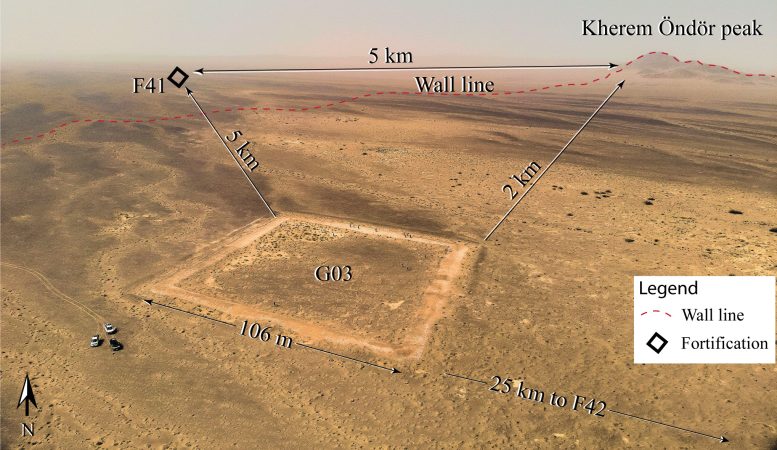
    Drone Documentation of Garrison G03
    Drone documentation of garrison G03, illustrating spatial relationships with Kherem Öndör Mountain and fortification F41 within the integrated defensive network. Credit: Photo Tal Rogovski; arrangement Dan Golan

    This research redefines the Gobi Wall as a multifunctional system that played a key role in the political and environmental dynamics of medieval Inner Asia.

    Archaeologists uncover forgotten frontier infrastructure

    A new study led by Professor Gideon Shelach-Lavi and Mr. Dan Golan, archaeologists from the Department of Asia Studies at the Hebrew University of Jerusalem, offers new insight into the Gobi Wall, one of the least understood elements of medieval Inner Asian infrastructure.
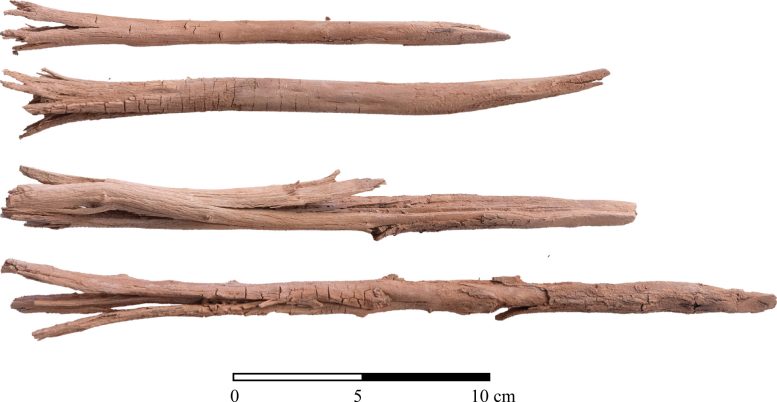
    Archeological Specimens of Wooden Stakes Recovered From Garrison
    Archaeological specimens of wooden stakes recovered from garrison G03, exhibiting consistent morphological characteristics. Credit: Tal Rogovski

    Conducted in Mongolia in collaboration with Professor Chunag Amartuvshin of the National University of Mongolia and Professor William Honeychurch of Yale University, the research brings fresh clarity to this enigmatic structure.

    The Gobi Wall stretches 321 kilometers across Mongolia’s highland deserts and forms part of a larger wall system that once extended from China into Mongolia. Until now, little was known about its origins, function, or historical context.
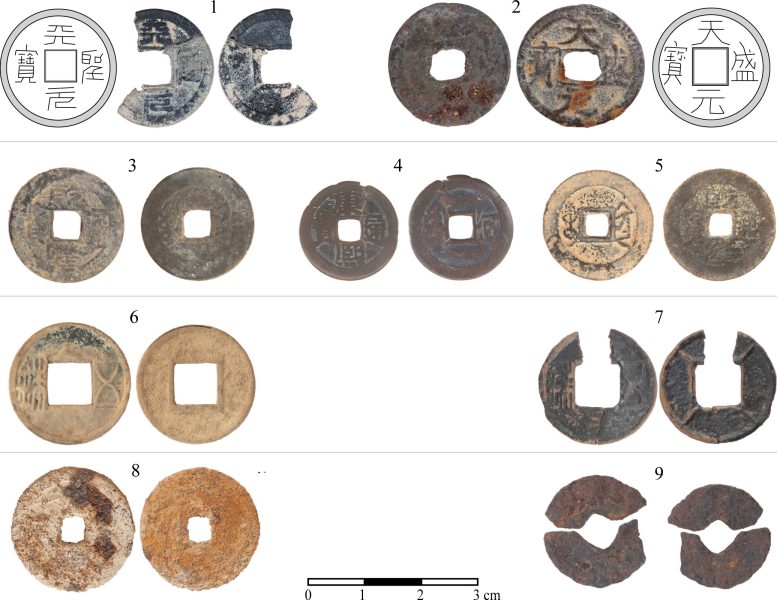
    Archeological Assemblage of Nine Recovered Coins, Obverse and Reverse
    Archeological Assemblage of Nine Recovered Coins, Obverse and Reverse. Credit: Photo Tal Rogovski; arrangement Dan Golan

    Through a wide-ranging international expedition that used remote sensing, on-foot surveys, and focused excavations, the research team has uncovered significant new evidence about how the wall was built and what role it played.

    Xi Xia dynasty led the wall’s major construction

    The study reveals that the wall and its garrison complexes were primarily constructed during the Xi Xia (1038–1227 CE), a dynasty ruled by the Tungut tribe of Western China and Southern Mongolia. This period marked by the expansion of frontier defense systems amid significant geopolitical transformations.

    Contrary to the traditional view of such walls as solely defensive structures, the research highlights the Gobi Wall’s multifunctional role in boundary demarcation, resource management, and the consolidation of imperial control.
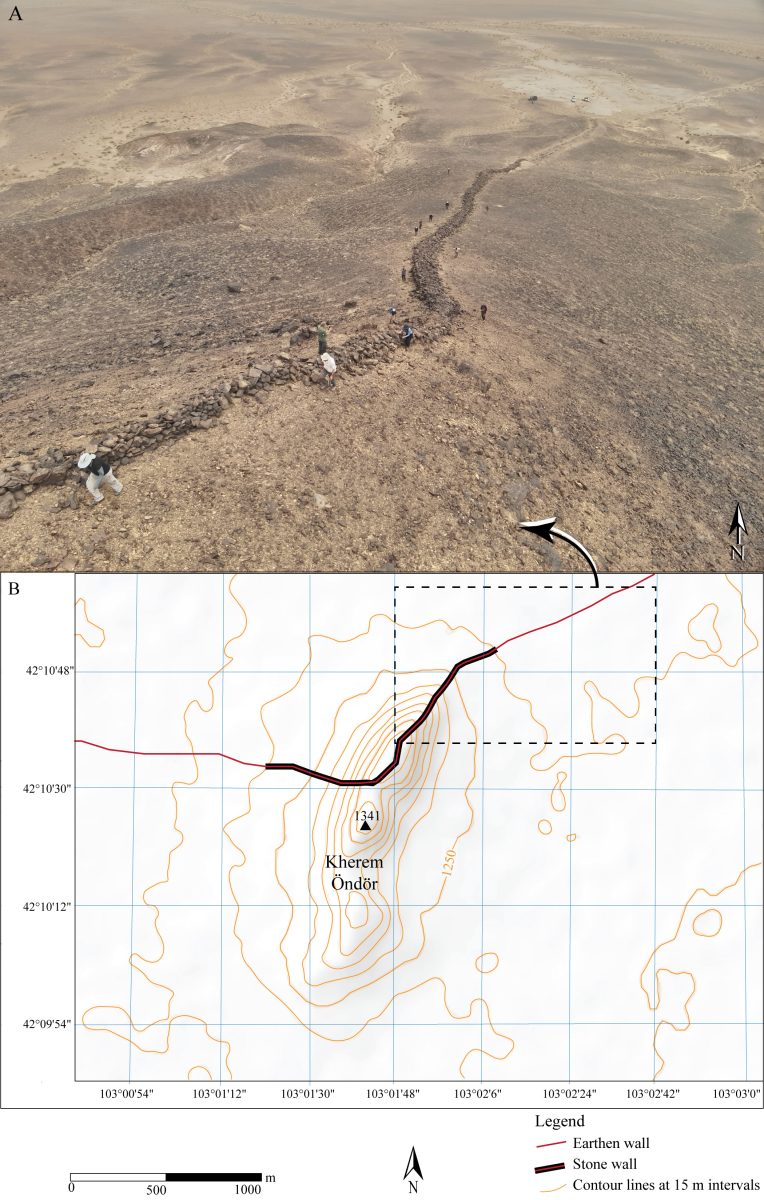
    Legend of the Black Stone Wall Section
    Black stone wall section. Credit: Tal Rogovski

    While the main phase of construction and occupation belongs to the Xi Xia, the expedition revealed evidence of periodic occupation of this remote area from the 2nd century BCE through the 19th century CE, with layers of artifacts pointing to the wall’s long-term strategic significance.

    The fortifications were made of rammed earth, supported by stone and wood reinforcements, illustrating the adaptive use of local materials in this arid, remote environment.
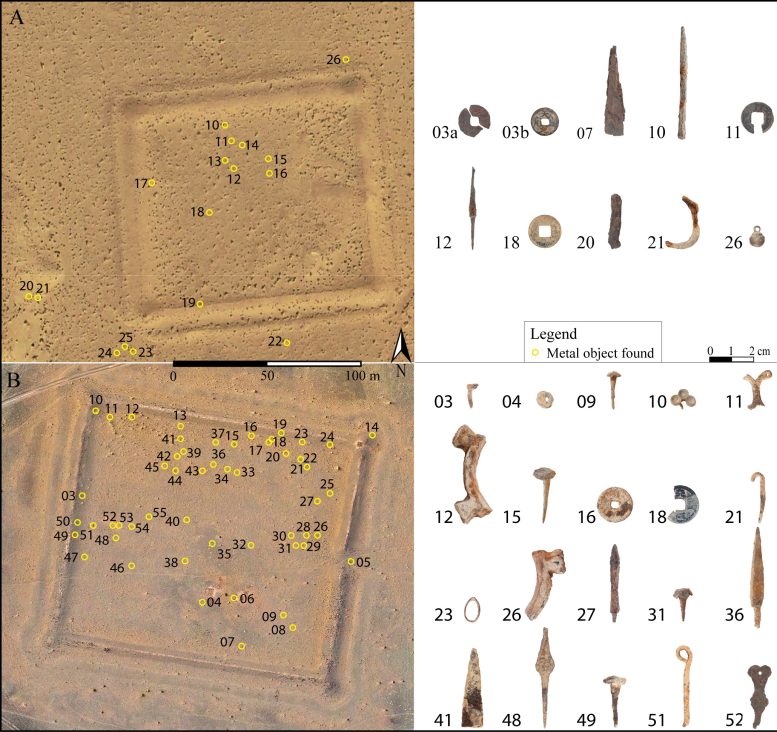
    Spatial Distribution of Metal Objects Recovered From Fort Sites G05 and G10 With Images of Selected Artifacts
    Spatial distribution of metal objects found, with photos of selected items. Credit: Tal Rogovski; arrangement Dan Golan

    Design adapted to geography and resources

    Moreover, the study’s ecological and spatial analysis shows that the wall’s route was carefully selected based on resource availability, particularly water and wood. The placement of forts and garrisons took advantage of natural geographic features such as mountain passes and sand dunes to enhance the wall’s effectiveness.

    “This research challenges long-standing assumptions about imperial frontier systems in Inner Asia,” said Prof. Shelach-Lavi. “The Gobi Wall was not just a barrier—it was a dynamic mechanism for governing movement, trade, and territorial control in a challenging environment.”
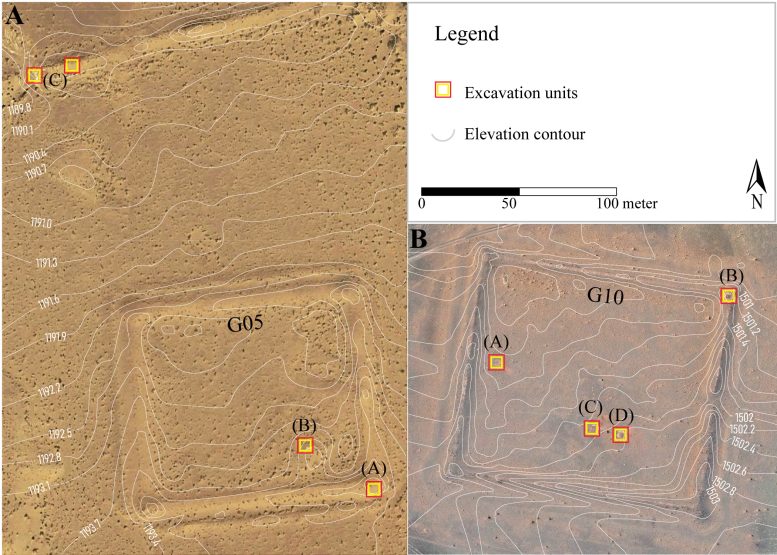
    Excavation Unit Maps of G05 and G10 Fort Sites Showing Elevation Contours and Surveyed Trenches in the Mongolian Desert
    Excavation Units. Credit: Tal Rogovski; arrangement Dan Golan

    The findings offer critical insights into the interplay between environmental adaptation and state power in medieval empires, with broader implications for understanding ancient infrastructure and its legacy on today’s political and ecological landscapes.

    Reference: “Exploring the Gobi Wall: Archaeology of a Large-Scale Medieval Frontier System in the Mongolian Desert” by Dan Golan, Gideon Shelach-Lavi, Chunag Amartuvshin, Zhidong Zhang, Ido Wachtel, Jingchao Chen, Gantumur Angaragdulguun, Itay Lubel, Dor Heimberg, Mark Cavanagh, Micka Ullman and William Honeychurch, 15 May 2025, Land.
    DOI: 10.3390/land14051087

    This research was funded by the European Research Council (ERC) under the European Union’s Horizon 2020 research and innovation program (“The Wall” project, grant agreement No. 882894).

    Never miss a breakthrough: Join the SciTechDaily newsletter.
    Follow us on Google and Google News.

    Anthropology Archaeology History The Hebrew University of Jerusalem
    Share. Facebook Twitter Pinterest LinkedIn Email Reddit

    Related Articles

    Indiscriminate Killing Revealed in Genetic Analysis of Ancient Massacre

    Medieval Injuries: Inequality in Cambridge Was “Recorded on the Bones” of Its Residents

    When Good Governments Go Bad: History Shows That Societies Collapse When Leaders Undermine Social Contracts

    Defining Moment in Human Evolution: Turbulent Era Sparked Leap in Human Behavior, Technology 320,000 Years Ago

    Vast Stone Monuments Discovered in Saudi Arabia Were Constructed in 7,000 Years Ago

    Grape Seeds Reveal Collapse of Ancient Economy in the Grip of Plague and Climate Change

    29,000 Years of Aboriginal History: Uncovering New Layers of River Murray Occupation

    Hidden Murray River Rockshelter Reveals Aboriginal Art, Frontier Conflict and a Swastika

    How Ancient Poop Debunked Myth of Native American Lost Civilization

    Leave A Reply Cancel Reply

    • Facebook
    • Twitter
    • Pinterest
    • YouTube

    Don't Miss a Discovery

    Subscribe for the Latest in Science & Tech!

    Trending News

    Scientists May Have Found the Key to Jupiter and Saturn’s Moon Mystery

    Scientists Uncover Brain Changes That Link Pain to Depression

    Saunas May Do More Than Raise Body Temperature – They Activate Your Immune System

    Exercise in a Pill? Metformin Shows Surprising Effects in Cancer Patients

    Hidden Oceans of Magma Could Be Protecting Alien Life

    New Study Challenges Alzheimer’s Theories: It’s Not Just About Plaques

    Artificial Sweeteners May Harm Future Generations, Study Suggests

    Splashdown! NASA Artemis II Returns From Record-Breaking Moon Mission

    Follow SciTechDaily
    • Facebook
    • Twitter
    • YouTube
    • Pinterest
    • Newsletter
    • RSS
    SciTech News
    • Biology News
    • Chemistry News
    • Earth News
    • Health News
    • Physics News
    • Science News
    • Space News
    • Technology News
    Recent Posts
    • Historians Reveal Secrets of the Strange Hat Wars That Shook Early Modern England
    • “A Plague Is Upon Us”: The Mass Death That Changed an Ancient City Forever
    • This Strange Material Can Turn Superconductivity on and off Like a Switch
    • Scientists Discover Game-Changing New Way To Treat High Cholesterol
    • Breakthrough Drug Delays Rheumatoid Arthritis for Years After Treatment Ends
    Copyright © 1998 - 2026 SciTechDaily. All Rights Reserved.
    • Science News
    • About
    • Contact
    • Editorial Board
    • Privacy Policy
    • Terms of Use

    Type above and press Enter to search. Press Esc to cancel.