
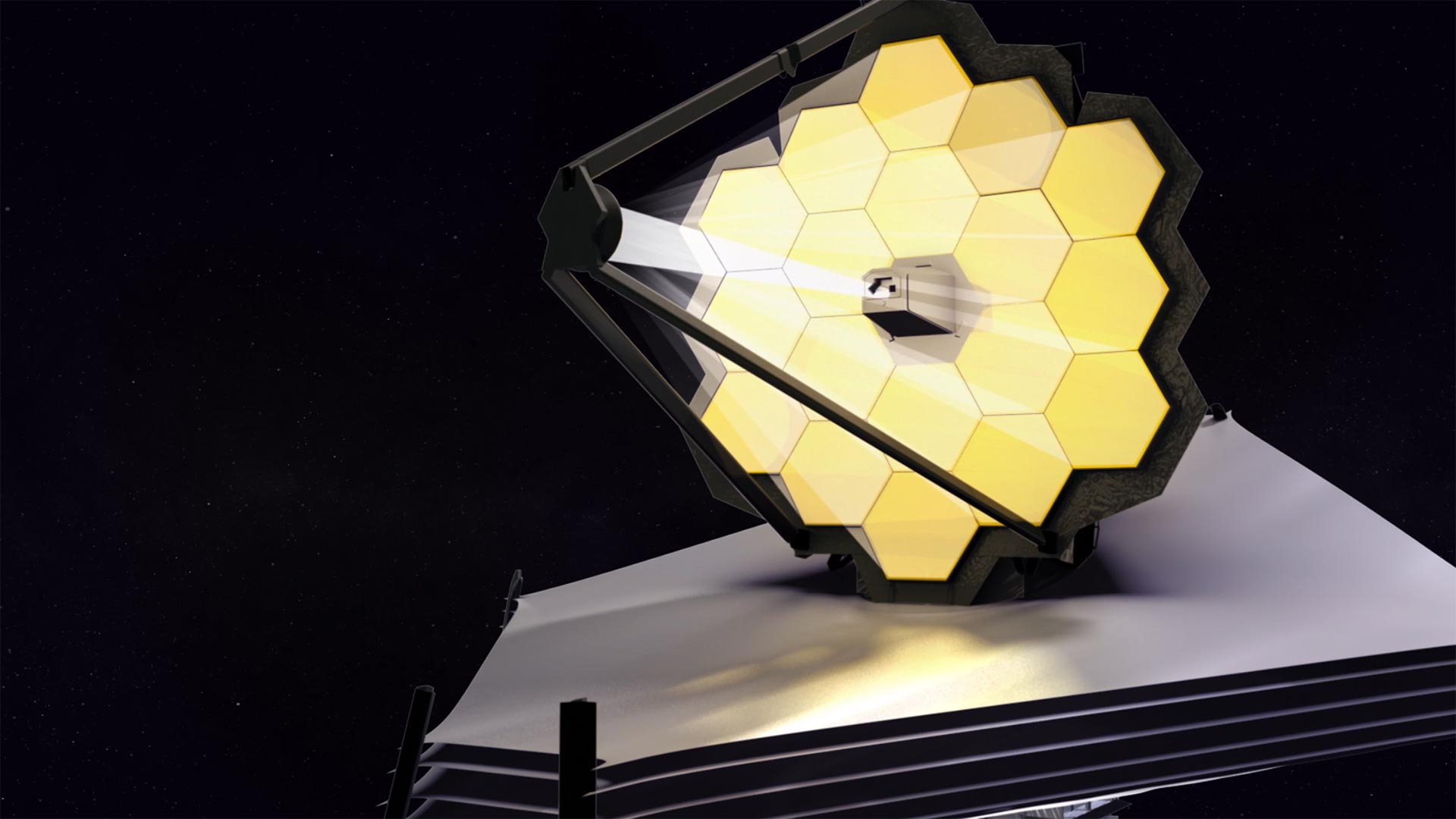
Sydney scientists fixed NASA’s James Webb Space Telescope without ever leaving Earth. Using AI-powered software called AMIGO, they eliminated image blurring caused by subtle electronic distortions.
The fix restored the telescope’s full power to reveal distant exoplanets and cosmic phenomena. It’s a remarkable story of how code, not astronauts, saved NASA’s $10 billion telescope.
Sydney Students Fix the Universe’s Sharpest Eye
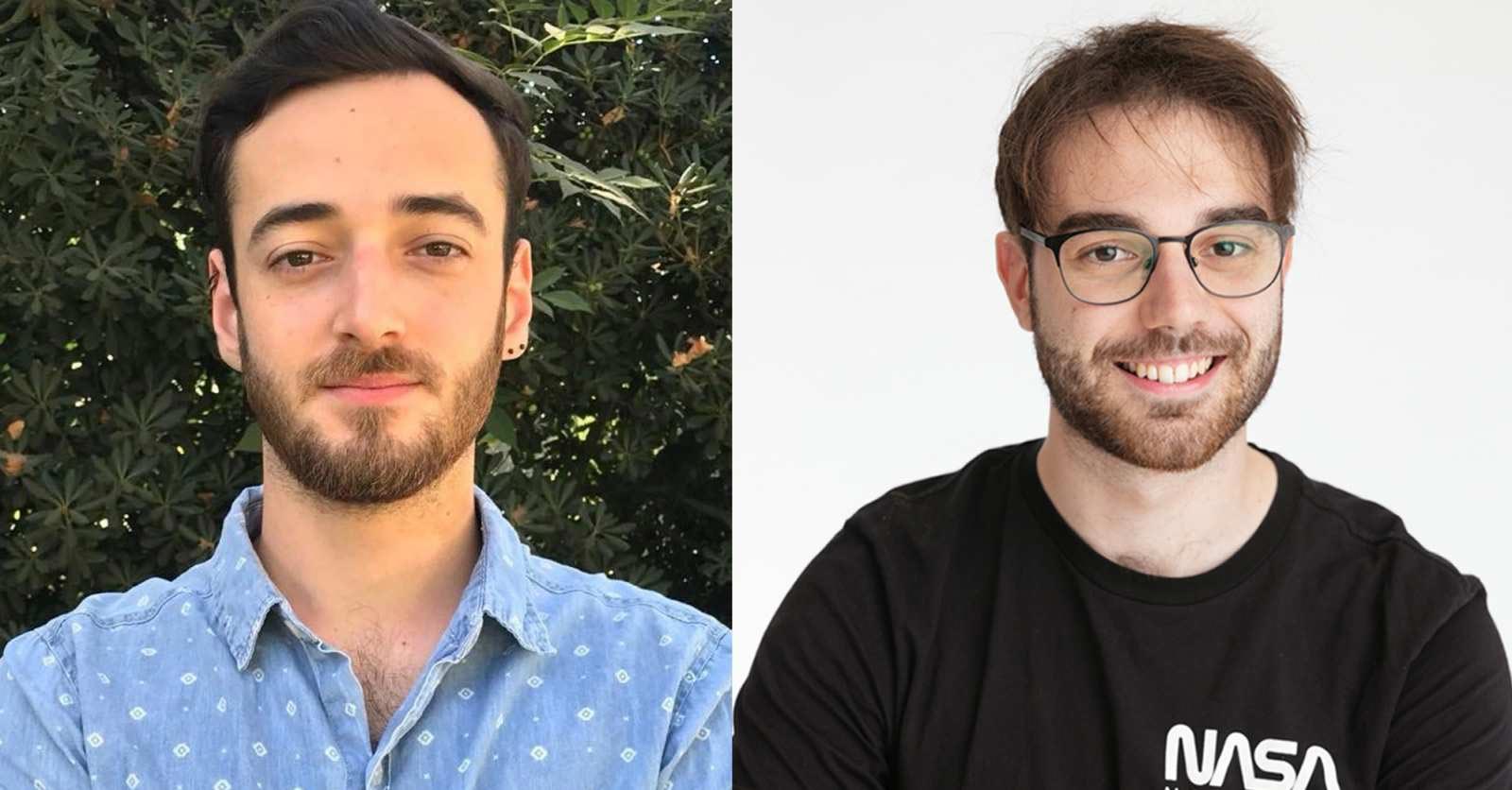
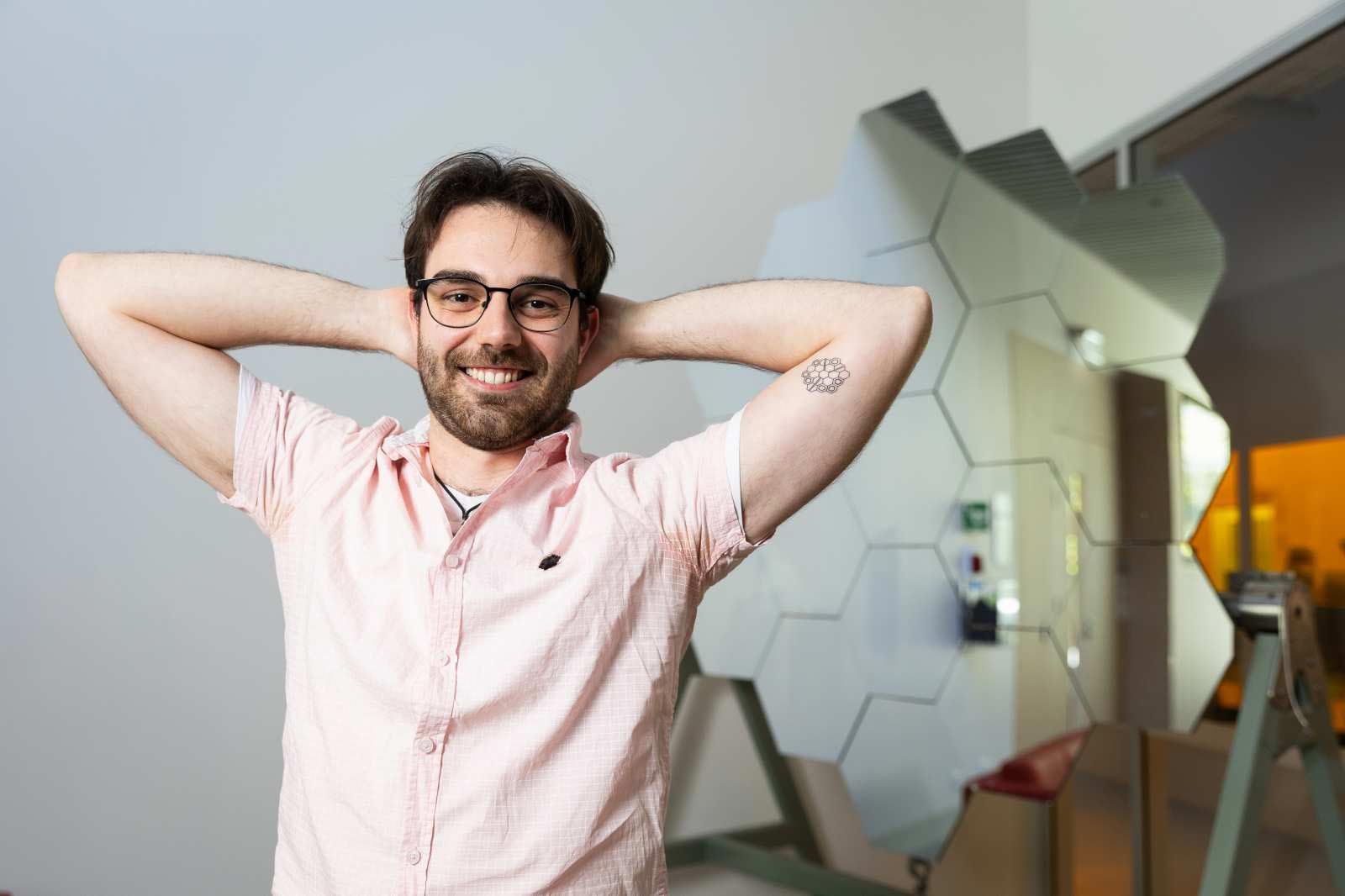
Two PhD students from Sydney have achieved what once required astronauts and space missions: they sharpened the vision of humanity’s most powerful observatory without ever leaving the ground. Louis Desdoigts, now a postdoctoral researcher at Leiden University in the Netherlands, and his colleague Max Charles were so inspired by their success that they each got tattoos (see image below) of the telescope instrument they helped repair.
Researchers at the University of Sydney created an ingenious software fix that removed blurring from images captured by NASA’s multibillion-dollar James Webb Space Telescope (JWST). Their work restored the crisp performance of one of its most important instruments, eliminating the need for any physical repairs or missions in space.
This breakthrough builds on the JWST’s only Australian-designed component, the Aperture Masking Interferometer (AMI). Developed by Professor Peter Tuthill at the University of Sydney’s School of Physics and the Sydney Institute for Astronomy, the AMI allows astronomers to capture extremely detailed images of stars and exoplanets. It does this by combining light from several sections of the telescope’s main mirror, using a method known as interferometry.
From Blurry Vision to Precision Clarity
When the James Webb Telescope began operations, scientists noticed that AMI’s performance was affected by tiny electronic distortions within its infrared camera detector. These distortions caused faint blurring in the telescope’s images, similar to the Hubble Space Telescope’s famous “blurry vision” problem after its launch—a flaw that had to be corrected through an astronaut-led space repair.
Rather than design new hardware or attempt an expensive rescue mission, PhD students Louis Desdoigts and Max Charles, working with Professor Tuthill and Associate Professor Ben Pope (at Macquarie University), developed a fully software-based calibration method that solved the issue from Earth.
Their tool, named AMIGO (Aperture Masking Interferometry Generative Observations), uses advanced simulations and neural networks to replicate how the telescope’s optics and electronics behave in space. By identifying a specific imperfection where electrical charge seeps into neighbouring pixels, a phenomenon known as the brighter-fatter effect, the team created algorithms that removed the distortion and restored the AMI instrument to peak precision.
“Instead of sending astronauts to bolt on new parts, they managed to fix things with code,” Professor Tuthill said. “It’s a brilliant example of how Australian innovation can make a global impact in space science.”
Sharper Than Ever: JWST’s Revived Power
The fix has produced spectacular results. With AMIGO, the James Webb Space Telescope has achieved sharper-than-ever detections of faint celestial objects – including the direct imaging of a dim exoplanet and a red-brown dwarf orbiting the nearby star HD 206893, about 133 light-years from Earth.
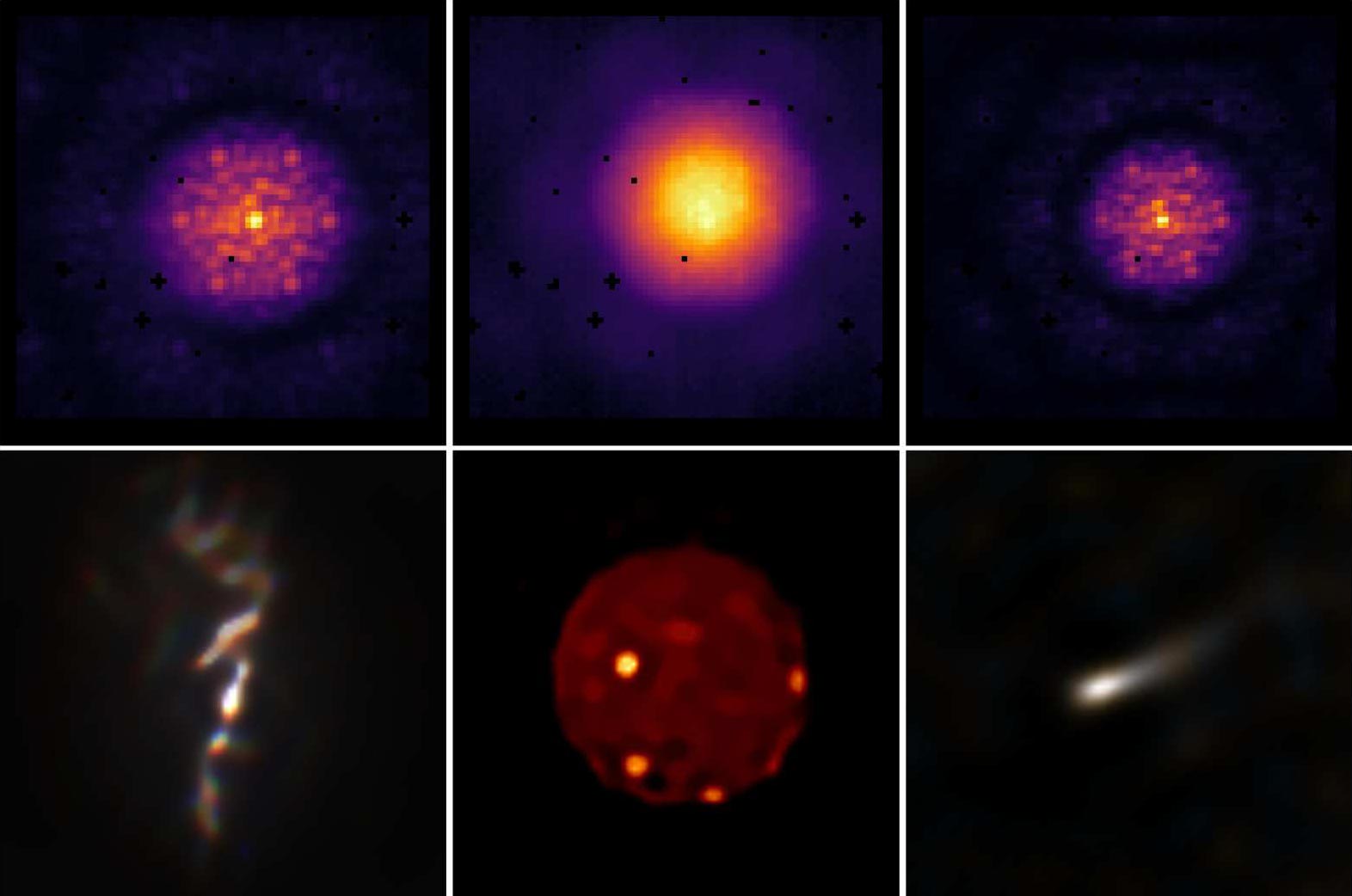
A companion study led by Max Charles, a PhD student at Sydney, has demonstrated AMI’s renewed focus by capturing high-resolution images of a black hole jet, the volcanic surface of one of Jupiter’s moons (Io) and the dusty stellar winds of WR 137 – pushing the boundaries of JWST’s capabilities.
A Rewarding Vision and Bright Futures
“This work brings JWST’s vision into even sharper focus,” Dr. Desdoigts said. “It’s incredibly rewarding to see a software solution extend the telescope’s scientific reach – and to know it was possible without ever leaving the lab.”
Dr. Desdoigts has now landed a prestigious postdoctoral research position at Leiden University in the Netherlands.
Both studies have been published on the pre-press server arXiv. Dr. Desdoigts paper has been peer-reviewed and will shortly be published in the Publications of the Astronomical Society of Australia. We have published this release to coincide with the latest round of James Webb Space Telescope General Observer, Survey and Archival Research programs.
Associate Professor Benjamin Pope, who presented these findings at SXSW Sydney, said the research team was keen to get the new code into the hands of JWST researchers as soon as possible.
References:
“AMIGO: a Data-Driven Calibration of the JWST Interferometer” by Louis Desdoigts, Benjamin Pope, Max Charles, Peter Tuthill, Dori Blakely, Doug Johnstone, Shrishmoy Ray, Anand Sivaramakrishnan, Jens Kammerer, Deepashri Thatte and Rachel Cooper, 10 October 2025, Astrophysics > Instrumentation and Methods for Astrophysics.
arXiv:2510.09806
“Image reconstruction with the JWST Interferometer” by Max Charles, Louis Desdoigts, Benjamin Pope, Peter Tuthill, Dori Blakely, Doug Johnstone, Shrishmoy Ray, K. E. Saavik Ford, Barry McKernan and Anand Sivaramakrishnan, 13 October 2025, Astrophysics > Instrumentation and Methods for Astrophysics.
arXiv:2510.10924
The researchers declare no competing interests. Funding was received from the Australian Research Council, Big Questions Institute, Natural Sciences and Engineering Research Council of Canada, National Research Council Canada, National Science Foundation (USA), and NASA.
Never miss a breakthrough: Join the SciTechDaily newsletter.
Follow us on Google and Google News.
1 Comment
thanks