

New research suggests juvenile American pikas are becoming scarce in parts of the Colorado Rockies.
A new study from the University of Colorado Boulder raises concerns about the future of one of the Rocky Mountains’ most recognizable animals, the American pika (Ochotona princeps), a small, fuzzy mammal known for its sharp calls along alpine trails.
The research is based on decades of monitoring a pika population living in a single habitat located roughly 10 miles south of Rocky Mountain National Park in Colorado.
Scientists found that the “recruitment“ of juvenile pikas at this site appears to have dropped sharply since the 1980s. This means the local population now consists mainly of older adults, with far fewer young pikas being born or arriving from elsewhere to sustain their numbers.
The team reported its results in the journal Arctic, Antarctic, and Alpine Research.
“It’s a fun encounter when you’re hiking on a trail in the Rockies and a pika yells at you,” said Chris Ray, lead author of the study and a research associate at the Institute of Arctic and Alpine Research (INSTAAR) at CU Boulder. “If you don’t have that anymore, your experience in the wild is degraded.”
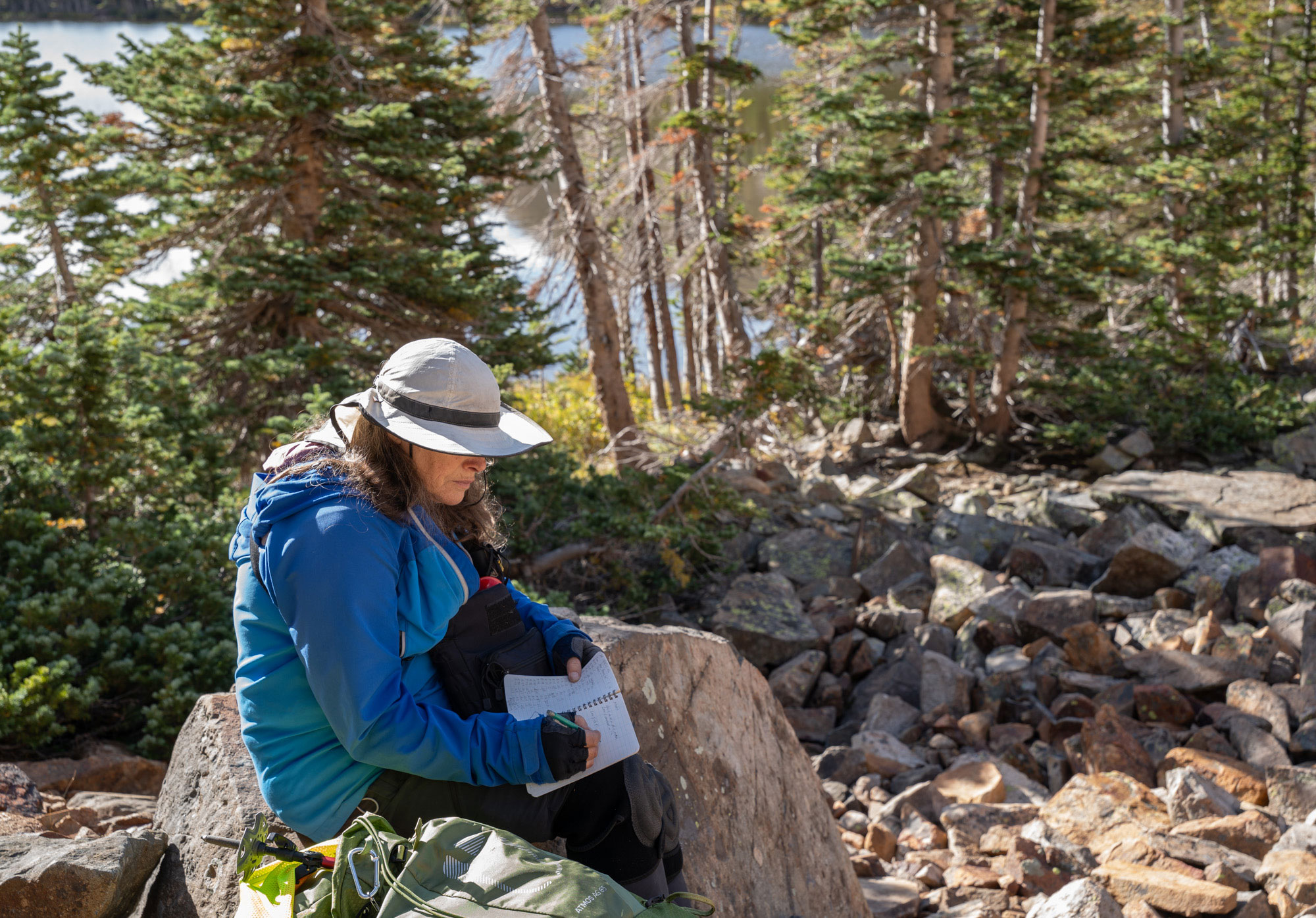
She noted that researchers have anticipated for years that climate change could put pikas in the American West at risk.
A study published in 2016 even suggested that pikas might vanish from Rocky Mountain National Park by the end of the century.
Ray and her team have not determined what is causing the drop in juvenile pikas at this particular location. However, summer temperatures across the Rocky Mountains have been rising, which serves as a troubling indicator for the health of alpine ecosystems that people rely on.
“The habitats where pikas live are our water tower,” Ray said. “The permafrost, or seasonal ice, that’s underground here melts later in the summer and helps replenish our water supplies at a time when reservoirs are draining.”
Rock piles
The research takes a close look at the Niwot Ridge Long Term Ecological Research site north of Nederland, Colorado.
Niwot Ridge is home to sweeping tundra meadows and steep hillsides dotted with boulders. It’s also home to pikas. These animals have round ears and are about the size of your fist, although they’re more closely related to rabbits and hares.
From 1981 to 1990, Charles Southwick, a former professor at CU Boulder, set out to follow the pika populations at Niwot Ridge. His team trapped and tagged pikas, which tend to stick close to taluses, or piles of rocks.
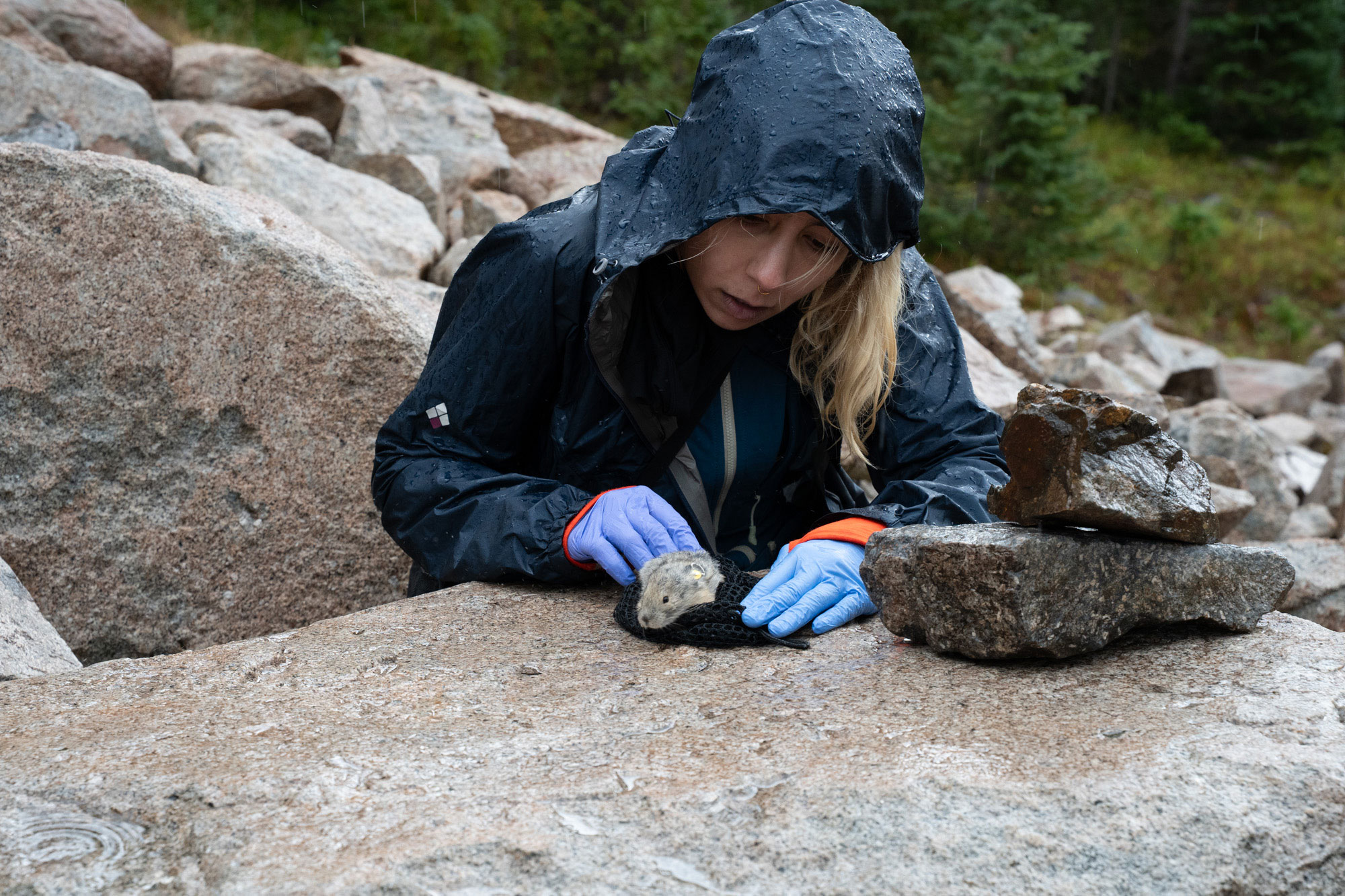
Ray has studied these animals in the American West, from Montana south to Colorado, for more than 35 years.
At Niwot Ridge, she took up Southwick’s mantle by using similar methods to survey pikas at this location in 2004 and from 2008 to 2020. The team takes rigorous precautions to ensure the health and safety of the animals.
“Pikas are useful as a study system because they’re so visible and conspicuous, and they’re one way to get a handle on what changes are happening in alpine ecosystems,” Ray said.
In the current study, she and Jasmine Vidrio, a former undergraduate at CU Boulder, compared their findings to what Southwick saw decades earlier.
The results were disturbing.
Quiet hillsides
Based on their calculations, the proportion of pikas the team trapped that were juveniles fell by roughly 50% from the 1980s to today—suggesting that younger pikas could be growing rarer on Niwot Ridge.
Ray explained that pikas may be especially vulnerable to climate change, in large part because they can only survive in a narrow range of temperatures.
“Pikas don’t pant like a dog. They don’t sweat,” she said. “The only way they can release their metabolic heat is to get into a nice, cool space and just let it dissipate.”
The researchers can’t conclusively link the possible decline of pikas on Niwot Ridge to warming temperatures. They also aren’t sure how widespread this trend is in the West.
But Ray noted that her results support previous predictions that juvenile pikas may have trouble migrating through the Rockies as temperatures continue to warm. To cross from one mountain habitat to another, pikas first have to descend in elevation, facing hot conditions in the process.
She recalls one pika she encountered at the start of her career in the 1990s. She nicknamed the male Mr. Mustard because he had yellow tags on his ears.
“He was an adult when I trapped him, and he lived for nine more years,” Ray said. “I don’t see that anymore, so I do think things are changing.”
Reference: “Long-term data suggest a severe decline in recruitment of the American pika on Niwot Ridge, Boulder County, Colorado” by Chris Ray and Jasmine Vidrio, 31 October 2025, Arctic, Antarctic, and Alpine Research.
DOI: 10.1080/15230430.2025.2570526
Never miss a breakthrough: Join the SciTechDaily newsletter.
Follow us on Google and Google News.