

New technology enables light to be stored, delayed, and controlled within a single photonic chip, with potential applications in low-power optical computing for AI servers and next-generation optical communication systems.
Light moves quickly enough to transmit enormous amounts of information, but that speed creates a problem when a computer needs to hold, delay, or synchronize an optical signal. Researchers from Seoul National University and the University of Seoul have now designed a programmable photonic integrated circuit that can slow light whenever needed.
The project was led by Professors Namkyoo Park and Sunkyu Yu of the Department of Electrical and Computer Engineering at Seoul National University, working with Professor Xianji Piao of the School of Electrical and Computer Engineering at the University of Seoul.
The rapid growth of generative AI and large-scale artificial intelligence models has sharply increased computing demands. Conventional electronic semiconductors face persistent constraints, including heavy power use and limited data transfer speeds, driving interest in optical computing systems that process information rapidly with less energy. Yet because light naturally travels at a fixed speed, creating the buffers and memory functions needed for optical computing has remained difficult.
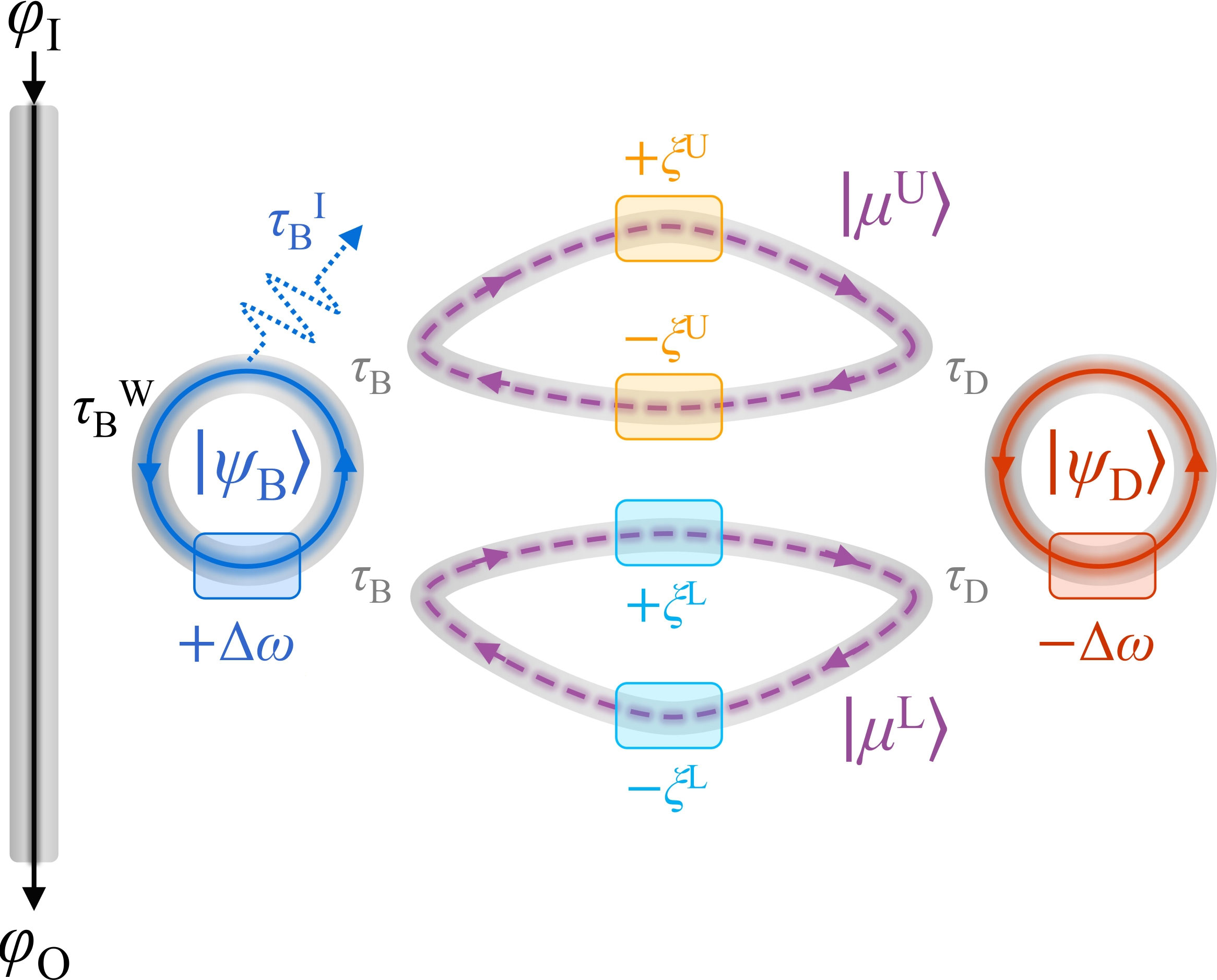
The researchers addressed this limitation with a programmable photonic circuit that controls both the speed and shape of optical signals. Their approach provided greater control over “slow light” than previously proposed methods.
The findings were published in Advanced Science.
Fixed optical delays limit computing
Photonic integrated circuits process information with light and are being developed for faster, more efficient computing. Data centers, optical communication networks, and computing systems need more than rapid transmission. They must also coordinate when signals arrive and hold them briefly when necessary.
Researchers have explored structures based on coupled-resonator-induced transparency (CRIT), which use interference among several optical resonators to perform these functions. CRIT selectively allows light within a particular frequency range to pass while reducing the speed at which the optical signal travels.
- Coupled-resonator-induced transparency (CRIT): An optical phenomenon that selectively transmits and delays light within a specific frequency range through interference among multiple resonators.
- Optical resonator: A photonic device that confines or circulates light of a specific frequency for a certain period; used in signal delay, filtering, and modulation.
The problem is that conventional CRIT devices are generally locked into their operating characteristics after fabrication. Changing the frequency range or producing a longer delay often requires an entirely new device.

That inflexibility makes optical communication hardware and data center systems more complex, while increasing the expense and development time required to add new capabilities. For AI servers and next-generation data centers processing vast quantities of information in real time, fixed optical hardware has become a significant barrier.
Two couplers make light programmable
The researchers approached the problem by treating two optical states in CRIT systems, the bright mode and dark mode, as one unified degree of freedom. They then added two adjustable loop couplers, producing a design in which resonator structures can be reconfigured after fabrication rather than remaining permanently fixed.
With the new CRIT structure, the researchers showed that light could be delayed and controlled when needed. Treating interference between the bright and dark modes as a single design parameter greatly expanded the flexibility of photonic resonator circuits.
Theoretical analysis showed that the two loop couplers could control the width and shape of the passband, along with the delay and transmission properties of signals moving through the circuit. This means the speed and transmission behavior of light could be reconfigured across an entire system of linked resonators, not merely within one device.
Numerical simulations also indicated that the speed of optical pulses* could be altered dynamically while the circuit was operating. The researchers found that signal delay could be adjusted without sacrificing processing performance, while light could be converted between frequencies without additional specialized components.
Simulations test real-world reliability
Three-dimensional electromagnetic simulations indicated that the proposed CRIT device could be built on a silicon nitride (Si₃N₄) photonic integrated circuit platform*. The researchers also examined practical problems that could emerge during manufacturing and operation, including material loss, differences in resonator quality, backscattering, unstable coupling, phase errors in the loop couplers, and thermal crosstalk.
The results suggested that the design could continue operating reliably under realistic photonic circuit conditions.
The proposed platform enables real-time adjustment of both the timing and spectral properties of optical signals, addressing the limitations of fixed optical delay devices. A single circuit architecture could potentially combine signal synchronization, variable delay lines, optical buffers, and frequency conversion, all of which are important for next-generation optical connections.
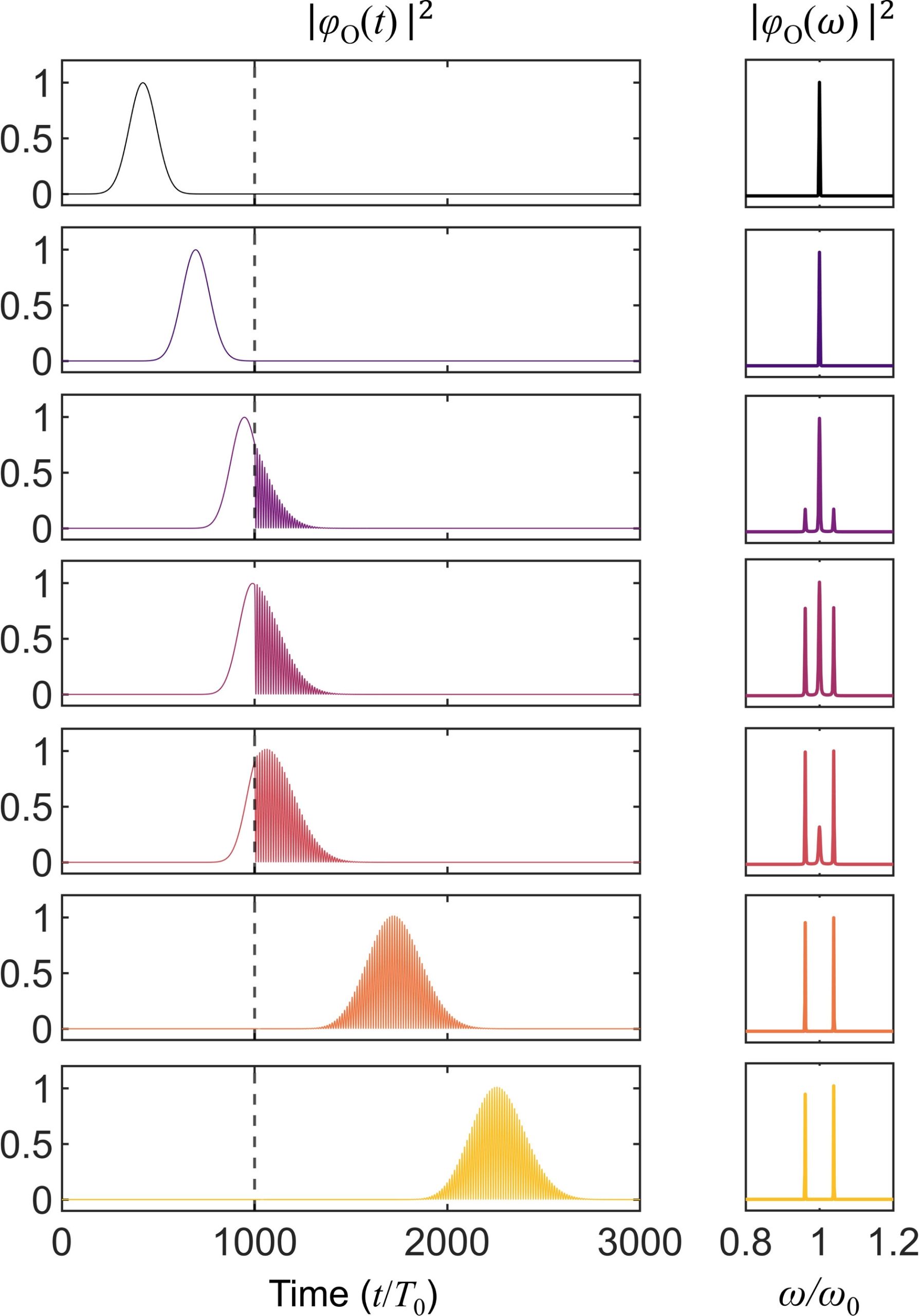
The same design strategy could also be applied beyond CRIT to many other resonator-based photonic circuits. This broader adaptability suggests that the method could support future optical signal processing systems in which the movement of light is designed and controlled more flexibly.
One chip could replace many components
If the technology reaches commercial use, one programmable optical chip could perform several tasks, including changing signal speed and switching between functions, in a manner similar to software-defined systems. That flexibility could reduce energy consumption in data centers and AI servers while increasing the efficiency of data processing.
Combining several signal processing functions on one chip could also make optical communication equipment and sensors smaller and less expensive. Over time, the technology could support fields requiring extremely fast information processing, including autonomous driving, next-generation communications, and quantum technologies.
Professor Namkyoo Park, co-corresponding author of the study from Seoul National University, stated, “This research is significant in that it proposes a new design principle that allows the flow of light within photonic integrated circuits to be reconfigured as needed, greatly enhancing design flexibility. We plan to expand this technology toward large-scale programmable photonic integrated circuits based on silicon photonics and photonic AI technologies.”
Co-first authors Dr. Seungkyun Park and Ph.D. student Beomjoon Chae, who led the theoretical framework and numerical analysis, added, “Through this study, we realized that reinterpreting conventional photonic resonator physics from a different perspective can serve as a starting point for discovering new functionalities in photonic integrated circuits. We plan to further develop this research toward practical device implementation and experimental validation.”
Reference: “Fully Programmable Slow Light Based on a Spinor Representation of Generalized Coupled-Resonator-Induced Transparency” by Seungkyun Park, Beomjoon Chae, Hyungchul Park, Sunkyu Yu, Xianji Piao and Namkyoo Park, 28 June 2026, Advanced Science.
DOI: 10.1002/advs.76378
This research was supported by the Ministry of Science and ICT through the Innovative Research Center (IRC) program, the Basic Research Laboratory (BRL) program, and the Young Researcher Program. Dr. Seungkyun Park also participated in the study with support from the InnoCORE program (PICORE Center).
Never miss a breakthrough: Join the SciTechDaily newsletter.
Follow us on Google and Google News.