
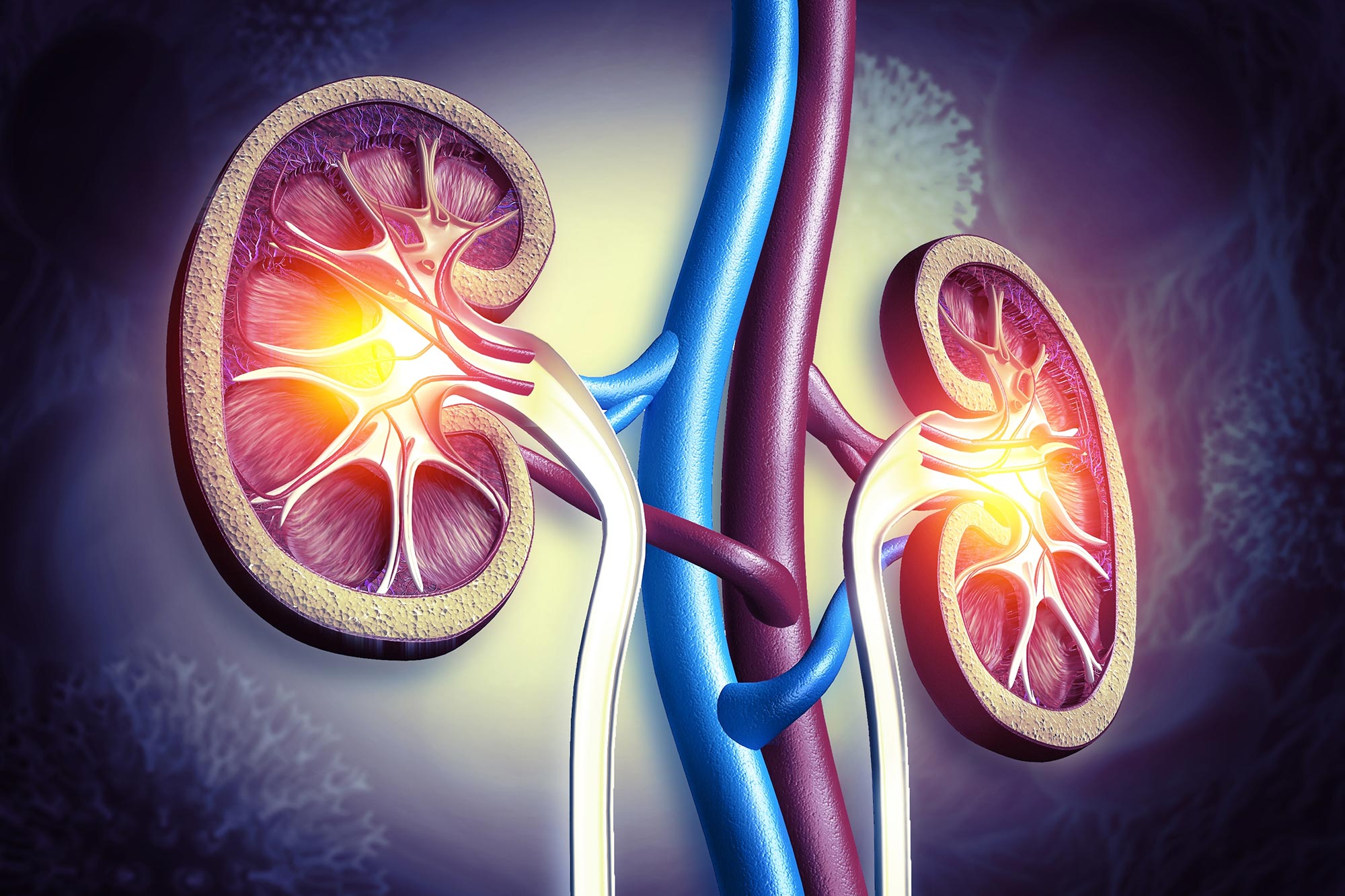
Scientists at UC Santa Barbara have taken a major step toward stopping the relentless cyst growth that defines polycystic kidney disease.
Polycystic kidney disease (PKD) is an inherited condition in which clusters of fluid-filled sacs gradually develop throughout the kidneys. As these cysts enlarge and multiply, they interfere with normal kidney activity and can cause severe pain. Many patients eventually require dialysis when the organs can no longer keep up. At present, there is no available cure.
Researchers at the University of California, Santa Barbara, are exploring a treatment designed to reach directly into these cysts and disrupt the signals that keep them expanding. Their approach relies on highly specific monoclonal antibodies, which are lab-made proteins used in many forms of immunotherapy.
“The cysts just keep growing endlessly,” said UCSB biologist Thomas Weimbs, senior author of the study reported in the journal Cell Reports Medicine. “And we want to stop them. So we need to get a drug into these cysts that will make them stop.”
This research received funding support from the National Institutes of Health and the U.S. Department of Defense.
Why Existing Drugs Are Not Enough
Several small-molecule drugs have shown the ability to slow cyst growth, but the only medication currently available that offers some benefit often causes significant side effects in kidney tissue, Weimbs noted. Laboratory-produced antibodies offer more precise targeting, yet the most common type, immunoglobulin G (IgG), is too large to enter the cysts where the disease process is taking place.
“They’re very successful for cancer therapy,” Weimbs said. “But IgG antibodies never cross the cell layers and they can never make it inside the cysts.” And that’s important, he added, because inside the cyst — a pocket of tissue lined with epithelial cells — is where the action is.
“Many of the cyst-lining cells actually make growth factors and they secrete them into the cyst fluid,” he explained. “And these growth factors then bind back to the same cells or to neighboring cells and continue to stimulate themselves and each other. So it’s like a never-ending scheme in which the cells just keep activating themselves and other cells in there. Our premise was that if you block either the growth factor or the receptor for the growth factor, you should be able to stop this constant activation of the cells.”
A New Antibody Designed to Reach the Cyst Interior
Enter dimeric immunoglobulin A (dIgA), a monoclonal antibody that can cross epithelial membranes. In the human body, dIgA is naturally released into mucus, saliva, and tears as an early defense against pathogens. A 2015 paper by Weimbs and his team proposed that dIgA could bind to polymeric immunoglobulin receptors on epithelial cells and move through the membrane into kidney cysts. Once there, it could target the receptors linked to uncontrolled cyst expansion.
The current study continues this line of work and demonstrates the effectiveness of targeting a major contributor to cyst growth, the cell mesenchymal-epithelial transition (cMET) receptor.
“It’s like a never-ending scheme in which the cells just keep activating themselves and other cells in there. Our premise was that if you block either the growth factor or the receptor for the growth factor, you should be able to stop this constant activation of the cells.”
Engineering and Testing the Modified Antibody
The researchers first engineered the antibody by altering the DNA sequence of IgG to “give it a different backbone,” which converted it into a dIgA antibody. They verified that the redesigned protein recognized the intended receptor and then tested it in mouse models. The antibody successfully reached the cysts and stayed there.
“The next question was, could it actually block that particular growth factor receptor,” Weimbs said. Their results showed a decrease in cMET activity, which lowered the growth signals within the cyst-lining cells. According to the study, the treatment also caused a “dramatic onset of apoptosis (cell death) in cyst epithelial cells, but not in healthy renal tissue” with no harmful side effects observed.
Next Steps Toward Future PKD Therapies
Since this work is still at the preclinical stage, Weimbs noted that it will take time before such a therapy could be considered for human use. The research team will need collaborators with an interest in PKD, as well as access to facilities that can support the development of new antibodies and help test additional targets.
“In the literature, there are dozens of growth factors that have been shown to be active in these cyst fluids,” Weimbs said. “So it would be a good idea to compare blocking of several different growth factors and several receptors, maybe side-by-side to see which is the most effective, and see if we can achieve slowing or reversal of the disease with any one of them. We can also combine different antibodies against different receptors at the same time. That would be the next step.”
Reference: “Development of a cyst-targeted therapy for polycystic kidney disease using an antagonistic dimeric IgA monoclonal antibody against cMET” by Margaret F. Schimmel, Bryan C. Bourgeois, Alison K. Spindt, Sage A. Patel, Tiffany Chin, Gavin E. Cornick, Yuqi Liu and Thomas Weimbs, 5 September 2025, Cell Reports Medicine.
DOI: 10.1016/j.xcrm.2025.102335
Research in this paper was also conducted by Margaret F. Schimmel (lead author), Bryan C. Bourgeois, Alison K. Spindt, Sage A. Patel, Tiffany Chin, Gavin E. Cornick and Yuqi Lu at UCSB. Additional funding was also provided through gifts from the Amy P. Goldman Foundation and the Lillian Goldman Charitable Trust.
Never miss a breakthrough: Join the SciTechDaily newsletter.
Follow us on Google and Google News.