
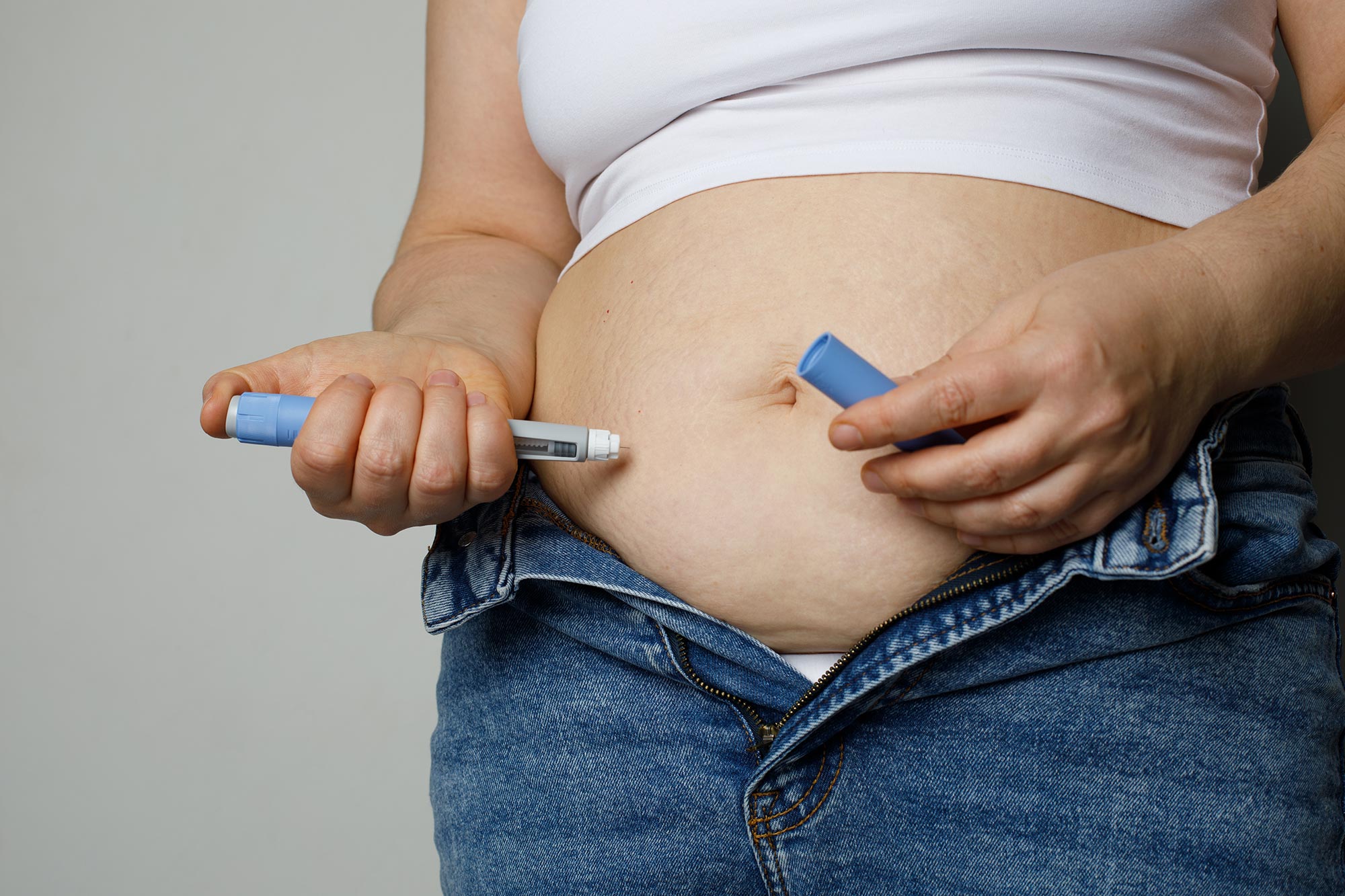
Researchers say treatment decisions should be individualized by weighing expected benefits, potential harms, treatment burden, cost, availability, and patient preferences.
A person taking an obesity drug may see a substantial drop on the scale after a year, yet experience little meaningful improvement in daily quality of life. The same treatment may also bring stomach and bowel problems, fatigue, loss of lean (muscle) mass, or a greater chance of stopping the medication because of side effects.
Those tradeoffs are central to a large evidence review published by The BMJ. The analysis found that drugs such as Wegovy and Mounjaro can produce considerable weight loss, but most did not deliver clinically important improvements in quality of life, and only a small number showed cardiovascular benefits after one year.
The pattern was consistent across the evidence: treatments linked to greater weight loss generally produced more harms. Any improvements were also not maintained once treatment ended.
Many medications are now available or being developed for adults with overweight or obesity. But because most have never been tested directly against one another in head-to-head trials, patients and clinicians have lacked a clear picture of how their weight loss effects compare with their risks and broader health benefits.
Nearly 100,000 participants reveal the tradeoffs
To build that comparison, the researchers searched scientific databases for randomized controlled trials, studies in which participants are assigned to different treatments to allow a fairer assessment of their effects. The trials compared at least one obesity drug with lifestyle changes, a placebo, or another medication.
They identified 262 eligible trials involving 99,791 participants (average age 49; 63% female; average BMI 35). Together, the studies assessed 19 available and emerging obesity drugs, with follow-up periods ranging from 12 to 172 weeks.
The researchers looked beyond body weight alone. Measures of benefit included changes in total weight, fat mass, and quality of life. Potential harms included loss of lean mass, gastrointestinal adverse events, gallbladder-related disorders, and fatigue.
Because the trials differed in quality, the researchers used the recognized GRADE system to judge how confident they could be in each result. This step was important because a large estimated effect is less informative when the supporting evidence is limited or uncertain.
The largest losses brought greater harms
After one year, tirzepatide and CagriSema produced the greatest weight reductions compared with lifestyle changes alone. Tirzepatide was associated with a 14.9% reduction and CagriSema with 14.8%, followed by oral semaglutide (10.9%), orforglipron (9.9%), subcutaneous semaglutide (9.8%), and phentermine-topiramate (8.1%).
Several emerging medications also appeared to produce large reductions. However, the evidence for retatrutide, ecnoglutide, and mazdutide was rated as low or very low certainty, meaning the estimates could change as stronger studies become available.
The review found that the drugs producing more weight loss also tended to cause more side effects and more treatment discontinuation. According to the authors, that pattern demonstrates a clear benefit-harm trade-off rather than a simple ranking in which the medication producing the greatest weight loss is automatically the best choice.
Tirzepatide reduced fat mass by the largest amount (by 25.7%), but it was also associated with the greatest loss of lean mass (8.3%). Losing lean tissue matters because body weight includes muscle as well as fat, so the number on the scale does not capture every physical change caused by treatment.
Subcutaneous semaglutide was the only drug associated with lower risks of death from any cause (19%), heart attack (28%), and heart failure (57%). Tirzepatide was also associated with a 51% reduction in heart failure risk.
The broader results were less conclusive. No medication convincingly lowered the risk of kidney failure, and none produced improvements in quality of life large enough to be considered clinically important.
Short trials leave major questions unanswered
The researchers cautioned that most of the trials followed participants for a relatively short period. That makes it difficult to determine the long-term safety of the drugs or their lasting effects on quality of life, cardiovascular health, kidney health, and survival.
Evidence for several newer medications was also sparse and uncertain. In addition, the people enrolled in clinical trials may differ from patients treated in everyday medical settings, which limits how confidently the findings can be applied to real-world populations.
Even with those limitations, the review offers a broad and current comparison of available and developing obesity medications across outcomes that matter to patients, clinicians, and policymakers. Instead of focusing only on kilograms or percentages lost, it places weight reduction beside side effects, body composition, quality of life, and major health outcomes.
Treatment choices require individual tradeoffs
The authors conclude: “Treatment decisions for obesity should be individualized, balancing expected benefits, harms, treatment burden, costs, availability, and patient preferences.”
Researchers writing in a linked editorial said the comparison provides useful information for conversations between patients and clinicians as the number of obesity treatment options continues to expand.
They also called for future research that follows people for longer periods and accounts for individual characteristics. Better evidence on outcomes such as mortality could help clinicians determine not simply which drug produces the most weight loss, but which treatment offers the most appropriate balance for a particular patient.
Reference: “Comparative effects of drugs for adults with overweight or obesity: systematic review and network meta-analysis” by Kailei Nong, Qingyang Shi, Xinran Xie, Yang Wang, Arnav Agarwal, Gordon H Guyatt, Haojie Zhang, Yiyuan Gao, Kamlesh Khunti, Carel W Le Roux, Indah S Widyahening, Qinlin Fan, Tianyou Liu, Yunhe Mao, Ivan D Florez, Heyue Du, Xiaohui Pan, Xinyu Zou, Chaoyang Wang, Xiaodong Sun, Jing Li, Qiukui Hao, Qingyi Jia, Feng Sun, Zhiming Zhu, Thomas Agoritsas, Haoming Tian, Per Olav Vandvik and Sheyu Li, 8 July 2026, BMJ.
DOI: 10.1136/bmj-2026-372161
Funding: Noncommunicable Chronic Diseases-National Science and Technology Major Project, Chengdu Science and Technology Bureau Key R&D Support Plan, National Natural Science Foundation of China, and 1.3.5 project for disciplines of excellence, West China Hospital, Sichuan University
Never miss a breakthrough: Join the SciTechDaily newsletter.
Follow us on Google and Google News.