
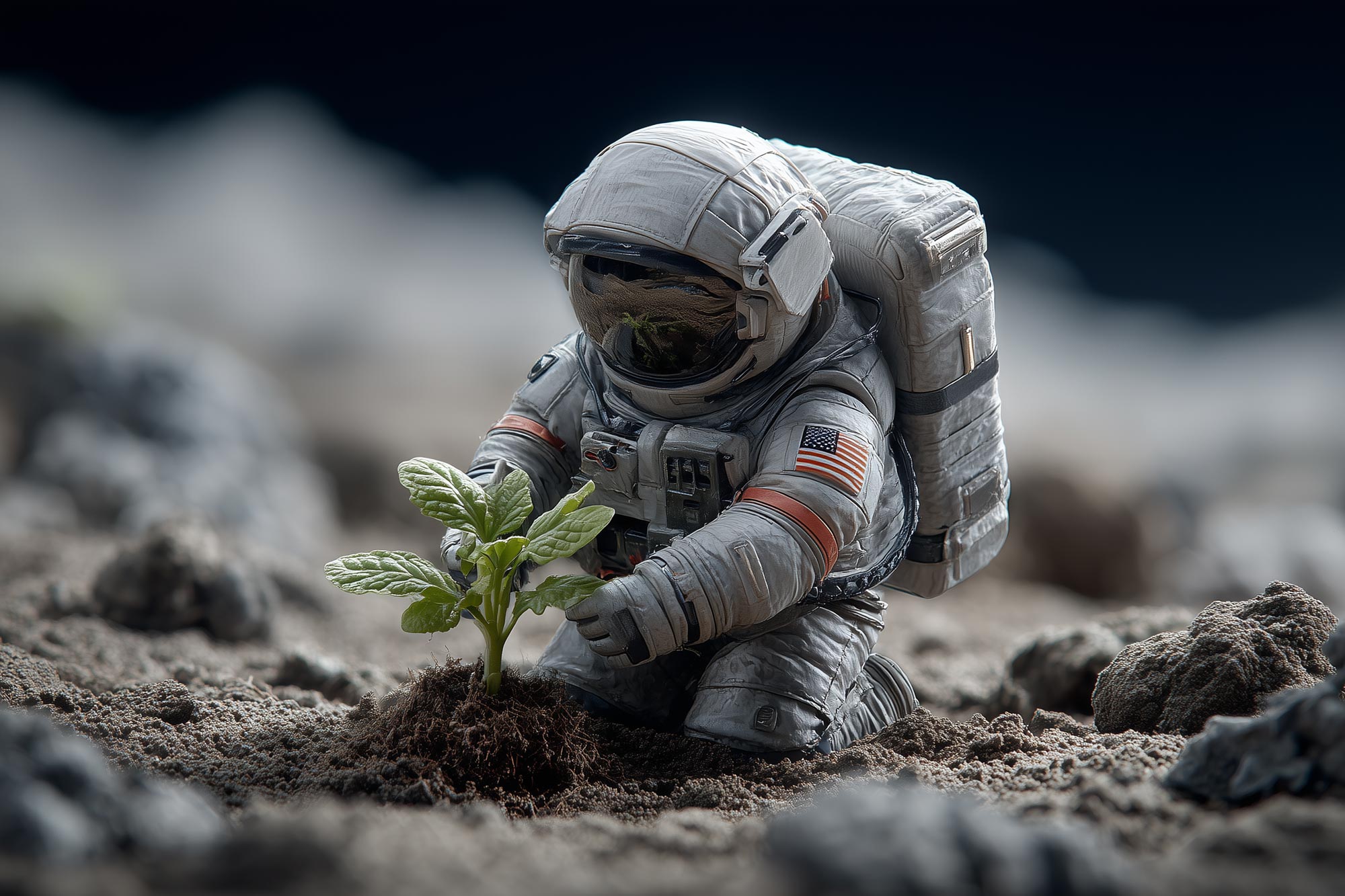
Scientists have grown chickpeas in simulated moon dirt—raising the possibility that future astronauts could one day harvest fresh food on the lunar surface.
As NASA prepares for the Artemis II mission and a return to the moon, scientists are exploring a practical question about long-term lunar exploration. What will astronauts eat? New research from The University of Texas at Austin suggests an unexpected possibility. Chickpeas.
Researchers have successfully grown and harvested chickpeas using simulated “moon dirt.” This marks the first time the crop has been produced in a material designed to mimic lunar soil. The study, conducted with collaborators from Texas A&M University, was published today (March 5) in the journal Scientific Reports.
Sara Santos, the project’s principal investigator, said the work represents a major step toward understanding how food might be grown on the moon.
“The research is about understanding the viability of growing crops on the moon,” said Santos, who is a distinguished postdoctoral fellow at the University of Texas Institute for Geophysics (UTIG) at the Jackson School of Geosciences. “How do we transform this regolith into soil? What kinds of natural mechanisms can cause this conversion?”
Turning Lunar Regolith Into Soil
Lunar regolith is the scientific term for the loose material that covers the moon’s surface. Unlike soil on Earth, it contains no microorganisms or organic matter that plants normally rely on to survive. Although the material does include minerals that plants need, it also contains heavy metals that can harm plant growth.
To study whether crops could grow in such conditions, the team used simulated moon dirt produced by Exolith Labs. The material closely resembles the composition of lunar samples brought back during the Apollo missions.
The researchers improved the simulated soil by adding vermicompost. This nutrient-rich material is produced by red wiggler earthworms as they digest organic waste. Vermicompost contains essential nutrients and a diverse microbial community that helps support plant growth. In a space mission, the worms could create compost from discarded organic materials such as food scraps, cotton clothing, or hygiene products that would otherwise become waste.
Fungi Help Chickpeas Survive Lunar Soil
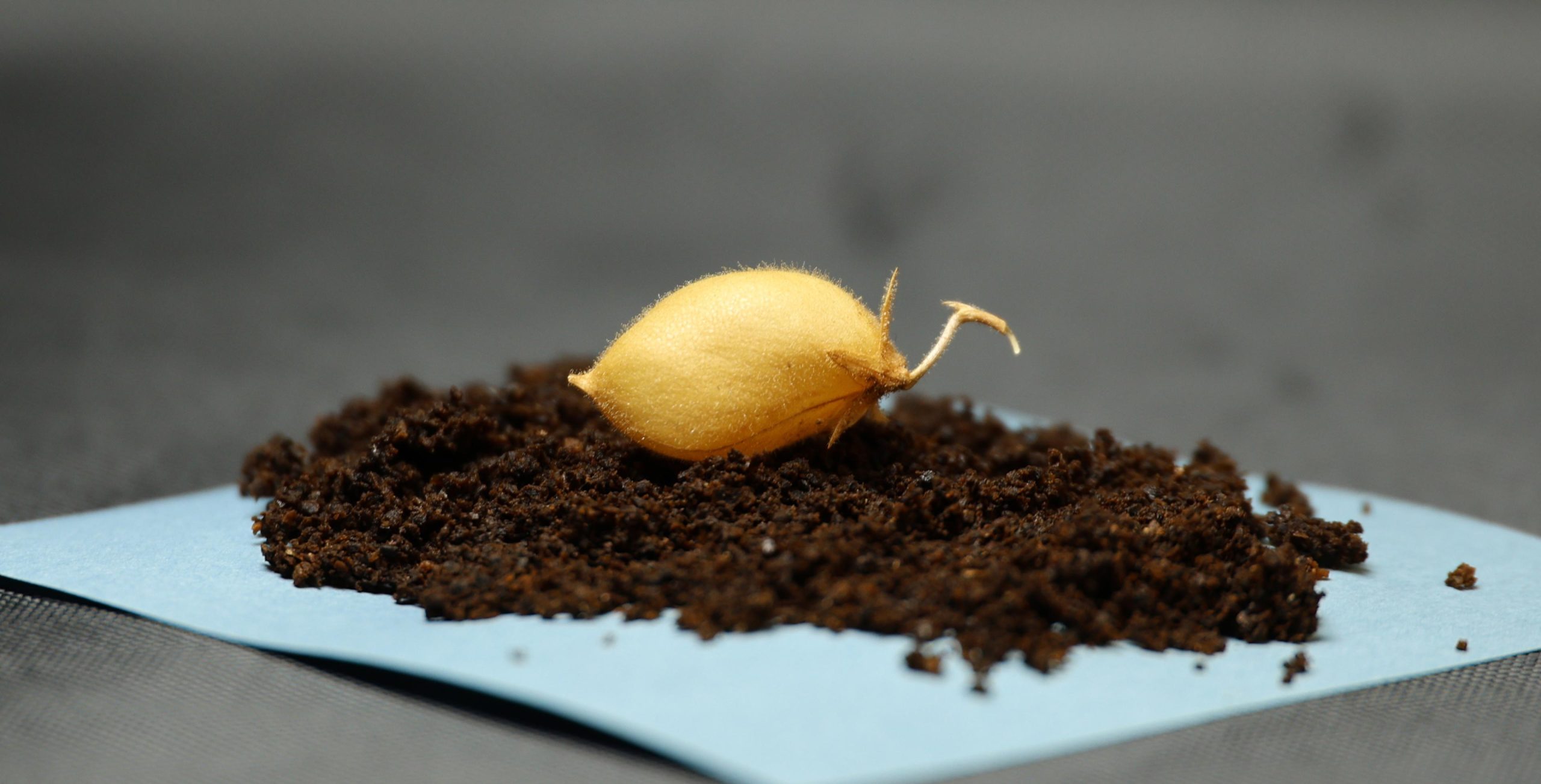
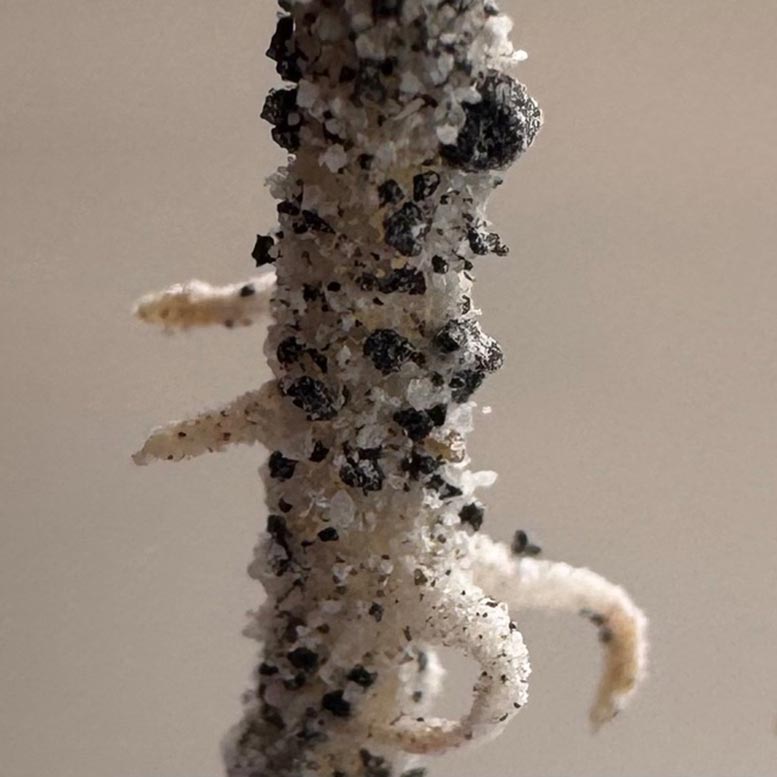
Before planting, the researchers coated the chickpea seeds with arbuscular mycorrhizal fungi. These fungi form a cooperative relationship with plant roots. The fungi help the plants absorb important nutrients while also reducing how much heavy metal the plants take up from the soil.
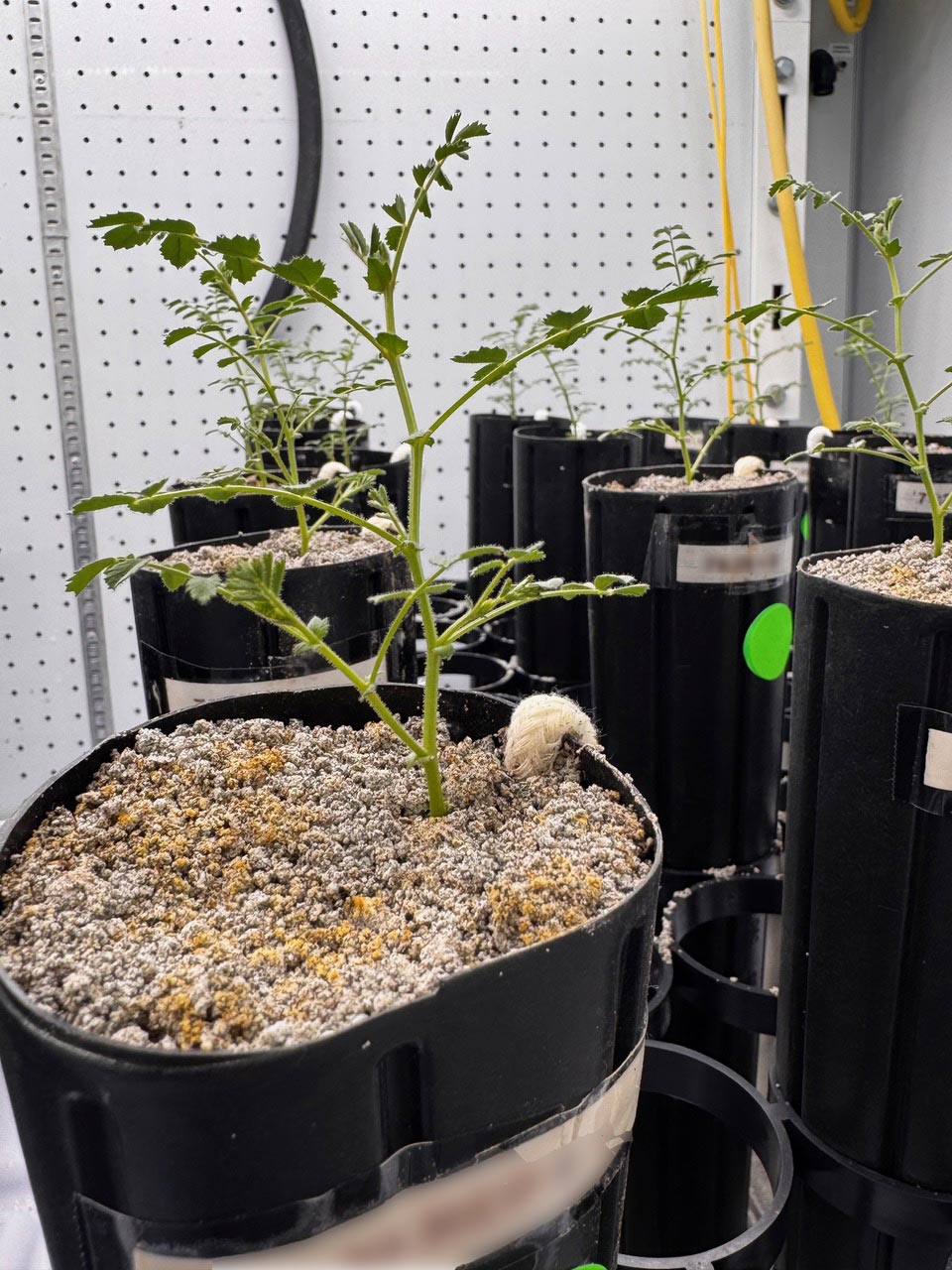
Santos and her team planted the treated chickpeas in different mixtures of simulated moon dirt and vermicompost.
The results showed that plants could grow successfully in mixtures containing up to 75 percent moon dirt. At higher concentrations, however, the plants began to struggle and often died early. Even under stressful conditions, the plants treated with fungi survived longer than those without it, highlighting the important role the fungi played in supporting plant health.
Researchers also discovered that the fungi were able to colonize and persist within the simulated lunar soil. This suggests they might only need to be introduced once in a real lunar farming system.
Are Moon Grown Chickpeas Safe to Eat?
Although producing a harvest is an important milestone, scientists still need to determine whether the chickpeas would be safe and nutritious for astronauts. The next step is to analyze the crops to see if they absorbed harmful metals from the simulated soil and to measure their nutritional value.
“We want to understand their feasibility as a food source,” said Jessica Atkin, the first author of the study and a doctoral candidate in the Department of Soil and Crop Sciences at Texas A&M University. “How healthy are they? Do they have the nutrients astronauts need? If they aren’t safe to eat, how many generations until they are?”
Reference: “Bioremediation of lunar regolith simulant through mycorrhizal fungi and plant symbioses enables chickpea to seed” by Jessica Atkin, Elizabeth Pierson, Terry Gentry and Sara Oliveira Santos, 5 March 2026, Scientific Reports.
DOI: 10.1038/s41598-026-35759-0
The project began with funding provided by Santos and Atkin themselves. It has since received additional support through a NASA FINESST grant, which will help researchers continue exploring how crops could be grown during future missions to the moon.
Never miss a breakthrough: Join the SciTechDaily newsletter.
Follow us on Google and Google News.