
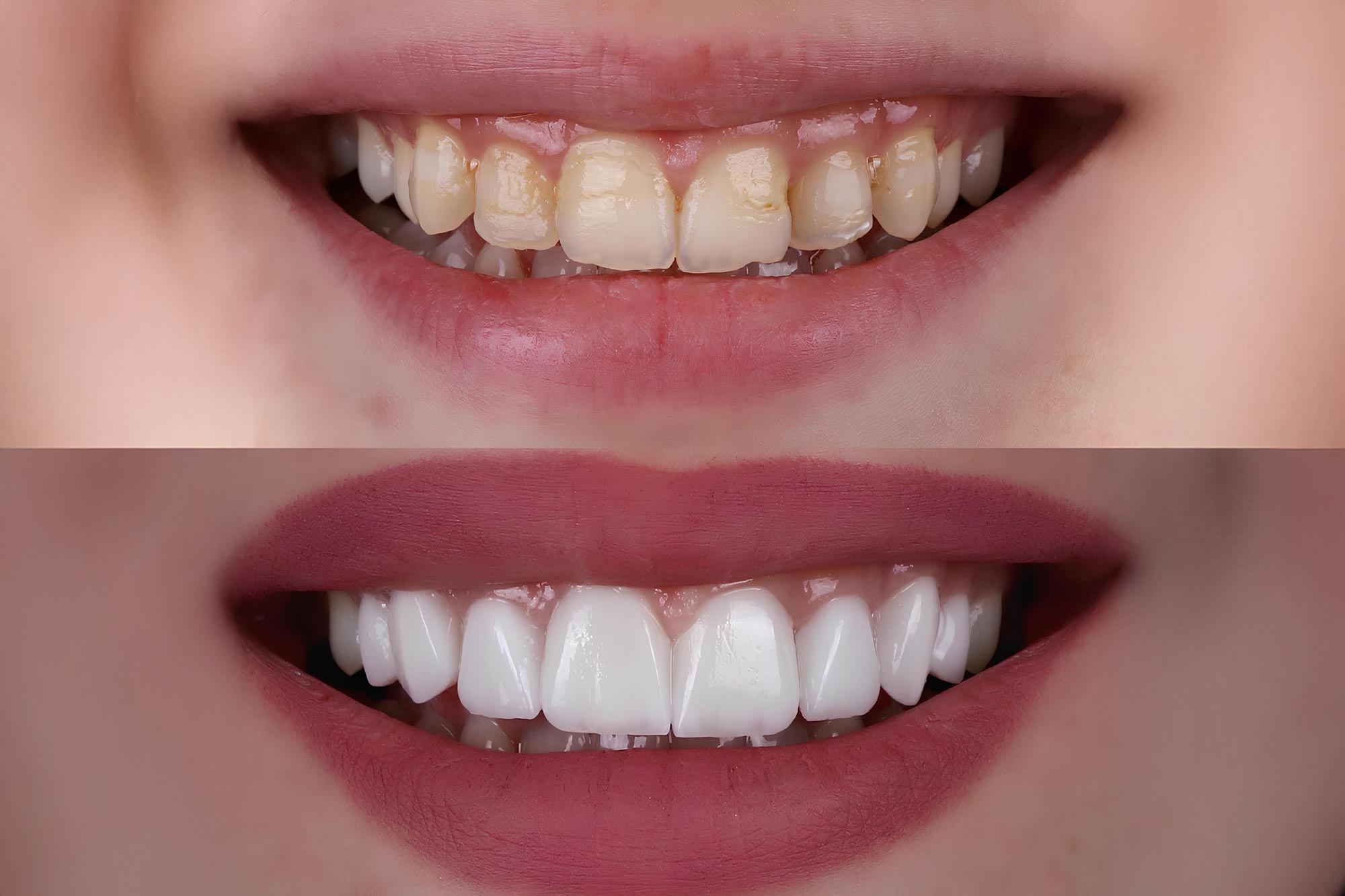
Researchers created a fast 3D-printing method for zirconia dental restorations by cutting debinding time to under 30 minutes, enabling same-day, high-strength, customized crowns.
The crown jewel of dental restoration technology may be in sight. Researchers at the University of Texas at Dallas have developed a way to 3D print permanent zirconia dental restorations in a matter of hours, opening the door to same-day treatments that previously required multiple visits.
Zirconia is widely regarded as the gold standard for dental restorations because of its strength, durability, and natural appearance. Until now, that level of quality has not been possible with true 3D printing on a same-day timeline.
With support from the National Science Foundation (NSF), the team is working to commercialize the process for use in crowns, bridges, veneers, and more.
“We are excited to be advancing the commercialization of chair-side 3D-printed, all-ceramic zirconia permanent dental restorations,” said Dr. Majid Minary, professor of mechanical engineering in the Erik Jonsson School of Engineering and Computer Science. “Because the crowns can be custom-printed for each patient on the same day, this approach offers greater personalization, faster treatment and the convenience of receiving a permanent restoration in a single visit.”
Advantages and Current Limits of 3D-Printed Dental Crowns
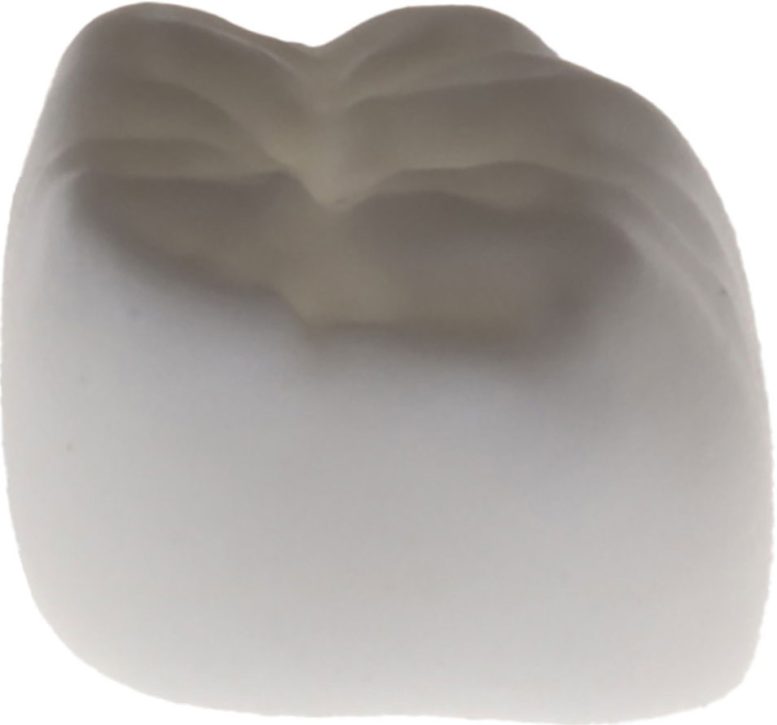
Dental crowns are used to restore teeth that are damaged or decayed, and they can anchor bridges that replace missing teeth. Today, patients often wait days or weeks for a permanent crown, sometimes relying on temporary solutions in the meantime.
3D printing has started to change that timeline, offering better customization and more efficient production. But there has been a tradeoff. Existing same-day printed crowns are typically made from ceramic resins, which are easier to process but lack the long-term strength of zirconia.
Zirconia crowns are already available for same-day use, but they are produced through milling rather than 3D printing. This process involves shaping the crown from a solid block of zirconia. While effective, milling can limit design flexibility and may introduce microcracks during production.
To overcome these limitations, the UT Dallas research team and their collaborators developed a method that significantly shortens the processing time required after a zirconia restoration is 3D-printed. Their findings were published in the September print edition of the journal Ceramics International. The approach will need clinical validation and regulatory approval before it can be widely adopted.
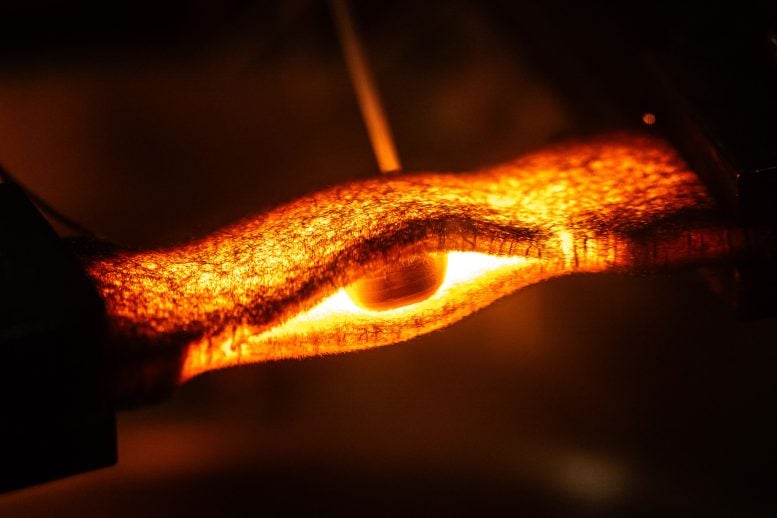
A dental crown is produced in a method developed by University of Texas at Dallas researchers. The approach combines enhanced heat transfer with the use of porous graphite felt, which can reach temperatures above 2,550 degrees Fahrenheit. Credit: University of Texas at Dallas
Breakthrough in Rapid Debinding for Same-Day Zirconia Crowns
After a zirconia crown is printed, it must go through two essential steps: debinding and sintering. During debinding, heat is gradually applied to remove the resin that binds the zirconia particles during printing. This stage typically takes between 20 and 100 hours. Once the resin is eliminated, the crown undergoes sintering, a high-temperature process similar to firing clay in a kiln, which fuses the particles into a dense and durable structure.
“Debinding has been the bottleneck in the process,” said Minary, corresponding author of the article. “It must be done very slowly. If you speed it up, the polymer being burned off turns into gas, and if that gas cannot escape, the crown may crack or fracture. A debinding time of 20 to 100 hours is not practical for same-day dental service. As a result, 3D-printed permanent zirconia restorations are not yet commercially available.”

The new technique reduces debinding time to less than 30 minutes, making same-day treatment more feasible. The process uses improved heat transfer along with porous graphite felt capable of reaching temperatures above 2,550 degrees Fahrenheit (about 1,400 degrees Celsius). The felt surrounds the printed crown, allowing gases released during resin removal to escape, while a vacuum system removes those gases.
“The combination of all of these features is what makes it work,” Minary said. “With our technology, if a practitioner wants to offer a 3D-printed zirconia crown chair-side, they could provide it to a patient within just a few hours.”
Reference: “Single-step thermal debinding for ceramics vat photopolymerization in less than 30 minutes” by Mahdi Mosadegh, Moein Khakzad, Zahra Sepasi, Kalyan Nandigama, Golden Kumar and Majid Minary-Jolandan, 13 May 2025, Ceramics International.
DOI: 10.1016/j.ceramint.2025.05.206
In addition to the NSF, the research in the paper also was supported by the U.S. Air Force Office of Scientific Research.
Never miss a breakthrough: Join the SciTechDaily newsletter.
Follow us on Google and Google News.
8 Comments
Excellent & fascinating cutting-edge information! Thank you so much for publishing!
Wonderful informative news.
Thank you!
Anne
White teeth
How much does it cost and will your insurance pay for it
The crown jewel is genetic strategies that regrow teeth, and organs, ….young. Brand new you.
Is the school doing clinical trials? Are they looking for volunteers?
Getting a permanent crown in a single day would be significantly better than the ten days it takes now. I doubt this process is any less expensive though.
Going to be pretty expensive.