
Close Menu
    Facebook X (Twitter) Instagram
    SciTechDaily
    • Biology
    • Chemistry
    • Earth
    • Health
    • Physics
    • Science
    • Space
    • Technology
    Facebook X (Twitter) Pinterest YouTube RSS
    SciTechDaily
    Home»Science»Discovering What Makes Durian Stink – “King of Fruits” Is Known for Its Pungent Odor
    Science

    Discovering What Makes Durian Stink – “King of Fruits” Is Known for Its Pungent Odor

    By Leibniz-Institut für Lebensmittel-Systembiologie an der TU MünchenFebruary 29, 2020No Comments3 Mins Read
    Facebook Twitter Pinterest Telegram LinkedIn WhatsApp Email Reddit
    Share
    Facebook Twitter LinkedIn Pinterest Telegram Email Reddit
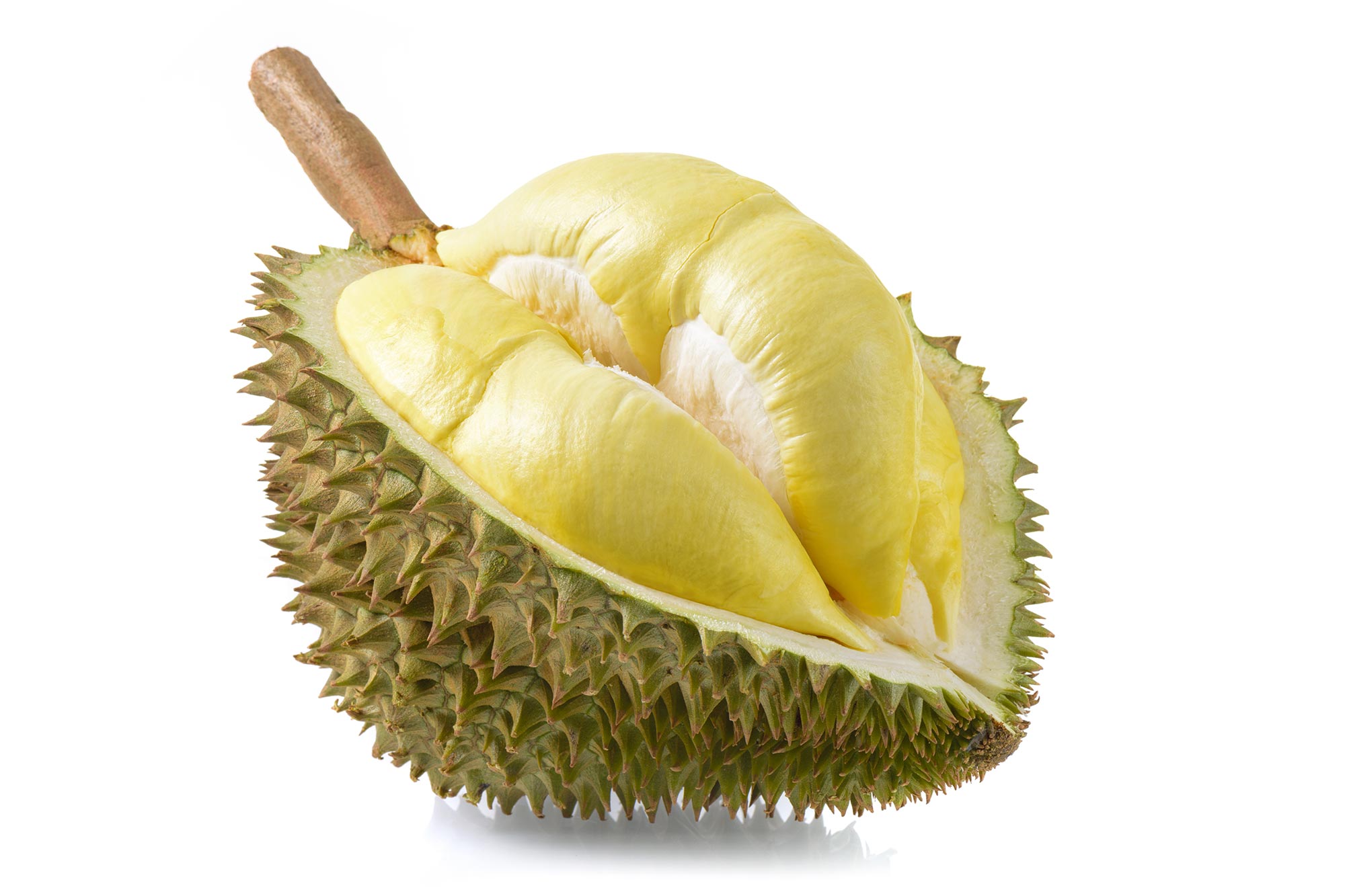
    Durian Fruit
    Durian fruit is known as the “king of fruits” in some regions. The durian is distinctive for its large size, strong odor, and thorn-covered rind.

    First Evidence of Rare Amino Acid in Plants

    Researchers at the Leibniz-Institute for Food Systems Biology at the Technical University of Munich (Leibniz-LSB@TUM) have confirmed the presence of the rare amino acid ethionine in a plant – or more precisely, in the fruit of the durian tree. Despite its pungent odor, durian is very popular in Southeast Asia. As the team of scientists has shown, the amino acid plays a key role in the formation of the characteristic durian odor.

    The pulp of a ripe durian emits an unusually potent and very persistent smell that is reminiscent of rotten onions. That is why the fruit has been banned on local public transportation in Singapore and at numerous hotels in Thailand. Nevertheless, different varieties of durian are highly valued in many Asian countries. Durian pulp has a high nutritional value, a distinctly sweet taste, and a pleasantly creamy consistency.

    Enzyme releases odorant from amino acid

    Previous research conducted at the Leibniz-LSB@TUM had already shown that the fruit’s stench is essentially due to the odorant ethanethiol and its derivatives. However, the biochemical pathway by which the plant produces ethanethiol remained unclear. As Nadine S. Fischer and Martin Steinhaus of the Leibniz-LSB@TUM have now demonstrated for the first time in their new study, ethionine is the precursor of the foul-smelling substance.
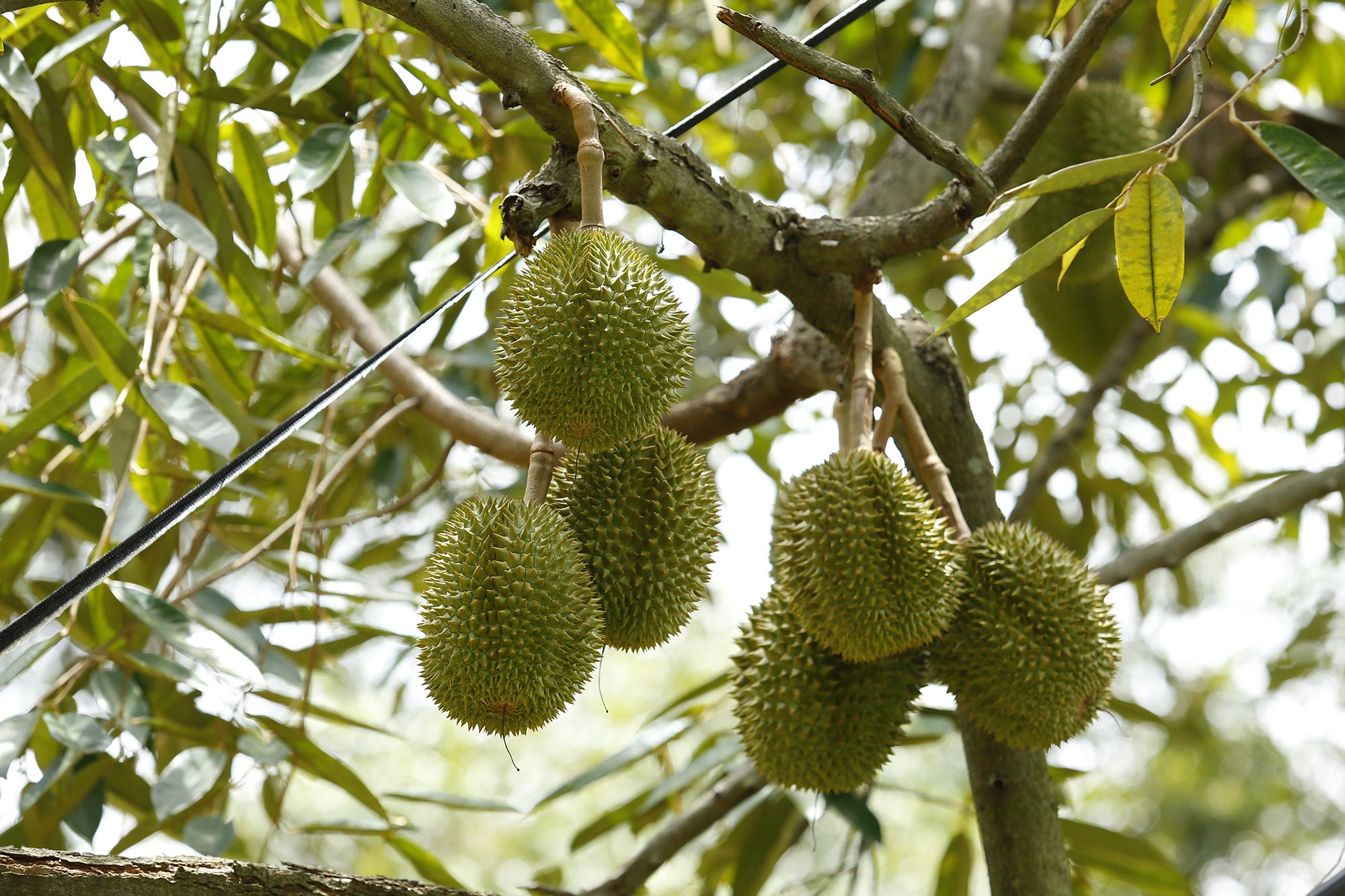
    Durian Tree
    The durian is the fruit of several tree species belonging to the genus Durio.

    “Our findings suggest that as the fruit ripens, a plant-specific enzyme releases the odorant from ethionine,” says lead author Nadine Fischer. “This is consistent with our observation that during fruit ripening not only the ethionine concentration in the pulp increases, but also at the same time that of the ethanethiol. The latter explains why a ripe durian emits an extremely strong smell.”

    Relevant not only from an olfactory aspect

    “Knowing exactly how much ethionine the durian fruit contains is interesting not only because of its significance for the odor,” says principal investigator Martin Steinhaus. The food chemist adds that animal tests and cell culture studies have verified that the amino acid is not harmless. Rats that incorporated high doses of the amino acid together with their food developed liver damage and cancer of the liver. A newer study, however, suggests that low concentrations of ethionine may even have positive immunomodulatory effects.

    “This raises the question of whether eating the fruit entails health risks,” says Steinhaus. “Further studies certainly need to be conducted.” The expert reassures us, however, by noting that “in order to consume a comparable dose of ethionine that had toxic effects in animal tests, a person weighing 70 kilograms (154 pounds) would in one day have to eat 580 kilograms (1,280 pounds) of fruit pulp of the Krathum variety which is especially rich in ethionine.”

    References:

    “Identification of an Important Odorant Precursor in Durian: First Evidence of Ethionine in Plants” by Nadine S. Fischer and Martin Steinhaus, 11 December 2019, Journal of Agricultural and Food Chemistry.
    DOI: 10.1021/acs.jafc.9b07065

    “Insights into the Key Compounds of Durian (Durio zibethinus L. ‘Monthong’) Pulp Odor by Odorant Quantitation and Aroma Simulation Experiments” by Jia-Xiao Li, Peter Schieberle and Martin Steinhaus, 26 December 2016, Journal of Agricultural and Food Chemistry.
    DOI: 10.1021/acs.jafc.6b05299

    Never miss a breakthrough: Join the SciTechDaily newsletter.
    Follow us on Google and Google News.

    Agriculture Biochemistry Food Science Plant Science
    Share. Facebook Twitter Pinterest LinkedIn Email Reddit

    Related Articles

    Warning on Avocado Oil Sold in the U.S.: 82% Tested Rancid or Mixed With Other Oils

    “Unparalleled Discovery” of Ancient Skeletons Reveals First Use of Maize in Mesoamerica

    Should Ripe Tomatoes Go in the Fridge? Scientific Testing Seeks to Resolve the Debate

    How Lasers and Vibrations Could Guarantee the Perfect Avocado

    Climate Change Could Shrink Wine Regions Dramatically – 85% Loss for 4°C of Warming

    Many New Diseases Developed in Bagged Salads Sector – Here’s Why

    Researchers Decoded How Bacteria Prime Important Global Grain Crop Against Deadly Fungus

    Mapping Millet Genetics to Enable Better Varieties for Farmers in Developing Countries

    Game Changer: New Chemical Could Protect Crops From Drought

    Leave A Reply Cancel Reply

    • Facebook
    • Twitter
    • Pinterest
    • YouTube

    Don't Miss a Discovery

    Subscribe for the Latest in Science & Tech!

    Trending News

    Largest-Ever Study Finds Medicinal Cannabis Ineffective for Anxiety, Depression, PTSD

    250-Million-Year-Old Egg Solves One of Evolution’s Biggest Mysteries

    Living With Roommates Might Be Changing Your Gut Microbiome Without You Knowing

    Century-Old Cleaning Chemical Linked to 500% Increased Risk of Parkinson’s Disease

    What if Your Memories Never Happened? Physicists Take a New Look at the Boltzmann Brain Paradox

    One of the Universe’s Largest Stars May Be Getting Ready To Explode

    Scientists Discover Enzyme That Could Supercharge Ozempic-Like Weight Loss Drugs

    Popular Sweetener Linked to DNA Damage – “It’s Something You Should Not Be Eating”

    Follow SciTechDaily
    • Facebook
    • Twitter
    • YouTube
    • Pinterest
    • Newsletter
    • RSS
    SciTech News
    • Biology News
    • Chemistry News
    • Earth News
    • Health News
    • Physics News
    • Science News
    • Space News
    • Technology News
    Recent Posts
    • Scientists Say This Overlooked Organ Could Hold the Key to Longer Life
    • Want Less Stress? Landmark Study Points to a Simple Habit
    • Scientists Reveal Eating Fruits and Vegetables May Increase Your Risk of Lung Cancer
    • AI Reveals Explosive Growth of Floating Algae Across the World’s Oceans
    • 5.5 Million Bees Discovered Living Beneath a New York Cemetery
    Copyright © 1998 - 2026 SciTechDaily. All Rights Reserved.
    • Science News
    • About
    • Contact
    • Editorial Board
    • Privacy Policy
    • Terms of Use

    Type above and press Enter to search. Press Esc to cancel.