
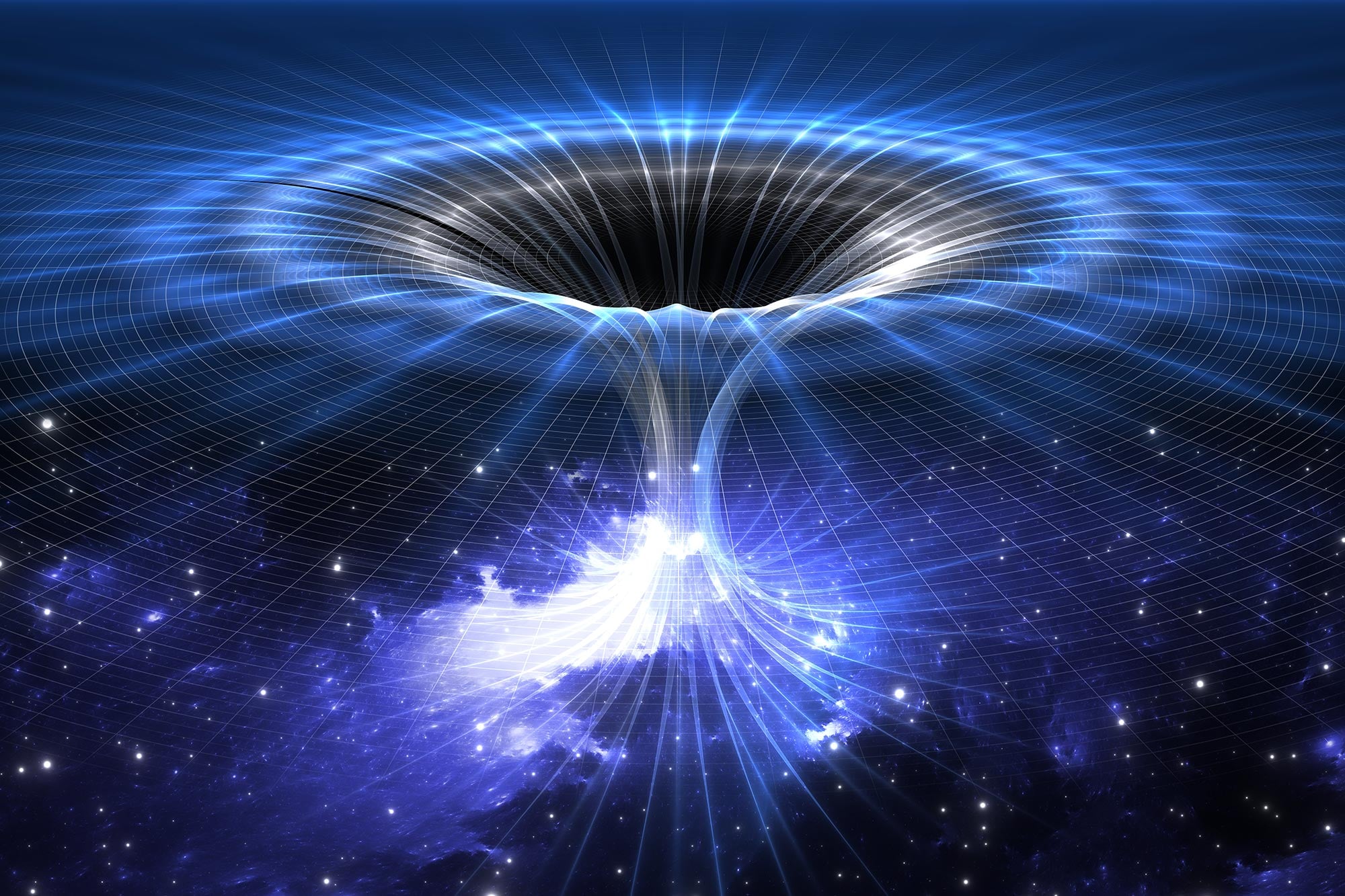
By studying galaxy clusters separated by hundreds of millions of light-years, Penn physicist Patricio Gallardo and collaborators show that the laws of gravity described by Newton and Einstein still hold, providing strong evidence that invisible dark matter exists.
Gravity may seem simple in everyday life. Drop an apple, and it falls. On cosmic scales, though, gravity becomes one of science’s biggest stress tests. It governs the rise of galaxies, the behavior of galaxy clusters, and the overall architecture of the universe, yet some of the universe’s motions still do not add up.
That long-running mismatch is what drove University of Pennsylvania cosmologist Patricio A. Gallardo and his collaborators to ask a basic but profound question: what if gravity itself behaves differently across the largest distances in the universe?
“Astrophysics has been plagued by a massive discrepancy in the cosmic ledger,” says Gallardo. “When we look at how stars orbit within galaxies or how galaxies move within galaxy clusters, some appear to be traveling way too fast for the amount of visible matter they contain.”
This discrepancy leads to two possible explanations. Either large amounts of unseen “dark matter” are present, adding gravitational influence, or “the fundamental equations for gravity need to be modified.”
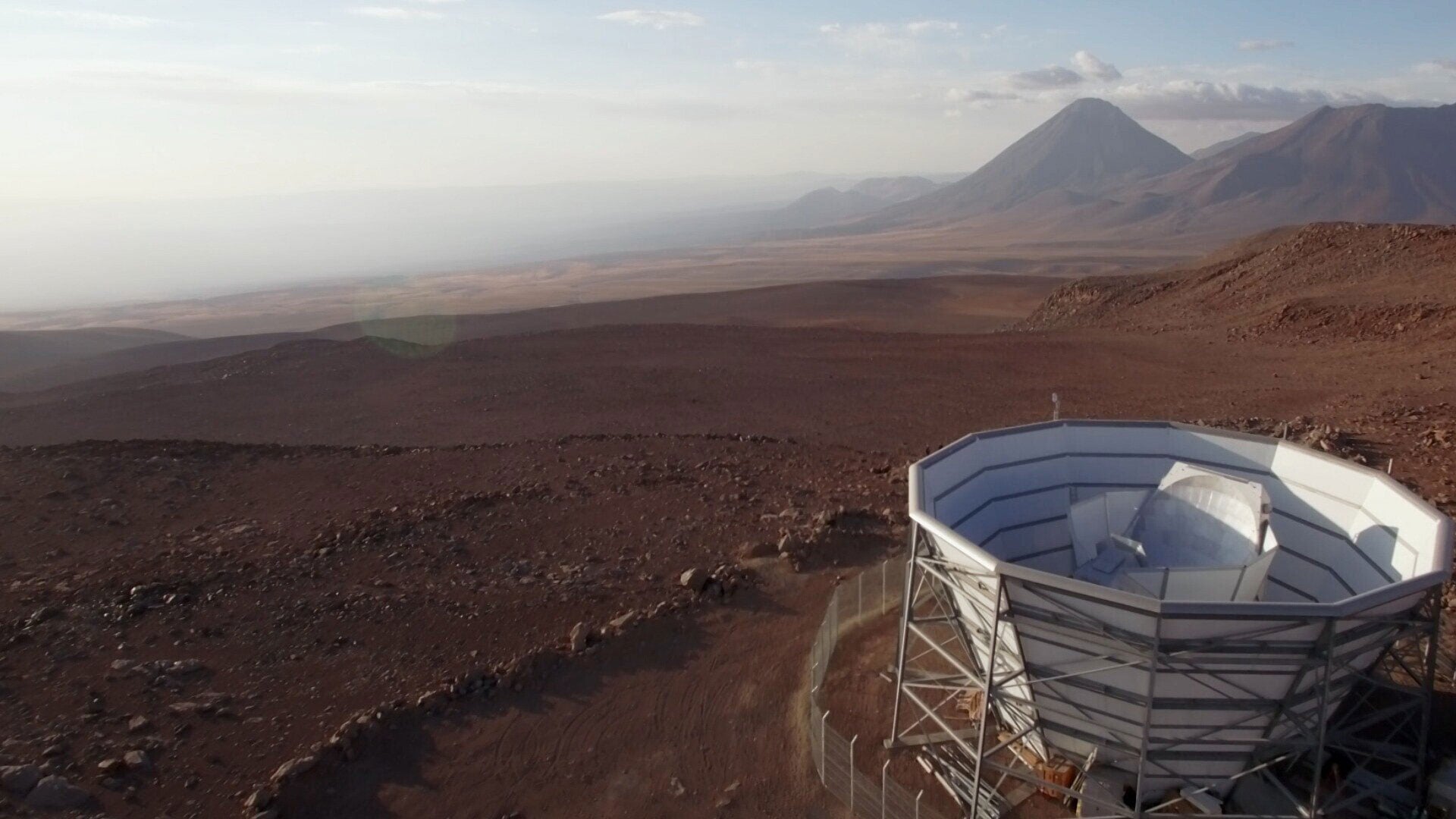
Now, drawing on data from the Atacama Cosmology Telescope (ACT), a roughly three-to four-story-tall instrument developed largely by Penn researchers led by Mark Devlin, Gallardo and collaborators have carried out a test of gravity on an unprecedented scale. They examined galaxy clusters separated by hundreds of millions of light-years, making this the most extensive test of gravity yet.
Their results, published in Physical Review Letters, show that gravitational strength decreases with distance in line with the predictions made by Newton and later incorporated into Einstein’s general theory of relativity.
“It is remarkable that the law of the inverse of the squares—proposed by Newton in the 17th century and then incorporated by Einstein’s theory of general relativity—is still holding its ground in the 21st century,” says Gallardo.
These findings reinforce a central principle of modern cosmology. By confirming that gravity behaves as expected even across vast distances between galaxy clusters, the results strengthen the standard model of cosmology. They also challenge alternative ideas such as Modified Newtonian Dynamics (MOND), which attempt to explain cosmic behavior by altering the laws of gravity.
When Newton first described the inverse square relationship, he focused on motions within the Solar System. Today, that same principle has been tested across distances and masses that were “inconceivable in Newton’s day,” Gallardo says.
Understanding the universe’s ‘speed limits’
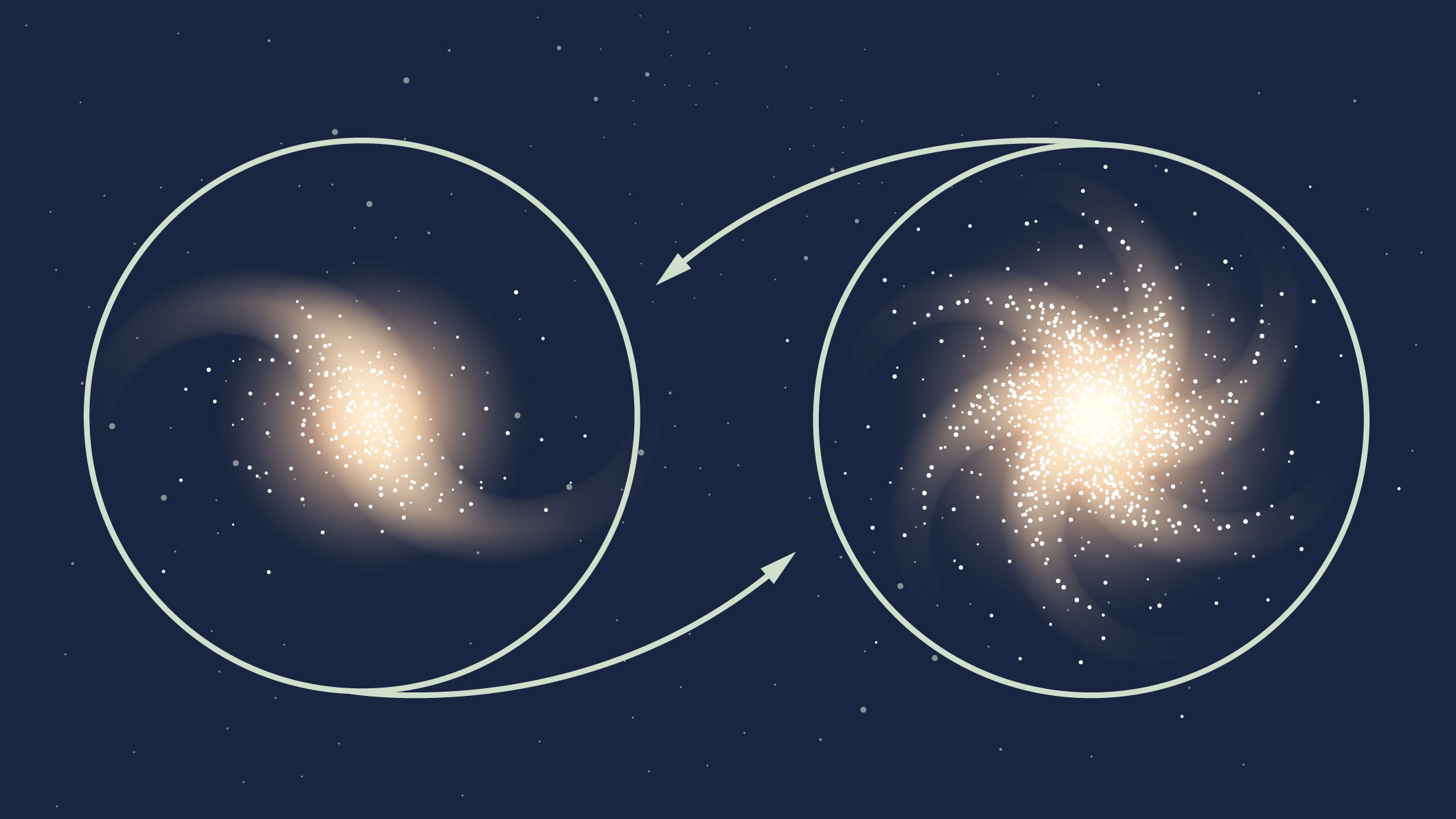
Galaxies, of which there are more than 200 billion, do not behave as expected if only visible matter is considered.
Based on Newtonian physics, stars located farther from the center of a galaxy should orbit more slowly. Instead, observations show that these outer regions move faster than predicted. A similar pattern appears in galaxy clusters, where entire galaxies travel at speeds that cannot be explained by the mass we can see.
“That is the central puzzle,” Gallardo explains. “Either gravity behaves differently on very large scales, or the universe contains additional matter that we cannot directly see.”
Testing gravity across the cosmos
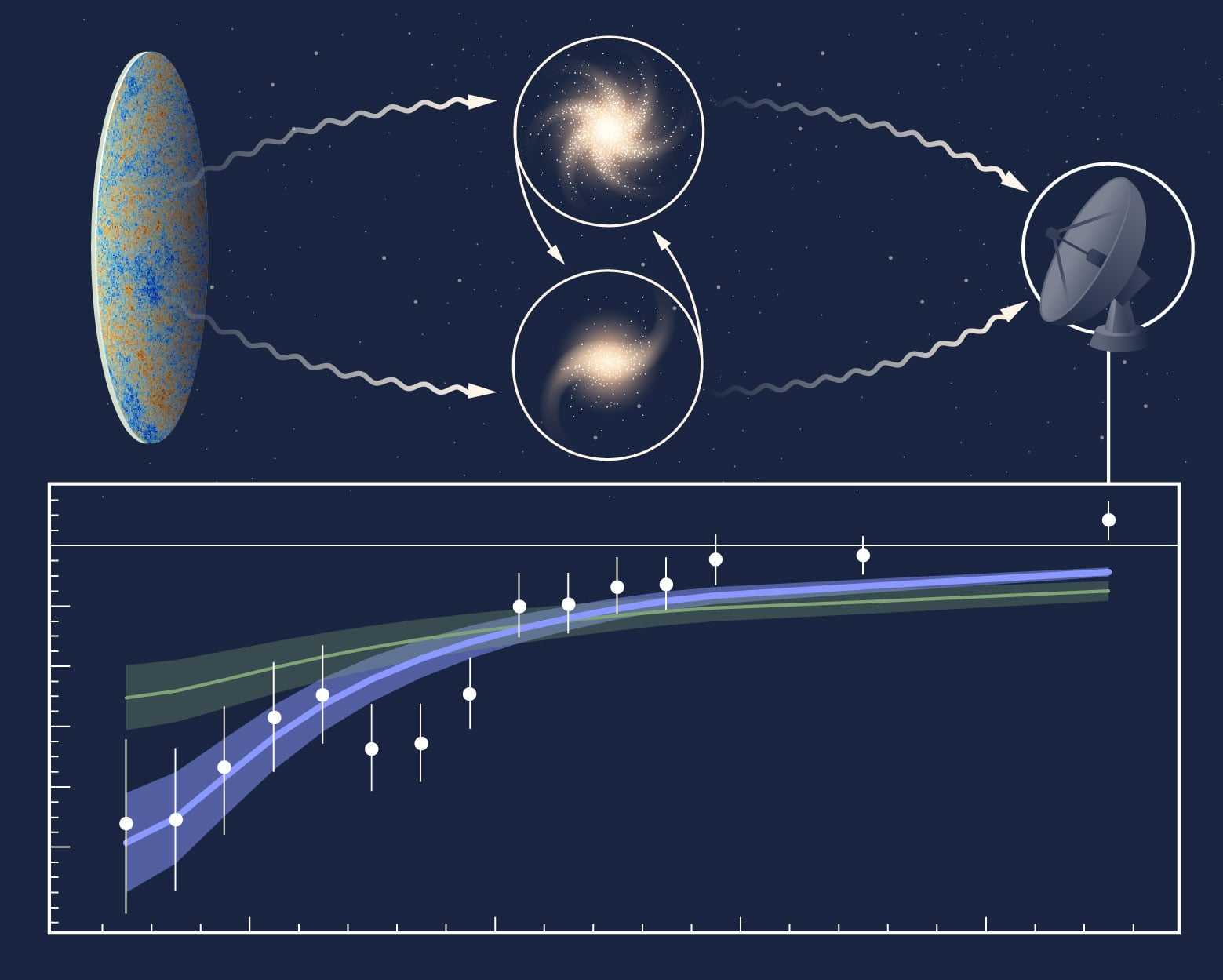
To investigate this question, the researchers used data from ACT that tracks light emitted about 380,000 years after the Big Bang, known as the cosmic microwave background.
As this ancient light passes through galaxy clusters, its path is subtly influenced by their motion, leaving detectable signatures. By analyzing these effects across hundreds of thousands of clusters spread over tens of millions of light-years, the researchers were able to determine how gravity operates on the largest known structures. If alternative theories like MOND were correct, the pattern of gravitational weakening would differ from established predictions.
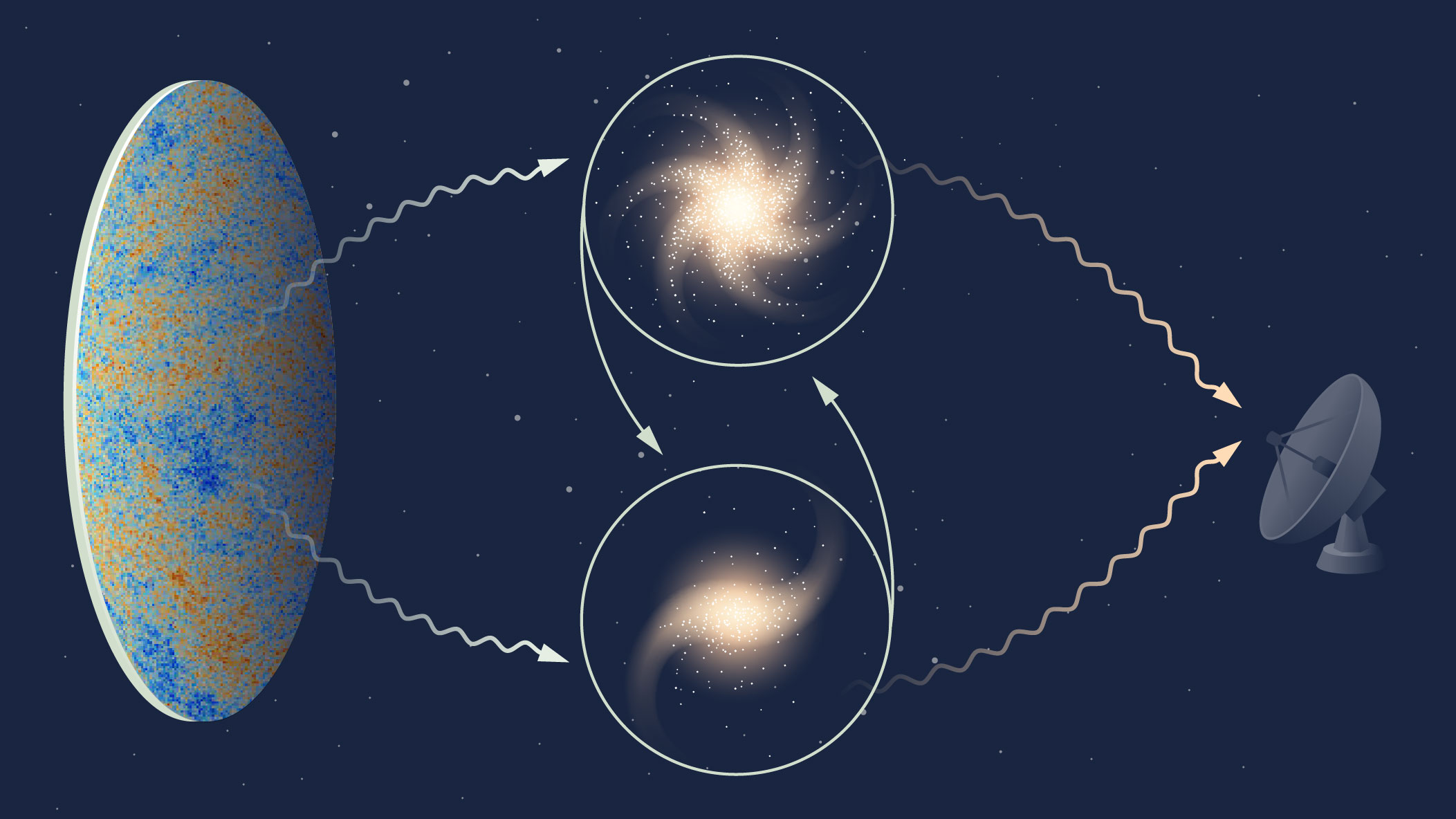
Instead, the measurements closely matched the expectations of both Newton’s and Einstein’s frameworks.
Because gravity behaves as predicted, the missing mass problem cannot be explained by changing gravitational laws. This strengthens the argument that an unseen form of matter, dark matter, is responsible for the additional gravitational effects.
The dark matter mystery
Determining the true nature of dark matter remains one of the most significant open questions in physics.
“This study strengthens the evidence that the universe contains a component of dark matter,” says Gallardo. “But we still do not know what that component is made of.”
Future observations of the cosmic microwave background and expanded galaxy surveys are expected to provide even more precise tests of gravity.
“With so many unanswered questions, gravity remains one of the most fascinating areas of research. It’s a naturally attractive field,” Gallardo chuckles.
Reference: “Test of the Gravitational Force Law on Cosmological Scales Using the Kinematic Sunyaev-Zeldovich Effect” by P. A. Gallardo, K. Pardo, O. H. E. Philcox, N. Battaglia, E. S. Battistelli, R. Bean, E. Calabrese, S. K. Choi, M. Devlin, J. Dunkley, R. Dünner, S. Ferraro, Y. Guan, E. Healy, C. Hervías-Caimapo, M. Hilton, A. D. Hincks, J. C. Hood, II, A. Kosowsky, A. La Posta, T. Louis, M. S. Madhavacheril, J. McMahon, K. Moodley, T. Mroczkowski, S. Naess, L. Newburgh, M. D. Niemack, L. A. Page, B. Partridge, R. Puddu, E. Schaan, N. Sehgal, C. Sifón, D. N. Spergel, S. T. Staggs, A. van Engelen, C. Vargas, E. M. Vavagiakis, K. Wagoner and E. J. Wollack, 15 April 2026, Physical Review Letters.
DOI: 10.1103/rk8v-rcm3
The Atacama Cosmology Telescope (ACT) project is supported primarily by the U.S. National Science Foundation through awards AST-0408698, AST-0965625, and AST-1440226 for the ACT project, as well as PHY-0355328, PHY-0855887, and PHY-1214379. Additional funding has been provided by Princeton University, the University of Pennsylvania, and a Canada Foundation for Innovation (CFI) award to the University of British Columbia. Development of ACT multichroic detectors and lenses was supported by NASA grants NNX13AE56G and NNX14AB58G, and detector research at the National Institute of Standards and Technology (NIST) was supported through the NIST Innovations in Measurement Science program.
Never miss a breakthrough: Join the SciTechDaily newsletter.
Follow us on Google and Google News.
1 Comment
Trudging through the dank crypt, the rusty bolt is thrown and the old door creaks open. There in the corner, the hoveled figure of Dr John Knurly crouches, still mumbling after 23 years. A distinguished mathematician, he claimed his ‘perfect’ model described his wife in possible outcomes of probabilities. A feat for which there was Nobel talk. When she left him for a younger man he was heard to say, “Impossible.”