
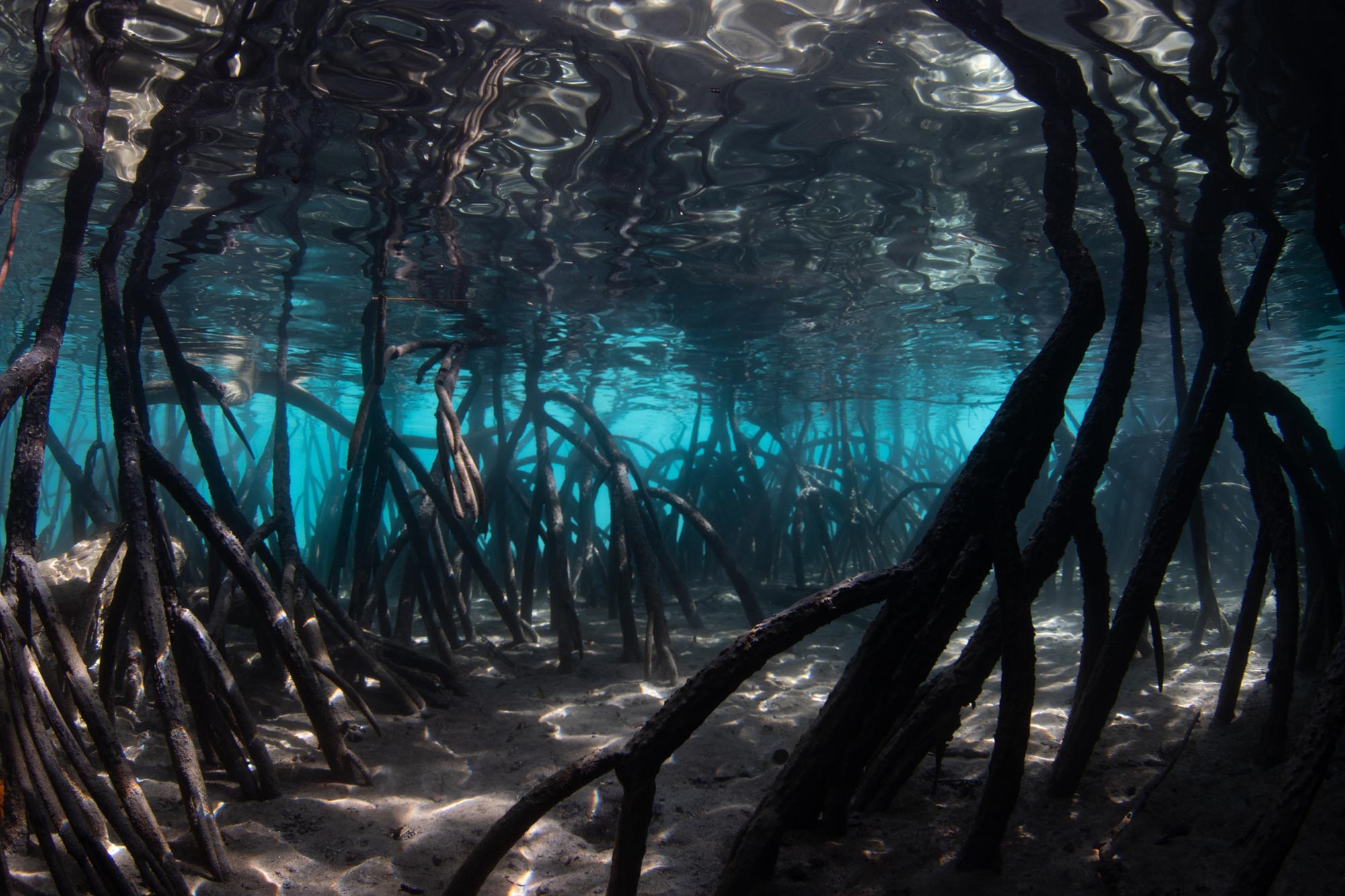
Rising seas could turn mangroves from carbon-storing climate allies into unexpected carbon emitters.
Mangroves are among the most effective natural systems for capturing and storing carbon, but new research suggests that rising sea levels could significantly reduce that benefit and may even cause these coastal forests to release carbon in the future.
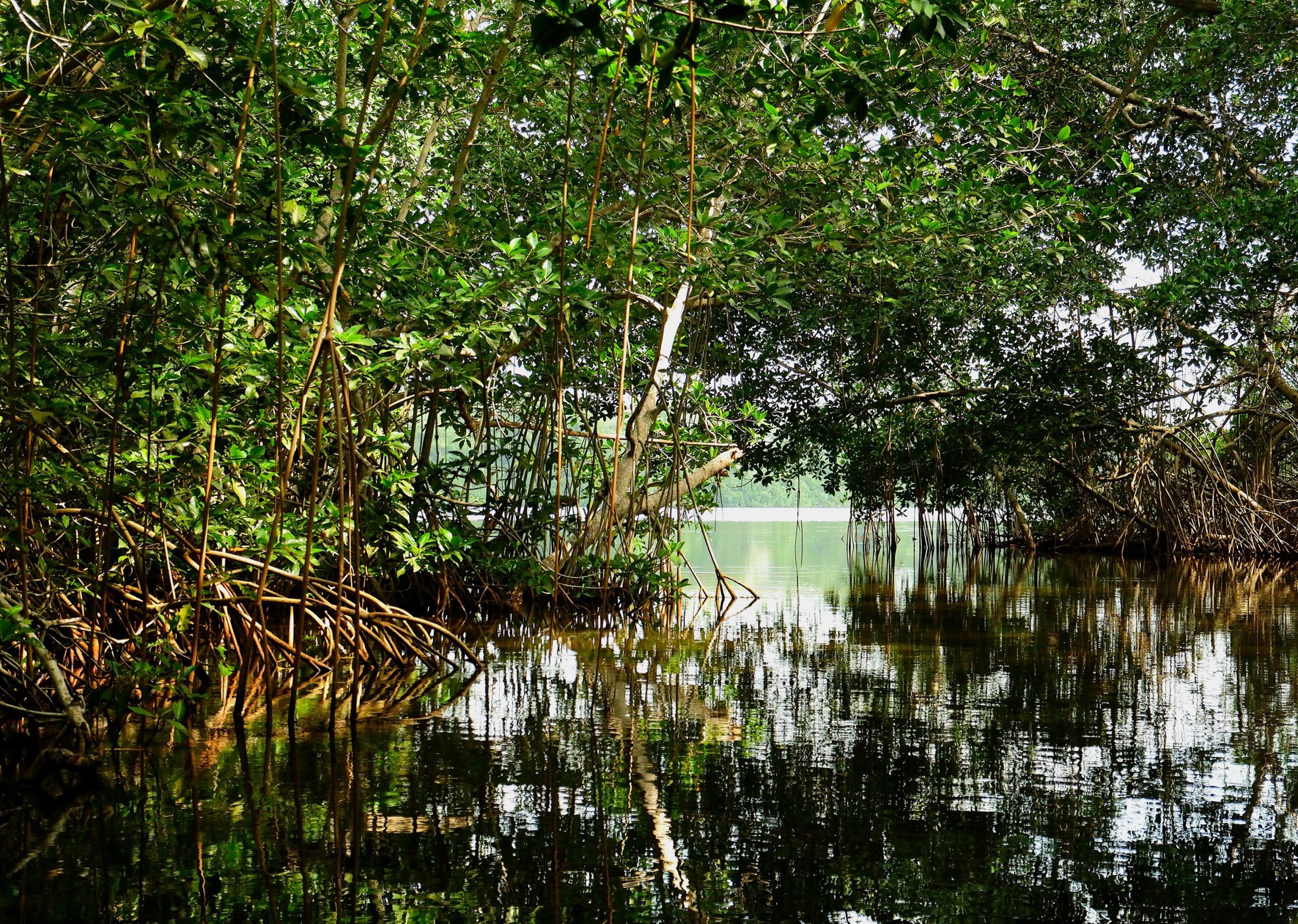
Made up of salt-tolerant plants that thrive along coastlines, mangroves occupy less than 1% of Earth’s surface. Despite their relatively small footprint, they hold roughly 15% of all carbon stored in the ocean, with most of that carbon locked away in the soils beneath them. Because of this remarkable capacity, mangroves play an important role in efforts to slow climate change.
Earlier studies have suggested that higher sea levels might actually increase carbon storage in mangrove ecosystems. However, new findings indicate the overall picture may be far more complex.
New Model Examines Entire Mangrove Forests
Researchers led by the University of Exeter, working with collaborators in Colombia and the United States, created a new modeling approach to explore how rising seas could affect carbon storage across whole mangrove forests rather than at individual locations.
Their analysis found that while some areas may temporarily accumulate more carbon as sea levels rise, the overall amount of carbon stored across entire mangrove forests is expected to decline over the next century.
“Mangrove forests are efficient carbon sinks and are therefore crucial for slowing climate change,” said Dr. Arya Iwantoro, who carried out the research at the University of Exeter and is now based at the University of Plymouth.
“Research about carbon storage in mangroves is usually based on field observations, and such studies have found that carbon storage can increase as sea levels rise.
“But this may not reveal the wider picture of what is happening across the forest as a whole.
“To investigate this, we developed a new model that links water flow and sediment transport, mangrove growth and dieback, and carbon storage while keeping track of changes in the composition of muddy beds where mangroves grow.
“In effect, we created three models in one to assess the way these complex ecosystems may respond to rising seas.”
How Rising Seas Could Turn Carbon Sinks Into Carbon Sources
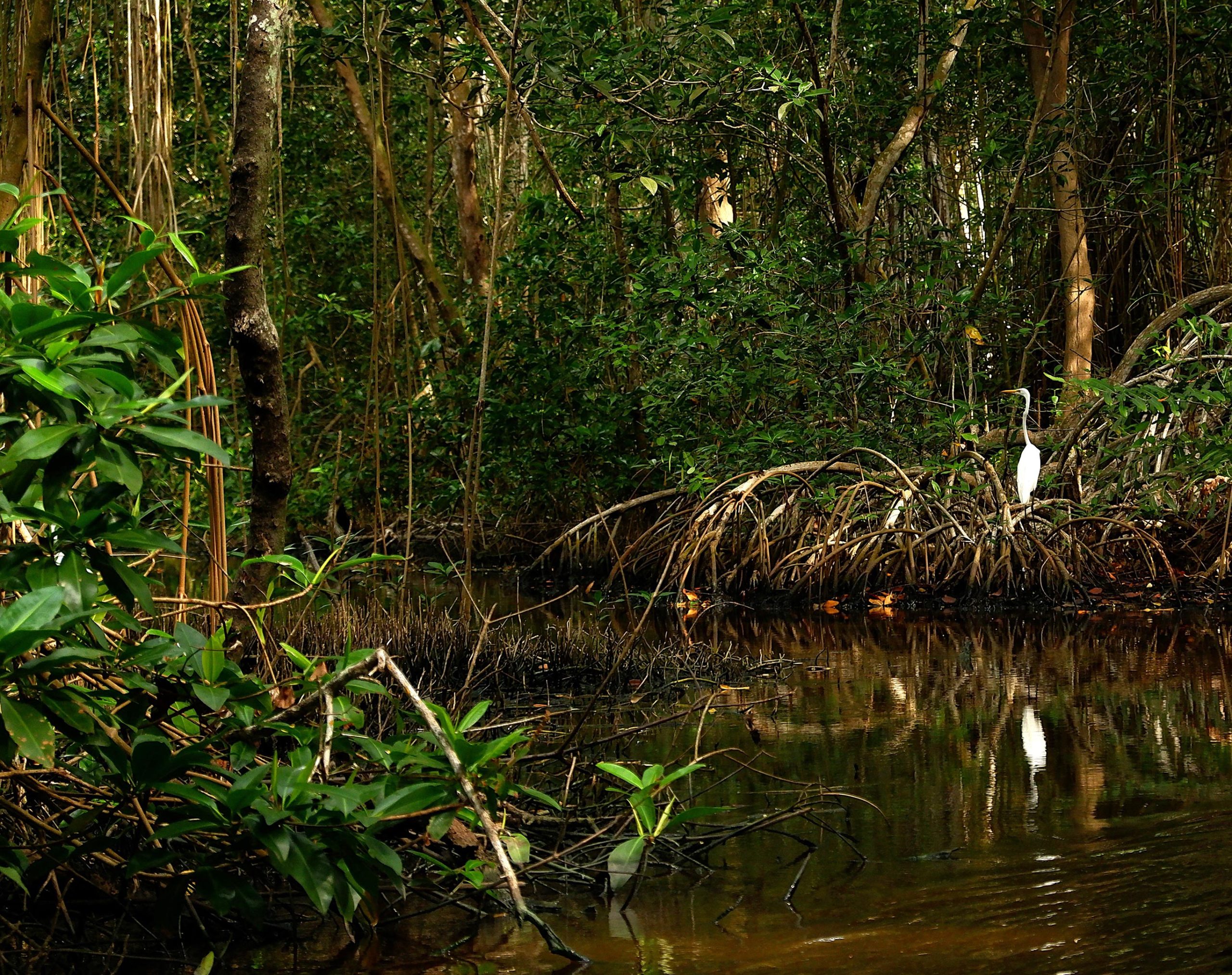
According to the researchers, rising sea levels may initially boost carbon accumulation in certain locations. Over time, however, the broader impact is likely to be a reduction in carbon storage across mangrove forests.
“Mangrove plants are highly specialized, and they require a certain duration of flooding with each tide,” said Luisa Fernanda Gómez Vargas, also from the University of Exeter.
“If this period is exceeded, a location will no longer be suitable. The plants will ‘drown’ and mangroves will die back.
“Mortality and erosion of carbon-rich soils can turn mangroves from a carbon sink (storing carbon) into a source (releasing it).”
The team tested several sea-level rise scenarios developed by the Intergovernmental Panel on Climate Change (IPCC). Their results showed that larger increases in sea level produce stronger negative effects on mangrove carbon storage.
Mangroves Face an Uncertain Future
Dr. Barend van Maanen, who leads the mangrove and carbon project at Exeter, said mangroves are increasingly vulnerable to climate change as well as other human pressures affecting rivers and coastlines.
“Mangroves face an uncertain future due to climate change and other human impacts on rivers and coasts.
“As well as being vital carbon stores, mangroves protect coasts from storms, provide livelihoods to coastal communities and habitats for a wide range of species.
“Our findings emphasize that understanding the coastal landscape as a whole is crucial when predicting how mangroves might respond to climate change, and how we can protect them.”
The findings were published in the journal Earth’s Future in a paper titled “The importance of scale in the future of mangrove blue carbon under sea-level rise.”
Reference: “The Importance of Scale in the Future of Mangrove Blue Carbon Under Sea-Level Rise” by A. P. Iwantoro, D. H. Urrego, D. Xie, A. P. Nicholas, K. A. Hapsari, J. A. Rodríguez-Rodríguez, J. C. Restrepo, J. Polanía, R. E. Aalto, L. F. Gómez Vargas and B. van Maanen, 3 June 2026, Earth’s Future.
DOI: 10.1029/2025EF006984
The study was funded by the Natural Environment Research Council.
Never miss a breakthrough: Join the SciTechDaily newsletter.
Follow us on Google and Google News.