

A newly identified loss of cellular identity may enable colorectal cancer cells to enter a highly flexible state that promotes liver metastasis.
For many patients with colorectal cancer, the greatest threat is not the original tumor but its ability to spread to the liver. Once that happens, treatment becomes far more difficult and survival rates drop sharply. Yet scientists have struggled to explain exactly how some cancer cells gain the ability to leave the primary tumor, survive in the bloodstream, and establish new tumors elsewhere.
A new study from researchers at Weill Cornell Medicine and the Massachusetts Institute of Technology points to a possible answer. The team found that the loss of a gene-regulating protein called GATA6 can push colorectal cancer cells into a highly adaptable state that appears to make metastasis far more likely. The findings, published June 22 in Cell Stem Cell, suggest that the spread of cancer may be driven not only by genetic mutations, but also by dramatic shifts in cellular identity.
When Cancer Cells Forget What They Are
Healthy cells typically maintain a stable identity. Intestinal cells, for example, follow specialized genetic programs that allow them to perform specific functions and remain part of an organized tissue.
GATA6 helps enforce that identity. As a transcription factor, it controls which genes are active and which remain silent, acting as a molecular gatekeeper that keeps intestinal cells on the right developmental path.
The researchers discovered that this control system frequently breaks down in colorectal cancer that has spread to the liver. In both mouse models and samples from patients, GATA6 levels were substantially lower in liver metastases than in primary tumors. Low GATA6 expression was also linked to poorer clinical outcomes.
The findings suggest that losing GATA6 may remove an important safeguard that normally prevents cancer cells from becoming more aggressive.
A Different Explanation for Metastasis
For years, scientists have searched for specific genetic mutations that trigger liver metastasis in colorectal cancer. Despite extensive research, no single mutation has emerged as the definitive driver.
The new study points toward a different mechanism.
“We discovered that GATA6 loss acts as a critical switch that can change cancer cells in the primary tumor from non-metastatic to pro-metastatic,” said Dr. Norihiro Goto, assistant professor of medicine in the Division of Gastroenterology & Hepatology at Weill Cornell and co-leader of the study. “Our findings suggest that epigenetic changes may be more important for promoting liver metastasis.”
Unlike genetic mutations, which alter the DNA sequence itself, epigenetic changes affect how genes are used. They can dramatically reshape cellular behavior without changing the underlying genetic code.
Recreating Cancer’s Evolution in the Lab
One of the biggest challenges in metastasis research is that scientists typically study tumors after they have already spread. By that point, many of the biological events that enabled metastasis have already occurred.
“When researchers analyze patient samples from liver metastases, we fail to capture the important signals occurring in the early stages of the metastatic process,” said Dr. Norihiro Goto.
To overcome this limitation, the team created an experimental system designed to mimic cancer evolution in real time.
Researchers grew organoids from liver metastases. These miniature three-dimensional clusters of cancer cells replicate many features of actual tumors. The organoids were then transplanted into the colons of mice, where they formed new tumors that later spread to the liver. By repeatedly cycling through this process, the scientists were able to observe how cancer cells gradually became more efficient at metastasizing.
The Return to a More Primitive State
The experiments revealed that losing GATA6 triggers a phenomenon known as lineage plasticity, which allows cells to abandon their existing identity and adopt new characteristics.
Rather than remaining specialized intestinal cells, the cancer cells activated genetic programs more commonly associated with fetal development. These fetal-like cells were far more flexible and appeared better equipped to survive the challenges of metastasis.
This ability to switch identities may help explain a long-standing mystery in cancer biology. Cells that leave a primary tumor face a hostile journey that includes detaching from surrounding tissue, entering circulation, surviving immune defenses, and adapting to an entirely new environment. Greater flexibility could help them overcome each of those obstacles.
Similar cellular reprogramming mechanisms are used by healthy tissues during wound healing and recovery from injury. Cancer may be exploiting a normal biological process for a dangerous new purpose.
A Key Marker of Metastatic Potential
The researchers also identified a clear molecular signature associated with this transformation.
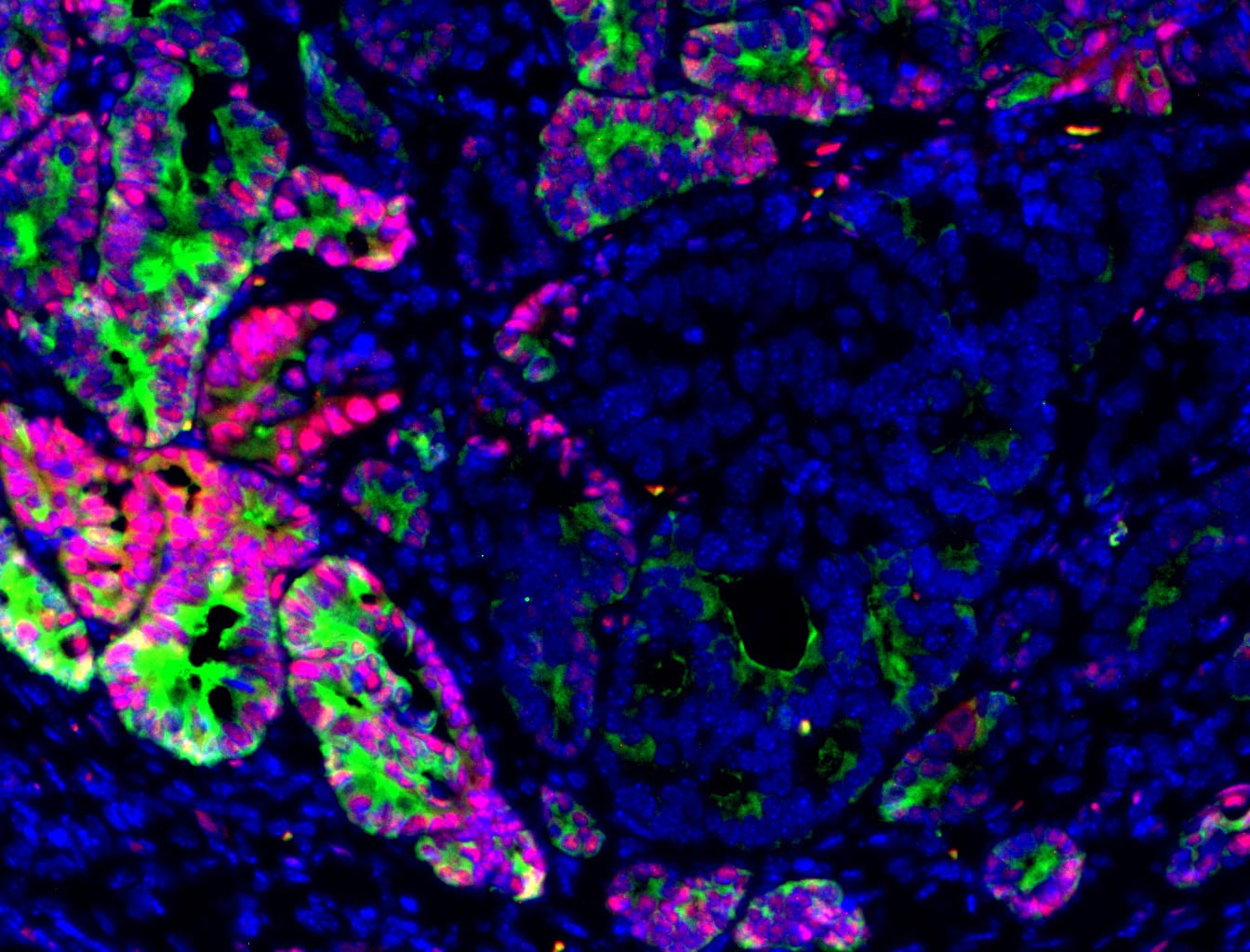
As GATA6 levels dropped, cancer cells shifted from an LGR5-positive state to an LGR5-negative state. Previous studies have shown that LGR5-negative cells possess an enhanced ability to initiate liver metastases.
The new findings suggest that GATA6 helps prevent this transition. When researchers silenced GATA6, more cells adopted the LGR5-negative state and gained fetal-like characteristics linked to metastasis. Restoring GATA6 activity, or activating related molecular pathways, reduced the cells’ ability to spread.
Why Tumor Growth May Not Tell the Whole Story
One of the study’s most surprising findings was that removing GATA6 dramatically increased liver metastasis without significantly affecting growth of the primary tumor.
“When we genetically delete GATA6, the frequency and burden of liver metastases in mouse models significantly increase, while having little effect on primary tumor growth,” said Dr. Norihiro Goto, who is also a member of the Jill Roberts Institute for Research in Inflammatory Bowel Disease and the Sandra and Edward Meyer Cancer Center at Weill Cornell.
New Opportunities for Detection and Treatment
The results also suggest that GATA6 could serve as a biomarker for metastatic risk. Tumors with low GATA6 levels may be more likely to contain cells capable of transitioning into a metastasis-promoting state, potentially helping doctors identify patients who need closer monitoring or more intensive treatment.
The findings point to a possible therapeutic strategy focused on preserving cell identity or preventing cancer cells from entering highly adaptable states associated with metastasis. However, developing such treatments will be challenging because many of the same biological programs are also involved in normal tissue repair.
Future research will look for vulnerabilities unique to GATA6-deficient cancer cells that could be targeted with new drugs. The team also plans to investigate how the tumor microenvironment, including immune cells and signals from the liver, influences these cellular transitions in preclinical models.
“In addition to treating primary tumors, we need to find strategies to target the mechanism of liver metastasis,” Dr. Norihiro Goto said. “Our study is a step toward developing therapies that block the spread of cancer at the earliest stages.”
Reference: “Lineage plasticity driven by GATA6 loss fuels colorectal cancer metastasis” by Saori Goto, Vikram Deshpande, Ömer H. Yilmaz and Norihiro Goto, 22 June 2026, Cell Stem Cell.
DOI: 10.1016/j.stem.2026.05.013
Never miss a breakthrough: Join the SciTechDaily newsletter.
Follow us on Google and Google News.
1 Comment
Thanks to the researchers. Metastasis is a turning point in the fight against cancer. If it can be prevented, it will be a milestone in medicine. Although your study focused on liver metastasis of colon cancer, similar mechanisms can occur in other types of cancer.