
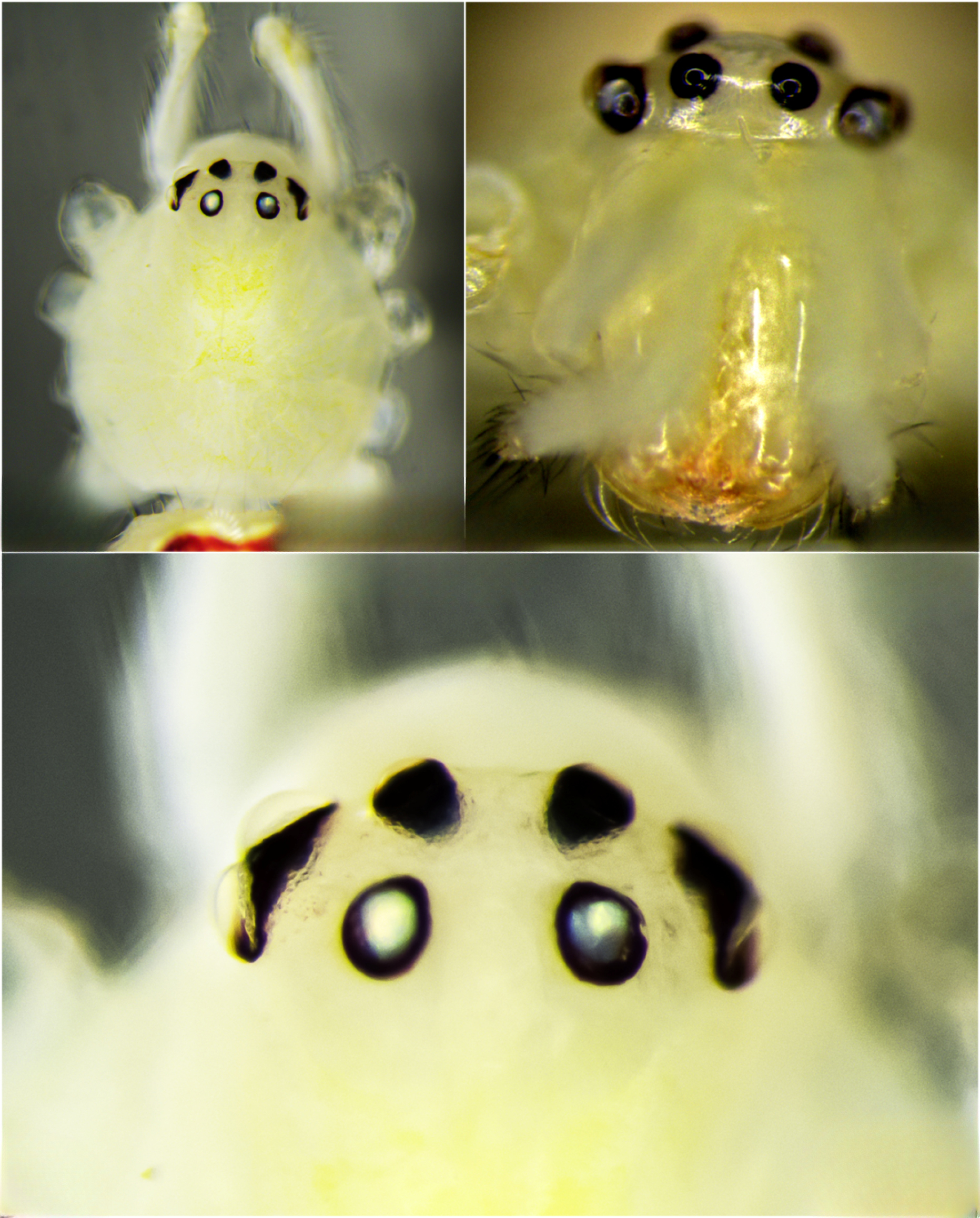
For more than a century, scientists believed this cheerful-looking creature lived only in the Hawaiian Islands.
Small, brightly colored, and marked with a vivid red smile on its back, the Happy Face spider is one of the world’s most recognizable arachnids. For more than 100 years, this cheerful-looking spider was believed to live only in the Hawaiian Islands, making it seem like a unique biological oddity found nowhere else.
That changed when scientists from the Forest Research Institute and the Regional Museum of Natural History found a new spider species with the same distinctive smile in the montane mountains of Uttarakhand, India. They named it Theridion himalayana, the Himalayan Happy Face Spider.
Discovery began by accident
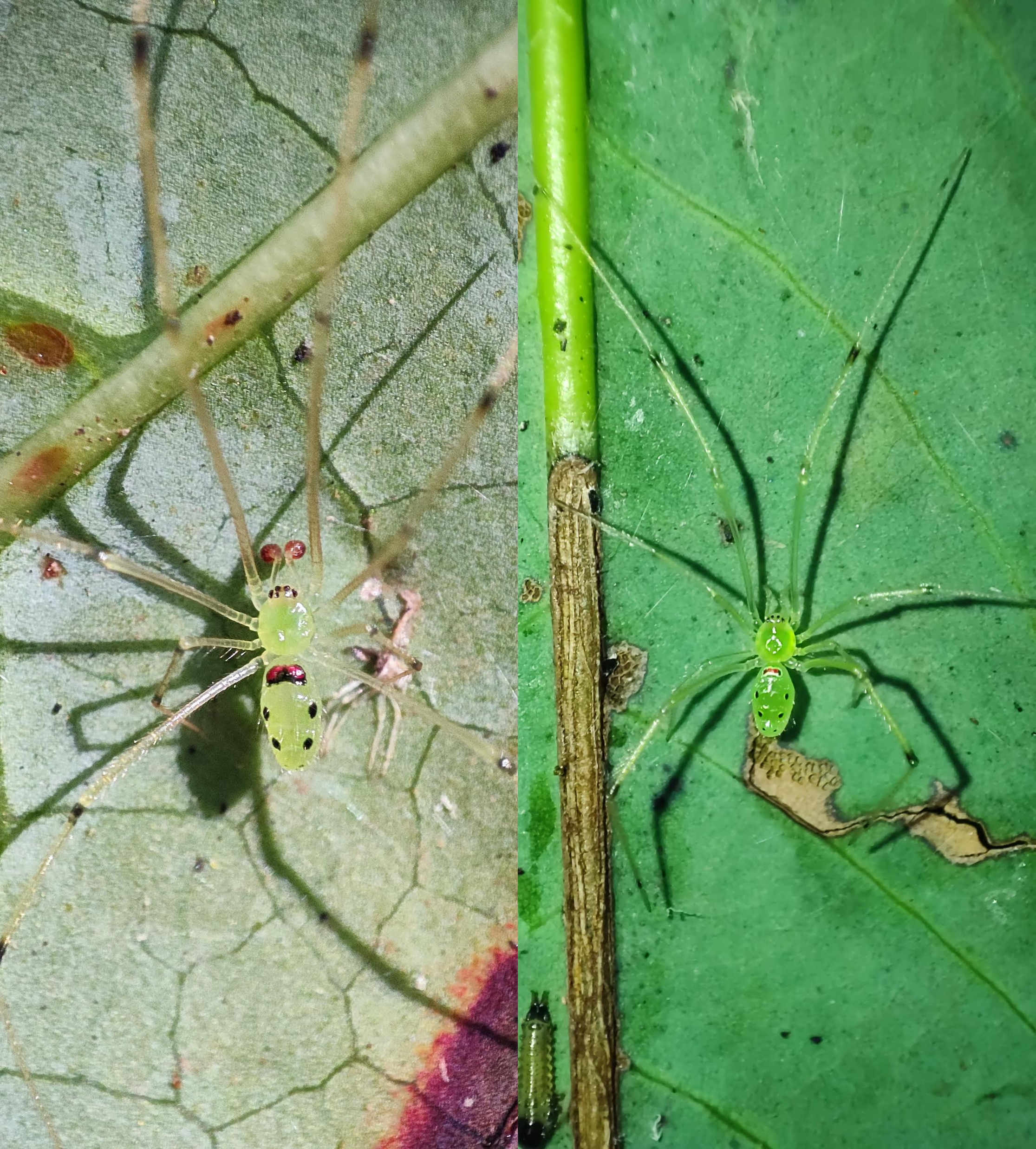
“The discovery was accidental because our survey was [originally] on ants,” said Devi Priyadarshini, a scientist at the Regional Museum of Natural History who coauthored the study.
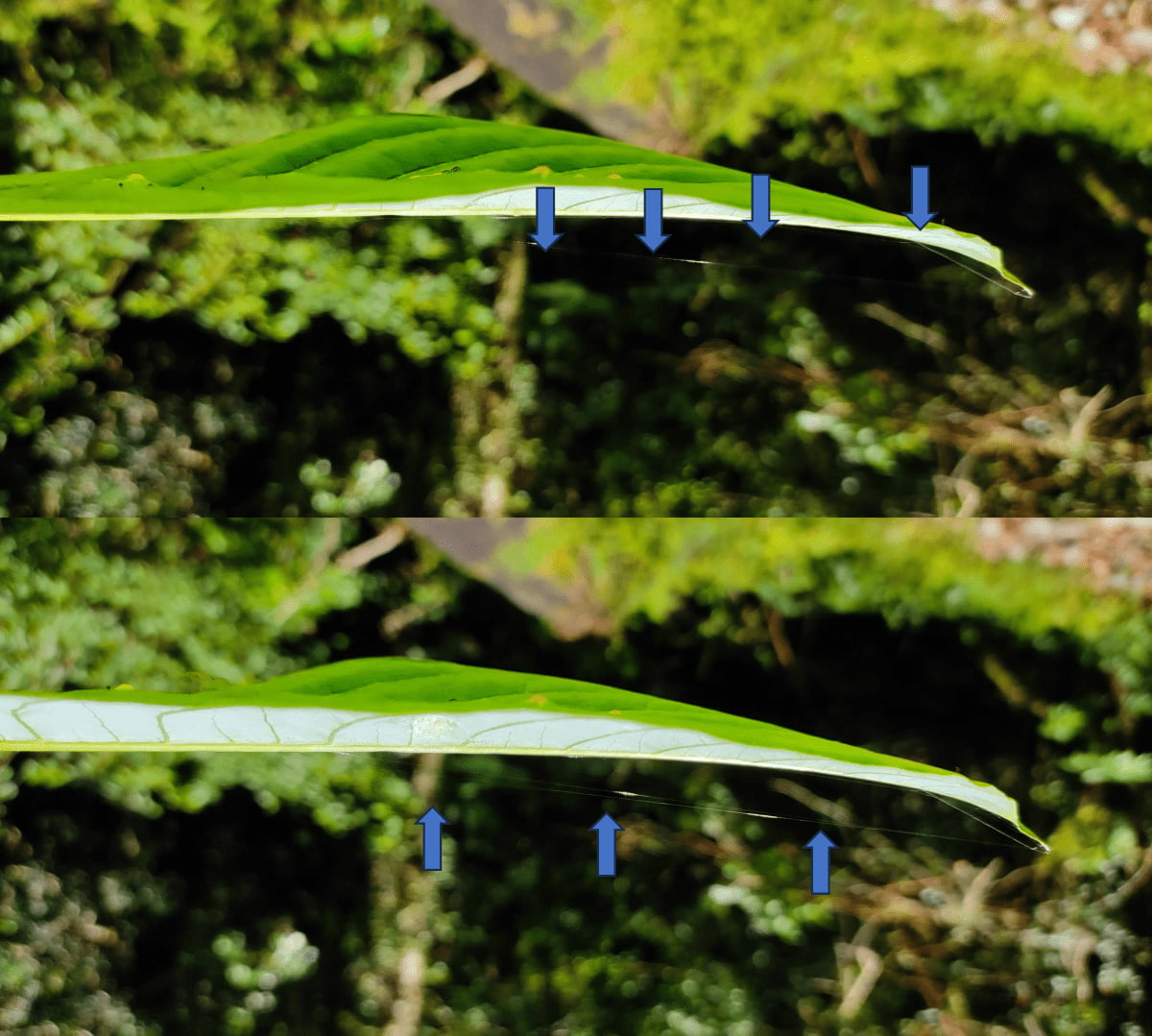
“But my co-author [Ashirwad Tripathy] kept sending me spiders from high-altitude regions for identification. So, one fine day, when he shared this image from the underside of a Daphniphyllum leaf, I froze in shock because I had seen the Hawaiian spider during my master’s program itself, and I knew instantly we had a jackpot because of its striking resemblance. I asked him to send all morphs that he found, and that led to the discovery in the next few months, from October 2023 onwards.”
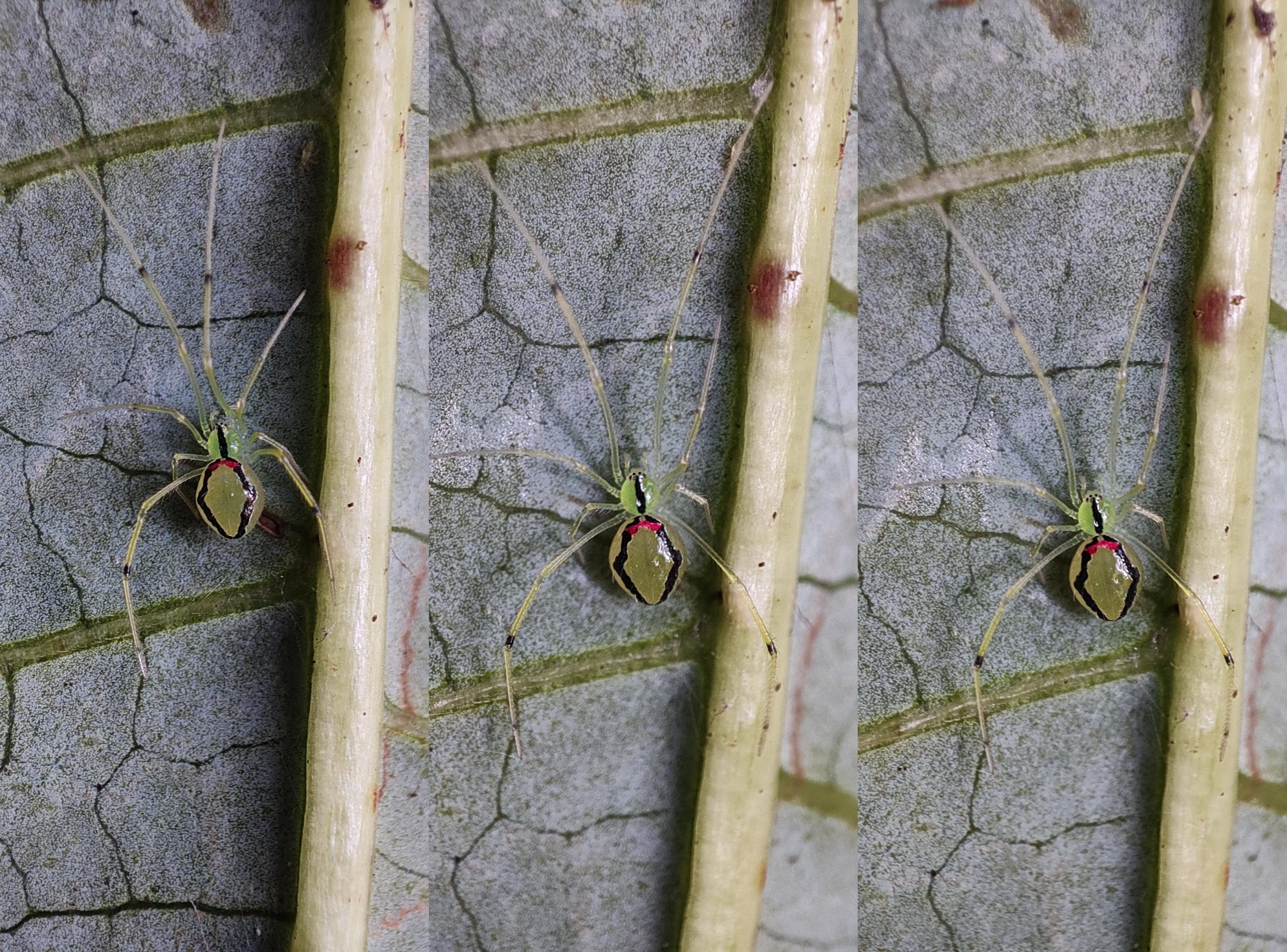
Priyadarshini said she had long been interested in high-altitude spiders because mountain landscapes and vegetation differ so sharply from the plains. “This almost came across as a gateway to look at other polymorphic species from this region.” Ashirwad also said broader surveys could reveal still more variation within the species.
Himalayas shaped the name
The species name, himalayana, honors the mountain range where the spider was discovered at elevations above 2,000 meters. “The name Himalayana was decided as the species name because we both wanted to pay our respects to the mighty Himalaya mountain ranges, which have been standing tall not just guarding our country but also holding a plethora of biodiversity within them,” Ashirwad said. “Since this spider was the first polymorphic from this region, we decided to make it an ode to the amazing mountain ranges.”
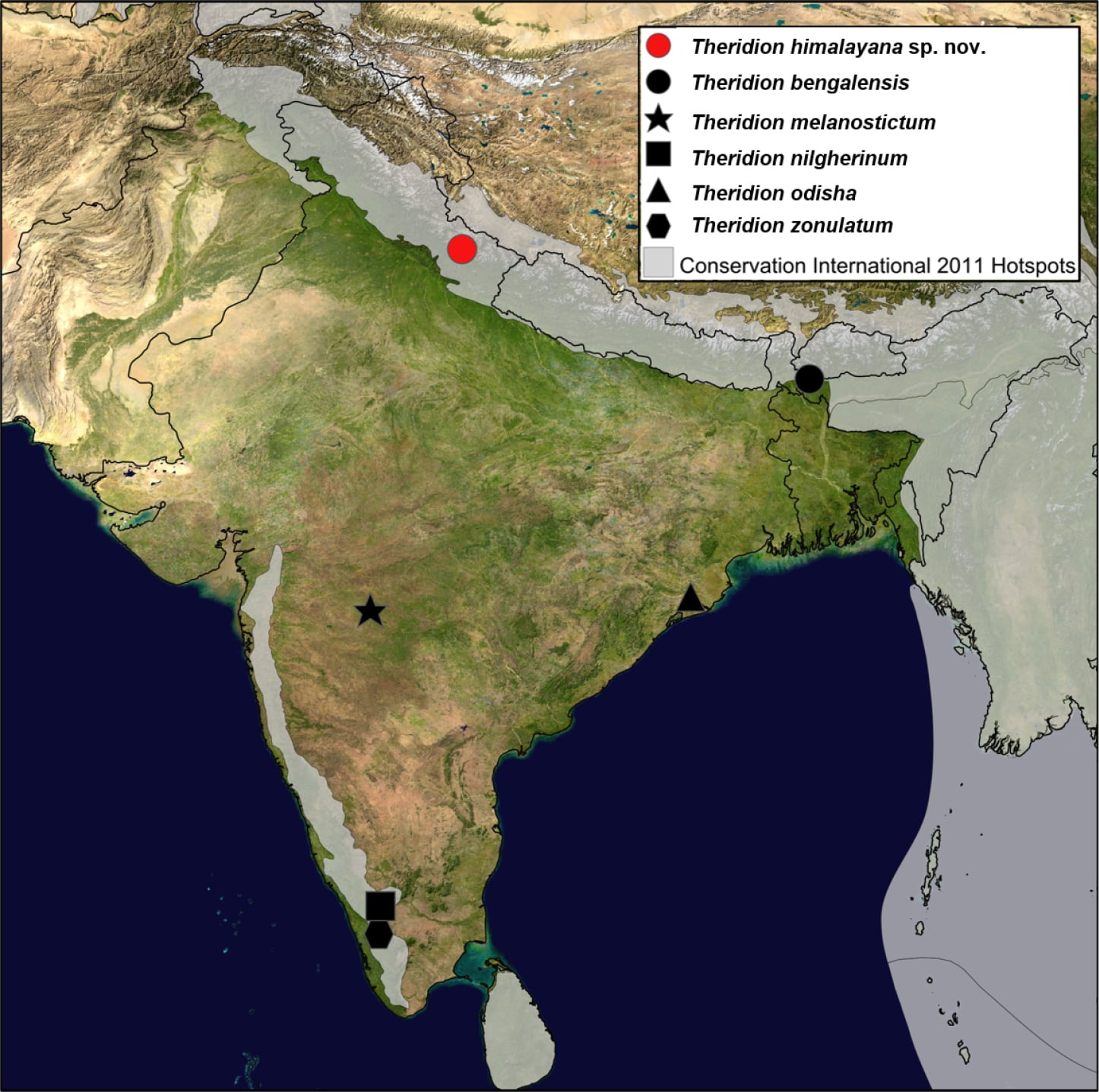
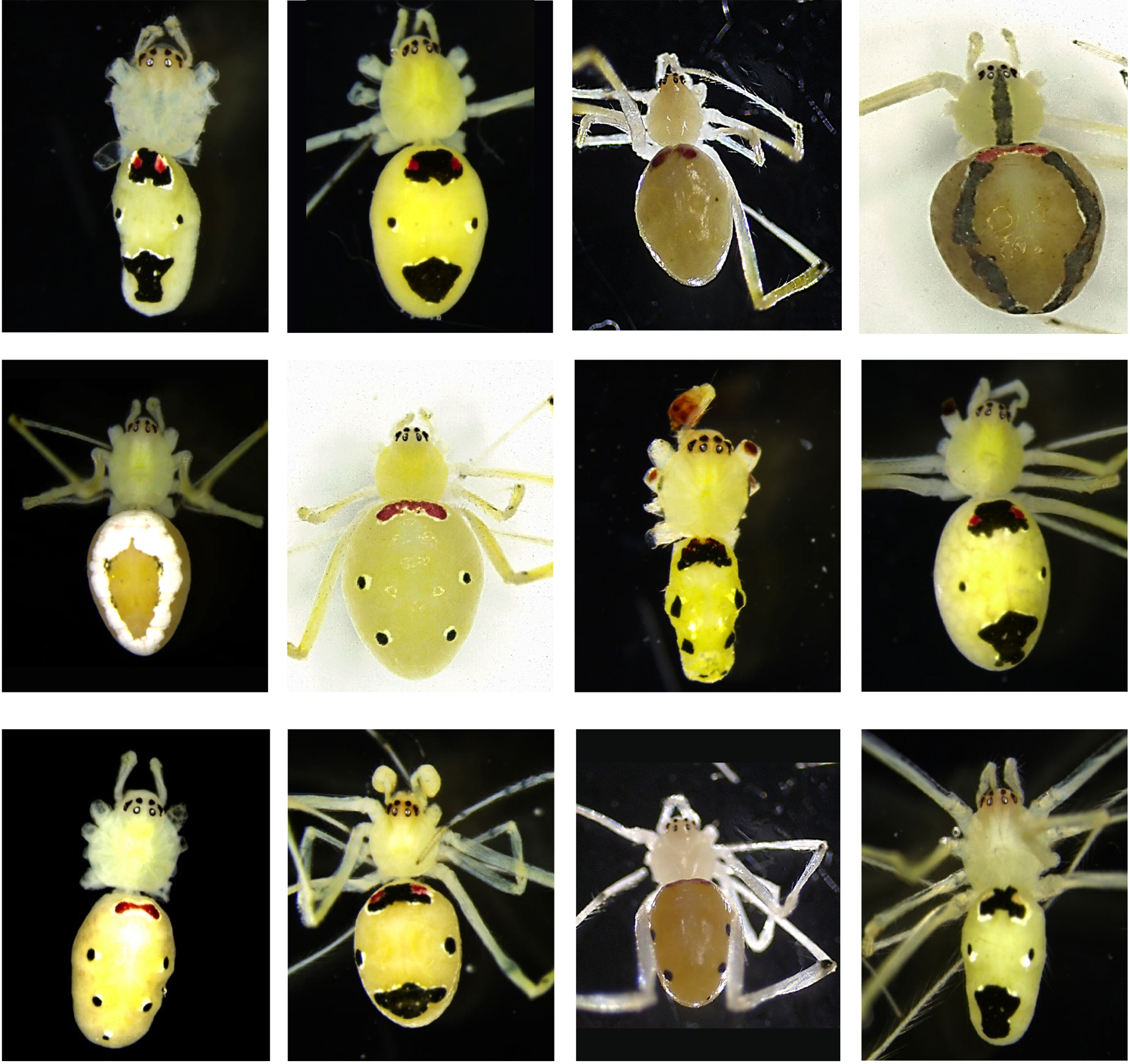
The study, published in the open-access journal Evolutionary Systematics, documented 32 color variations, or “morphs,” in specimens collected from three sites in Uttarakhand: Makku, Tala, and Mandal. DNA testing showed about 8.5% genetic variation from the Hawaiian happy face spider, confirming that the Indian spider belongs to a separate lineage that evolved independently in Asia.
Patterns remain unexplained
The smile-like markings are visually striking, but their function is still unclear.
“The reason behind the expression of polymorphism is also very complex and unique,” Priyadarshini explained. “These patterns definitely help them survive better in the wild, which is understood prima facie, but why do they resort to such patterns on their back, and what functional role in their life cycle does it exactly serve is yet to be deciphered. This is definitely indicative of a deeper genetic mystery.”
Ashirwad also noted that the spider was found among other small creatures with similar color patterns on their bodies.
The study also found that these spiders often occur on ginger plants (Hedychium species), echoing the behavior of their Hawaiian relatives. Because ginger is not native to Hawaii, that connection has raised new evolutionary questions for the scientists.
“How did the spiders choose an invasive species and ginger exactly?” Priyadarshini noted. “If T. himalayana is an elder cousin of T. grallator, although discovered 125 years later! Although this sounds like a tall claim now, it will be our further scope of work to establish any missing links, if at all, through Hedychium sps.”
Reference: “On the discovery of a new polymorphic Happy-Face Spider (Araneae, Theridiidae) from the Western Himalayas, India, with notes on its natural history” by Ashirwad Tripathy and Devi Priyadarshini, 24 April 2026, Evolutionary Systematics.
DOI: 10.3897/evolsyst.10.174338
Never miss a breakthrough: Join the SciTechDaily newsletter.
Follow us on Google and Google News.