
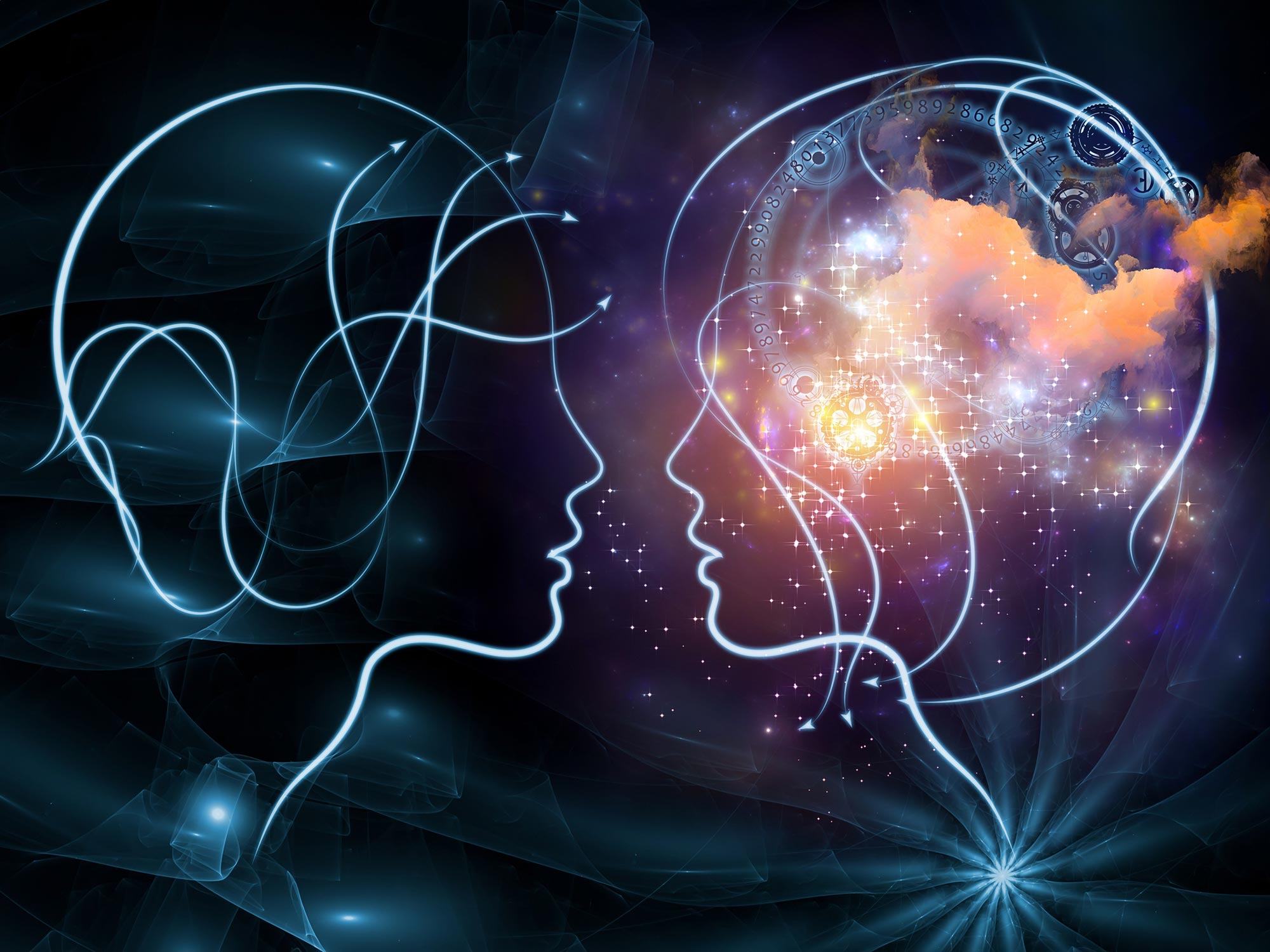
A new philosophical study challenges the idea that consciousness requires human-like biology.
What if consciousness has nothing to do with flesh and blood?
The possibility may sound like science fiction, but it is becoming an increasingly serious philosophical question as scientists search for alien life and artificial intelligence grows more sophisticated. A new analysis argues that consciousness may not be unique to Earth’s biology and could, in principle, emerge in life forms built from entirely different materials.
Eric Schwitzgebel, a distinguished professor of philosophy at the University of California, Riverside, and Jeremy Pober, a former UCR graduate student now a postdoctoral researcher at the University of Lisbon, contend that there is little reason to think conscious experience is tied exclusively to carbon-based life. Instead, they argue, consciousness could arise wherever evolution, or something like it, produces the right kind of complex system.
Rather than attempting to define consciousness itself, the researchers begin with the assumption that it is a real phenomenon. From there, they explore a deceptively simple question: Must consciousness depend on the biology found on Earth, or could it take forms unlike anything humanity has ever encountered?
Their paper arrives as debates over conscious artificial intelligence grow more urgent, inspiring both hopeful visions and alarming scenarios. Schwitzgebel and Pober address AI only briefly and do not offer a shared conclusion. In fact, their views differ. Still, their argument leaves room for the possibility that AI could be conscious someday, even if current systems may not be.
The central idea in the paper is “substrate flexibility.” A property is substrate flexible when it can be produced by more than one type of material. A cup, for example, can be made from glass, plastic or many other substances. A book can exist on paper or in digital form. Music can be stored on vinyl or compact discs.
Schwitzgebel and Pober argue that consciousness may work in a similar way.
“The universe may contain minds stranger than we can imagine,” Schwitzgebel said.
High probability of alien life
The observable universe contains roughly 1 trillion galaxies. Astronomers believe planets are common, and most of them likely have environments very different from Earth’s.
For their argument, Schwitzgebel and Pober estimate that at least 1,000 behaviorally sophisticated extraterrestrial civilizations have existed somewhere in the cosmos. They describe that as a conservative number, noting that “one recent survey found median scientific estimates over one civilization per galaxy at some point in that galaxy’s lifetime.”
Astrobiologists have also considered the possibility of life built from materials unlike those used by organisms on Earth. Some have examined alternative amino acids, different solvents, and even other possible chemical structures.
In the book version of “Project Hail Mary,” author Andy Weir, known for grounding his fiction in plausible science, describes an alien with a shell of oxidized minerals, two circulatory systems, mercury blood, steam-powered muscles, and a crystal brain. The being comes from an extremely hot planet with an atmosphere rich in ammonia.
Schwitzgebel and Pober do not claim that such exotic life definitely exists. Their argument is more limited. If life can emerge under a range of chemical conditions, and if the universe offers enormous numbers of chances for life to arise, it would be surprising if every successful evolutionary lineage used exactly the same biochemical ingredients.
The philosophers also point to the wide variety of nervous systems on Earth. Octopuses, bees, and dogs all process information in different ways. Even here, nature has not chosen just one biological design. Elsewhere in the universe, Schwitzgebel and Pober argue, evolution may be just as creative, or even more so.
Copernican principle of consciousness
Their main argument draws on the Copernican tradition in astronomy. Nicolaus Copernicus and later scientists showed that Earth is not the center of the solar system, the solar system is not the center of the galaxy and the Milky Way is not the center of the universe. Each step made humanity seem less cosmically special than people once assumed.
Schwitzgebel and Pober apply that lesson to consciousness. In their view, consciousness is probably not uniquely tied to us either.
If the universe contains many behaviorally sophisticated species with different biological structures, the authors argue, it would be a form of “terrocentrism” to assume that only Earth-like organisms can be conscious. By that, they mean treating Earth life as uniquely privileged without enough justification. They call their idea “the Copernican principle of consciousness.”
They are not saying that every advanced life form must be conscious. Instead, they argue that if consciousness exists among complex, behaviorally sophisticated beings, it would be strange to suppose that only organisms with our biochemical architecture could have it.
For centuries, humans have repeatedly learned that we are less central, less unique, and less privileged than earlier generations believed.
Schwitzgebel and Pober suggest consciousness may follow the same pattern. Rather than being a rare gift limited to one kind of biological machine, it may be a phenomenon that can arise wherever evolution, or a similar process, produces the right forms of complexity.
Where does this leave AI?
The paper inevitably raises questions about AI, though Schwitzgebel and Pober do not argue that today’s AI systems are conscious.
Pober says we should not assume current computer hardware can support consciousness. The fact that consciousness might occur in more than one substrate does not mean it can occur in every possible substrate.
Schwitzgebel is somewhat more open to the idea. If consciousness does not require human biology, he argues, it becomes harder to rule out silicon-based systems simply because they are made of silicon.
Either way, Schwitzgebel thinks this part of the philosophical discussion has been too limited.
“It’s focused too much on whether silicon can duplicate a human brain and not enough on the broader question of what kinds of systems can be conscious,” he said.
In the paper, Schwitzgebel and Pober separate highly specific properties from broader, more general ones. Asking whether human consciousness can exist in another substrate is a very specific question, they argue, because human consciousness may depend on many details of human biology. Consciousness in general is a broader category.
They compare this to the difference between asking whether another animal can exactly reproduce an eagle’s way of flying and asking whether flight can take different forms. Hummingbirds, bats, and insects all fly, but they do not fly in the same way. Consciousness, Schwitzgebel and Pober argue, may likewise appear in many forms without closely resembling human consciousness.
Reference: “Substrate Flexibility and the Copernican Principle of Consciousness” by Jeremy Pober and Eric Schwitzgebel, 28 May 2026.
Never miss a breakthrough: Join the SciTechDaily newsletter.
Follow us on Google and Google News.
18 Comments
It’s becoming clear that with all the brain and consciousness theories out there, the proof will be in the pudding. By this I mean, can any particular theory be used to create a human adult level conscious machine. My bet is on the late Gerald Edelman’s Extended Theory of Neuronal Group Selection. The lead group in robotics based on this theory is the Neurorobotics Lab at UC at Irvine. Dr. Edelman distinguished between primary consciousness, which came first in evolution, and that humans share with other conscious animals, and higher order consciousness, which came to only humans with the acquisition of language. A machine with only primary consciousness will probably have to come first.
What I find special about the TNGS is the Darwin series of automata created at the Neurosciences Institute by Dr. Edelman and his colleagues in the 1990’s and 2000’s. These machines perform in the real world, not in a restricted simulated world, and display convincing physical behavior indicative of higher psychological functions necessary for consciousness, such as perceptual categorization, memory, and learning. They are based on realistic models of the parts of the biological brain that the theory claims subserve these functions. The extended TNGS allows for the emergence of consciousness based only on further evolutionary development of the brain areas responsible for these functions, in a parsimonious way. No other research I’ve encountered is anywhere near as convincing.
I post because on almost every video and article about the brain and consciousness that I encounter, the attitude seems to be that we still know next to nothing about how the brain and consciousness work; that there’s lots of data but no unifying theory. I believe the extended TNGS is that theory. My motivation is to keep that theory in front of the public. And obviously, I consider it the route to a truly conscious machine, primary and higher-order.
My advice to people who want to create a conscious machine is to seriously ground themselves in the extended TNGS and the Darwin automata first, and proceed from there, by applying to Jeff Krichmar’s lab at UC Irvine, possibly. Dr. Edelman’s roadmap to a conscious machine is at https://arxiv.org/abs/2105.10461, and here is a video of Jeff Krichmar talking about some of the Darwin automata, https://www.youtube.com/watch?v=J7Uh9phc1Ow
Thank you! Much appreciate post-ignorance communication on this topic:)
You’re welcome.
Thank you for this info. I will check it out. While I am not a scientist, I have studied how the brain works, decision making, ethics, drug interactions and other effects on the brain. I agree about the two levels of consciences, particularly the animal tendency of living in the now, similar to some cerebral palsy victims.
Also if all matter originated with the big bang, there should be a lot of quantum entanglement throughout the universe. A third and different type of conscienceness. (God?) Ha! Sorry, just throwing that thought out there for the sake of debate. I have no viewpoint on it in either direction.
You’re welcome.
Your post was more informative than this article, which is neither science nor (good) philosophy.
Is water conscious because it flows around a rock? Humans project agency into many events that have no immediate apparent cause creating imaginary agents with powers like God, devils and angels. The idea that a universe operating according to complex physical relationships needs a conscious agency or a self-referential algorithm exhibits conscious decision-making is projecting features of human experience. Because we humans cannot define consciousness, everything can be conscious which results in consciousness becoming meaningless . In our complex universe all observable phenomena are influenced by their relationships found in the context of their existence.
Consciousness is entirely a product of brains – for good or most bad as humans particularly prove.
Sorry your fantasies are – fantasies.
But look on the bright side: it far more complex and fantastic than you imagine – and you might have an even greater kick out of seeing how all this is experienced than you have imagining your fantasy.
Here’s the key, it’s more than you think.
I used to believe that consciousness derived from a biological source. I’m not so sure about that anymore. A lot of new wave thinking has it existing independent of the body. Outside somehow and attuned to each individual, kind of like an antenna. This could be a good argument for a soul or whatever you want to call it. I’m not religious, in the traditional sense, but something started it all – call it what you want. I do believer in a prime mover but don’t tend to personalize it per se.
Can a Galaxy, Star, or Planet be conscious? How about a molecular cloud, or asteroid? Maybe a black hole? Hmmmmm…..
The more I read about the philosophy behind consciousness, the more I find myself leaning toward the idea that consciousness is a hustle. The true application of the Copernican theory is not to expose an Earth- and carbon-based consciousness but to expose consciousness itself. Perhaps consciousness is nothing more than a detection system, which clearly need not be biologically-based, detecting that a detection system exists, and that the detection system is detecting itself. Everything else that we associate with consciousness – the value of things, the qualia of existence – is a figment of our imagination resulting from the most basic goals of evolution: mere survival and passing on genes.
Perhaps it is not merely humanity which is less cosmically special than people once assumed but also the human experience itself; the assessment of “special” gets exposed at every level. The utlimate application of Copernican theory is not in valuation based on the geography of astrophysics but in the valuation itself. Similar to the debate of theology: rather than engage in the debate of which of the 4,000+ religions humans have created to best explain the nature of supernatural beings is correct, the simpler position is to stop assuming that supernatural beings exist. Rather than engage in the debate of how consciousness could be structured or which structures could produce the “special” thing that humans have, the simpler position is to stop assuming that specialness – consciousness – exists.
I’d make a reply regarding consciousness and in general consent, but the fact that this discussion has been elicited by two philosophers whom scitechdaily has presented as ‘scientists’, just for the sake of web-traffic, takes priority.
‘Scientists’…
Clickbait.
Because nobody cares about a philosopher and his postdoc (philosophy) former student’s opinion about consciousness. In fact, you won’t see a Google News category “Philosophy” either. People care about:
” Business Technology Entertainment Sports Science” etc.
And that isn’t my opinion. That’s a 𝘧𝘢𝘤𝘵 .
I’m not nobody.
You contributed nothing but your own bile, as usual.
My previous comment was directed at “danR2222”, NOT Dan Slaby.
Is water conscious because it flows around a rock? Humans project agency into many events that have no immediate apparent cause creating imaginary agents with powers like God, devils and angels. The idea that a universe operating according to complex physical relationships needs a conscious agency or a self-referential algorithm exhibits conscious decision-making is projecting features of human experience. Because we humans cannot define consciousness, everything can be conscious which results in consciousness becoming meaningless . In our complex universe all observable phenomena are influenced by their relationships found in the context of their existence.
philosophers…
And why only 1000 possible civilizations? Why not more