
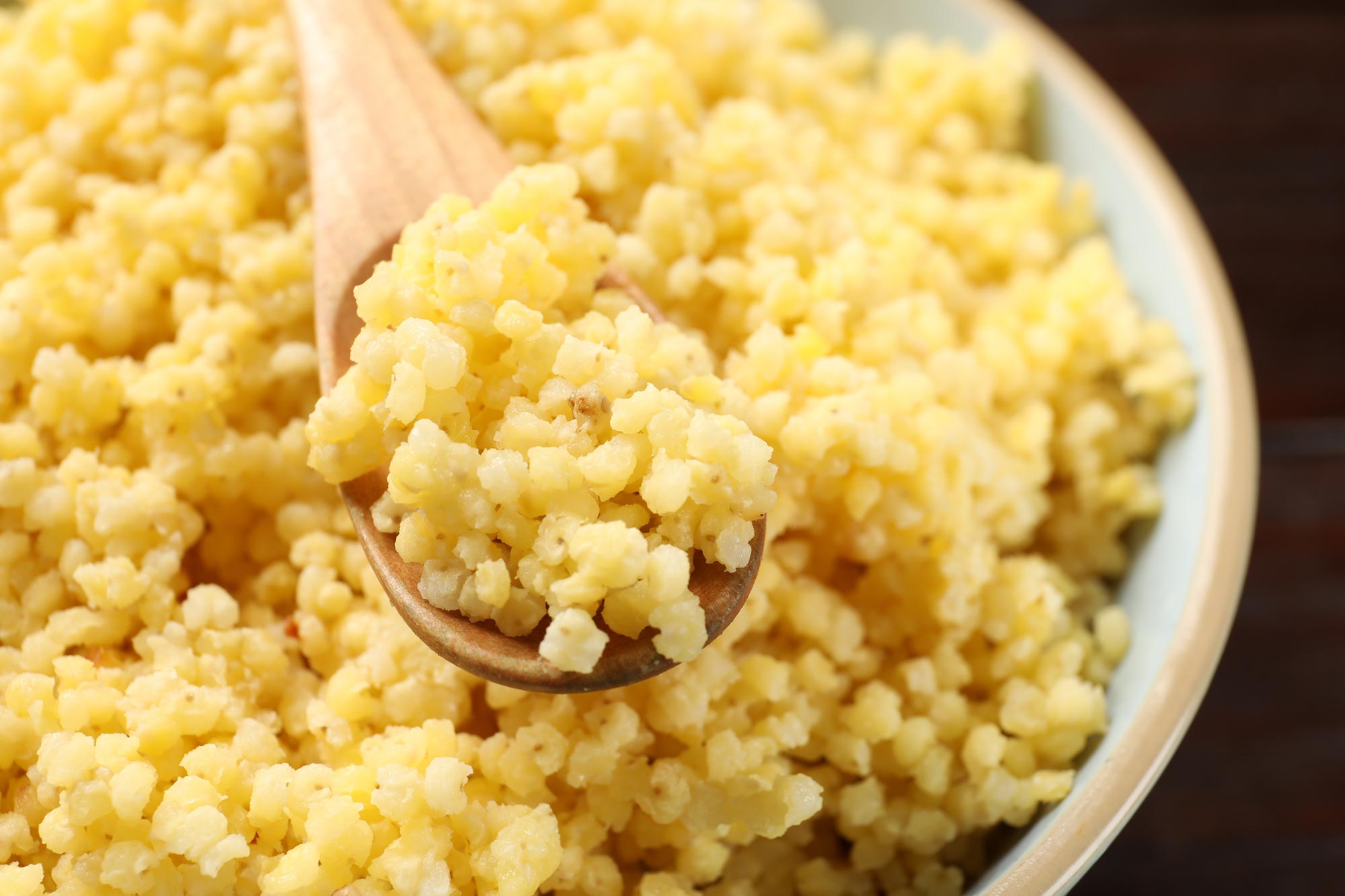
Iron-rich pearl millet may improve toddler nutrition without disrupting the developing gut microbiome.
Each day, hundreds of toddlers in Mumbai’s urban slums ate porridge, soft curry, or freshly baked foods prepared for young children. Some meals contained ordinary pearl millet, an ancient grain widely eaten in India. Others used a specially bred millet with almost three times as much iron and more zinc than conventional grain. The foods tasted much the same, but the fortified grain was producing measurable changes inside the children’s developing gut microbiomes.
Iron deficiency is the world’s most common nutritional disorder, affecting about one quarter of the global population. Without enough iron, the body cannot make sufficient hemoglobin, the protein that carries oxygen in the blood. The resulting iron-deficiency anemia can interfere with physical health, brain development, and cognitive function.
Researchers at the Cornell Joan Klein Jacobs Center for Precision Nutrition and Health, working with collaborators in India and at the University of California San Diego, studied toddlers who ate iron- and zinc-biofortified pearl millet for nine months. They found none of the adverse effects commonly associated with higher iron intake. Instead, the children developed distinct gut microbial changes that may be beneficial.
Published in Nature Communications and presented at the American Society for Nutrition’s annual meeting, the research is believed to be among the first studies to examine how eating a biofortified crop affects the human gut microbiome.
“We thought that a food-based approach could help us move away from one-size-fits-all supplementation strategies to address population health, while also being a way to personalize nutritional interventions,” said Dr. Saurabh Mehta, founding director and Janet and Gordon Lankton Professor at the Jacobs center in the College of Human Ecology, and the principal investigator on the study. “So, we decided to test it.”
Iron deficiency affects approximately one in four people and can be especially damaging during early childhood, when it may slow brain development and weaken resistance to infection. Iron supplements can correct the deficiency, but previous research has identified an important drawback. Because the body absorbs only part of a large supplemental dose, excess iron can reach the colon, encourage harmful pathogens, and restrict beneficial microbes. Supplements may also cause diarrhea, constipation, and tarry stools. Those effects are particularly concerning in infants and toddlers because their gut ecosystems are still developing and remain highly sensitive to outside influences.
A staple crop tests a safer approach
The trial included 223 children between 12 and 18 months old living in Mumbai’s urban slums, where iron deficiency and anemia remain widespread. Half received meals prepared with biofortified millet containing 8.7 mg of iron per 100 grams. The remaining children ate standard millet containing 3 mg per 100 grams. Researchers collected rectal swabs before and after the intervention, then sequenced the samples to chart each child’s gut microbial community.
“We had to work with growers to develop the millet. Then we procured 38 tons of millet, split between the two types, and we had to identify storage facilities with the proper temperature and humidity,” said Samantha Huey, research associate in the Jacobs center and co-first author of the study. “We tested it for contamination and to make sure it had the iron and zinc we wanted it to have.”
SNDT Women’s University in India helped create the millet recipes and foods. Working with the Mumbai-based Centre for the Study of Social Change, researchers distributed the meals across 20 locations. At every feeding center, a research assistant recorded how much each child consumed twice daily, with another meal sent home. The schedule continued six days per week for nine months.
Microbial genes reveal what changed
“The sequencing technique that was used allowed us to delve deeper than just describing the types of bacteria present in these children’s guts – we could also understand what they were actually doing,” said co-first author Nathanial Cole, a postdoctoral associate in the Jacobs Center.
“We compared the DNA from these children’s gut communities to reference DNA from other species with known functions, allowing us to predict what these microbes were doing based on genetic similarities,” he said. “This approach enabled us to track how the gut microbiome developed over time and how it responded to the biofortified pearl millet.”
The biofortified millet was associated with increased activity in microbial pathways involved in resisting pathogens. These included pathways that produce natural antibiotic-like compounds, along with antioxidant metabolism that helps support a healthier intestinal environment. By the end of the trial, the children who received the fortified grain also had fewer microbial markers associated with harmful bacteria.
The researchers observed another pattern in both groups. As the toddlers grew older, their gut microbiomes became more diverse and developed a broader range of metabolic abilities, making them better prepared to process different foods. This progression is expected as a healthy gut ecosystem matures during the first years of life.
Biofortification could scale beyond supplements
“Iron supplementation is usually given at high doses because it isn’t well absorbed, but excess ends up in the colon and can allow harmful bacteria to proliferate,” Huey said. “Biofortification increases the nutrient density of the plant via genetic engineering, agronomic practices or – what we used – traditional cross breeding.”
Supplements depend on reliable distribution systems and consistent individual use. Biofortified crops could instead be cultivated, prepared and eaten in the same ways as ordinary staple foods. That could make them a more self-sustaining strategy, Huey said.
Larger studies involving more diverse populations will be necessary before biofortified crops can be recommended as a gut-friendly alternative to supplements. Even so, the approach may have value in lower and middle-income countries as well as wealthier nations. Iron deficiency remains a significant problem in the United States, where biofortification could strengthen agriculture while providing climate-smart, high-yield staple crops with nutrients the body can readily absorb.
The strategy also reflects a broader shift in nutrition guidance toward minimally processed foods.
“The latest dietary guidelines are now stressing eating whole foods and limiting ultra-processed foods and additives,” Huey said. “Growing crops that are naturally more nutrient-dense, rather than relying on adding micronutrients back in during food manufacturing, aligns with these recommendations.”
Reference: “Effect of a complementary feeding intervention based on iron- and zinc-biofortified pearl millet on the gut microbiota in 12–18-month-old children: a randomized trial” by Samantha L. Huey, Nathaniel L. Cole, Ioanna Pagani, Antonio González, Julia L. Finkelstein, Jere D. Haas, Shobha A. Udipi, Padmini Ghugre, Ramesh D. Potdar, Rob Knight and Saurabh Mehta, 30 July 2026, Nature Communications.
DOI: 10.1038/s41467-026-75674-6
This study was also funded by the Agriculture and Food Research Initiative Grant #2021-67017-34008 from the United States Department of Agriculture National Institute of Food and Agriculture. S.L.H. was supported by the NIH under award 5T32HD087137.
Never miss a breakthrough: Join the SciTechDaily newsletter.
Follow us on Google and Google News.