
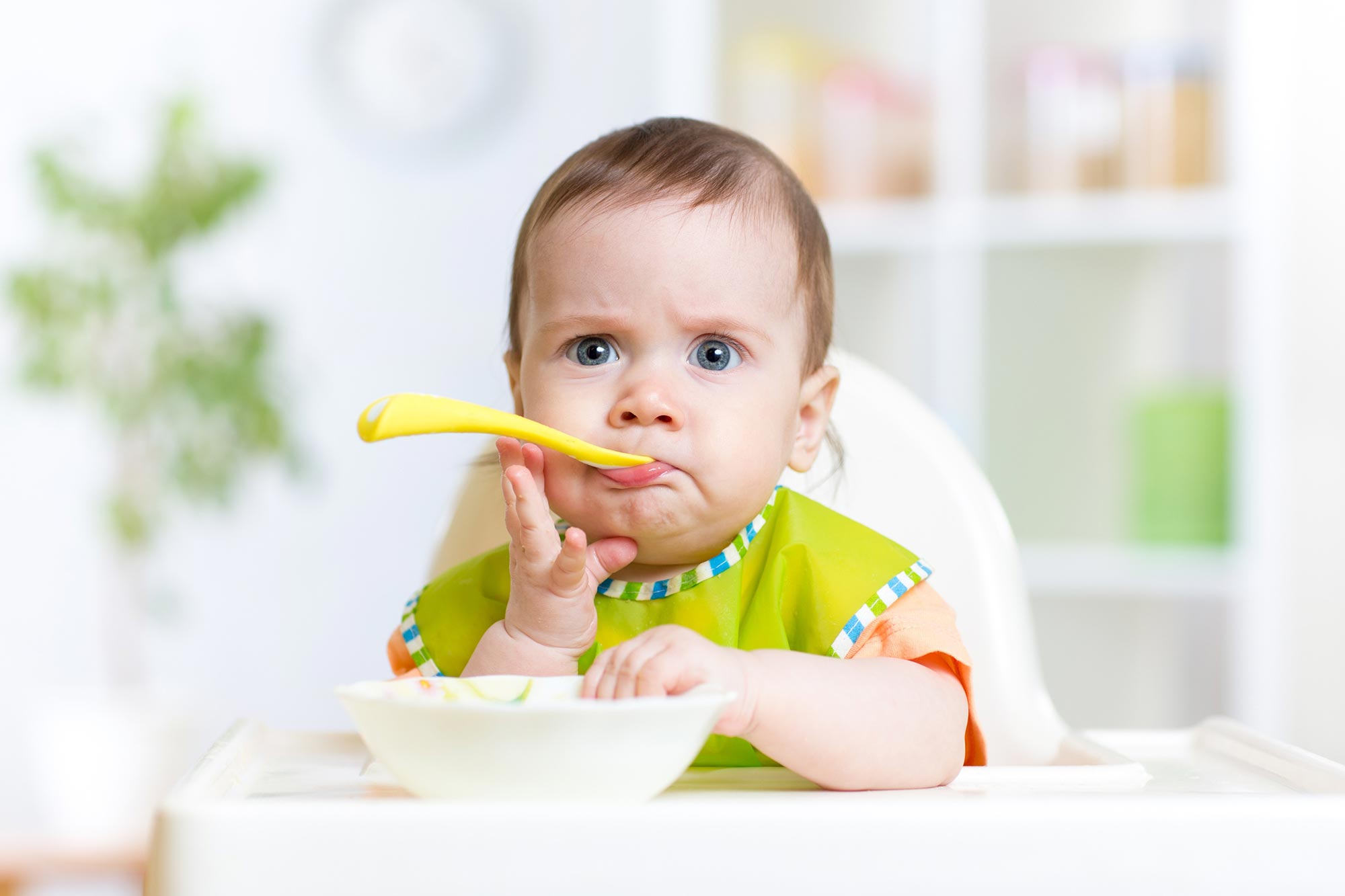
A wake-up call for parents and policymakers with widespread use of misleading claims.
Research shows that 60% of US infant and toddler foods do not align with nutritional recommendations, and none adhere to WHO promotional guidelines. With convenience foods on the rise, baby food pouches, despite their popularity, often fail health standards. Misleading marketing practices compound the issue, suggesting a need for stricter regulations.
Nutritional Shortcomings in Infant Foods
A staggering 60 percent of infant and toddler foods fail to meet nutritional recommendations, and none meet promotional requirements set by World Health Organization (WHO) guidelines, according to new research published today (August 21) in the scientific journal Nutrients.[1]
In the absence of US-specific nutrition or promotional guidelines for these foods, researchers at The George Institute for Global Health assessed data on 651 infant and toddler food products sold in the top ten US grocery chains held in the Institute’s FoodSwitch database against this international benchmark.[2]
Among all products, 70 percent failed to meet protein requirements and 44 percent exceeded total sugar requirements. A further one in four products did not meet calorie requirements and one in five exceeded recommended sodium limits.
Health Implications of Poor Nutrition
Dr. Elizabeth Dunford, Research Fellow at The George Institute, and Adjunct Assistant Professor, Department of Nutrition at the University of North Carolina said that the rising popularity of processed convenience foods for infants and young children was concerning.
“Early childhood is a crucial period of rapid growth and when taste preferences and dietary habits form, potentially paving the way for the development of chronic diseases such as obesity, diabetes, and some cancers later in life,” she said.
Growing Popularity of Convenience Foods
“Time-poor parents are increasingly choosing convenience foods, unaware that many of these products lack key nutrients needed for their child’s development and tricked into believing they are healthier than they really are.”
Researchers found that baby food pouches are the fastest-growing products in the sector, with a 900 percent increase in the proportion of sales deriving from pouches in the last 13 years. Concerningly, pouches ranked among the unhealthiest products assessed, with fewer than 7 percent meeting total sugar recommendations.*
Misleading Marketing in Baby Foods
The study also revealed the extent of misleading marketing practices, with almost all (99.4 percent) products featuring at least one prohibited claim on their packaging. On average, products displayed four prohibited claims, with some displaying as many as 11. Common claims included ‘non genetically modified (GM)’ (70 percent), ‘organic’ (59 percent), ‘no BPA’ (37 percent), and ‘no artificial colors/flavors’ (25 percent).
Dr. Daisy Coyle, Research Fellow and Dietitian at The George Institute said that claims like these create a so-called ‘health halo’ around these products.
“The lack of regulation in this area leaves the door wide open for the food industry to deceive busy parents,” she said.
“We saw this not only in the use of misleading claims but also in the use of misleading names, where the product name did not reflect the main ingredients found on the ingredient list.”
“For example, snack and finger foods often referred to fruit or vegetables in the product name, despite primarily being made of flour or other starches,” Dr. Coyle added.
Rise in Childhood Obesity and Regulatory Challenges
Obesity in children aged two to five has more than doubled in the US since the 1970s, with approximately 13% of preschool children living with obesity.[3] This has only worsened since the COVID-19 pandemic.[4]
“While reducing childhood obesity was a priority under the Obama administration, the issue appears to have fallen by the wayside in recent years,” added Dr. Dunford.
Conclusion and Call for Action
“Our findings highlight the urgent need for better regulation and guidance in the infant and toddler foods market in the United States — the health of future generations depends on it.”
References:
- “An Evaluation of the Nutritional and Promotional Profile of Commercial Foods for Infants and Toddlers in the United States” by Daisy H. Coyle, Maria Shahid, Kiana Parkins, Monica Hu, Marina Padovan and Elizabeth K. Dunford, 20 August 2024, Nutrients.
DOI: 10.3390/nu16162782 - World Health Organization. Nutrient and Promotion Profile Model: Supporting appropriate promotion of food products for infants and young children 6–36 months in the WHO European Region. 2022
https://www.who.int/europe/publications/i/item/WHO-EURO-2022-6681-46447-67287 - Fryar CD, et al. Prevalence of overweight, obesity, and severe obesity among children and adolescents aged 2–19 years: United States, 1963–1965 through 2017–2018. NCHS Health E-Stats. 2020. https://www.cdc.gov/nchs/data/hestat/obesity-child-17-18/overweight-obesity-child-H.pdf
- Lange SJ et al. Longitudinal Trends in Body Mass Index Before and During the COVID-19 Pandemic Among Persons Aged 2–19 Years — United States, 2018–2020. MMWR Morb Mortal Wkly Rep 2021;70:1278–1283
https://www.cdc.gov/mmwr/volumes/70/wr/mm7037a3.htm?s_cid=mm7037a3_w
*This represents 7 percent of all pouches, but fruit-based pouches (which contain the most sugar) aren’t included in the WHO criteria. This figure becomes 69% if fruit-based pouches are excluded.
Never miss a breakthrough: Join the SciTechDaily newsletter.
Follow us on Google and Google News.
1 Comment
Also, the pouches can leach chemicals into the food. Some of these are forever chemicals.