
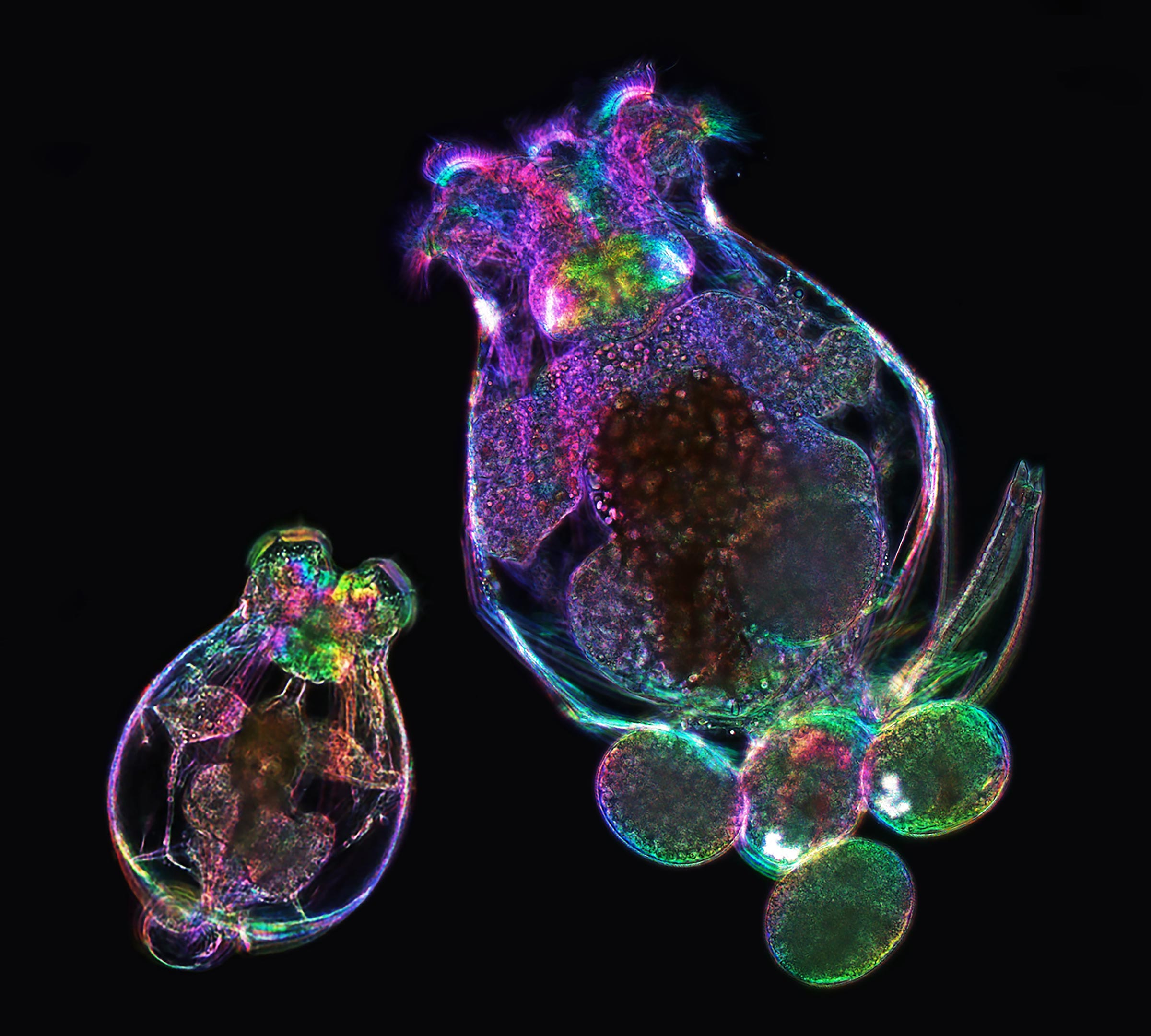
Maternal age effects may arise from reversible epigenetic changes whose impact depends partly on genetics and evolutionary pressures.
A mother’s age can leave a biological imprint on her offspring, influencing physical and behavioral traits across many animal species, including humans. These so-called maternal age effects are widespread, but scientists still do not fully understand the biological mechanisms behind them or why evolution has allowed them to persist.
“Maternal age effects are incredibly common, from invertebrates up through humans, elephants, other primates and other mammals,” said Kristin Gribble, an associate scientist in the Bay Paul Center at the Marine Biological Laboratory. “Nearly all forms of life show some level of maternal age effect, and most are negative effects caused by advanced maternal age.”
Epigenetics may carry maternal age effects
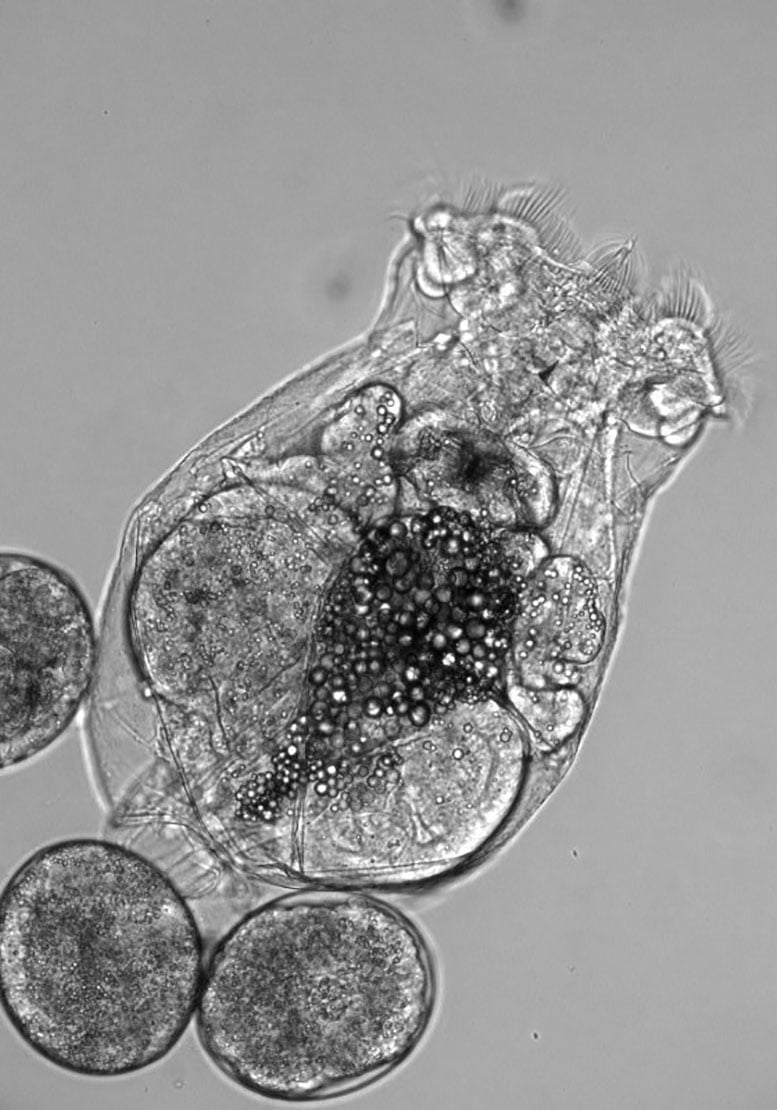
To investigate how information about maternal age reaches the next generation, Gribble’s lab studies rotifers, tiny aquatic animals that reproduce quickly and can be examined across generations. “Understanding the mechanism in these simple invertebrates can help us understand how maternal age effects occur in people as well,” she said. The rotifer experiments point toward an epigenetic explanation, meaning changes in how genes are switched on or off rather than mutations in the DNA sequence itself.
Work in Gribble’s lab by postdoctoral scientist Alyssa Liguori, now an assistant professor at SUNY-New Paltz, examined two different genotypes of the same rotifer species. Maternal age effects did not become progressively stronger with each generation and could instead disappear within a single generation.
That rapid reversal argues against the idea that the effects simply result from a gradual buildup of age-related cellular damage or DNA mutations. One possible mechanism is histone modification, an epigenetic process capable of turning gene expression on or off.
Gribble’s lab is now testing whether histone modifications account for the maternal age effects it has observed. She is also examining whether mitochondrial DNA, which is usually inherited from the mother, could play a role “in transmitting information about maternal age from moms to offspring.”
Genetics may change the severity of effects
The researchers are also investigating whether genetic variation changes how strongly offspring experience maternal age effects.
“There are likely gene variants out there that are protective of negative effects of advanced maternal age,” Gribble said. “In one of our strains, we saw that offspring from older mothers had a longer lifespan, implying a genetic mechanism may be involved in that beneficial effect.”
Evolution has not eliminated the pattern
A larger evolutionary puzzle remains: why do maternal age effects continue to exist? Offspring of older mothers often have shorter lifespans, reproduce less, and have lower evolutionary fitness, traits that might be expected to disappear through natural selection. Yet maternal age effects occur across a broad range of species.
Gribble suspects part of the explanation is that the force of natural selection declines later in life. “Selective pressure is much lower at advanced ages, particularly in rotifers which are really geared to do most of their living and reproducing very young,” she said. By old age, female rotifers have already produced most of their offspring, leaving less evolutionary pressure for late-life reproduction to produce highly fit descendants.
For Gribble, the deeper question is how biological information can persist across several generations. “I want to know how it happens that information about a grandmother or great-grandmother’s environment can affect the phenotype of her grandchild or great-grandchild,” she explains.
Learning how these maternal effects move across generations could also deepen understanding of human health and eventually inform precision medicine. “It’s not just about what’s in your genome as an individual,” Gribble said, because “your health potentially depends on the health and environment of your mom and grandmother and great grandmother.”
Reference: “Transgenerational and Intergenerational Maternal Age Effects Exhibit Complex, Genotype-Specific Patterns of Inheritance” by Alyssa Liguori, Sovannarith Korm, Alex Profetto, Emily Richters and Kristin E. Gribble, 13 August 2026, The American Naturalist.
DOI: 10.1086/742104
Never miss a breakthrough: Join the SciTechDaily newsletter.
Follow us on Google and Google News.