
Water and spice influenced eating in opposite and unexpected ways during controlled meal experiments.
A glass of water beside a meal is often treated as an easy way to eat less. The usual explanation is that the water stretches the stomach and creates a sense of fullness before too much food is consumed.
A Cornell analysis, however, found no evidence that this happened during the meals researchers observed.
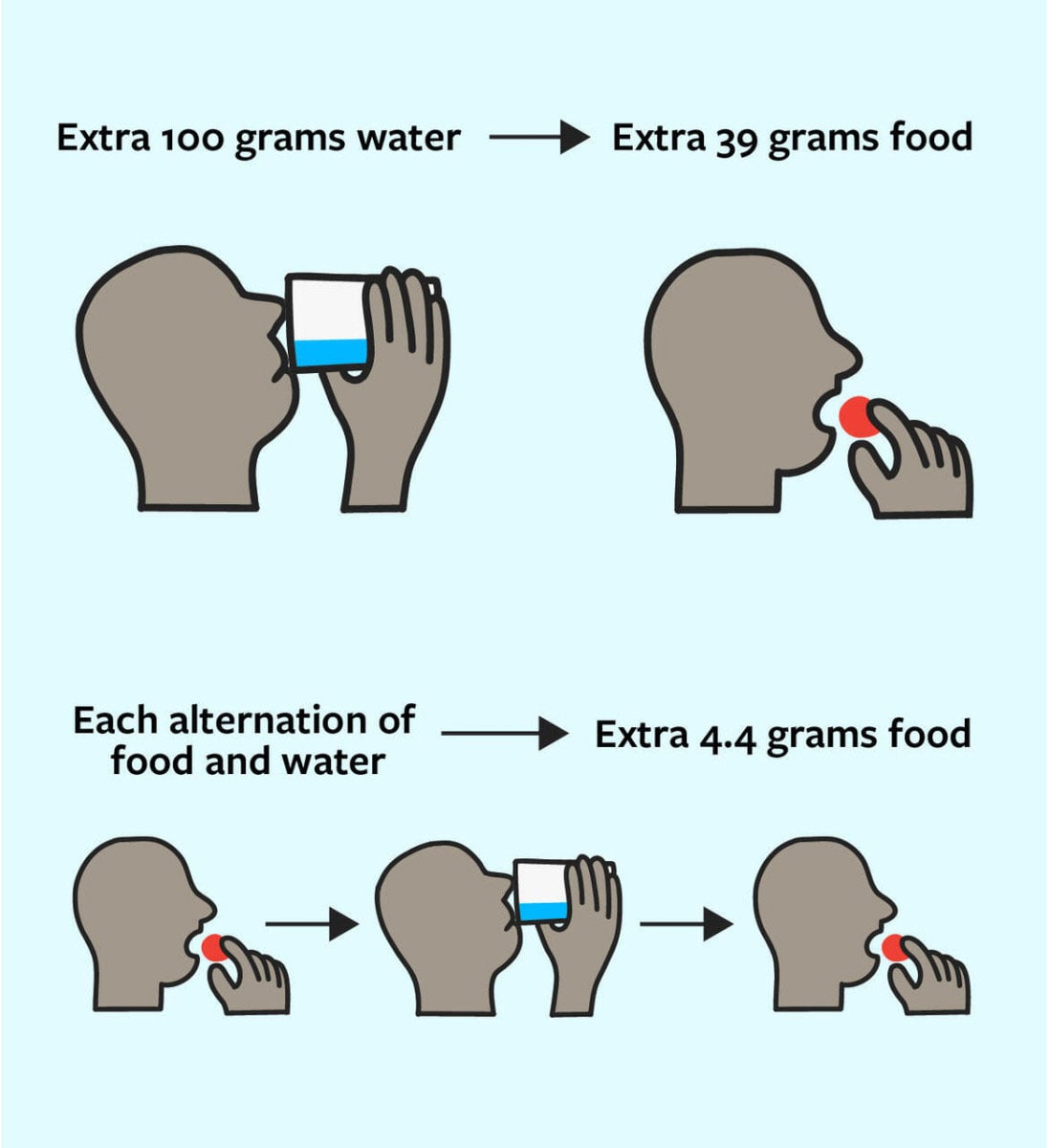
Participants actually consumed about 39 additional grams of food, or roughly 49 more calories, for every extra 100 grams of water they drank. Those who alternated more often between eating and drinking also consumed more food, with each additional switch associated with another 4.4 grams eaten.
One possible explanation involves sensory-specific satiety, the gradual decline in a food’s appeal as a person continues eating it. Taking sips of water between bites may refresh the sensory contrast of the meal, allowing the food to remain enjoyable for longer and postponing the point when eating stops.
Water may prolong eating, not fullness
“There’s been this widespread advice that if we drink water, it fills us up,” said Paige Cunningham, assistant professor in the Division of Nutritional Sciences in the College of Human Ecology. “But water is emptied quickly from the stomach so it likely doesn’t fill us up for long. Instead, water may increase how much we eat, providing lubrication which can speed up eating, and preventing a dry mouth which can prolong enjoyment of the food.”
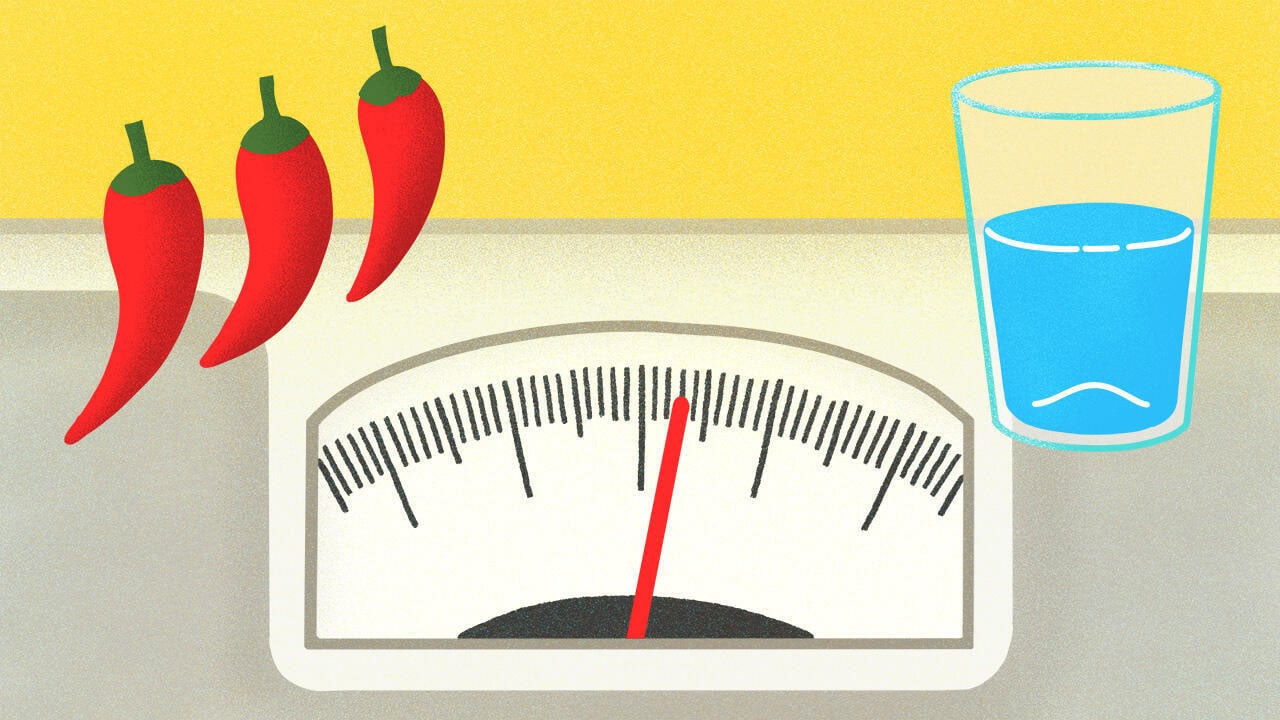
Cunningham served as corresponding author of the analysis, published in July in Appetite and completed with longtime collaborator John Hayes of Penn State’s Department of Food Science. A separate but related experiment examined how the heat of salsa affected the amount people ate and produced another unexpected result.
“Both studies show how mealtime behaviors and food properties can significantly influence how much we eat, without us even realizing. We found that just drinking more water was associated with greater consumption, while adding a bit more spice to a snack slowed eating and decreased how much participants ate,” said Cunningham.
Faster drinking complicates the pattern
For the water analysis, researchers combined data from two earlier laboratory experiments involving 86 adults. Participants received either beef chili or chicken tikka masala with water and were allowed to eat as much as they wanted while cameras recorded every bite and sip.
One finding did not fit the researchers’ expectations. People who consumed their water more quickly ate less food rather than more. The researchers do not yet have a firm explanation, noting that the pattern might involve how long water remains in the mouth or simply reflect the total duration of the meal.
“This was a secondary analysis looking at associations,” Cunningham said. “We are following up on this right now so we can make those causal inferences.”
Spicier salsa slowed eating and intake
A separate experiment, published in April in Food Quality and Preference, involved 49 adults who ate tortilla chips with either mild or spicy salsa once a week for two weeks. The amount of cayenne in the salsa was the only difference between the two conditions.
When the salsa was spicier, participants consumed 28% less of the snack overall. The reduction included both the salsa and the unchanged tortilla chips.
Participants also ate the spicy snack about 30% more slowly than the mild version. The researchers suspect the heat reduced intake by slowing the pace of eating. Participants drank similar amounts of water under both conditions, making increased drinking an unlikely explanation for the result.
“We were interested in whether making the salsa spicy would result in people eating the same amount of chips,” Cunningham said. “And they didn’t. The takeaway is that adding spice to one part of the snack can significantly influence how much people eat overall.”
The results challenge familiar diet advice
Together, the studies complicate two familiar ideas about eating. Water consumed with meals is commonly promoted as a straightforward way to reduce intake, while spicy foods may be viewed cautiously by people trying to control how much they eat. In these laboratory settings, the opposite patterns appeared: drinking more water was associated with greater food consumption, while additional spice was associated with eating less.
“These strategies might help consumers achieve their goals to reduce energy intake,” Cunningham said.
Both studies also have clear limitations. Researchers tested only beef chili, chicken tikka masala, and one combination of tortilla chips and salsa, all under controlled laboratory conditions. They caution that different foods or everyday eating environments may not produce the same results.
“We are looking to future experiments that explore what other factors or properties of foods we can leverage to influence behaviors,” Cunningham said.
References:
“Water intake, switching between bites and sips, and drinking behavior are associated with food intake across meals varying in spiciness: A secondary analysis of two randomized crossover studies” by Paige M. Cunningham and John E. Hayes, 24 June 2026, Appetite.
DOI: 10.1016/j.appet.2026.108698
“Increasing the spiciness of a snack slows eating and reduces food and energy intake” by Paige M. Cunningham, Eliza Polyak and John E. Hayes, 26 April 2026, Food Quality and Preference.
DOI: 10.1016/j.foodqual.2026.105951
Never miss a breakthrough: Join the SciTechDaily newsletter.
Follow us on Google and Google News.
1 Comment
I ALWAYS drink water with my meals. Helps wash down the food.
My step-father believed that drinking during meals was bad because it diluted the stomach acid needed to break up food! He wasn’t the brightest bulb on the tree. 🤣