

Research shows that adopting a childlike facial expression can make adults feel more connected to their childhood experiences.
New research suggests that temporarily changing how people perceive their own bodies can help them recall personal memories, potentially even those from their earliest years of life.
Published in the journal Scientific Reports, the study is the first to show that adults can retrieve more early-life memories after viewing and embodying a version of their own face that has been digitally transformed to look like their childhood self.
The experiment, led by neuroscientists at Anglia Ruskin University (ARU) in Cambridge, involved 50 adult participants and used a technique called the “enfacement illusion.” This method allows individuals to perceive a face displayed on a computer screen as their own reflection.
Participants were shown a live video feed of their face that had been digitally altered with an image filter to resemble how they might have looked as children. As they moved their heads, the modified face mirrored their movements in real time, reinforcing the illusion that the childlike face belonged to them. A control group experienced the same setup but viewed their unaltered adult faces.
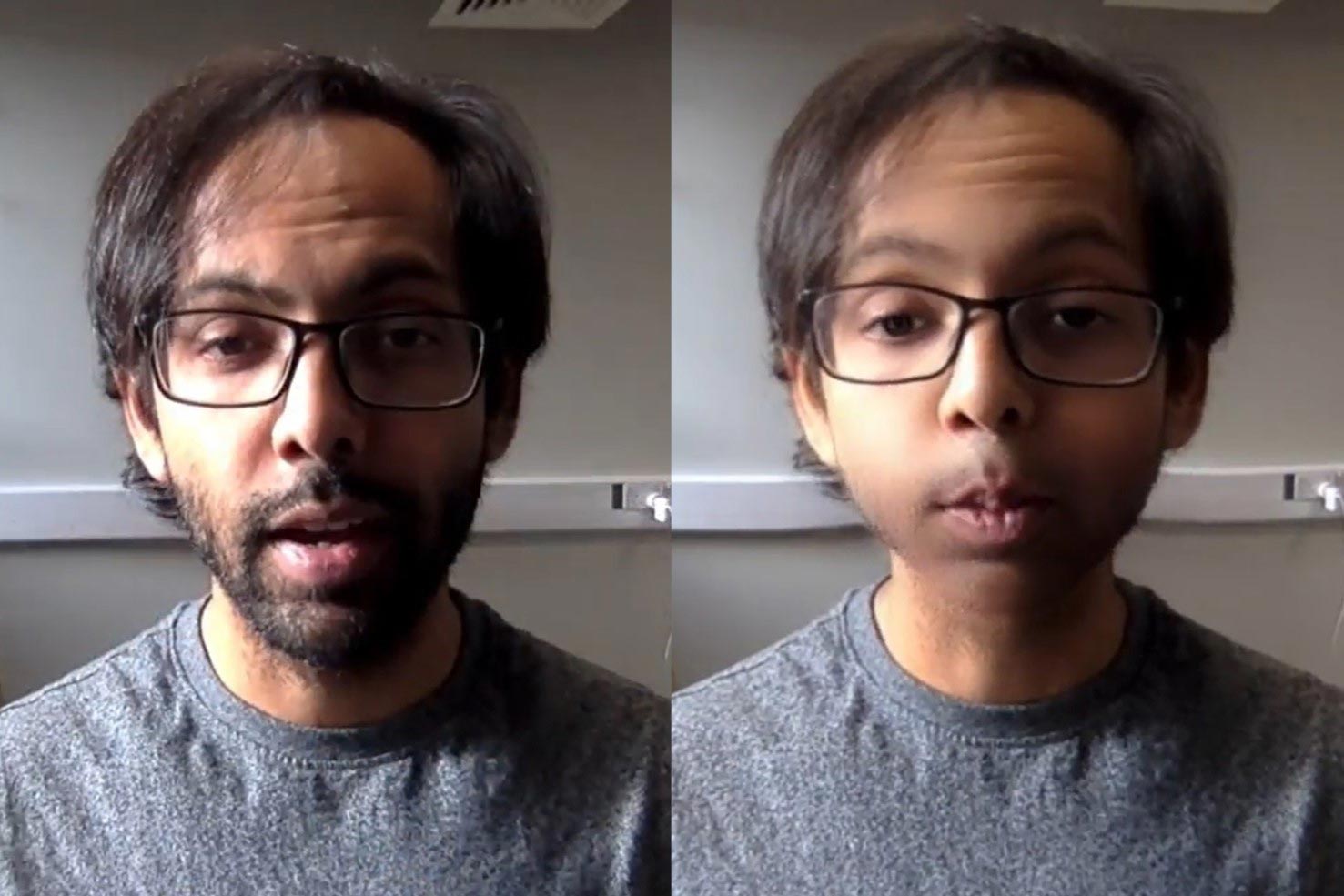
Following the illusion, participants took part in an autobiographical memory interview, where they were asked to recall events from both their childhood and the past year.
Measuring the details of remembered experiences
The researchers then analyzed how much detail participants provided when describing their episodic autobiographical memories—the type of memory that allows people to mentally relive personal experiences and “travel back in time” to specific moments in their past.
The results revealed that changes in bodily self-perception can influence how easily individuals access distant memories. Participants who viewed the childlike version of their face recalled significantly more detailed childhood memories than those who saw their current adult face.
According to the research team, these findings shed new light on the link between bodily awareness and memory retrieval. The results could eventually lead to new methods for accessing long-forgotten memories, including those from the “childhood amnesia” period, which typically occurs before the age of three.
Dr. Utkarsh Gupta explains how the enfacement illusion works. Credit: Anglia Ruskin University
Lead author Dr. Utkarsh Gupta conducted the study as part of his PhD at Anglia Ruskin University and is now a Cognitive Neuroscience Research Fellow at the University of North Dakota. Dr. Gupta said: “All the events that we remember are not just experiences of the external world, but are also experiences of our body, which is always present.
“We discovered that temporary changes to the bodily self, specifically, embodying a childlike version of one’s own face, can significantly enhance access to childhood memories. This might be because the brain encodes bodily information as part of the details of an event. Reintroducing similar bodily cues may help us retrieve those memories, even decades later.”
Unlocking early memories and future potential
Senior author Professor Jane Aspell, who leads the Self & Body Lab at Anglia Ruskin University, said: “When our childhood memories were formed, we had a different body. So we wondered: if we could help people experience aspects of that body again, could we help them recall their memories from that time?
“Our findings suggest that the bodily self and autobiographical memory are linked, as temporary changes to bodily experience can facilitate access to remote autobiographical memories.
“These results are really exciting and suggest that further, more sophisticated body illusions could be used to unlock memories from different stages of our lives – perhaps even from early infancy. In the future, it may even be possible to adapt the illusion to create interventions that might aid memory recall in people with memory impairments.”
Reference: “Illusory ownership of one’s younger face facilitates access to childhood episodic autobiographical memories” by Utkarsh Gupta, Peter Bright, Alex Clarke, Waheeb Zafar, Pilar Recarte-Perez and Jane E. Aspell, 9 October 2025, Scientific Reports.
DOI: 10.1038/s41598-025-17963-6
Never miss a breakthrough: Join the SciTechDaily newsletter.
Follow us on Google and Google News.
10 Comments
Dosen’t sound convincing at all… Sorry.
A much better way to invoke memories will be to recreate the settings of those times.
I like this study. It’s certainly not for people adverse to science. It’s an amazing breakthrough.
Is there anything you don’t like?
Didn’t think so
I like this study. It’s certainly not for people adverse to science. It’s an amazing breakthrough.
Hah! Frank Herbert beat them to this realization. In his sci Fi books many years ago. In one of the dune books a character would imagine her hands looking like they did as a child to access her early memories
Can I imply that this could be similar to Dèja – U?
It’s interesting. I think they should control for people just looking at childhood pictures though versus the special software. Might do exactly the same thing.
Yeah I’m pretty sure it would do the same thing too.
I believe that seeing an image of yourself younger allows you to make links with other pictures that you’ve seen of yourself at that age and therefore the events come to mind naturally.
Not convinced with the “bodily self” argument..
The test seems easy enough. Now point me to a free or inexpensive and decent filter. This theory could be tested on a wider basis.
I’d love to test this theory out since I have no recall of life before age 7 and fuzzy after that till my 20’s. Trauma did a number on me and I blocked a lot out and have no clue.