
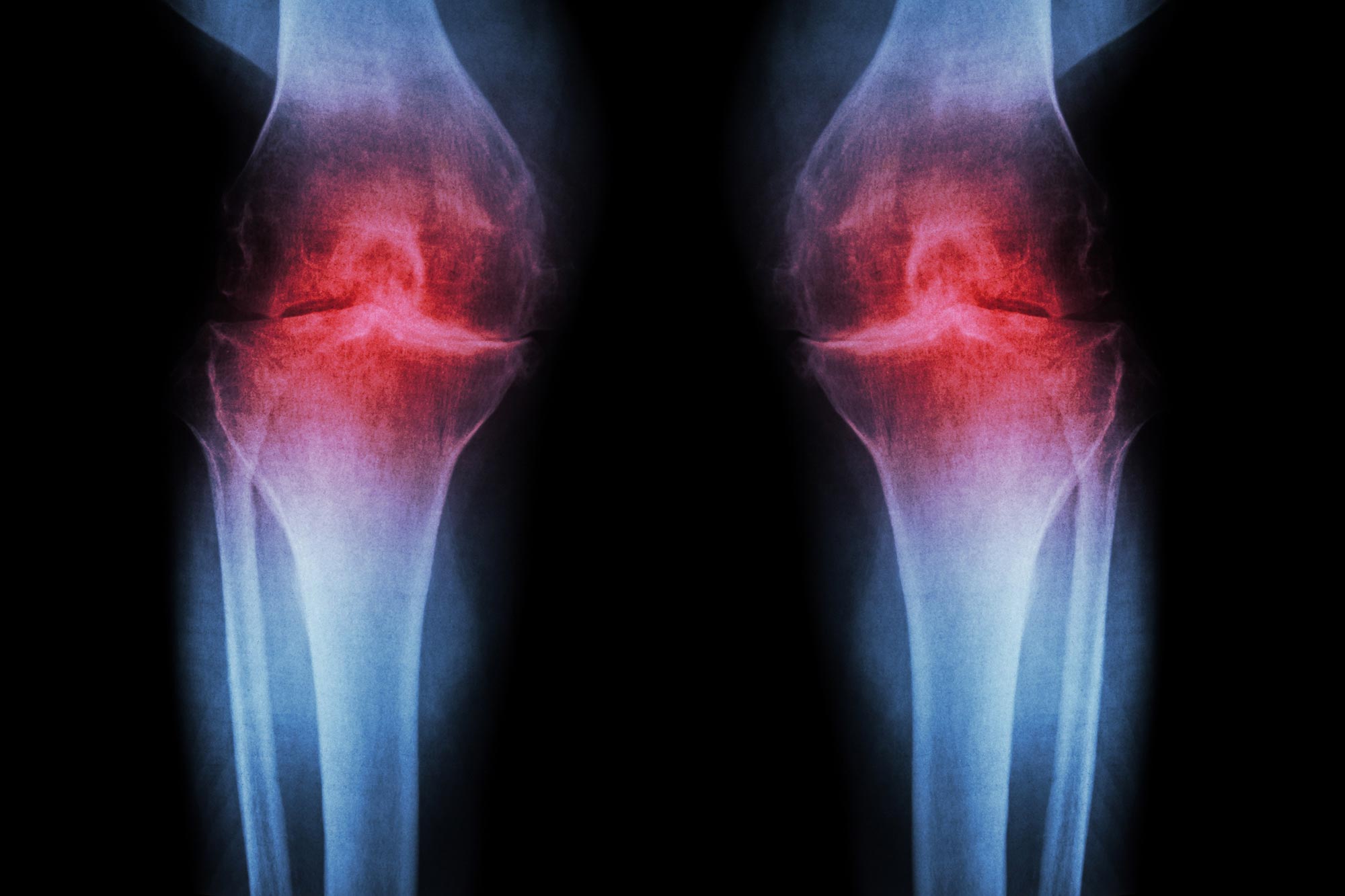
A new study suggests low-intensity ultrasound can influence immune cell behavior in ways that may reduce chronic inflammation and encourage tissue repair after joint injury.
Every year, millions of people suffer joint injuries that can trigger a biological chain reaction lasting long after the original damage has healed. Instead of switching from inflammation to repair, the immune system can remain stuck in attack mode, gradually wearing away cartilage and increasing the risk of post-traumatic osteoarthritis, a condition that accounts for roughly one in eight osteoarthritis cases and often develops years after an injury.
Now, researchers at The University of Alabama in Huntsville (UAH) report that continuous low-intensity ultrasound may help interrupt this process by nudging immune cells toward healing rather than prolonged inflammation, pointing to a potential non-invasive strategy for protecting injured joints.
Published in the Nature journal Scientific Reports, the study combined expertise in engineering, immunology, mathematics, and computational biology to examine how ultrasound influences macrophages, immune cells that orchestrate both inflammation and tissue repair. The multidisciplinary project was led by Dr. Anuradha Subramanian, professor of chemical and materials engineering.
Immune cells hold the key
The study focuses on how a noninvasive ultrasound treatment influences macrophages, immune cells that are central to both inflammation and repair.
“Following injury, the body recruits inflammatory ‘defender’ macrophages (M1) to clear damaged tissue and healer macrophages (M2) to support repair and recovery,” Subramanian explains. “Persistent dominance of defender macrophages can create a prolonged inflammatory environment that contributes to post-traumatic osteoarthritis.”
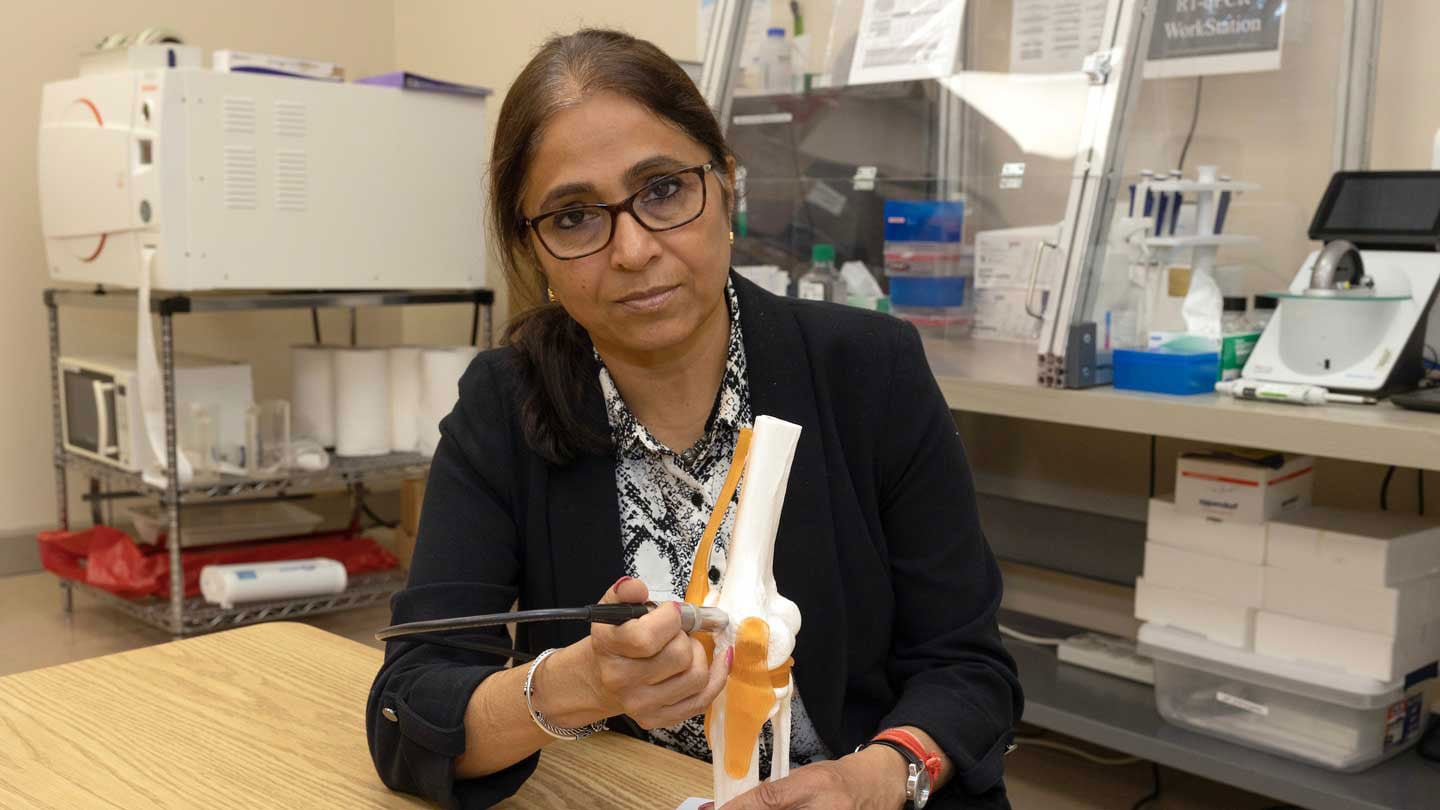
The UAH researchers tested whether continuous low-intensity ultrasound could help steer macrophages away from a lasting inflammatory mode and toward a state more closely tied to tissue healing.
“In an ‘M1’ state, microphages promote inflammation to fight damage or infection, but prolonged M1 activity can also harm healthy tissue,” Subramanian notes. “In contrast, ‘M2-like’ macrophages support tissue repair and recovery. Shifting macrophages toward an M2-like state is important because it may help reduce chronic inflammation while encouraging healing in damaged joints. Our findings suggest that continuous low-intensity ultrasound may help restore this balance by promoting a more reparative macrophage response.”
“Post-traumatic osteoarthritis is driven in part by persistent inflammation that limits tissue repair and accelerates joint degeneration,” Roy adds. “Our team is interested in continuous low-intensity ultrasound because it offers a non-pharmacological, non-invasive approach that may help regulate immune cell behavior and promote a more reparative healing environment in injured joints.”
A closer injury model
To better imitate the biology of a damaged joint, Dr. Subramanian, Dr. Roy, Dr. Khan, and Trippany used fibronectin fragments, molecules created as tissue breaks down, instead of depending only on standard laboratory methods for producing inflammation. That choice gave them a model that more closely matches the environment inside an injured joint.

For the analysis, Roy paired “transcriptomics,” the large-scale study of gene activity, with an advanced computational method called “differential clustering.” The method helps identify groups of genes that change together when conditions shift, rather than simply sorting genes by general similarity. By looking beyond single genes, the approach gave the researchers a broader picture of how immune cells responded to ultrasound treatment.
“This allowed us to study not only which genes changed, but also how groups of genes changed their coordinated behavior in response to ultrasound stimulation,” Roy says.
The findings showed that continuous low-intensity ultrasound lowered markers tied to inflammation and raised markers associated with a more reparative, M2-like macrophage state.
A possible path forward
The research is still in the laboratory stage, but it points to the possibility that non-drug, noninvasive technologies could help guide immune activity and support healing after injury. Dr. Subramanian and colleagues suggest that this approach may eventually work alongside future therapies designed to slow osteoarthritis progression and improve recovery after joint trauma.
“The next steps will involve validating these findings in animal models of early post-traumatic osteoarthritis and studying how ultrasound-based modulation affects long-term tissue repair in joint injury settings,” Subramanian says.
Reference: “Continuous low-intensity ultrasound influences the transcriptomic profile in M1 macrophages by downregulating inflammation and promoting M2-like markers” by Shahid Khan, Owen Trippany, Anuradha Subramanian and Satyaki Roy, 14 May 2026, Scientific Reports.
DOI: 10.1038/s41598-026-53228-6
This work is supported by the U.S. National Institutes of Health (NIH), National Institute of Arthritis and Musculoskeletal and Skin Diseases.
Never miss a breakthrough: Join the SciTechDaily newsletter.
Follow us on Google and Google News.
3 Comments
I have osteoarthritis in both knees and I am trying to find help with this painful situation. I am not a candidate for knee replacement and frankly I do think I could survive 2 knee replacement. Is there ever going to be a non surgery treaent that that makes this disease cureable. I am 71 and I worry that I’ll be dead by the time comes and a cure has been found.
My wife had both knees replaced when in her mid 60’s. Her doctor had recently replaced a knee on a man in his 90’s. My wife was walking the afternoon of her surgery, and out of the hospital the next morning.There were daily routines for six months. Six years later she is even more grateful it was done.
There is a procedure called Genicular Artery Emobilization that you might look into.
It treats the pain and inflammation associated with osteoarthritis in the knee joint.