

What if your next meal could help your gut defend itself?
Your gut bacteria may be doing more than digesting dinner. They may also be making compounds that help repair the intestine when it is under attack.
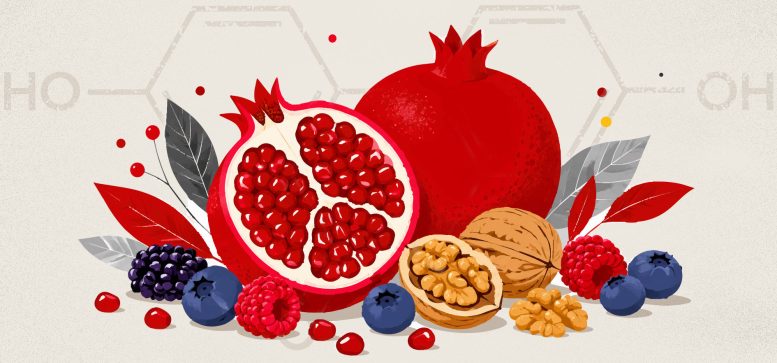
Researchers at the University of Louisville have uncovered how urolithin A (UroA), a compound produced when certain gut microbes break down foods such as pomegranates, walnuts, and berries, helps protect the intestinal lining. The finding could point toward more precise treatments for inflammatory bowel disease (IBD), including Crohn’s disease and ulcerative colitis.
IBD damages the gut’s protective barrier, allowing bacteria and other irritants to move into places they do not belong. That can fuel chronic inflammation, pain, and long-term complications. Many current treatments work by calming the immune system, but that broad approach can also weaken normal defenses. The new study suggests another possibility: activating the body’s own repair programs in the right cells.
The research, published in Nature Communications, focused on the aryl hydrocarbon receptor (AHR), a protein that responds to signals from food, microbes, and the environment. AHR has a complicated reputation. Certain pollutants can activate it in harmful ways, but some dietary and microbial compounds appear to use the same receptor to support gut health.
Why the Same Pathway Can Help or Harm
The key, researchers found, is context. UroA activated AHR specifically in intestinal epithelial cells, the cells that form the gut’s protective surface. That targeted signal switched on the NLRP6 inflammasome, a cellular system often associated with inflammation.
But in this case, the inflammasome did not behave like a blunt inflammatory weapon. Instead, it helped release controlled levels of molecules involved in gut repair, mucus production, antimicrobial defense, and barrier strength.
The result is a more nuanced view of inflammation. Some immune pathways can damage tissue when overactive or triggered in the wrong place. Under the right conditions, however, those same systems can help the intestine heal.
“This study shows, for the first time, how a natural microbial product works together with the body’s response to control complex molecular and cellular processes during intestinal injury,” the researchers reported.
Human Tissue Findings Point to New IBD Treatments
UroA is not simply found ready-made in pomegranates or walnuts. It is produced only after gut microbes transform plant compounds known as ellagitannins and ellagic acid. That means two people can eat similar foods but produce different amounts of UroA, depending on the microbes living in their intestines.
That detail makes the discovery especially interesting. It suggests future therapies may not be as simple as telling patients to eat more berries. Instead, researchers may need to understand which microbes, foods, or treatments help the body make or use UroA most effectively.
“The findings show that not all inflammatory pathways are harmful,” said Sweta Ghosh, previously a postdoctoral researcher in Jala’s laboratory and lead investigator on the study. “Under the right conditions and in the right cells, these pathways can play an essential role in maintaining gut health and supporting tissue repair.”
Toward More Targeted IBD Treatments
The team tested the mechanism in several systems, including cell studies, organoids, and intestinal tissue samples from patients with IBD. UroA activated the same protective pathway in human tissue, strengthening the case that the finding could be relevant beyond laboratory models.
The study was led by Venkatakrishna Rao Jala, associate professor in the Department of Microbiology and Immunology and UofL’s Brown Cancer Center. Jala previously studied UroA’s beneficial effects in the gut, and the new work helps explain how the compound communicates with the immune system.
“This study helps us better understand how natural compounds produced through interactions between diet, gut microbes, and the body can influence disease processes,” Jala said. “By identifying this specific protective pathway, we may be able to develop more targeted therapeutic approaches that restore intestinal balance instead of broadly suppressing immune responses.”
The finding does not mean foods such as pomegranates, walnuts, and berries can treat IBD on their own. But it does show how diet, microbes, and immune signaling may intersect in ways that could be harnessed for future therapies. For a disease driven by a broken barrier, the most promising strategy may be helping the gut rebuild its own defenses.
Reference: “Urolithin A activates aryl hydrocarbon receptor-NLRP6-mediated pathways in intestinal epithelial cells to modulate mucosal immunity and strengthen gut barrier integrity” by Sweta Ghosh, Zachary M. Vanwinkle, Sobha Rani Bodduluri, Subir Kumar Juin, Mahendar Kadari, Ankita Singh, Gerald W. Dryden, Matthew B. Lawrenz, Thirumala-Devi Kanneganti, Shesh N. Rai, Misty Good, Pawan Kumar, Bodduluri Haribabu and Venkatakrishna Rao Jala, 23 June 2026, Nature Communications.
DOI: 10.1038/s41467-026-73760-3
This study was funded by NIH/National Institute of General Medical Sciences, NIH/National Institute of Environmental Health Sciences, NIH/National Cancer Institute, NIH/National Institute on Alcohol Abuse and Alcoholism, NIH/National Institute of Diabetes and Digestive and Kidney Diseases, Jewish Heritage Fund for Excellence.
Never miss a breakthrough: Join the SciTechDaily newsletter.
Follow us on Google and Google News.