
Gut microbiome changes may drive age-related memory loss via inflammation and disrupted brain signaling, but interventions in mice show this process can be reversed.
Memory tends to decline with age, but this pattern is not the same for everyone. Some individuals remain mentally sharp even at 100, while others begin experiencing noticeable memory issues much earlier in life.
Although it is often assumed that cognitive decline is caused by aging and deterioration within the brain itself, growing evidence suggests that other parts of the body also play a role. Signals from organs throughout the body can influence how the brain processes and stores information. Research has also shown that the gut microbiome can affect learning, behavior, and memory. However, the exact mechanisms behind these connections remain unclear, including which molecules, microbes, and signaling pathways are involved, and whether they could be targeted to prevent or reverse memory loss.
A recent study published in Nature found that changes in the aging gastrointestinal system produce molecules that interfere with a key gut-brain signaling pathway, contributing to cognitive decline in mice.
Interoception and the Gut-Brain Connection
The body’s five senses, known as exteroception, include sight, hearing, taste, smell, and touch, and tend to weaken with age. Less understood is interoception, which refers to how the brain monitors internal bodily states to maintain balance and function. The vagus nerve plays a central role in this process, carrying information from organs such as the heart, intestines, lungs, and liver to the brain.
The researchers found that signals traveling from the intestine to the brain through the vagus nerve help protect against cognitive decline in mice. Activating specific sensory neurons in the gut that connect to this nerve restored more youthful cognitive performance in older mice. These findings, thus, suggest that internal sensory systems, like external senses, may deteriorate with age. This raises important questions about what drives this decline and how it might be reversed.
The composition of the gut microbiome changes over time, including shifts in microbial species and their metabolic activity. To test whether these changes influence memory, the researchers transferred microbiomes from older mice into younger ones and evaluated their cognitive performance.
Young mice receiving older microbiomes showed impaired memory, similar to older animals. However, removing the microbiome with antibiotics restored cognitive function. Interestingly, mice raised without any microbiome showed slower cognitive decline as they aged compared to normal mice. These findings indicate that factors produced by aging gut microbes may contribute to memory loss.
Microbiome Changes and Cognitive Decline
The researchers identified a likely contributor: a bacterium called Parabacteroides goldsteinii. This microbe produces medium-chain fatty acids (MCFAs), which increase with age. Elevated MCFA levels activate immune cells in the gut, triggering the release of inflammatory molecules. One such molecule, IL-1β, was found to disrupt the function of vagal sensory neurons. The study traced this chain of events from microbial activity in the gut, through immune signaling, into the vagus nerve, and ultimately to the hippocampus, a brain region essential for memory.
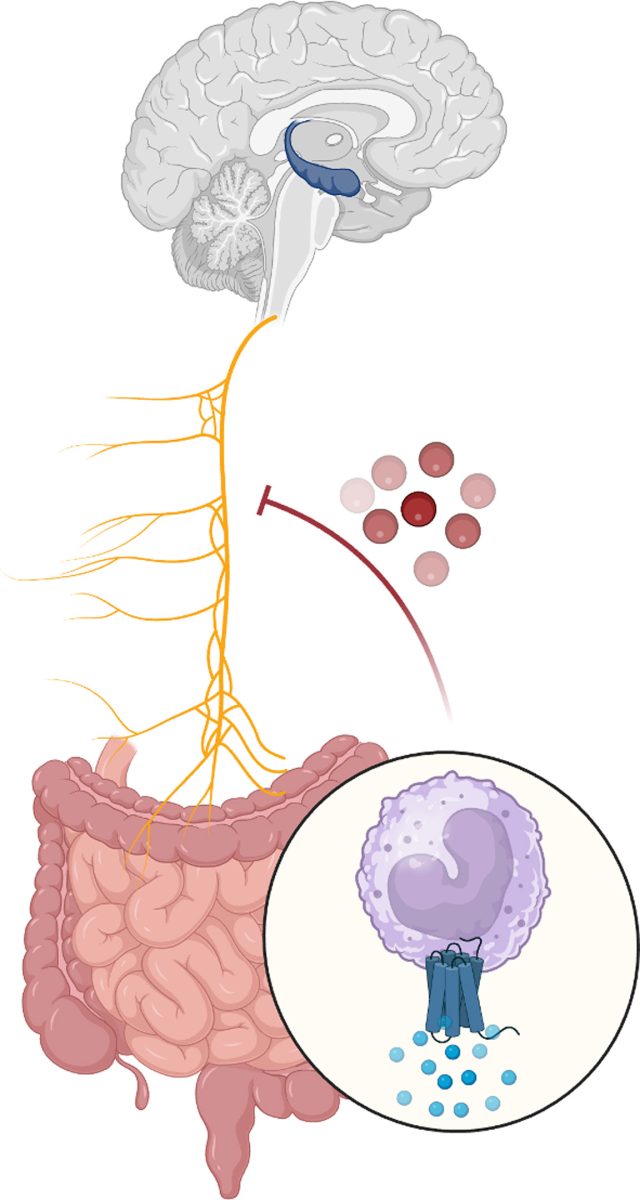
Several interventions were able to restore cognitive function in mice already experiencing decline. While antibiotic treatment improved memory, it is not a practical long-term solution. A more targeted method involved using a bacteriophage, a virus that specifically affects P. goldsteinii. This approach reduced MCFA levels and improved memory performance.
Another promising strategy focused on directly stimulating the vagus nerve. Treatments using the gut hormone CCK or GLP-1 receptor agonists, similar to drugs like Ozempic, successfully reversed memory deficits in older mice.
Reframing Brain Aging Through the Body
These findings challenge the traditional view that cognitive decline is driven solely by changes in the brain. Instead, they suggest that processes in other parts of the body can influence and potentially reverse age-related memory loss using treatments that are already available or under development.
Because the research was conducted in mice, it is not yet clear whether the same mechanisms apply to humans. Further studies are underway to explore this possibility and determine how these findings might translate to clinical use.
There is some early evidence supporting the idea in humans. Vagus nerve stimulation is already used to treat conditions such as severe epilepsy and recovery after stroke. Patients receiving this treatment have reported improvements in cognitive function, suggesting that enhancing vagus nerve activity may also help counter memory loss.
Future Research and Clinical Implications
Other factors, including chronic inflammation or infection, may also impair vagus nerve function through similar pathways. Future research will be needed to determine whether stimulating this nerve can improve cognitive outcomes in these cases, as well as in more severe conditions such as neurodegeneration and dementia.
Reference: “Intestinal interoceptive dysfunction drives age-associated cognitive decline” by Timothy O. Cox, Ashwarya S. Devason, Alan de Araujo, Sydney Mason, Madhav Subramanian, Andrea F. M. Salvador, Hélène C. Descamps, Junwon Kim, Yixuan Zhu, Lev Litichevskiy, Sunhee Jung, Won-Suk Song, Adrián Cortés-Martín, Nathan T. Henderson, Kuei-Pin Huang, Thao Nguyen, Wisath Sae-Lee, Iboro C. Umana, Maria Sacta, Ryan J. Rahman, Stephen Wisser, J. Andrew D. Nelson, Ilona Golynker, Alana M. McSween, Eric F. Hohmann, Shaan Patel, Anna L. Bub, Clara Soekler, Niklas Blank, Kevt’her Hoxha, Lavinia Boccia, Andrea C. Wong, Klaas Bahnsen, Jihee Kim, Natalie Biderman, Dina Abbasian, Clarissa Shoffler, Christopher Petucci, Fiona E. McAllister, Amber L. Alhadeff, Marc V. Fuccillo, Colin Hill, Cholsoon Jang, J. Nicholas Betley, Guillaume de Lartigue, Virginia Y.-M. Lee, Maayan Levy and Christoph A. Thaiss, 11 March 2026, Nature.
DOI: 10.1038/s41586-026-10191-6
Never miss a breakthrough: Join the SciTechDaily newsletter.
Follow us on Google and Google News.
2 Comments
I concur with the above finding.
Vagus nerve dysfunction, as occurs in acute on chronic liver failure, more often than not, results in hepatic encephalopathy with cognitive issues Reversal of encephalopathy with rifaximine , and hence attainment of full recovery of cognition, aligns with the above gut-vagus-live-brain signaling.
I like the article about the brain. My problem is not me but of my sister she have amnesia since our mother passed away (7) years the situation is not to strong she was recognised with the problem, but didn’t want to have any professional help can any one give me suggestions how I can help her she is 75 years