
A new study proposes a shift in the search for extraterrestrial life, moving away from individual biosignatures toward large-scale planetary patterns.
What if the clearest signs of life in the universe are not found on a single planet, but hidden in patterns across many worlds? Instead of focusing on one-off clues, a new study suggests scientists could detect life by examining how entire groups of planets compare and interact. This shift could open a new path for astrobiology when traditional signals are uncertain or misleading.
The idea comes from researchers led by Specially Appointed Associate Professor Harrison B. Smith of the Earth-Life Science Institute (ELSI) at the Institute of Science Tokyo and Specially Appointed Associate Professor Lana Sinapayen of the National Institute for Basic Biology. Their work proposes a broader way to search for life beyond Earth.
One of the central challenges in this field is deciding whether features observed on distant planets truly point to biology. Common biosignatures, such as certain atmospheric gases, can also form through nonbiological processes, creating false positives. Technosignatures may seem more definitive, but they rely on assumptions about how extraterrestrial intelligence might evolve and behave.
A Population-Level Perspective
To address these issues, the researchers explored a different concept. Instead of focusing on individual planets, they examined whether life might reveal itself through combined effects across many worlds.
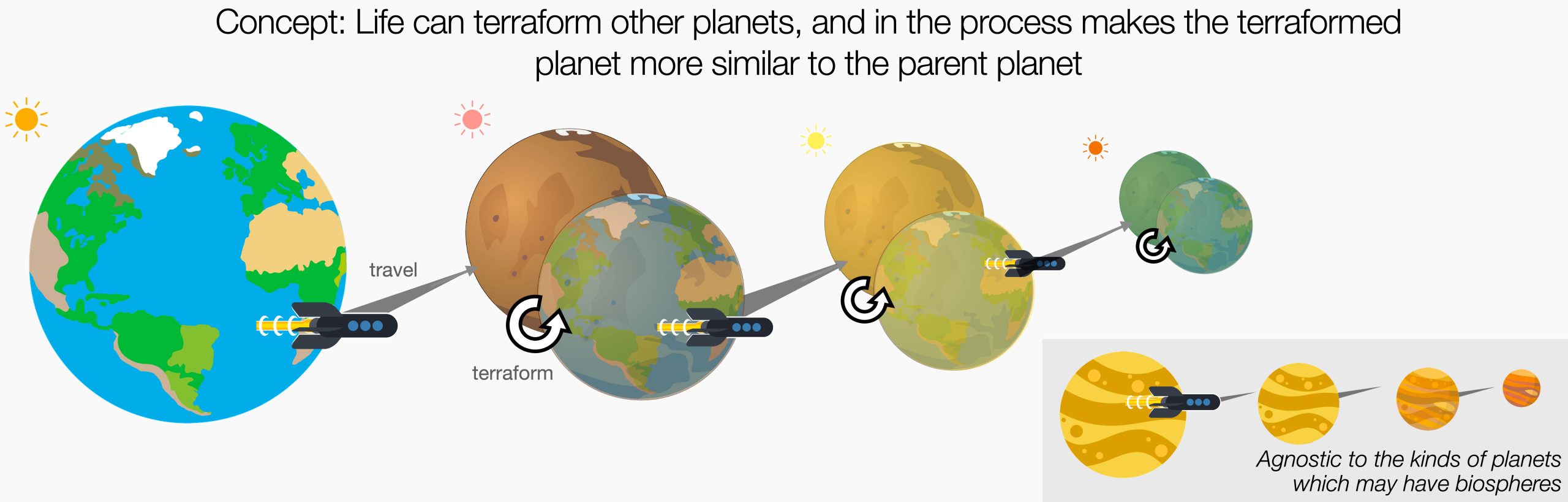
The study introduces an “agnostic biosignature,” which does not depend on detailed knowledge of life’s chemistry or structure. It is based on two general ideas: life can spread between planets, for example through panspermia, and it can gradually alter planetary environments.
Using an agent based simulation, the team modeled how life could move through star systems and change planetary properties. Their results show that if life spreads and influences environments, it can create measurable statistical links between where planets are located and what they look like.
Importantly, these patterns can emerge even when no clear biosignature is identified on any single planet.
Identifying Likely Life-Bearing Worlds
In addition to detecting possible signs of life, the researchers developed a method to identify which planets are most likely to host it. By grouping planets according to observable traits and their positions in space, they identified clusters with a higher likelihood of having been affected by life.
This method emphasizes reliability over completeness. It aims to reduce false positives, even if some inhabited planets are overlooked. Such an approach is especially valuable when telescope time for follow up observations is limited.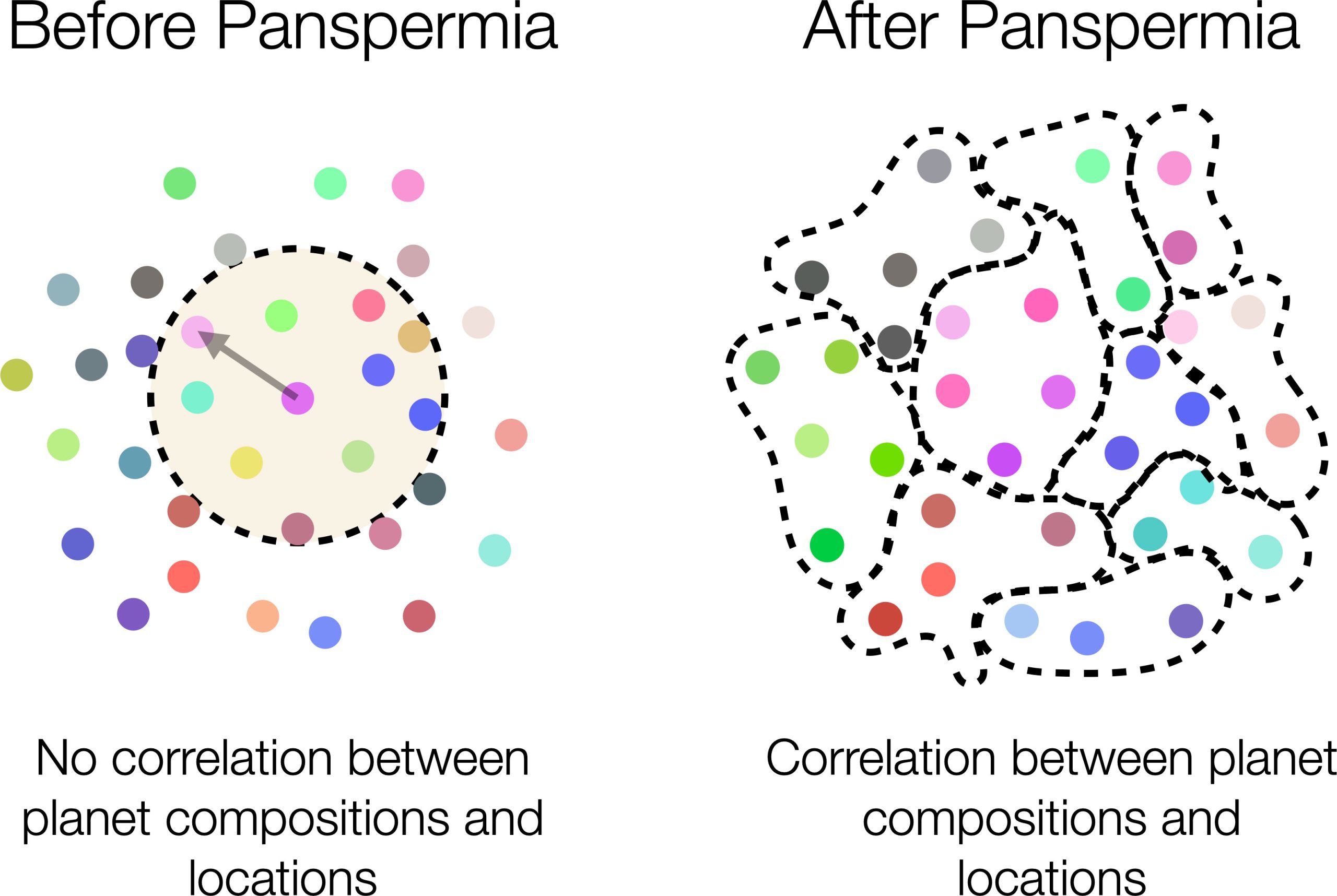
“By focusing on how life spreads and interacts with environments, we can search for it without needing a perfect definition or a single definitive signal,” said Harrison B. Smith. Lana Sinapayen added, “Even if life elsewhere is fundamentally different from life on Earth, its large-scale effects, such as spreading and modifying planets, may still leave detectable traces. That’s what makes this approach compelling.”
The findings suggest that future surveys observing large numbers of exoplanets could use statistical techniques to identify life across planetary populations. This may be particularly useful when individual biosignatures are weak, uncertain, or prone to false positives.
Challenges and Future Directions
The study also points to the need for a better understanding of the natural diversity of lifeless planets. Establishing this baseline will make it easier to recognize changes caused by biological activity.
Although the current results are based on simulations, they provide a foundation for a new class of life detection methods. The researchers note that future studies will need to incorporate more detailed planetary data and improved models of galactic dynamics. Even so, the work suggests that life might be detectable without knowing its exact chemistry, by identifying the broader patterns it creates across the universe.
Reference: “An Agnostic Biosignature Based on Modeling Panspermia and Terraforming” by Harrison B. Smith and Lana Sinapayen, 9 April 2026, The Astrophysical Journal.
DOI: 10.3847/1538-4357/ae4ee3
Never miss a breakthrough: Join the SciTechDaily newsletter.
Follow us on Google and Google News.
1 Comment
Again, it is assumed alien life is like ours and look/act/think like us.
Unlearn your expectations and preconceptions.