
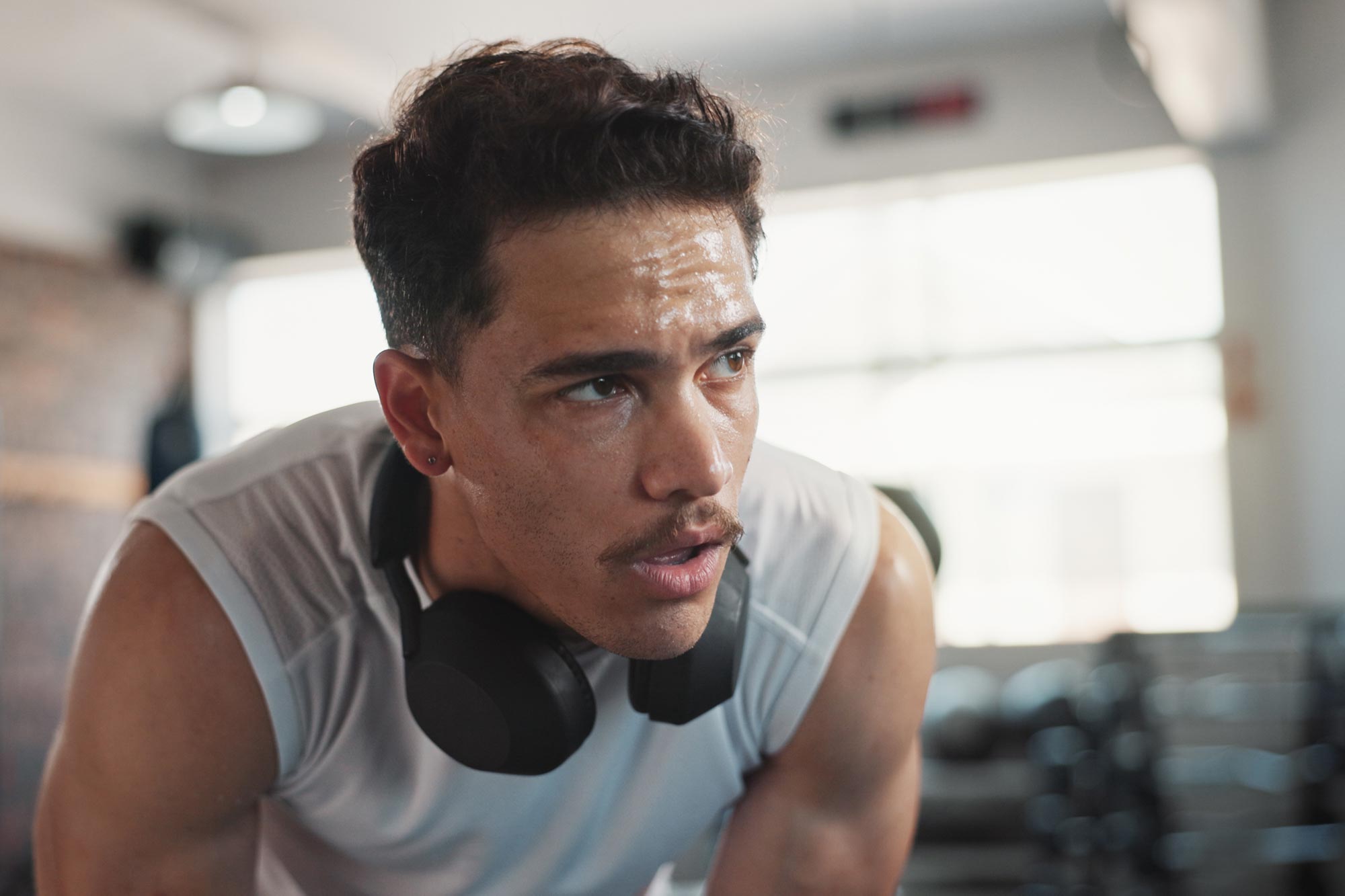
A new study explores how self-selected music influences physical endurance during high-intensity exercise.
A simple change to your workout routine might help you go longer without feeling more exhausted: choose your own music.
New research from the University of Jyväskylä (JYU) shows that letting people pick their own workout playlist can boost endurance by nearly 20%, all without increasing how hard the exercise feels. The study suggests that something as routine as pressing play could meaningfully extend performance.
Participants in the experiment pedaled on stationary bikes while listening to their preferred songs, typically in the 120-140 beats per minute range, a tempo often linked to steady, rhythmic movement. Compared to exercising in silence, they lasted close to six minutes longer on average before reaching exhaustion. The findings appear in the journal Psychology of Sport & Exercise and highlight how sensory input can shape physical performance.
Why Music Makes a Difference
Lead researcher Andrew Danso from JYU’s Centre of Excellence in Music, Mind, Body and Brain explains the real-world impact: “Self-selected music doesn’t change your fitness level or make your heart work dramatically harder in the moment – it simply helps you tolerate sustained effort for longer.”
Rather than increasing physical capacity, music appears to influence perception. Familiar, motivating songs may distract from discomfort, help regulate pace, or create a sense of forward momentum that makes sustained effort feel more manageable.
He continues, “It may be an incredibly simple, zero-cost tool that lets people push further in training without feeling extra strain at the end. Our findings suggest that the right playlist may make tough sessions feel more doable and more enjoyable.”
The research involved 29 recreationally active adults who completed two identical high-intensity cycling sessions at about 80% of their peak power. One session was performed in silence, while the other allowed participants to select their own music.
With music, participants exercised for an average of 35.6 minutes, compared to 29.8 minutes without it, a clear improvement in endurance. This difference emerged even though the workload remained the same, underscoring the role of psychological factors in performance.
Physiological Response and Perceived Effort
Despite the longer sessions, physiological markers told a consistent story. Heart rate and lactate levels at the end of each test were nearly identical, indicating that the body was working just as hard in both conditions. In other words, the music helped them “stay in the pain zone” longer without making the pain feel worse.
The findings have immediate relevance for athletes and coaches looking for safe, accessible ways to improve training volume. But they may be even more important for people who struggle to maintain regular exercise habits.
“Many people struggle to stick with hard training because it feels exhausting too quickly,” says Danso.
“Our research shows that letting people choose their own motivating music may help them accumulate more quality training time, which could translate to better fitness gains, improved adherence to exercise programmes, and possibly more people staying active.”
From a broader perspective, the study points to a low-cost strategy for addressing physical inactivity, a major contributor to chronic disease worldwide. Longer, more tolerable exercise sessions may help reduce risks linked to low fitness.
Reference: “Feel the beat, not the burn: Effects of self-selected music in time-to-exhaustion cycling” by Andrew Danso, Jasmin C. Hutchinson, Vesa Laatikainen-Raussi, Bianca J. De Lucia, Tomi Vänttinen, Kady Long, Elia Burbidge, Simon Walker, Johanna K. Ihalainen and Geoff Luck, 11 March 2026, Psychology of Sport and Exercise.
DOI: 10.1016/j.psychsport.2026.103116
Never miss a breakthrough: Join the SciTechDaily newsletter.
Follow us on Google and Google News.