
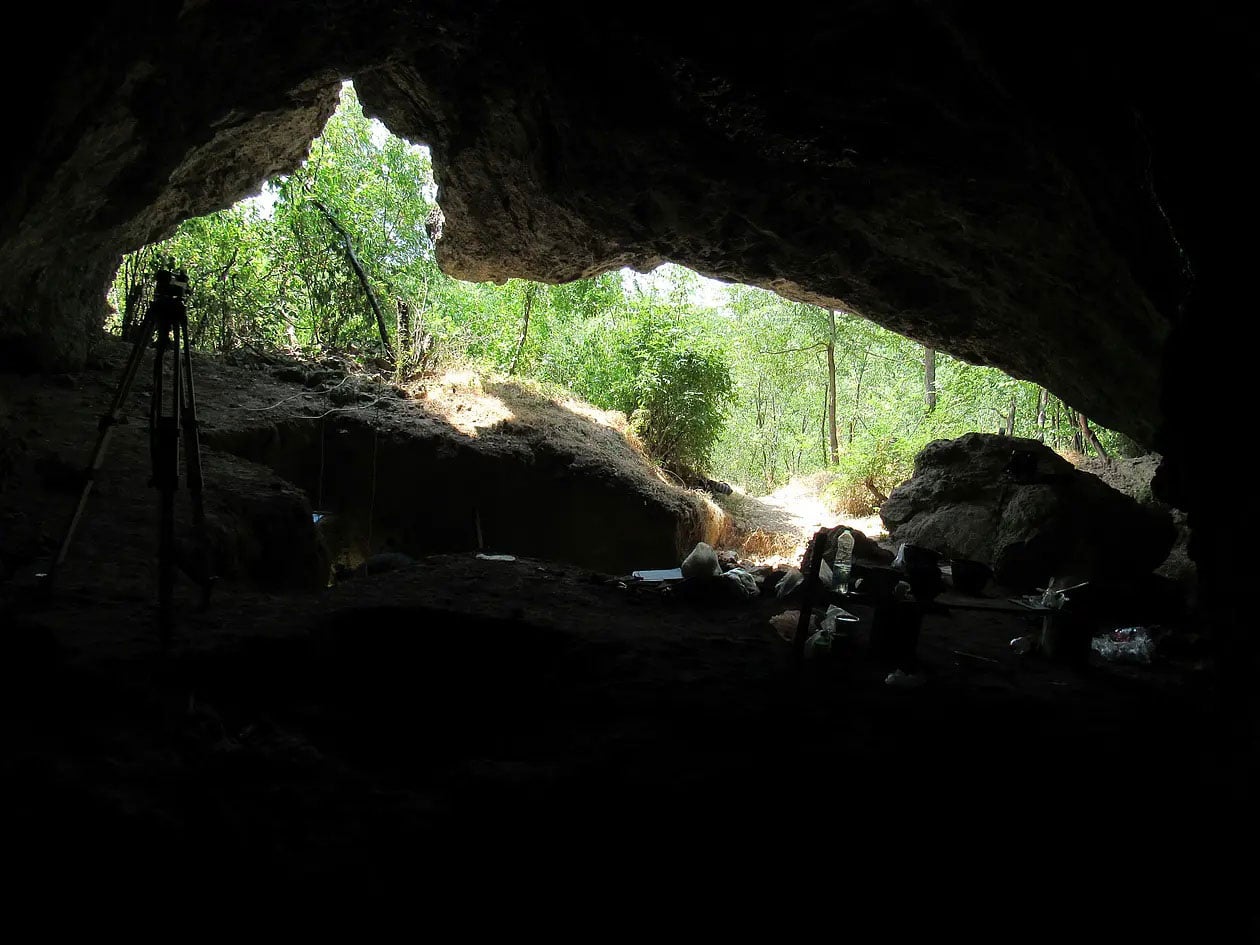
A new study from the Senckenberg Nature Research Society and the University of Tübingen reveals major shifts in Neanderthal genetic history.
Near the end of their time in Europe, Neanderthals were not spread across the continent as a deeply varied population. Their DNA now points to a much narrower story: a severe genetic bottleneck, a retreat into one refuge, and a later expansion by descendants of that surviving group.
A study combining new DNA evidence with archaeological records suggests that Europe’s final Neanderthals went through a major population turnover before they disappeared roughly 40,000 years ago. An international research group led by Professor Cosimo Posth at the Senckenberg Center for Human Evolution and Palaeoenvironment at the University of Tübingen traced this history and found that earlier, more widespread Neanderthal populations in Europe had largely vanished.
The new analysis indicates that one localized group survived harsh conditions about 75,000 years ago by retreating to a climate refuge in what is now southwestern France. After about 65,000 years ago, descendants of that refuge population expanded across Europe. As a result, nearly all Late Neanderthals studied so far appear to come from the same maternal genetic lineage.
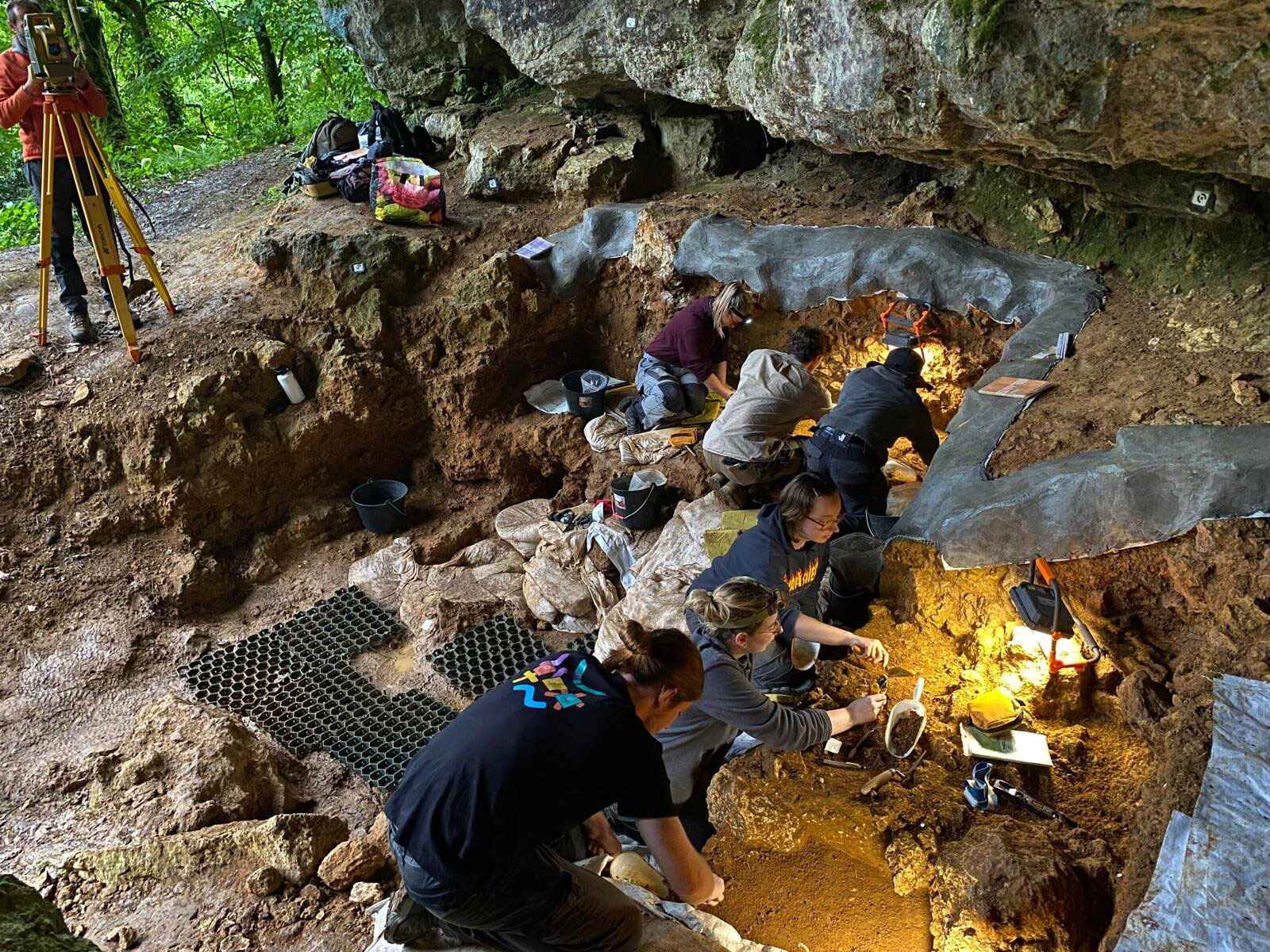
Posth and his colleagues also found evidence of another sharp decline around 45,000 years ago. Neanderthal numbers fell quickly and reached a low point around 42,000 years ago, not long before the species disappeared. The findings were published in PNAS.
Neanderthals were genetically distinct from Homo sapiens, the modern humans who replaced them in Europe by around 40,000 years ago. The broad outline is known, but the details of their final population history have remained difficult to reconstruct because the evidence is scattered and incomplete.
“We have evidence that Neanderthals inhabited Europe continuously between 400,000 and 40,000 years ago. However, we have only fragmentary details of their population history,” says Posth. “So far, we know very little about the evolutionary developments that preceded their extinction.” For that reason, Posth and his colleagues focused on Late Neanderthals, the groups that lived between roughly 60,000 and 40,000 years ago.
Ten rare new individuals
To follow the genetic trail, the researchers turned to mitochondria in Neanderthal teeth and bones recovered from caves and rockshelters. Mitochondria are small structures inside cells that help produce energy. They also carry their own DNA, inherited separately from the DNA in the cell nucleus.
“Mitochondrial DNA does not contain nearly as much genetic information as the entire genome of a human being, but it usually survives longer and is easier to obtain,” says Charoula Fotiadou from Posth’s research group and first author of the study.
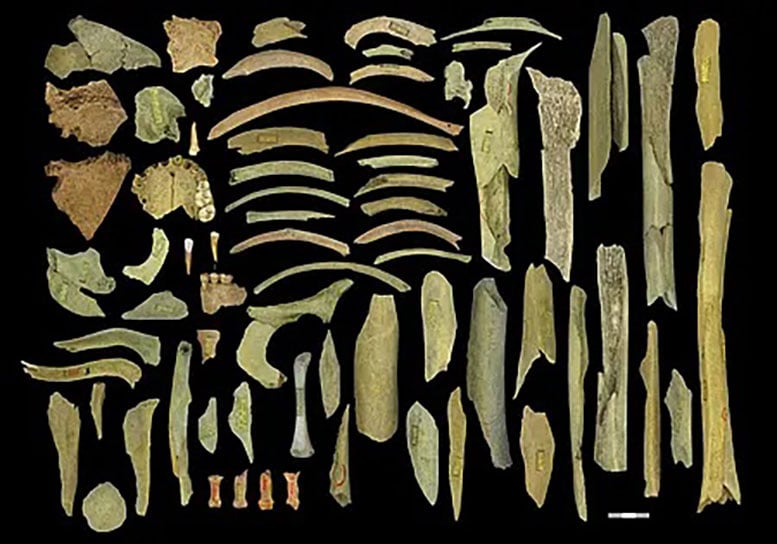
That durability made mitochondrial DNA especially useful for rare and ancient Neanderthal remains. Fotiadou and colleagues sequenced mitochondrial DNA from 10 previously unanalyzed Neanderthal individuals found at six archaeological sites in Belgium, France, Germany and Serbia. They then compared those data with 49 previously published Neanderthal mitochondrial DNA samples.
The genetic evidence was paired with archaeological information from ROAD, a major database documenting Neanderthal presence across Europe. ROAD was developed by the ROCEEH (The Role of Culture in Early Expansions of Humans) project of the Heidelberg Academy of Sciences, the Senckenberg Research Institute and Natural History Museum Frankfurt, and the University of Tübingen.
“This allowed us to combine the two lines of evidence and reconstruct the demographic history of Neanderthals in terms of space and time,” said study co-author Jesper Borre Pedersen from the ROCEEH project.
Late Neanderthals all of the same stock
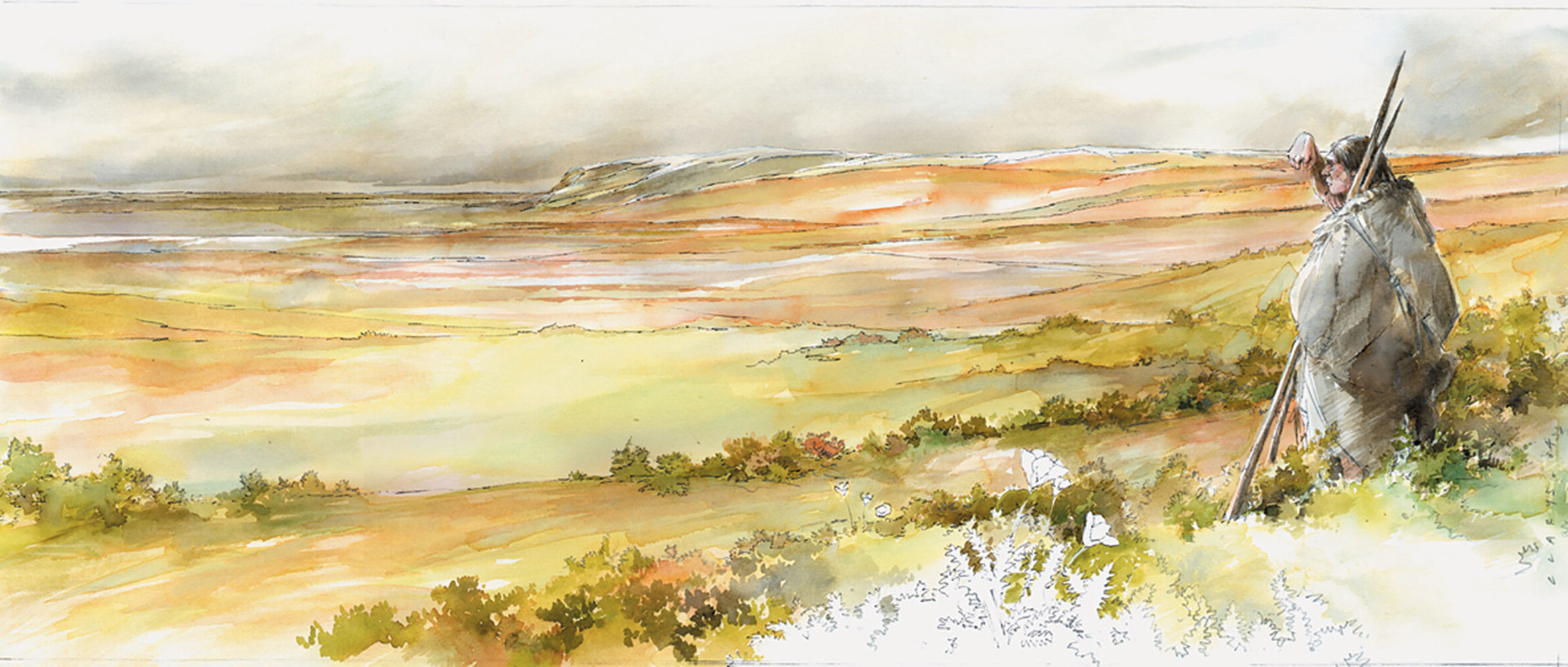
The combined evidence points to a major disruption around 75,000 years ago, when Ice Age conditions appear to have hit European Neanderthals hard. Archaeological sites became fewer and more concentrated in southwestern Europe, while genetic diversity dropped.
“Our data enabled us to reconstruct geographically that Neanderthals retreated to what is now southwestern France. There, around 65,000 years ago, a new population emerged and later spread across the whole of Europe,” says Posth. “This explains why almost all Late Neanderthals sequenced so far – from the Iberian Peninsula to the Caucasus – belong to the same line of inherited mitochondrial DNA.” The pattern suggests a large genetic turnover in European Neanderthals, with later groups descending mainly from one surviving lineage.
The researchers also tested whether changes in mitochondrial DNA diversity matched what would be expected from a Neanderthal population that stayed roughly the same size over time. The result did not fit that stable scenario. Instead, the data point to a rapid and severe decline between 45,000 and 42,000 years ago.
“Genetically speaking, the Late Neanderthals were a very homogeneous group,” says Posth. “So it may be that the low genetic diversity – and possibly also the subsequent isolation of small groups – contributed to the disappearance of the Neanderthals.”
Reference: “Archaeogenetic insights into the demographic history of Late Neanderthals” by Charoula M. Fotiadou, Jesper Borre Pedersen, Hélène Rougier, Mirjana Roksandic, Maria A. Spyrou, Kathrin Nägele, Ella Reiter, Hervé Bocherens, Andrew W. Kandel, Miriam N. Haidle, Timo P. Streicher, Nicholas J. Conard, Flora Schilt, Ricardo Miguel Godinho, Thorsten Uthmeier, Luc Doyon, Patrick Semal, Johannes Krause, Alvise Barbieri, Dušan Mihailović, Isabelle Crevecoeur and Cosimo Posth, 23 March 2026, Proceedings of the National Academy of Sciences.
DOI: 10.1073/pnas.2520565123
Never miss a breakthrough: Join the SciTechDaily newsletter.
Follow us on Google and Google News.
3 Comments
Thx for bringing this info to the public I luv this line of study I think they shared similar demize as the American Indians maintained small groups.
Perhaps there was a flu/virus they hit them? Maybe spread from our H.S species as well populated their territory?
Is it possible that all hominins had consistently overlapped at points in time and interbred throughout millennia to present homosapiens.