
Close Menu
    Facebook X (Twitter) Instagram
    SciTechDaily
    • Biology
    • Chemistry
    • Earth
    • Health
    • Physics
    • Science
    • Space
    • Technology
    Facebook X (Twitter) Pinterest YouTube RSS
    SciTechDaily
    Home»Science»Unearthing Neanderthal Population History Using Ancient Nuclear DNA From Cave Sediments
    Science

    Unearthing Neanderthal Population History Using Ancient Nuclear DNA From Cave Sediments

    By American Association for the Advancement of ScienceJune 19, 20211 Comment3 Mins Read
    Facebook Twitter Pinterest Telegram LinkedIn WhatsApp Email Reddit
    Share
    Facebook Twitter LinkedIn Pinterest Telegram Email Reddit
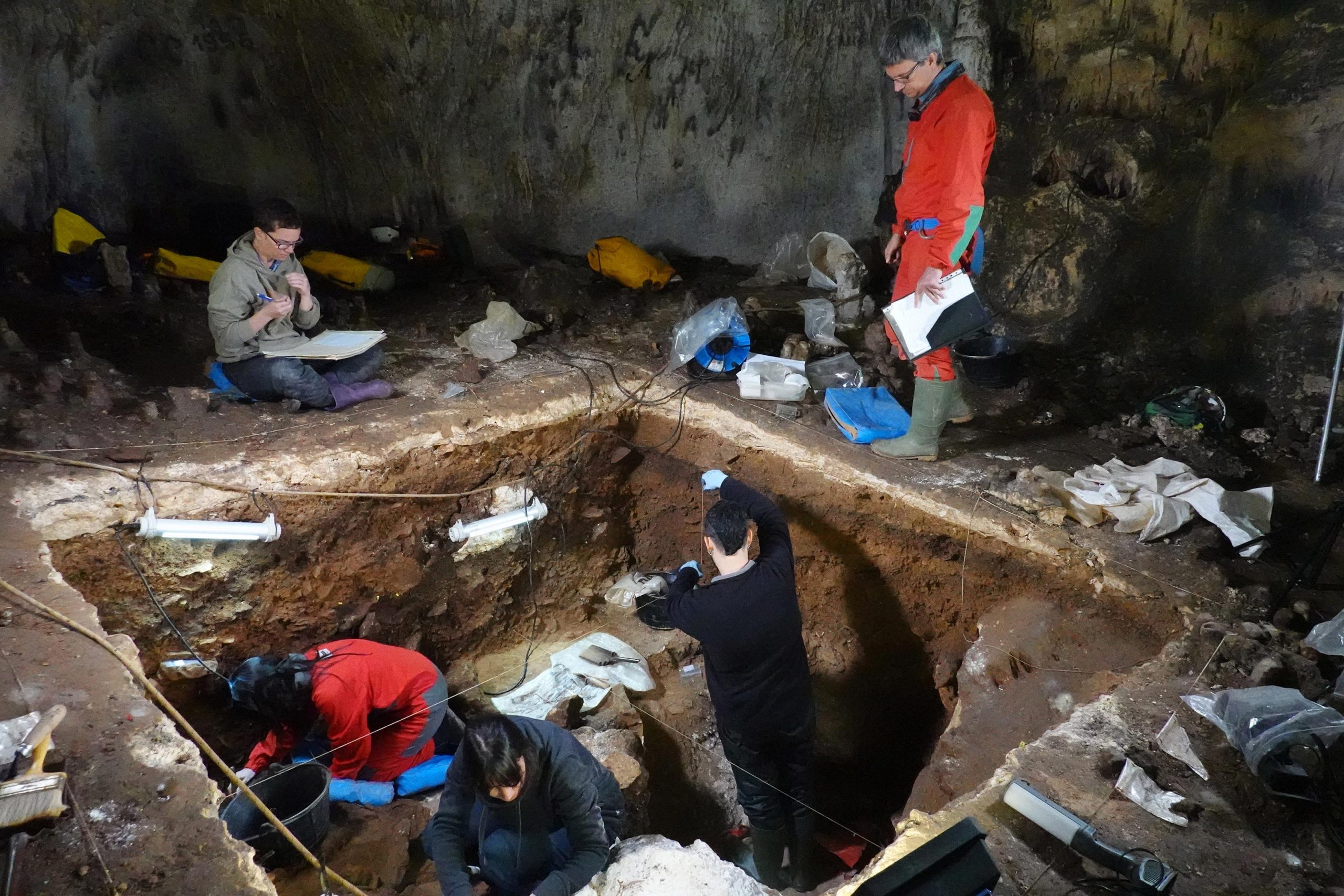
    Galería de las Estatuas
    Galería de las Estatuas cave site in northern Spain. Credit: Javier Trueba – Madrid Scientific Films

    A new method extracts nuclear DNA from sediments, uncovering Neanderthal population shifts and opening broader possibilities for paleo-genetic research.

    Mitochondrial DNA of archaic humans has been retrieved from cave sediments, but it has limited value for studying population relationships. Now, researchers present a method for analyzing trace amounts of archaic human nuclear DNA from sediments; their work studying ancient sediments from western Europe and southern Siberia has revealed new insights into Neanderthal population history.

    While recent studies have shown that it’s possible to recover hominin mitochondrial DNA (mtDNA) from Pleistocene-age archaeological sediments, mtDNA only carries information about maternal lineage, which does not always reflect the complete genetic history of archaic humans. Although nuclear DNA contains far more information, its retrieval from sediments presents substantial challenges; it’s far less abundant than mtDNA and difficult to distinguish from other non-hominin mammalian and microbial DNA, which dominates the genetic material often present in ancient sediments.
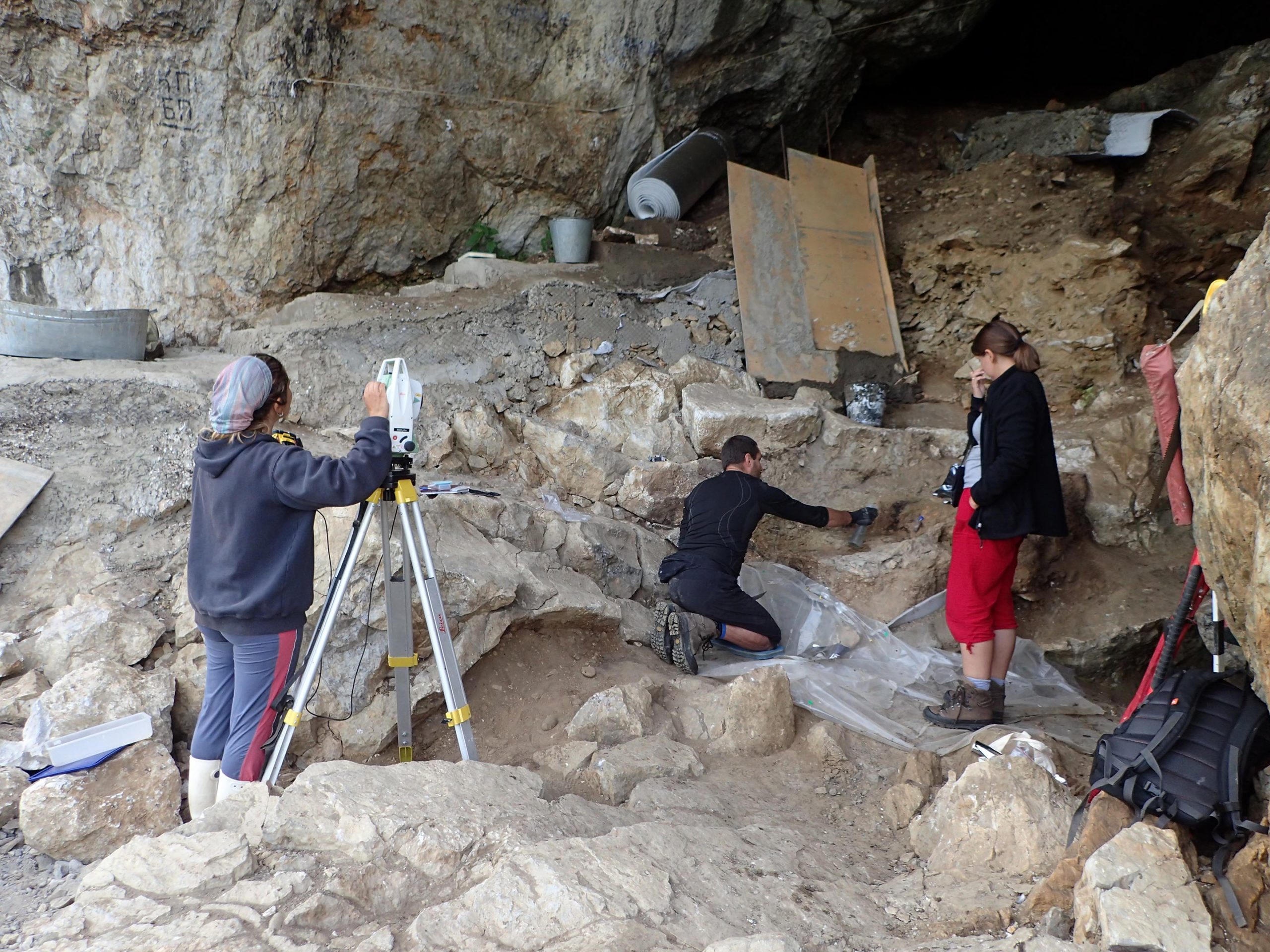
    Chagyrskaya Cave
    Chagyrskaya cave in the Altai Mountains of southern Siberia. Credit: Richard G. Roberts

    To address these challenges, Benjamin Vernot and colleagues developed methods to recover, enrich, and analyze nuclear DNA from cave sediments. Specifically, Vernot et al. applied their approach to archaeological cave deposits from paleolithic sites in western Europe and southern Siberia dated to roughly 200,000 and 50,000 years ago.

    Not only were the authors able to identify hominin nuclear DNA sequences in the Pleistocene sediments, but their analysis also revealed new insights into archaic human population history.

    The findings suggest a Neanderthal population replacement event in northern Spain about 100,000 years ago, as well as two distinct Neanderthal radiation events during the early part of the Late Pleistocene that may have been associated with changing climate and environmental conditions. Their approach has the potential to substantially expand the settings in which hominin DNA can be recovered, the authors say.

    Read Nuclear DNA From Cave Sediments Helps Unlock Ancient Human History for more on this research.

    Reference: “Unearthing Neanderthal population history using nuclear and mitochondrial DNA from cave sediments” by Benjamin Vernot, Elena I. Zavala, Asier Gómez-Olivencia, Zenobia Jacobs, Viviane Slon, Fabrizio Mafessoni, Frédéric Romagné, Alice Pearson, Martin Petr, Nohemi Sala, Adrián Pablos, Arantza Aranburu, José María Bermúdez de Castro, Eudald Carbonell, Bo Li, Maciej T. Krajcarz, Andrey I. Krivoshapkin, Kseniya A. Kolobova, Maxim B. Kozlikin, Michael V. Shunkov, Anatoly P. Derevianko, Bence Viola, Steffi Grote, Elena Essel, David López Herráez, Sarah Nagel, Birgit Nickel, Julia Richter, Anna Schmidt, Benjamin Peter, Janet Kelso, Richard G. Roberts, Juan-Luis Arsuaga and Matthias Meyer, 15 April 2021, Science.
    DOI: 10.1126/science.abf1667

    Never miss a breakthrough: Join the SciTechDaily newsletter.
    Follow us on Google and Google News.

    American Association for the Advancement of Science Archaeology Evolution Genetics Neanderthals
    Share. Facebook Twitter Pinterest LinkedIn Email Reddit

    Related Articles

    Ancient Human Discovery: New Fossils Reveal a Mysterious Hominin Lineage From the Levant

    It Was NOT Climate Change That Caused Neanderthal Extinction

    Earliest Modern Artifacts in Europe – Blade-Like Tools and Teeth Pendants – Were Created by Homo Sapiens

    Earliest Interbreeding Between Ancient Human Populations Discovered – Evolutionary Puzzle Solved

    Unraveling the Mystery of Neanderthal Death Rites – Discovery at ‘Flower Burial’ Site Offers “Unparalleled Opportunity”

    What Caused Neanderthal Extinction and Were Our Human Ancestors to Blame?

    New Evidence Shows Humans Mastered Fire Earlier Than Thought

    Scientists Reveal the Complex Story Behind the Beaker Phenomenon

    New Research Suggests Human Evolution Was Uneven and Punctuated

    1 Comment

    1. Bob on June 21, 2021 12:22 am

      “The findings suggest a Neanderthal population replacement event…”

      What is a replacement event? Were the Neanderthals replaced by H Sapiens, or did another group of Neanderthals muscle in and kick out their predecessors?

      Reply
    Leave A Reply Cancel Reply

    • Facebook
    • Twitter
    • Pinterest
    • YouTube

    Don't Miss a Discovery

    Subscribe for the Latest in Science & Tech!

    Trending News

    New Study Reveals Why Ozempic Works Better for Some People Than Others

    Climate Change Is Altering a Key Greenhouse Gas in a Way Scientists Didn’t Expect

    New Study Suggests Gravitational Waves May Have Created Dark Matter

    Scientists Discover Why the Brain Gets Stuck in Schizophrenia

    Scientists Engineer “Tumor-Eating” Bacteria That Devour Cancer From Within

    Even “Failed” Diets May Deliver Long-Term Health Gains, Study Finds

    NIH Scientists Discover Powerful New Opioid That Relieves Pain Without Dangerous Side Effects

    Collapsing Plasma May Hold the Key to Cosmic Magnetism

    Follow SciTechDaily
    • Facebook
    • Twitter
    • YouTube
    • Pinterest
    • Newsletter
    • RSS
    SciTech News
    • Biology News
    • Chemistry News
    • Earth News
    • Health News
    • Physics News
    • Science News
    • Space News
    • Technology News
    Recent Posts
    • JWST Reveals a “Forbidden” Planet With a Baffling Composition
    • New Research Challenges 30-Year-Old Theory of Eye Development
    • The Protein “Sabotaging” Aging Muscle Recovery Could Be Key to Surviving Aging
    • This Diet–Gut Interaction Could Transform Fat Into a Calorie-Burning Machine
    • Why Some People Reach 100: New Study Reveals Key Biological Differences
    Copyright © 1998 - 2026 SciTechDaily. All Rights Reserved.
    • Science News
    • About
    • Contact
    • Editorial Board
    • Privacy Policy
    • Terms of Use

    Type above and press Enter to search. Press Esc to cancel.