
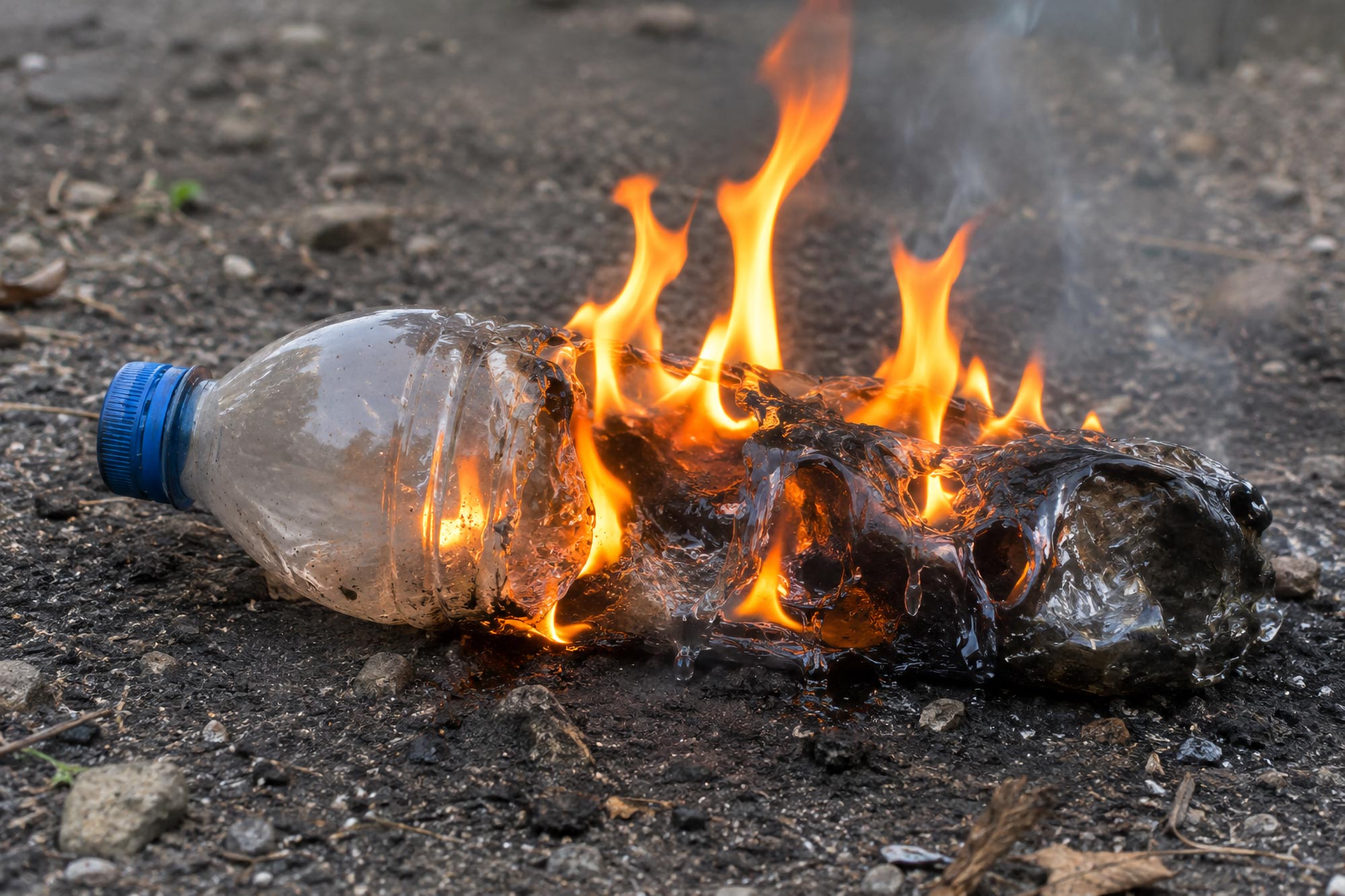
New research shows that burning plastic is more common as an everyday energy source than previously understood, raising serious global concerns for health, social inequality, and the environment.
For some families, plastic waste is not only something to throw away. It can become fuel for cooking, heat, fire starting, or keeping insects away when safer energy sources are too expensive, and waste collection is unreliable.
A study led by Curtin University points to how widespread this hidden practice may be in developing countries, raising concerns about health, environmental damage and social inequality. Published in Nature Communications, the research surveyed more than 1000 people across 26 countries who work closely with low-income urban neighborhoods, including researchers, government workers, and community leaders.
One in three respondents said they knew of households burning plastic. Many had seen neighbors or community members do it firsthand. A smaller but still important group said they had burned plastic themselves.
Plastic becomes household fuel
Dr. Bishal Bharadwaj, from the Curtin Institute for Energy Transition (CIET), said the study provides the first broad global evidence that households are burning plastic not just to get rid of waste, but to meet daily energy needs.
“This is an issue that has largely been happening out of sight in communities and been difficult to get accurate data on; however, this survey provides additional insights into what is going on,” Dr. Bharadwaj said.
“When families can’t afford cleaner fuels and have no reliable waste collection, plastic becomes both a nuisance and a last-resort energy source. We found evidence of people burning everything from plastic bags and wrappers to bottles and packaging, just to meet basic household needs.
“The practice is far more widespread than anyone realized, but because it happens in marginalized communities and is often hidden, it has escaped meaningful global attention despite the severe risks to health and the environment.”
Toxic smoke hits vulnerable groups
The survey found that households often burned plastic in simple stoves, including three-stone fires, charcoal stoves, and makeshift burners. That can produce toxic smoke inside homes and crowded neighborhoods, where people may have little choice but to breathe it.
Women, children, older residents, and people with disabilities were identified as the groups most exposed.
Coauthor Professor Hari Vuthaluru from Curtin’s Western Australian School of Mines (WASM) said burning mixed plastics and polyvinyl chloride (PVC) is especially dangerous because it can release highly toxic chemicals.
“When PVC is burned, it releases highly toxic dioxins and furans, which are among the most dangerous pollutants known,” Professor Vuthaluru said.
“These compounds persist in the environment, accumulate in the food chain and can cause serious health problems including cancer, reproductive disorders and immune system damage.
“PVC ranks as the third most commonly burned plastic, which is extremely concerning.”
Contamination reaches food and water
The danger does not stop with smoke. Dr. Pramesh Dhungana from Curtin’s School of Molecular and Life Sciences said plastic burning can also contaminate food and water.
“Our survey found 60 percent of respondents thought it extremely likely that toxic chemicals from burning plastic could contaminate food and water,” Dr. Dhungana said.
“This isn’t just theoretical: studies near plastic burning sites have found toxic compounds in eggs and soil samples.
“When plastic burns near homes and food preparation areas, these toxins can settle on crops, enter water sources and accumulate in foods, creating a hidden health crisis for communities already facing significant challenges.”
Safer alternatives are essential
Professor Peta Ashworth, coauthor and CIET Director, said the findings point to a problem that cannot be solved by simply warning people not to burn plastic. The practice is tied to deeper pressures, including energy poverty, unaffordable cleaner fuels and inadequate waste services.
The need for action is growing more urgent because plastic use is projected to triple by 2060.
“People only do this because they have no safer alternatives, due to root causes such as extreme energy poverty, unaffordable cleaner fuels and inadequate waste services,” Professor Ashworth said.
“It’s essential that solutions include improving sanitation, supporting access to modern cooking energy and working with communities on practical, culturally relevant options.
“This research provides the evidence base needed to design interventions that genuinely support the world’s most vulnerable urban residents.”
Reference: “Prevalence of plastic waste as a household fuel in low-income communities of the Global South” by Bishal Bharadwaj, Tara Gates, Sobia Rose, Ernoiz Antriyandarti, Sarva Mangala Praveena, Chizoba Obianuju Oranu, Monjit Borthakur, Pramesh Kumar Dhungana, Aminath Shazly, Gabriel Enrique De-la-Torre, Ayşe Lisa Allison, Dinushika Madhushani Yapa Abeywardhana, Sizwe Mabaso, Philip Kofi Adom, Margaret Banga, Witness Dlamini, Telesphore Kabera, Jessika Bohlmann, Chinnathan Areeprasert, Bijeesh Kozhikkodan Veettil, Wasso Dieudonné Shukuru, Nyaladzani Nkhwanana, Alice Kammwamba, Rajesh Kumar Rai, Bakary Conteh, Victoria Ndinelago Erasmus, Sadikou Agbere, Keophousone Phonhalath, Hope Njoroge, Darcy Glenn, Esther Ishuga, Gilbert Mubalama Mugisho, Raeesa Moolla, Fèmi E. Hounnou, Madina Mwagale Guloba, Ulemj Damiran, Hari Vuthaluru, Yacob Mulagetta, Marc Jeuland, Ian D. Gates and Peta Ashworth, 8 January 2026, Nature Communications.
DOI: 10.1038/s41467-025-67512-y
Never miss a breakthrough: Join the SciTechDaily newsletter.
Follow us on Google and Google News.
1 Comment
thanks for this information