
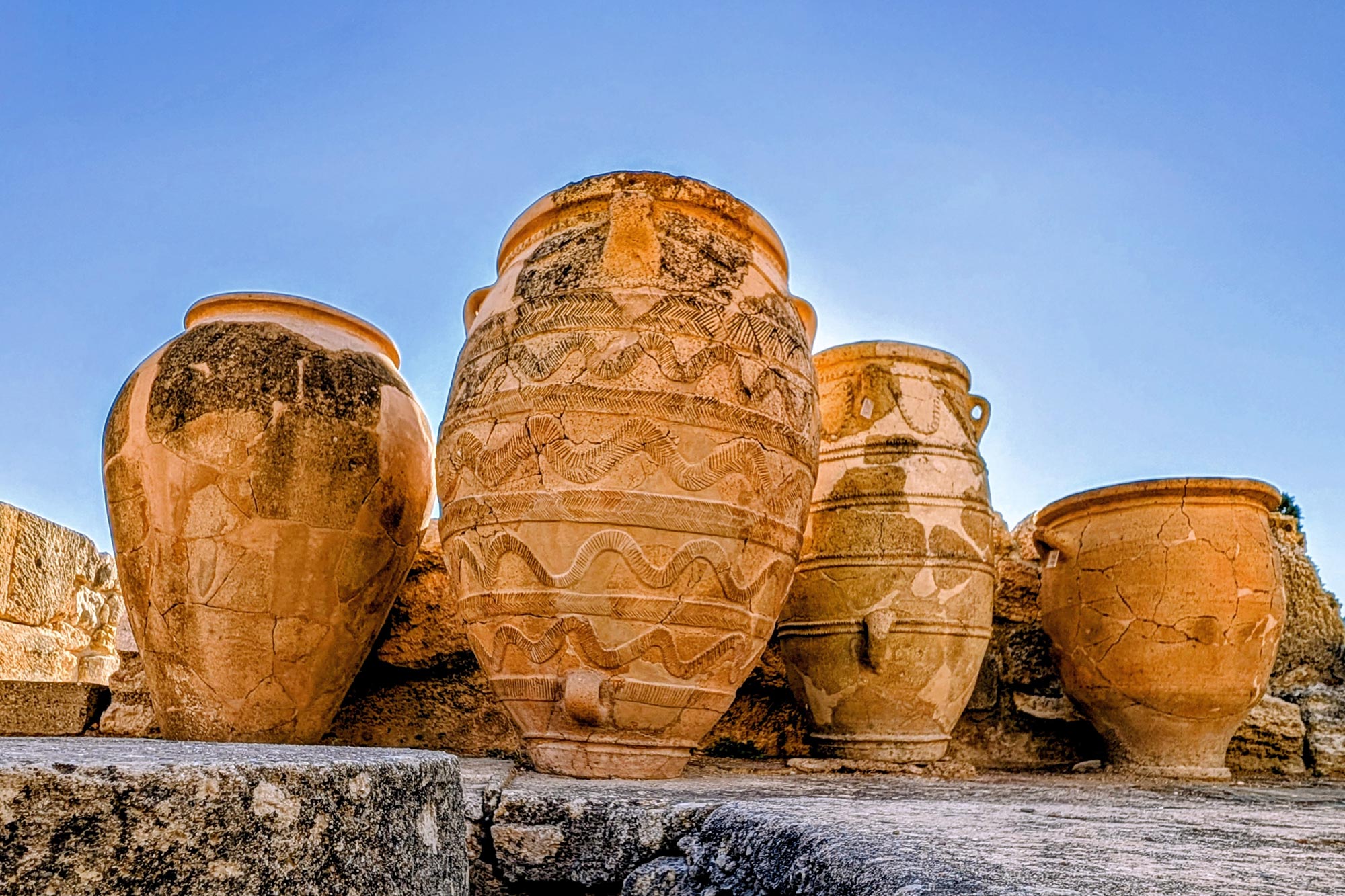
Mediterranean soil chemistry may have caused archaeologists to overidentify olive oil in ancient pottery.
For archaeologists, a trace of olive oil inside an ancient pot can do more than identify a meal. It can point to trade networks, farming choices, household routines and the economic power of one of the Mediterranean’s most important products.
But a Cornell-led study suggests that some of those traces may be less reliable than they once seemed.
An interdisciplinary group at Cornell, bringing together classicists, food scientists, and engineers, found that plant oil residues do not survive well in calcareous Mediterranean soils. That matters because archaeologists have often used chemical residues in pottery to identify olive oil. In some cases, the new findings suggest, those residues may have been misread as olive oil, confused with other plant oils, or even mistaken for animal fat.
The findings were published in the Journal of Archaeological Science.
Ancient residues need better testing
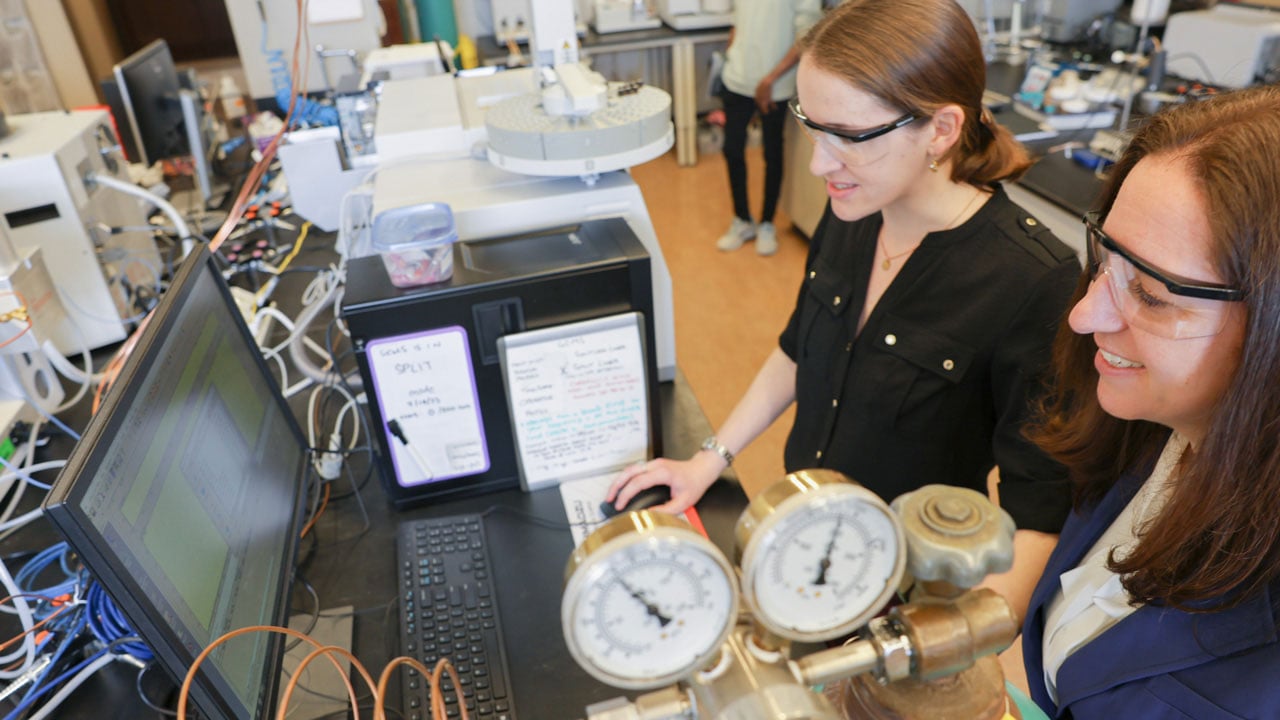
The project began in 2019 with Rebecca Gerdes, Ph.D. ’24, then a doctoral student in the Department of Classics in the College of Arts and Sciences. Gerdes had also studied chemistry as an undergraduate, and she wanted to bring that training into archaeological science.
“I usually describe my work as: I wash ancient dirty dishes, I save the rinse liquid, and I use the molecules in it to figure out how people are using their pots,” said Gerdes, currently the Hirsch Postdoctoral Associate at the Cornell Institute of Archaeology and Material Studies in A&S.
Organic residue analysis is already a well-established part of archaeology. It allows specialists to study tiny molecular traces left behind in ancient containers. Yet Gerdes saw that many claims about olive oil in eastern Mediterranean pottery rested on assumptions that had not been tested experimentally in the region’s soils.
At the recommendation of her Ph.D. chair, Sturt Manning, Distinguished Professor of Arts and Sciences in Classical Archaeology (A&S), she decided the first step was not to answer a historical question, but to strengthen the method itself.
“One of the things that I was realizing early in my Ph.D. was people were making all sorts of claims about what they had found in pots in the eastern Mediterranean, and there was a lot of room for backing those claims up with more solid experimentation,” she said. “I wanted to answer some interesting archaeological questions, but I realized I had to do some method development first.”
That need turned into a broad Cornell collaboration, stretching “up and down Tower Road,” Gerdes said, and drawing on researchers from three colleges and multiple campus facilities.
A crucial partner was Jillian Goldfarb, associate professor of chemical and biomolecular engineering in Cornell Engineering. Goldfarb’s lab studies how organic waste breaks down into biofuels, giving her group tools that could be adapted to the problem of ancient food residues.
But first, they needed soil.
Soil changed the chemical story
Because the work began during the height of the pandemic, Gerdes could not travel to Cyprus to sample the island’s geological conditions directly. Instead, she arranged for the Mediterranean soil to come to Cornell. The Cornell Soil Health Lab in the College of Agriculture and Life Sciences received soil from Cyprus, sterilized it and released it for safe study.
Bob Schindelbeck, the lab’s director, helped Gerdes understand how soil chemistry might shape what survives on pottery. Working with Goldfarb’s research group, Gerdes then designed a lab experiment to test how different soils affect the breakdown of food residues.
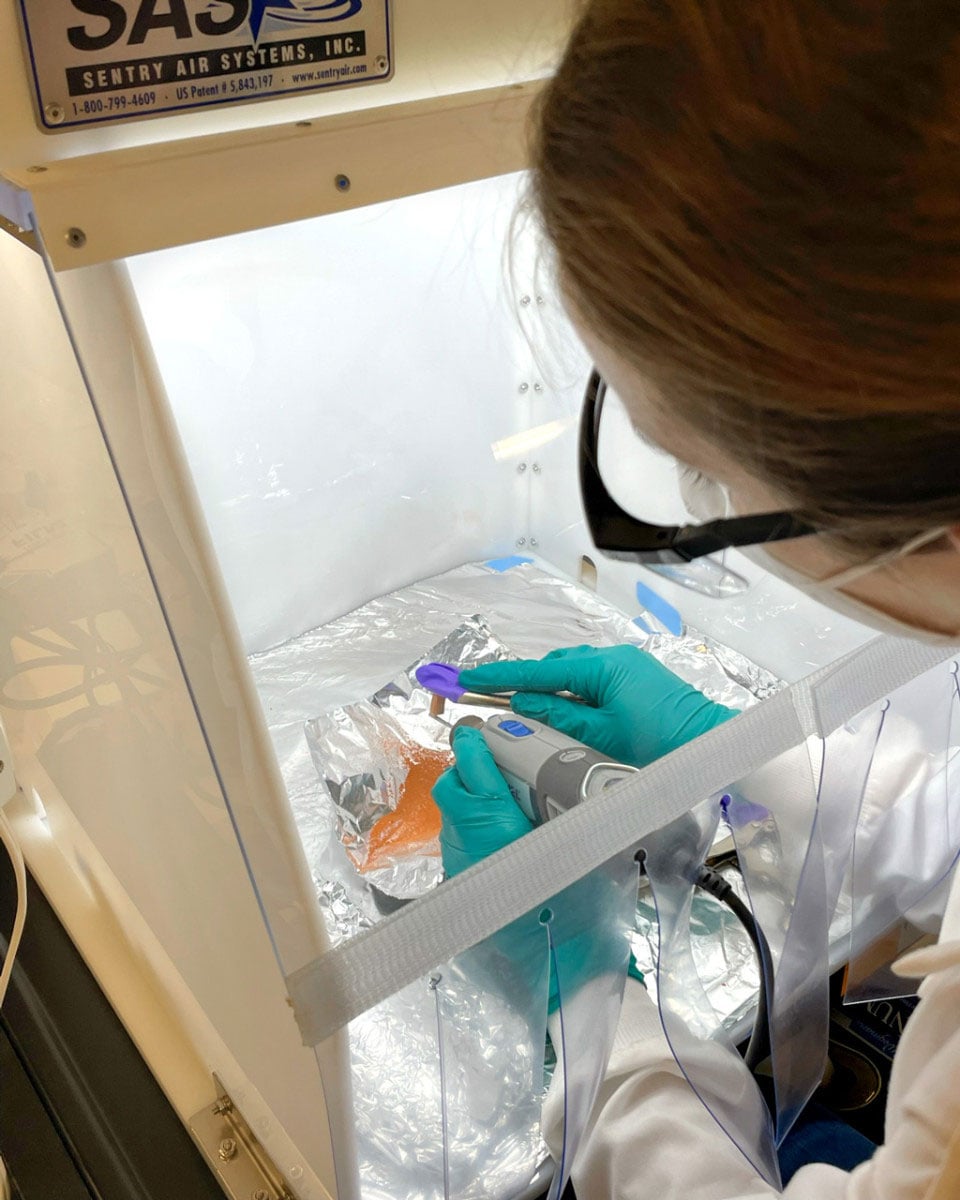
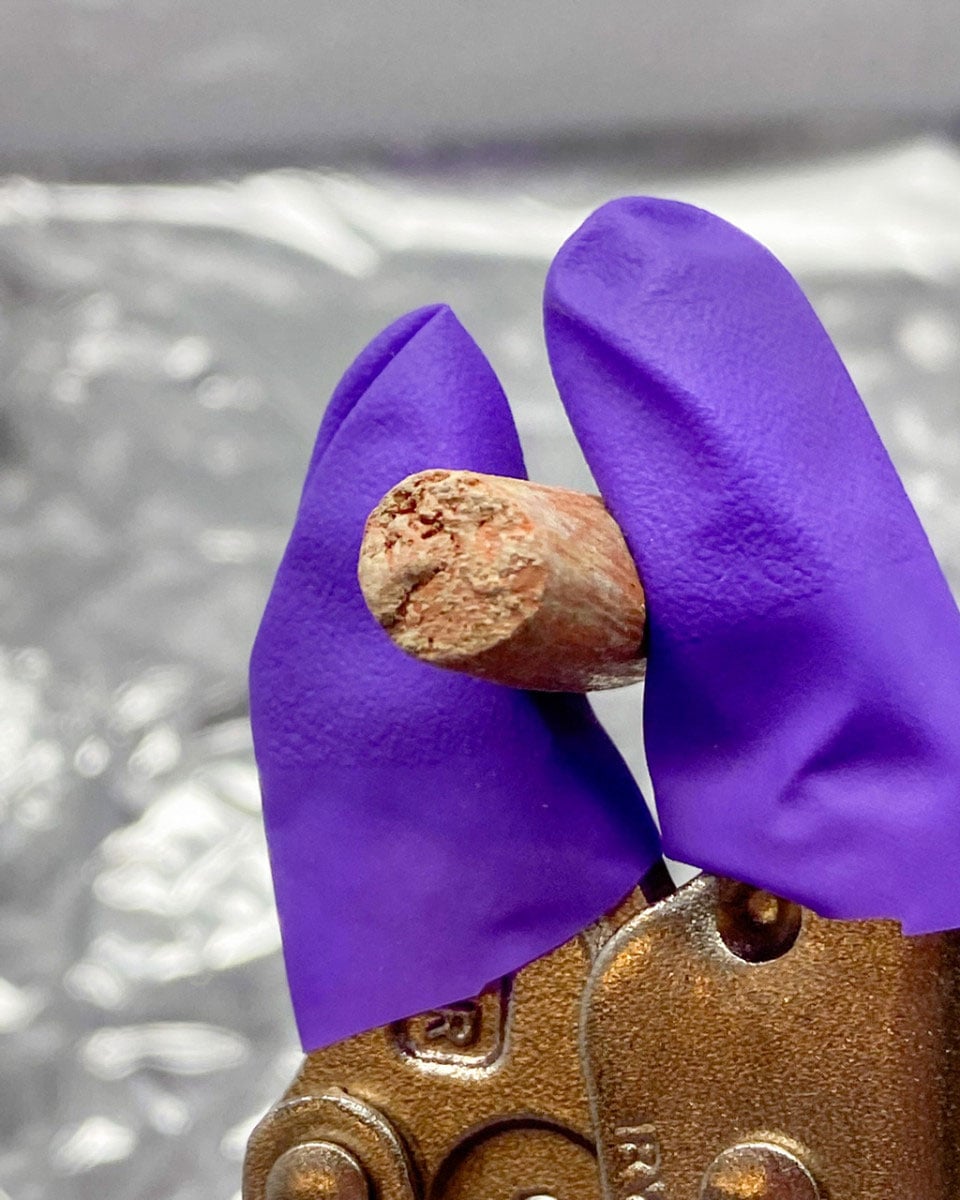
The experiment began with small ceramic pellets made from rolled-out terracotta clay. The process reminded Gerdes of a childhood craft material. “I was thinking about playing with Play-Doh the whole time,” Gerdes said. The pellets were fired in a tube furnace, soaked in olive oil, and buried in two kinds of moist soil. One came from a Soil Health Lab agricultural field in New York. The other came from Cyprus, selected because it matched conditions at an archaeological site and had been collected by Thilo Rehren at the Cyprus Institute.
“What turns out to be critical is this soil is really common in the eastern Mediterranean, so it impacts a lot of major historical periods, especially where we’re looking at trade and connectivity in that region,” Gerdes said. “The Late Bronze Age [c. 1650-1100 BC] is one of those time periods.”
To speed up the aging process, the samples were kept in incubators at 50 degrees Celsius for as long as a year. After excavation, the olive oil residues were extracted so the preserved molecules could be analyzed.
“We managed to do it in the lab at an accelerated rate, so we didn’t have to wait 3,000 years to finish my Ph.D.,” Gerdes said.
Olive oil can mimic fat
The results showed that the Cyprus soil changed the residue record. In the calcareous, alkaline soil, the ceramic pellets yielded less olive oil residue and lost dicarboxylic acid plant oil biomarkers compared with pellets buried in mildly acidic New York soil.
That chemical loss creates a serious problem for interpretation. Olive oil naturally overlaps in composition with other plant oils. When it degrades, its molecular profile can become even harder to distinguish and may begin to resemble animal fat.
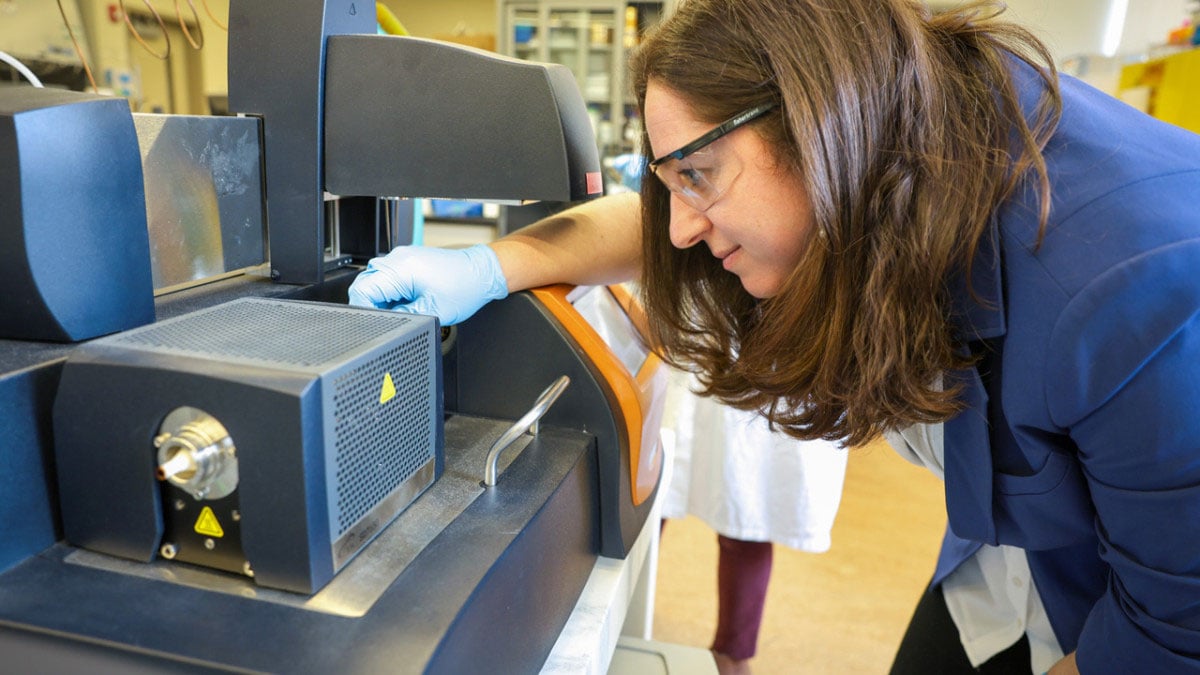
“There’s definitely a sense among archaeologists of wanting to believe that you found olive oil, because it makes a nice story. And because it’s such an economically important Mediterranean product, there is a default assumption that if you found molecules that match olive oil, then you must have found olive oil,” Gerdes said. “The problem is that olive oil overlaps in its composition with a bunch of other plant oils. And if you start to degrade it, then it gets even worse – it starts looking like an animal fat.”
Collaboration expanded the method
For Gerdes, the results were important, but so was the way the project came together. The work relied on a network of Cornell collaborators whose expertise stretched far beyond classical archaeology.
Her team used lab space from the Schroeder Research Group at the Boyce Thompson Institute. Joe Regenstein, professor emeritus of food science (CALS) and a member of Gerdes’s Ph.D. committee, helped establish the extraction process for the organic residues. Goldfarb’s group adapted chemical engineering techniques from biofuel research to measure the residues. The Cornell Center for Materials Research helped the team handle powdered ceramic samples safely, and the Cornell Stable Isotope Lab cleaned the glassware.
The project also included undergraduate co-authors Hanna Wiandt ’24, Malak Abuhashim ’23, M.Eng ’24 and Avery Williams ’22. According to Goldfarb, the students and faculty had to work across fields, developing shared language, expectations, and goals.
That kind of collaboration points to a larger opportunity for Cornell to become a leading interdisciplinary center for biomolecular archaeology.
“We really want to build out an analytical center for this,” Goldfarb said. “We’re thinking about how engineers and scientists can be of use in building out new methodologies and applying the fundamental skills and the applied skills that we have to new knowledge areas. And it all starts with one amazing student – now a postdoc – to get the conversations going.”
Reference: “Overlooking environmental context causes misidentification of ancient Mediterranean plant oil in organic residues” by R.F. Gerdes, H. Wiandt, M. Abuhashim, A. Williams, J.M. Regenstein, S.W. Manning and J.L. Goldfarb, 24 November 2025, Journal of Archaeological Science.
DOI: 10.1016/j.jas.2025.106426
The research was supported by the National Science Foundation; Cornell’s Department of Classics, the Cornell Institute of Archaeology and Material Studies, the Engineering Learning Initiatives, the Mario Einaudi Center for International Studies and the Institute of European Studies; and the American Society for Overseas Research.
Never miss a breakthrough: Join the SciTechDaily newsletter.
Follow us on Google and Google News.