
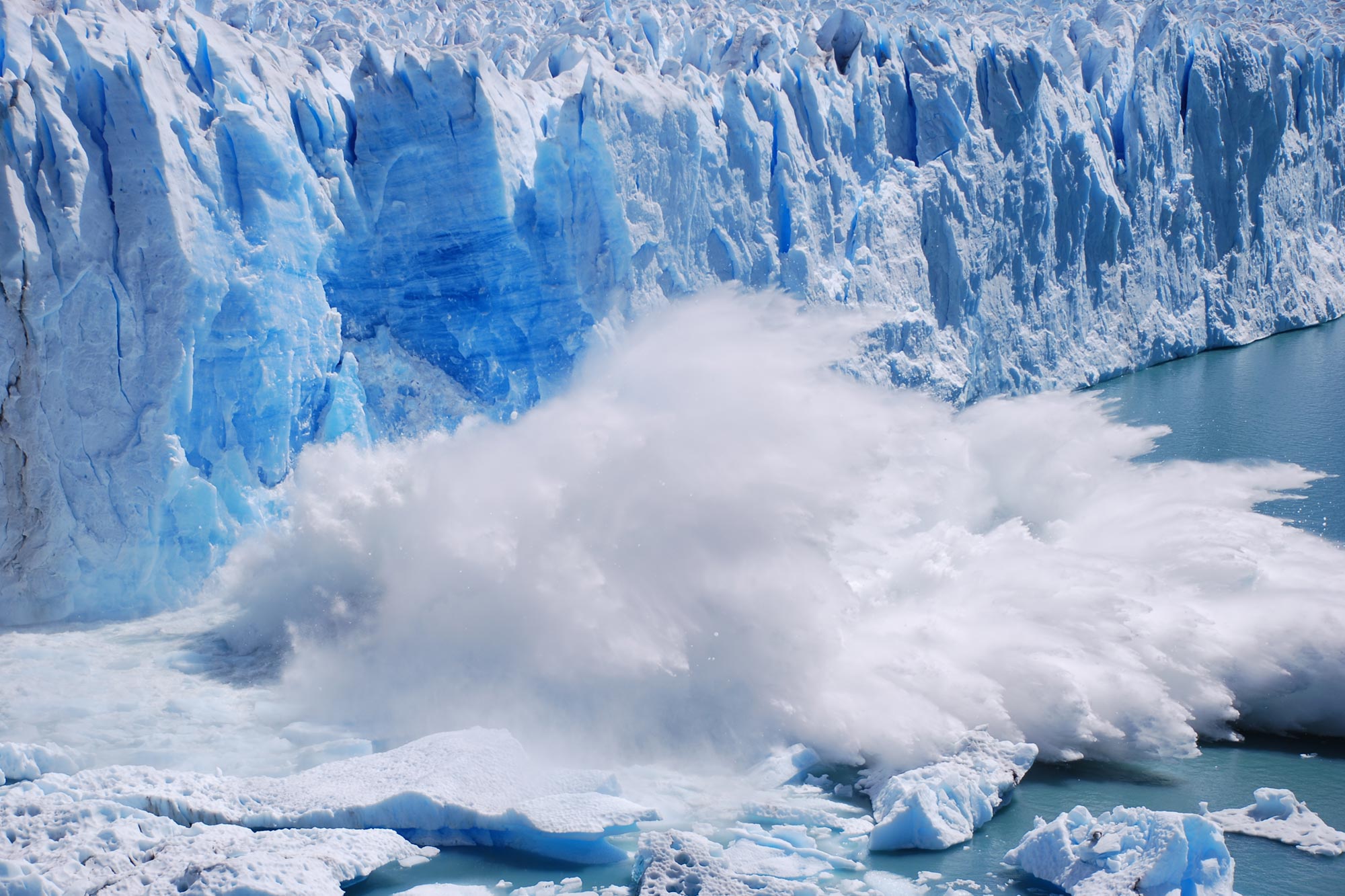
A new study uses boreholes drilled deep beneath Antarctic ice to investigate why the continent’s glaciers are accelerating.
More than half a kilometer beneath an East Antarctic glacier, sensors detected water pressure high enough to support almost all the ice above. The measurements provide the first direct confirmation that meltwater from the surface can reach the base of an Antarctic glacier, reduce friction and accelerate its movement toward the ocean.
“The Antarctic ice sheet holds 90% of the world’s glacier ice. If it were to melt completely and drain into the ocean, sea levels would rise by about 60 meters,” says Professor Shin Sugiyama of Hokkaido University.
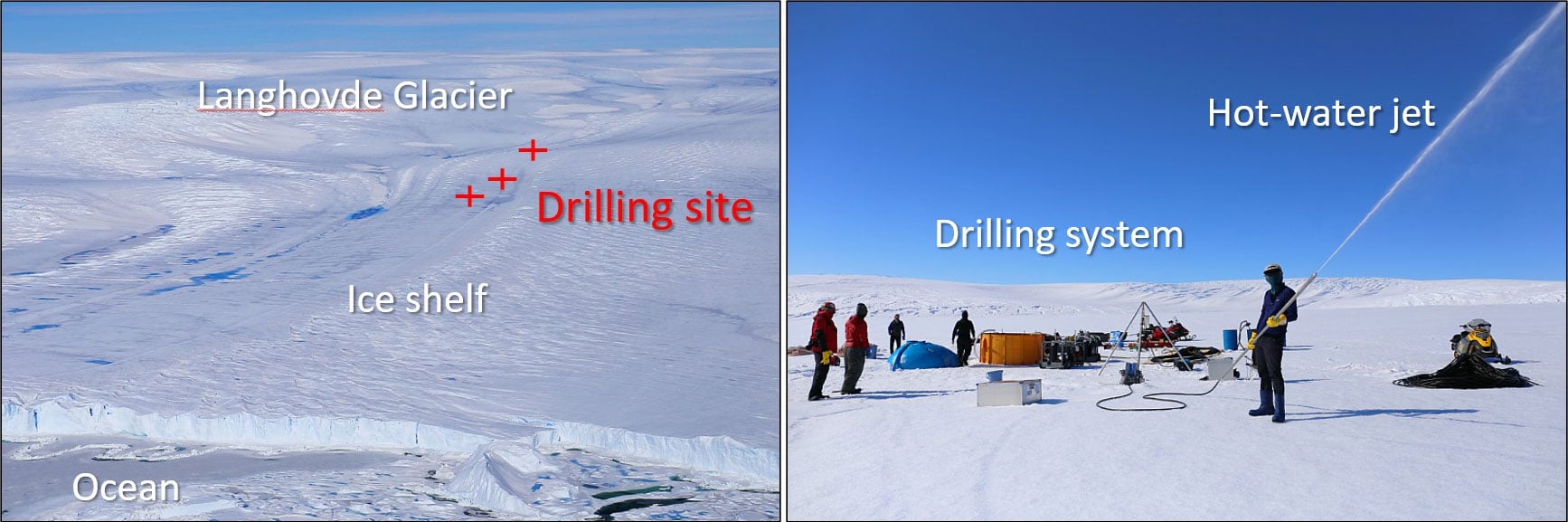
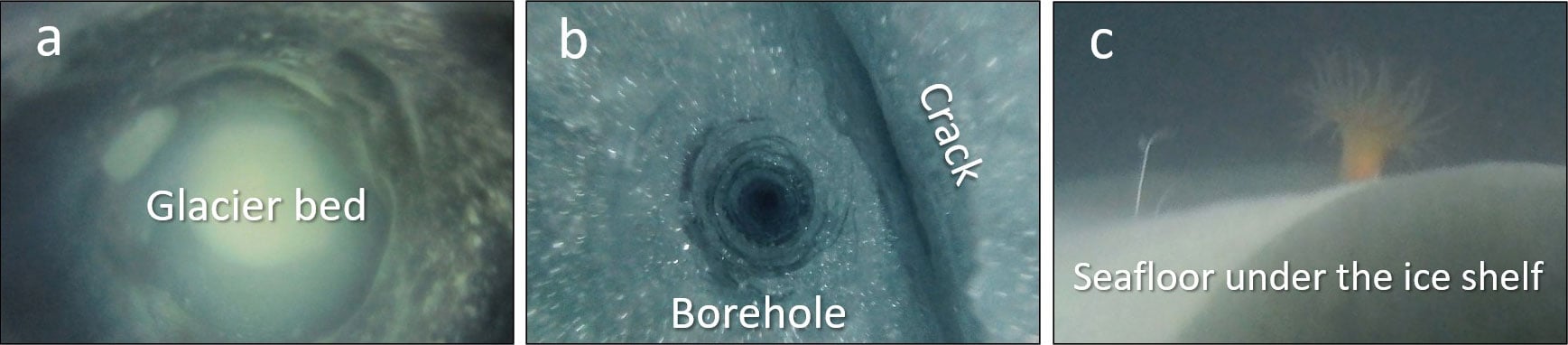
For the study, published in Nature Communications, Sugiyama and his colleagues drilled boreholes more than 550 meters into the Langhovde Glacier in East Antarctica. They lowered cameras and pressure sensors to the glacier bed, allowing them to observe conditions that satellites cannot see from above. “Using a hot-water jet, we could carefully and rapidly drill into the glacier and measure the water pressure right at its base,” explains Sugiyama.
Meltwater reaches the glacier bed
The measurements showed that water gathering in surface lakes and ponds traveled through fractures all the way to the bottom of the glacier. The route formed through hydrofracturing, a process in which the weight of accumulated meltwater forces cracks deeper into the ice and opens channels through which the water can descend.
Once the water reached the glacier bed, it increased pressure beneath the ice and lifted the glacier slightly from the underlying rock. This pressurized water reduced friction along the boundary between the ice and bedrock, allowing the glacier to slide more quickly toward the ocean.
Meltwater speeds up Antarctic glacier ice flow from below. Credit: Shin Sugiyama
Rising pressure speeds the ice
“During a spell of intense surface melting, and again after a rare rainfall event in January 2022, meltwater increased the water pressure at the glacier’s base until it was supporting 97% of the weight of the ice above,” says Professor Sugiyama. “The glacier rose slightly and, with less friction to hold it back, its sliding across the bed accelerated by 10–20%.”
Similar behavior has been documented in glaciers across Europe, Alaska and Greenland. Whether the same process occurred in Antarctica had remained uncertain because researchers had never measured it directly beneath the ice.
“This is the first observation of such kind in Antarctica,” says Sugiyama.
Cameras reveal life beneath ice
The boreholes revealed more than the mechanics of glacier movement. Cameras recorded a sea anemone and several slender-stalked sponges attached to a boulder within a seawater layer only three meters thick, buried beneath 474 meters of ice. The animals were several hundred meters beyond the point where the glacier separates from the seabed.
“It was very surprising to spot colorful creatures going about their lives in such a cold, dark, and confined environment, revealing a hidden ecosystem under the ice,” says Sugiyama.
The results could have implications far beyond Langhovde Glacier.
“Currently, the ice sheet is losing mass overall because the amount of ice discharged into the ocean exceeds snow accumulation inland. Our study suggests that ice loss will increase as meltwater rises in a warming climate, carrying more and more ice into the ocean. This is especially urgent and relevant for people and societies living in low-elevation areas,” concludes Sugiyama.
Reference: “Acceleration of an Antarctic outlet glacier driven by surface meltwater input to the base” by Shin Sugiyama, Ken Kondo, Masahiro Minowa and Akira Watanabe, 6 May 2026, Nature Communications.
DOI: 10.1038/s41467-026-72724-x
This research was performed as a scientific program of JARE63 as a Prioritized Research Project and funded by JSPS KAKENHI Grant Numbers 20H00186 and 25H00452.
Never miss a breakthrough: Join the SciTechDaily newsletter.
Follow us on Google and Google News.
2 Comments
Prior to this revelation, it was calving glaciers past the grounding line that were getting the blame. But this glacier is in East Antarctica and the wasting is occurring primarily in West Antarctica. Might it be that East Antarctica is not an appropriate proxy for West Antarctica? After all, they remark, “Similar behavior has been documented in glaciers across Europe, Alaska and Greenland. Whether the same process occurred in Antarctica had remained uncertain because researchers had never measured it directly beneath the ice.” Why did they then choose East Antarctica for a proxy instead of West Antarctica? If Europe, Alaska, and Greenland weren’t sufficiently similar to West Antarctica, they still haven’t demonstrated that the process occurs where the probability of collapse is greatest. Why does it matter? Much of West Antarctica basal ice is below sea level and it just might act differently than ice that is high above sea level and has lower hydrostatic pressures, particularly when so much of West Antarctica has higher geothermal gradients than East Antarctica. The proximity to ice, or the name (Antarctica) are not the most important factors.
“The results could have implications far beyond Langhovde Glacier.”
Let’s hope so, because if that isn’t the case, their extrapolations and predictions would be inappropriate.