
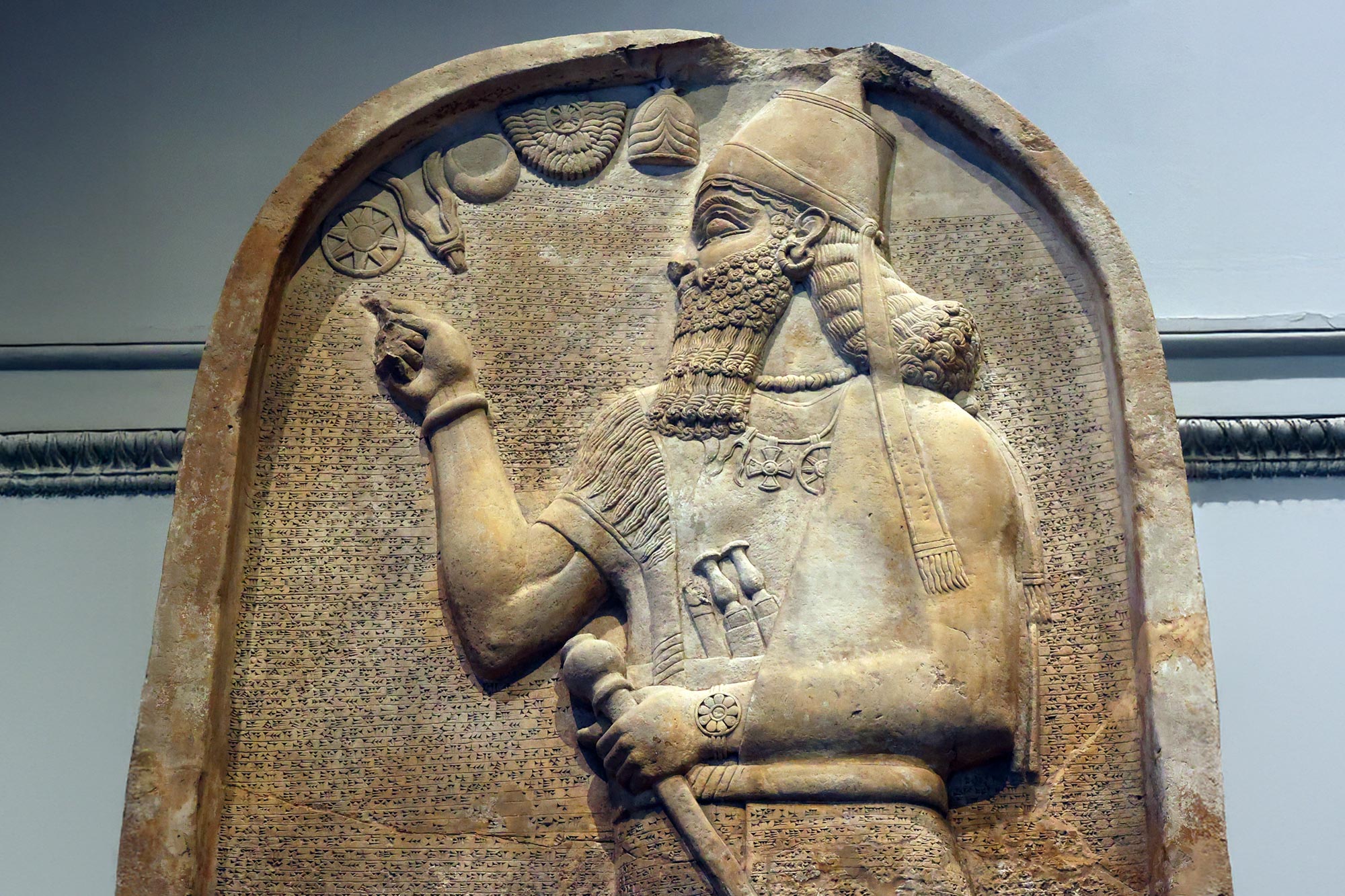
Three missing rulers reveal that Assyria’s official royal chronology may have concealed a more contested political history.
For nearly a century, historians have treated the Assyrian King List (AKL) as the standard chronology of Assyria’s rulers, particularly during the empire’s later history. But evidence drawn from inscriptions, tablets, and damaged monuments suggests that this official record may have excluded kings whose reigns complicated the preferred story of royal succession.
In new research published in the Journal of Cuneiform Studies, Alexander Johannes Edmonds and Eckart Frahm identify three previously unrecognized rulers whose existence can be reconstructed from surviving evidence. Their findings challenge the idea that the AKL was a complete and impartial record. As Edmonds and Frahm write, “early Neo-Assyrian political history was much messier, but also more interesting, than has so far been recognized.”
Three missing kings reshape the timeline
The first overlooked ruler adopted the name Tiglath-pileser, following an earlier Assyrian king. He appears to have ruled at the same time as the officially recognized monarch Aššur-dān III, his nephew, whom he tried to overthrow following a solar eclipse that would have carried ominous political meaning.
Evidence of this Tiglath-pileser’s administration survives on a clay tablet in the British Museum bearing the inscription of a royal grant. Edmonds and Frahm argue that he probably ruled from approximately 763 to 762 BCE before being removed from power.
The second proposed king emerges from a stela found in 1894 at Tell ‘Abta in Iraq. Scholars have long debated why the name of the Assyrian ruler originally inscribed on the monument was later replaced with that of another “Tiglath-pileser.”
Edmonds and Frahm suggest that the alteration becomes understandable if another ruler, named Shalmaneser, is added to the royal sequence. According to their reconstruction, this Shalmaneser ruled shortly before Tiglath-pileser III took the throne in 745 BCE.
The third case concerns a king named Aššur-uballiṭ. On a cuneiform tablet, Tukultī-Ninurta II refers to a ceremonial vessel made by Tukultī-Ninurta I and later restored by Aššur-uballit. Yet the AKL records no king with that name between the reigns of the two Tukultī-Ninurtas.
Edmonds and Frahm propose that an otherwise forgotten Aššur-uballit ruled from 913 to 912 BCE. His existence would explain both the tablet’s reference and the identity of a royal statue found at Aššur. The statue is missing its head, while its arms and royal insignia have been deliberately worn away.
The king list may reflect power
The recognition of these three rulers raises a broader question about what the Assyrian King List was designed to preserve. Rather than being “an impartial chronographic work,” Edmonds and Frahm suggest it may have served as “a legitimizing canon of kings, which was periodically updated to remove short-lived or parallel Neo-Assyrian rulers.”
Viewed this way, the AKL becomes more than a timeline. It may also record political decisions about which rulers deserved to be remembered as legitimate and which could be removed from official history.
That possibility leads Edmonds and Frahm to ask: “What and who determined a king’s ‘canonicity’? How did this intersect with Assyrian cultural memory or notions of kingship? Was the AKL’s function at all practical, or solely ceremonial?”
With three hidden reigns now reconstructed, the Assyrian King List has become a source of new questions rather than a settled authority. The early Neo-Assyrian period appears to have included rival claims, overlapping reigns and deliberate acts of historical exclusion.
The discovery therefore complicates the political story behind the rise of the Assyrian Empire while offering a new perspective on how the world’s first empire shaped its own official memory.
Reference: “Three New Kings of Assyria” by Alexander Johannes Edmonds and Eckart Frahm, July 24, 2026, Journal of Cuneiform Studies.
DOI: 10.1086/741239
Never miss a breakthrough: Join the SciTechDaily newsletter.
Follow us on Google and Google News.