
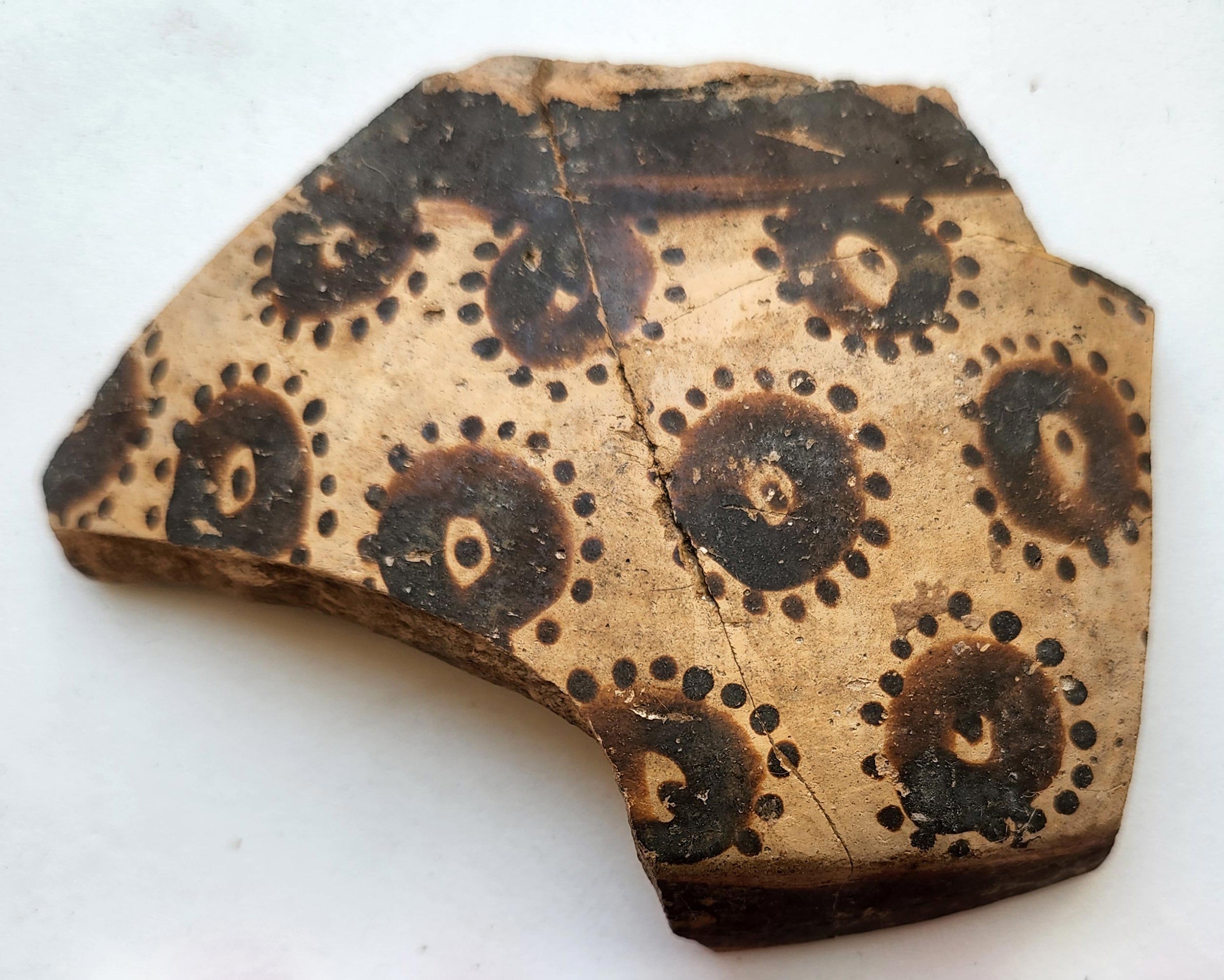
Halafian pottery shows that early agricultural societies practiced advanced mathematical thinking through plant-based art long before writing.
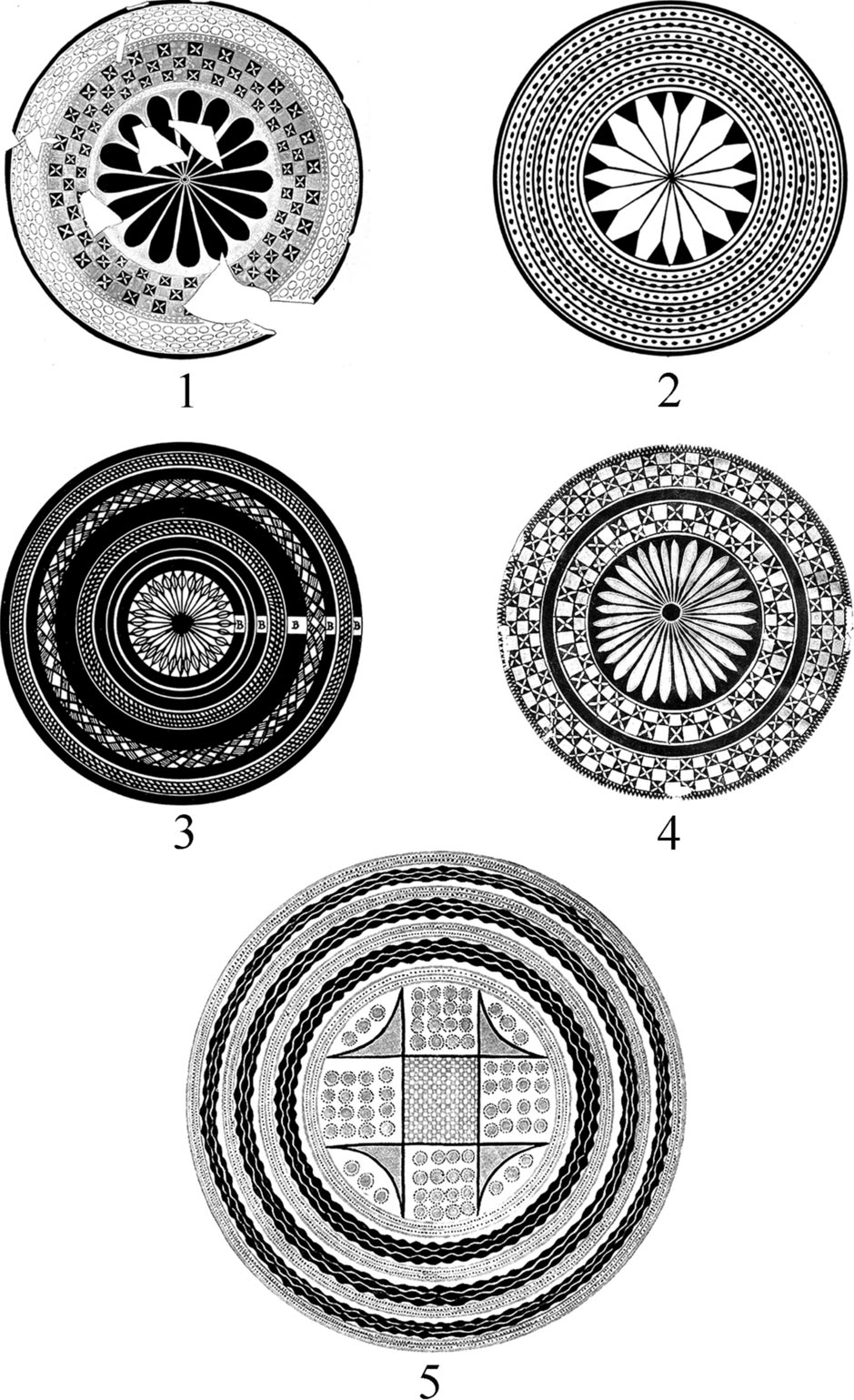
Researchers report that the Halafian culture of northern Mesopotamia (c. 6200–5500 BCE) created the earliest known systematic plant imagery in prehistoric art. Fine pottery from this period features flowers, shrubs, branches, and trees arranged with careful symmetry and repeating numerical patterns, most notably petal and flower counts of 4, 8, 16, 32, and 64. These designs indicate that early farming communities in the Near East already used practical mathematical reasoning to divide space and quantities, likely connected to everyday tasks such as equitably sharing harvests from jointly cultivated land, long before writing or formal number systems appeared.
The findings come from a study published in the Journal of World Prehistory, which shows that some of the earliest artistic depictions of plants were not simply decorative but reflected underlying mathematical structure.
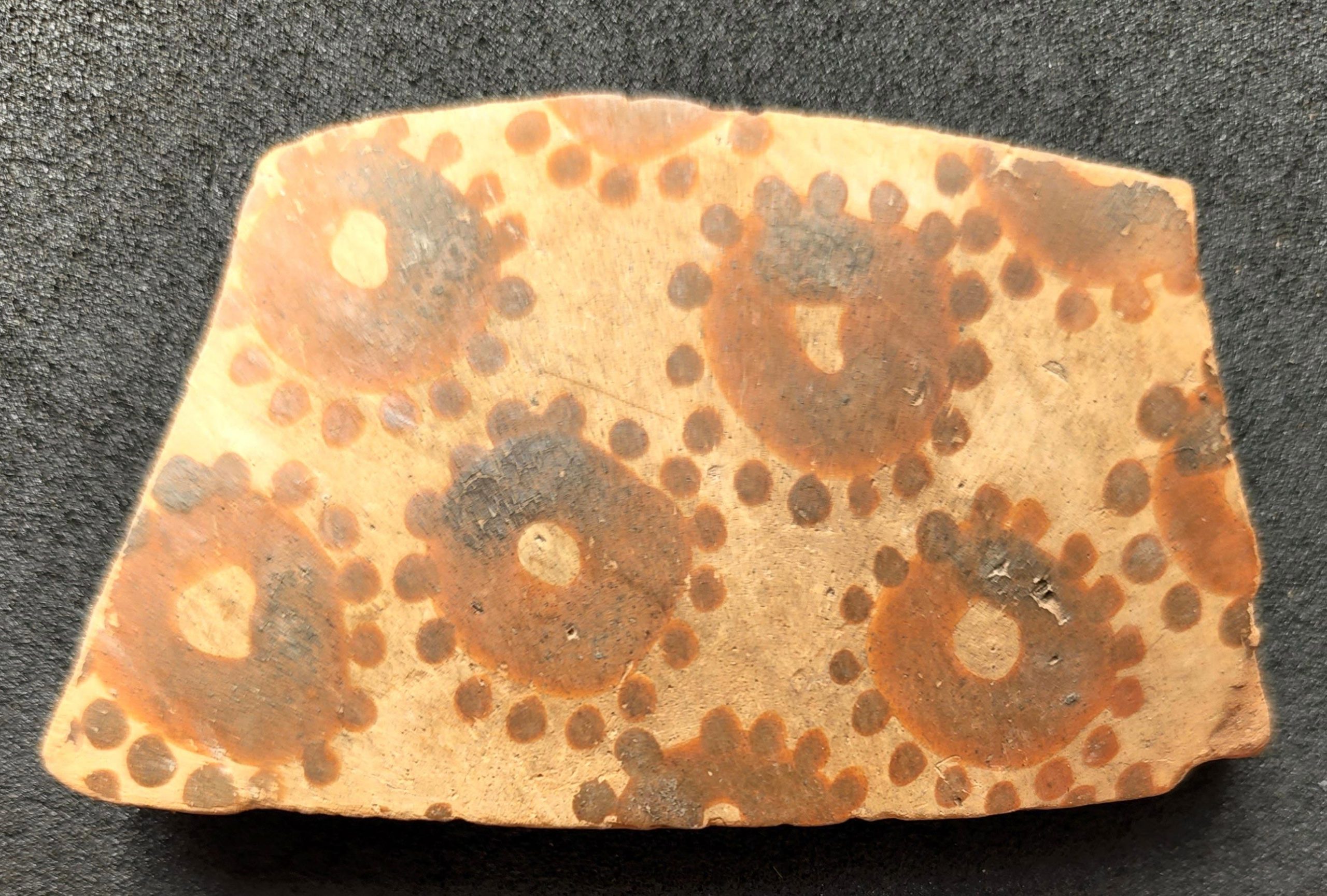
Through a detailed examination of ancient ceramics, Prof. Yosef Garfinkel and Sarah Krulwich of the Hebrew University identified the earliest consistent use of vegetal motifs in human history, dating back more than 8,000 years to the Halafian culture of northern Mesopotamia (c. 6200–5500 BCE). Their analysis reveals that these early agricultural societies painted flowers, shrubs, branches, and trees with deliberate precision, embedding evidence of advanced geometric and arithmetic thinking into their designs.
A New Understanding of Prehistoric Art
Much of earlier prehistoric art emphasized people and animals. Halafian pottery stands out as the point at which plants became a central subject of artistic expression in a consistent and visually refined manner.
Examining material from 29 archaeological sites, Garfinkel and Krulwich recorded hundreds of carefully crafted plant motifs. Some appear realistic, while others are more abstract, but all show intentional design choices rather than random decoration.
“These vessels represent the first moment in history when people chose to portray the botanical world as a subject worthy of artistic attention,” the authors note. “It reflects a cognitive shift tied to village life and a growing awareness of symmetry and aesthetics.”
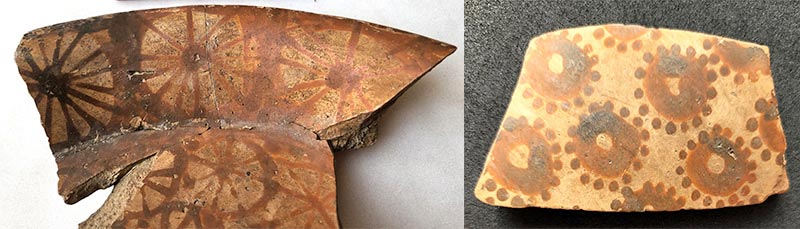
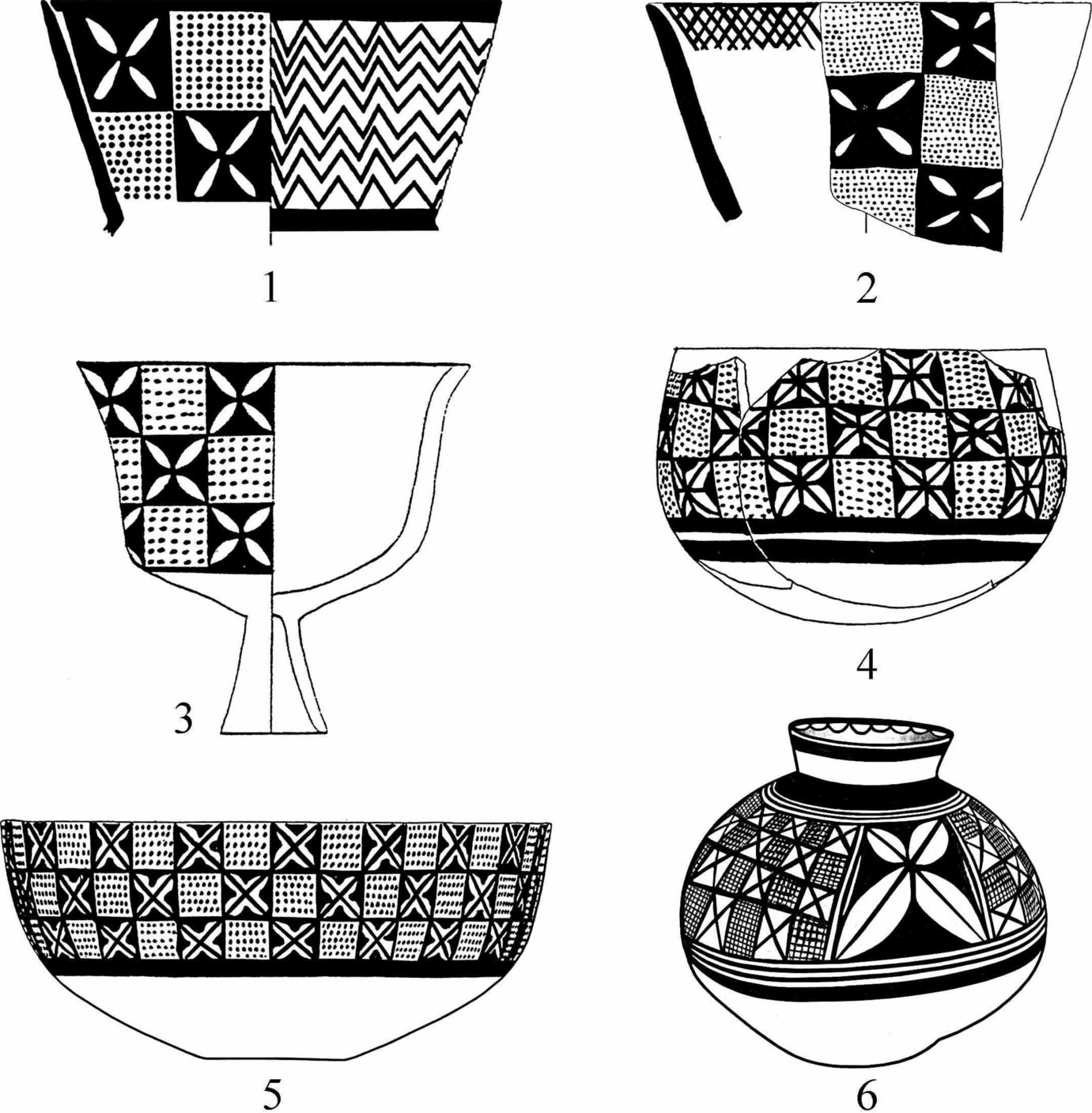
Among the study’s most striking insights is the precise numerical patterning in Halafian floral designs. Many bowls feature flowers with petal counts that follow geometric progression: 4, 8, 16, 32, and even arrangements of 64 flowers.
These sequences, the researchers argue, are intentional and demonstrate a sophisticated grasp of spatial division long before the appearance of written numbers.
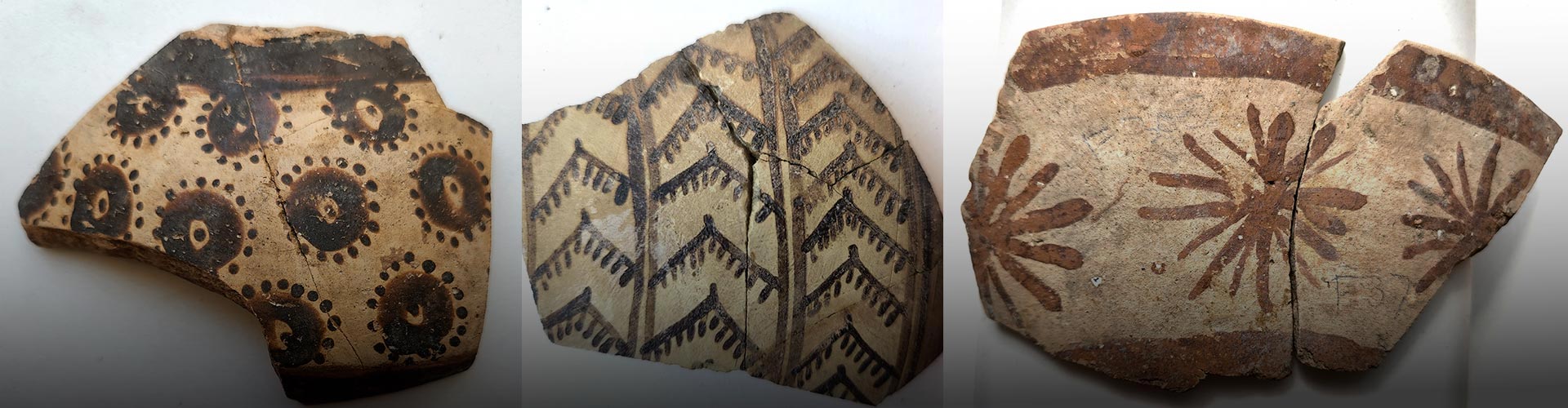
“The ability to divide space evenly, reflected in these floral motifs, likely had practical roots in daily life, such as sharing harvests or allocating communal fields,” Garfinkel explains.
This work contributes to the field of ethnomathematics, which identifies mathematical knowledge embedded in cultural expression.
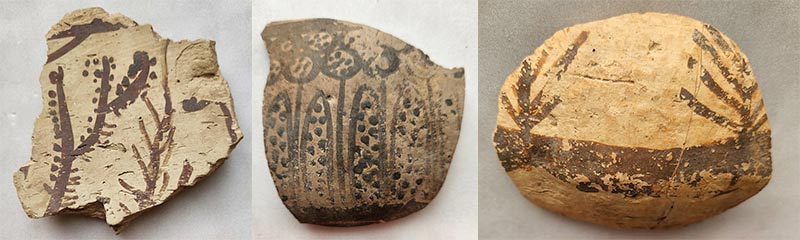
The motifs documented span the full botanical spectrum:
- Flowers shown with carefully even and balanced petal arrangements
- Seedlings and shrubs depicted with clear attention to their botanical form
- Branches organized into regular, rhythmic, repeating patterns
- Tall trees portrayed as dominant forms, sometimes accompanied by animals or architectural features
Notably, none of the images depict edible crops, suggesting that the purpose was aesthetic rather than agricultural or ritualistic. Flowers, the authors note, are associated with positive emotional responses, which may explain their prominence.
Revising the History of Mathematics
While written mathematical texts appear millennia later in Sumer, Halafian pottery reveals an earlier, intuitive form of mathematical reasoning, rooted in symmetry, repetition, and geometric organization.
“These patterns show that mathematical thinking began long before writing,” Krulwich says. “People visualized divisions, sequences, and balance through their art.”
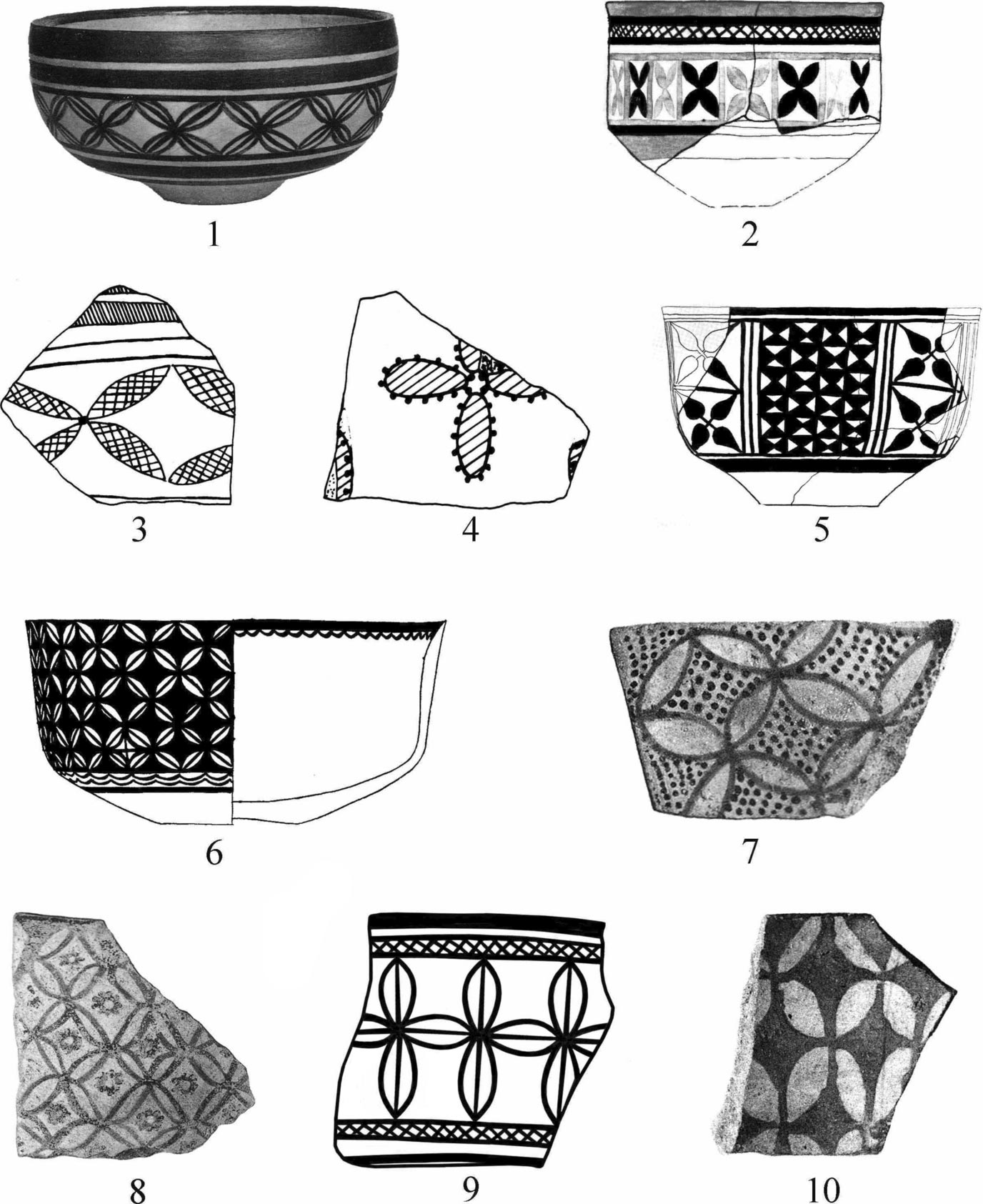
By cataloging these vegetal motifs and revealing their mathematical foundations, the study offers a new perspective on how early communities understood the natural world, organized their environments, and expressed cognitive complexity.
Reference: “The Earliest Vegetal Motifs in Prehistoric Art: Painted Halafian Pottery of Mesopotamia and Prehistoric Mathematical Thinking” by Yosef Garfinkel, and Sarah Krulwich, 5 December 2025, Journal of World Prehistory.
DOI: 10.1007/s10963-025-09200-9
Never miss a breakthrough: Join the SciTechDaily newsletter.
Follow us on Google and Google News.
2 Comments
I didn’t know that archaeologists cannot count. But this seems to prove it. Visit the pictures and count for yourself. The fractured pot featured several times shows 1 full “flower” with 16 petals and two with 15, for example.
{O.O}
It would seem that this ancient society recognized pattern and beauty of repetition, incorporating it into their utilitarian artifacts. The recognition of pattern, on animals, on plant structures, in the spread of tree branches, in the shape of the grain that provided food, is a spiritual recognition, tying the community together.