
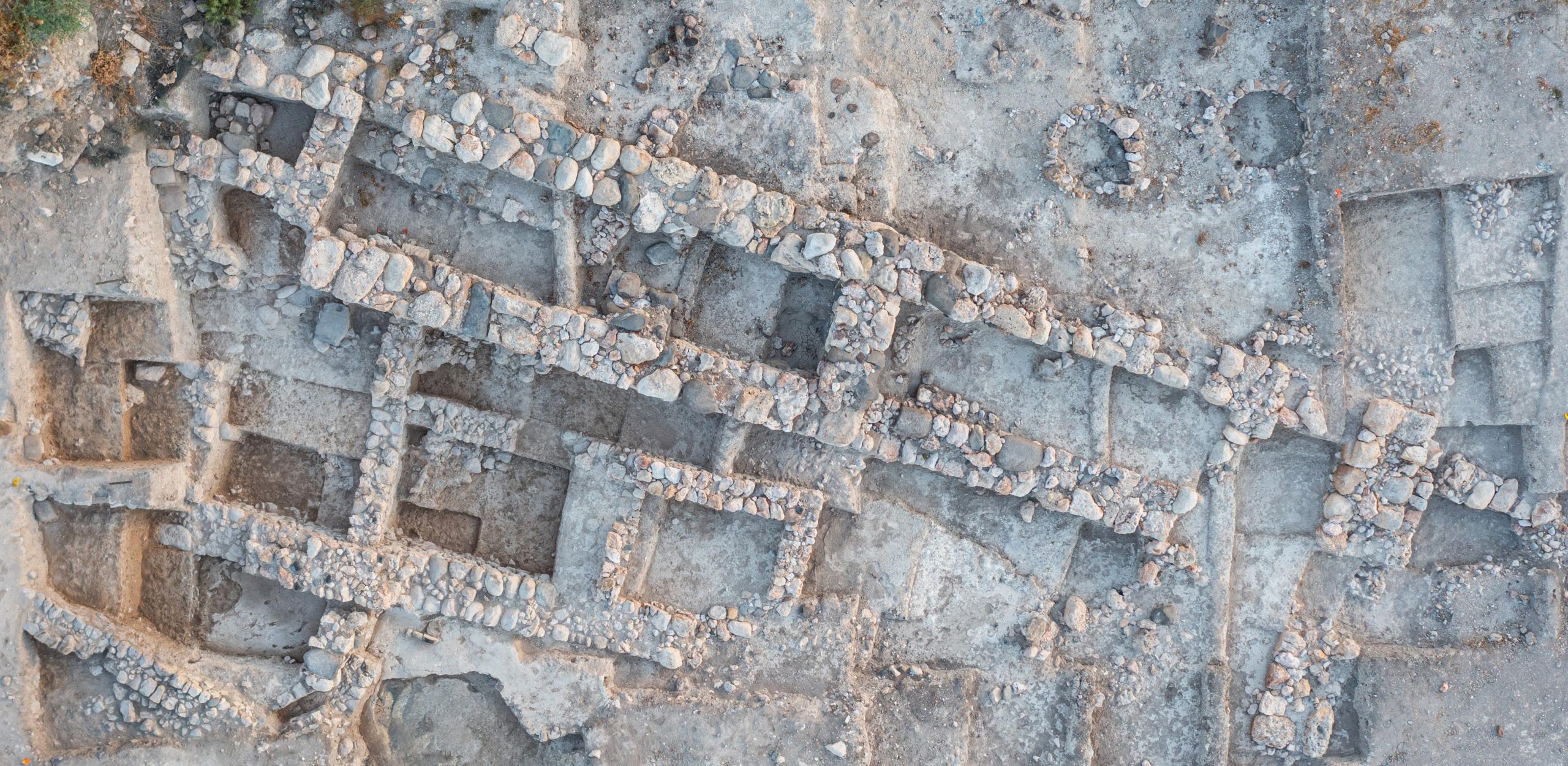
Archaeologists excavating Abel Beth Maacah in northern Israel have discovered a rare Tetrarchic boundary stone from the Roman period.
Archaeologists have discovered a rare Tetrarchic boundary stone at the ancient site of Abel Beth Maacah in northern Israel. This stone, originally used to demarcate land boundaries as part of Roman Emperor Diocletian’s tax reforms, sheds light on ancient land ownership, local settlement patterns, and the administrative systems of the Roman Empire. Remarkably, the stone also reveals two previously unknown place names, offering valuable insights into the historical geography and socio-economic dynamics of the region.
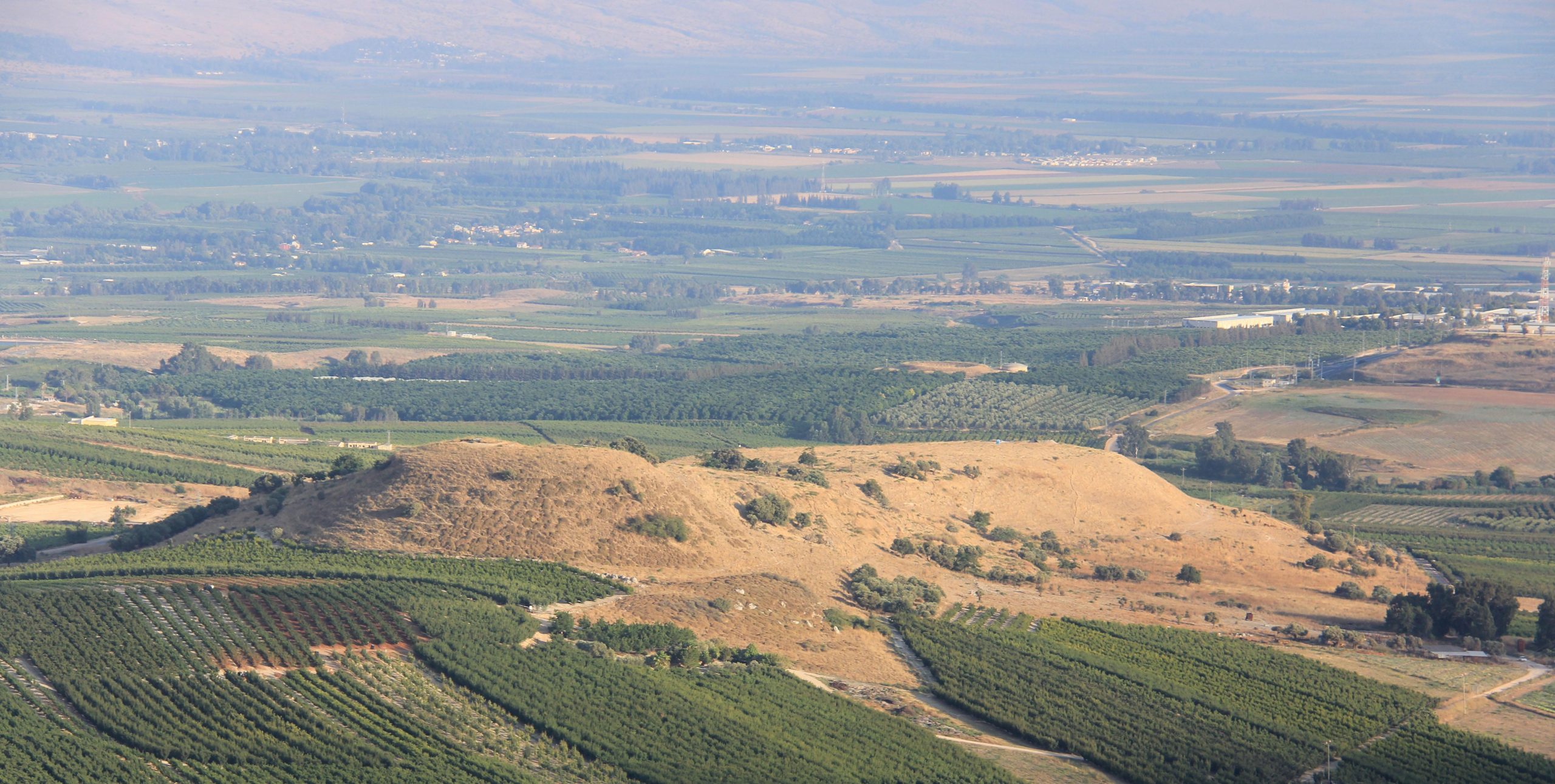
The excavation was led by Prof. Naama Yahalom-Mack and Dr. Nava Panitz-Cohen from the Hebrew University’s Institute of Archaeology, along with Prof. Robert Mullins from Azusa Pacific University. Their work at this biblical site near Metula has unearthed a significant artifact that deepens our understanding of ancient administrative and territorial practices.
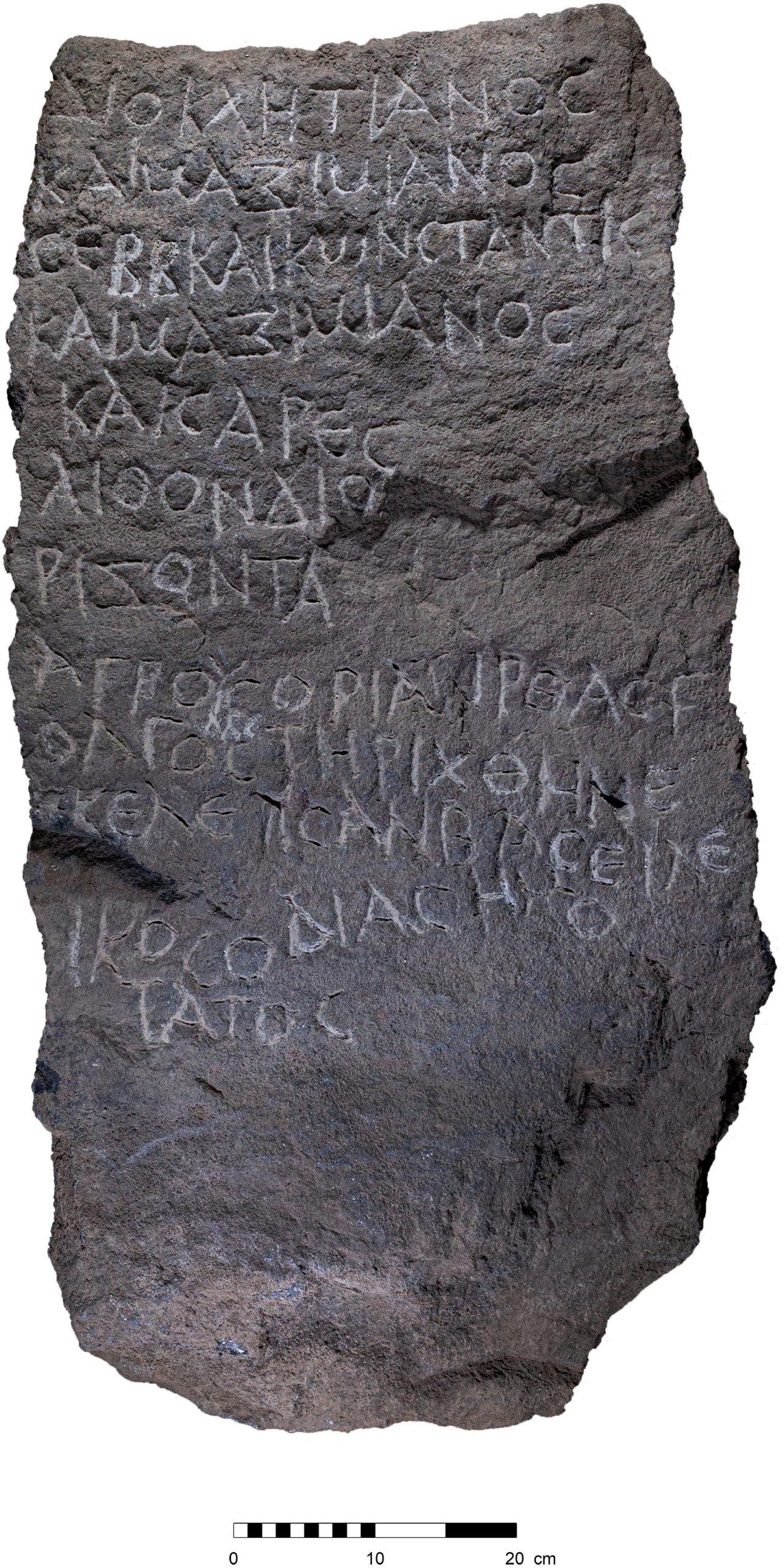
The find, which was deciphered by Dr. Avner Ecker and Prof. Uzi Leibner from the Hebrew University is a boundary stone, originally inscribed to delineate agrarian borders between villages during the reign of the Roman Tetrarchy (a short-lived system instituted by the emperor Diocletian in 293 CE to govern the Roman Empire by dividing it between two emperors, the augusti, and their junior colleagues and designated successors, the caesares) and was found in secondary use in a Mamluk-period installation.
This basalt slab, etched with a detailed Greek inscription, has provided a wealth of historical insights.
Historical Significance of the Inscription
The inscription revealed two previously unknown village names, Tirthas and Golgol, which may correspond to ancient sites identified in the 19th-century Survey of Western Palestine. The slab also mentions an imperial surveyor, or “censitor,” whose name is attested here for the first time. These markers reflect the sweeping tax reforms initiated by Diocletian in the late third century CE, emphasizing the role of land ownership and settlement structures in the economic landscape of the Roman Near East.
“This discovery is a testament to the meticulous administrative re-organization of the Roman Empire during the Tetrarchy,” said Prof. Uzi Leibner. “Finding a boundary stone like this not only sheds light on ancient land ownership and taxation but also provides a tangible connection to the lives of individuals who navigated these complex systems nearly two millennia ago.”
Dr. Avner Ecker added, “What makes this find particularly exciting is the mention of two previously unknown place names and a new imperial surveyor. It underscores how even seemingly small discoveries can dramatically enhance our understanding of the socio-economic and geographic history of the region.”
This discovery adds to a unique corpus of over 20 boundary stones concentrated in the northern Hula Valley and surrounding areas. The stones mark a period of heightened administrative control aimed at standardizing taxation and clarifying land ownership. Remarkably, this specific find highlights the interconnectedness of historical geography, economic policies, and local settlement patterns.
Scholars believe the abundance of boundary stones in this region underscores the high concentration of small landholders who operated independently of major urban centers. Interestingly, a contemporaneous rabbinic tradition mentions a burden imposed by the emperor Diocletian on this specific area, and apparently also reflects the hardships the tax reform drew on the local population.
The find enriches our understanding of the socio-economic dynamics during the Tetrarchy, particularly the implications of Diocletian’s reforms on rural communities. Prof. Leibner and Dr. Ecker emphasize that such discoveries provide a unique glimpse into the lives of ancient inhabitants, the pressures they faced under imperial rule, and the enduring traces of their communities in the archaeological record. This exceptional artifact now joins the broader narrative of Roman imperial administration in the Levant.
Reference: “‘Diocletian oppressed the inhabitants of Paneas’ (ySheb. 9:2): A New Tetrarchic boundary stone from Abel Beth Maacah” by Avner Ecker and Uzi Leibner, 14 January 2025, Palestine Exploration Quarterly.
DOI: 10.1080/00310328.2024.2435218
Never miss a breakthrough: Join the SciTechDaily newsletter.
Follow us on Google and Google News.