
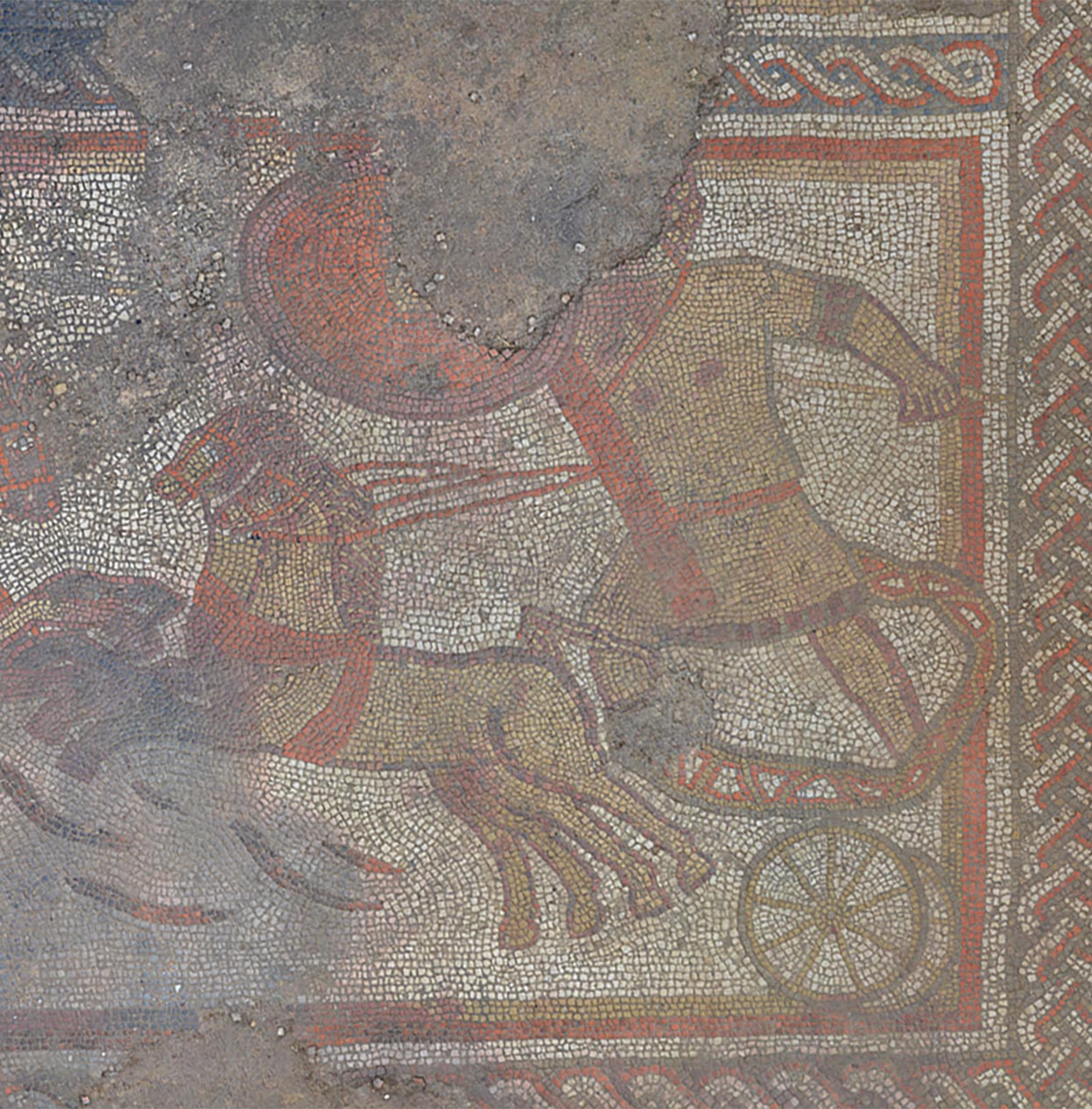
An ancient historian at the University of Leicester has found that the Rutland mosaic presents a version of the Trojan War that differs from the story told in Homer’s Iliad.
Researchers studying what has been hailed as one of the most important mosaic finds ever made in the UK have revealed that it illustrates a rare and long-forgotten version of the Trojan War.
New analysis from the University of Leicester explains why the celebrated Ketton mosaic in Rutland cannot represent scenes from Homer’s Iliad, as originally thought. Although it is regarded as one of the most remarkable Roman discoveries in Britain in the past century, the imagery instead reflects a different telling of the Trojan War that was first brought to prominence by the Greek playwright Aeschylus and later vanished from the historical record.
The artwork brings together decorative motifs and visual patterns that had been in use across the ancient Mediterranean for centuries. This suggests that artisans working in Roman Britain were part of a much broader cultural network and were more closely connected to classical artistic traditions than previously believed.
From lockdown discovery to national monument
The Ketton mosaic came to light in 2020 during the COVID-19 lockdown, when it was uncovered by local resident Jim Irvine. Its discovery led to a large-scale excavation carried out by University of Leicester Archaeological Services (ULAS) with support from Historic England.
In recognition of its outstanding national significance, the mosaic and the surrounding villa complex have since been designated a Scheduled Monument. Further joint excavations by Historic England and ULAS took place in 2021 and 2022, and work is ongoing to formally publish the findings.
Achilles, Hector, and a different story
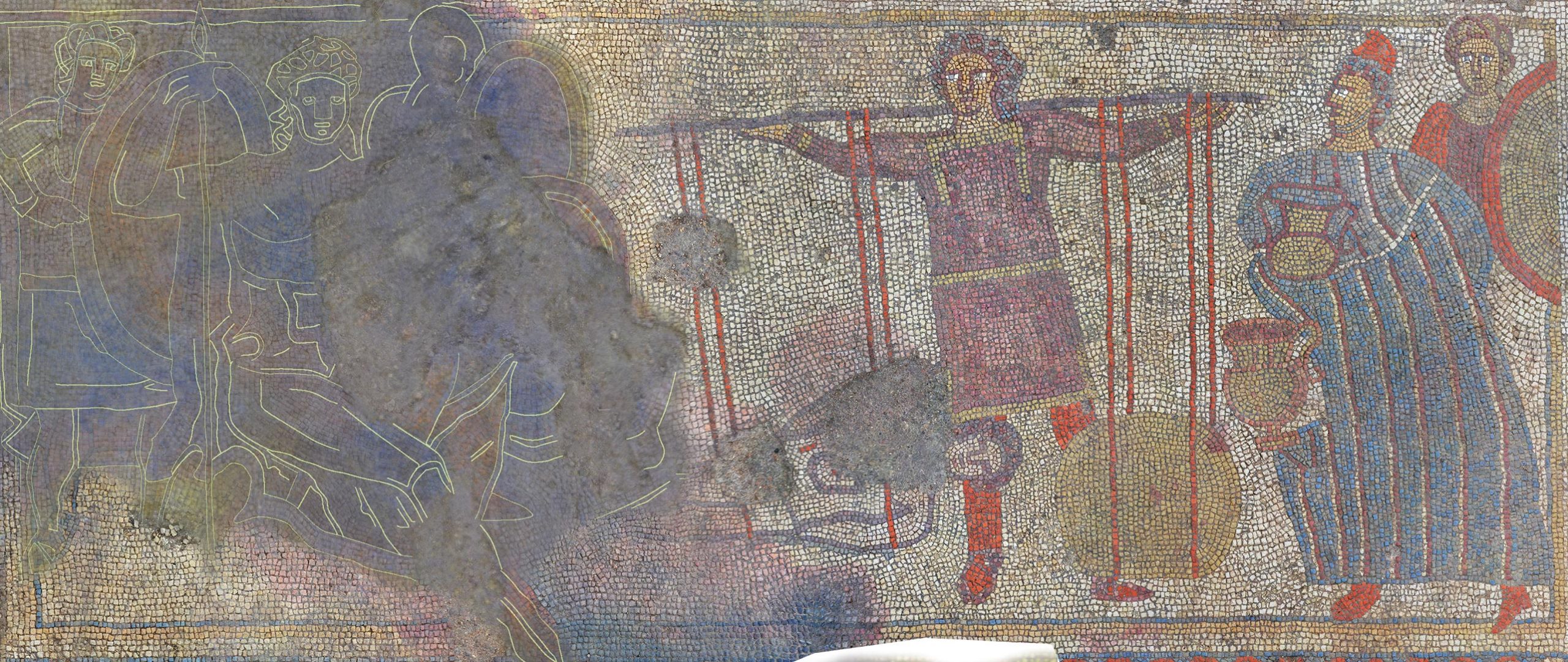
The mosaic portrays the Greek hero Achilles and the Trojan prince Hector across three intense scenes. These include their combat, the dragging of Hector’s body, and its eventual return to King Priam, during which Hector’s body is shown being weighed against gold.
The Trojan War is best known through Homer’s epic poem, the Iliad, which recounts a mythical ten-year conflict between Greek forces and the city of Troy, ruled by King Priam, fought to reclaim Helen of Sparta, famed for her beauty.
New analysis has shown that the mosaic is not based on Homer’s Iliad, as first believed, but instead echoes a lesser-known tragedy, Phrygians, by the Athenian playwright Aeschylus. There are several retellings of the Trojan War that the Romans would have been familiar with, but the owner of the Ketton villa would have enjoyed the cachet of displaying one of the more niche versions.
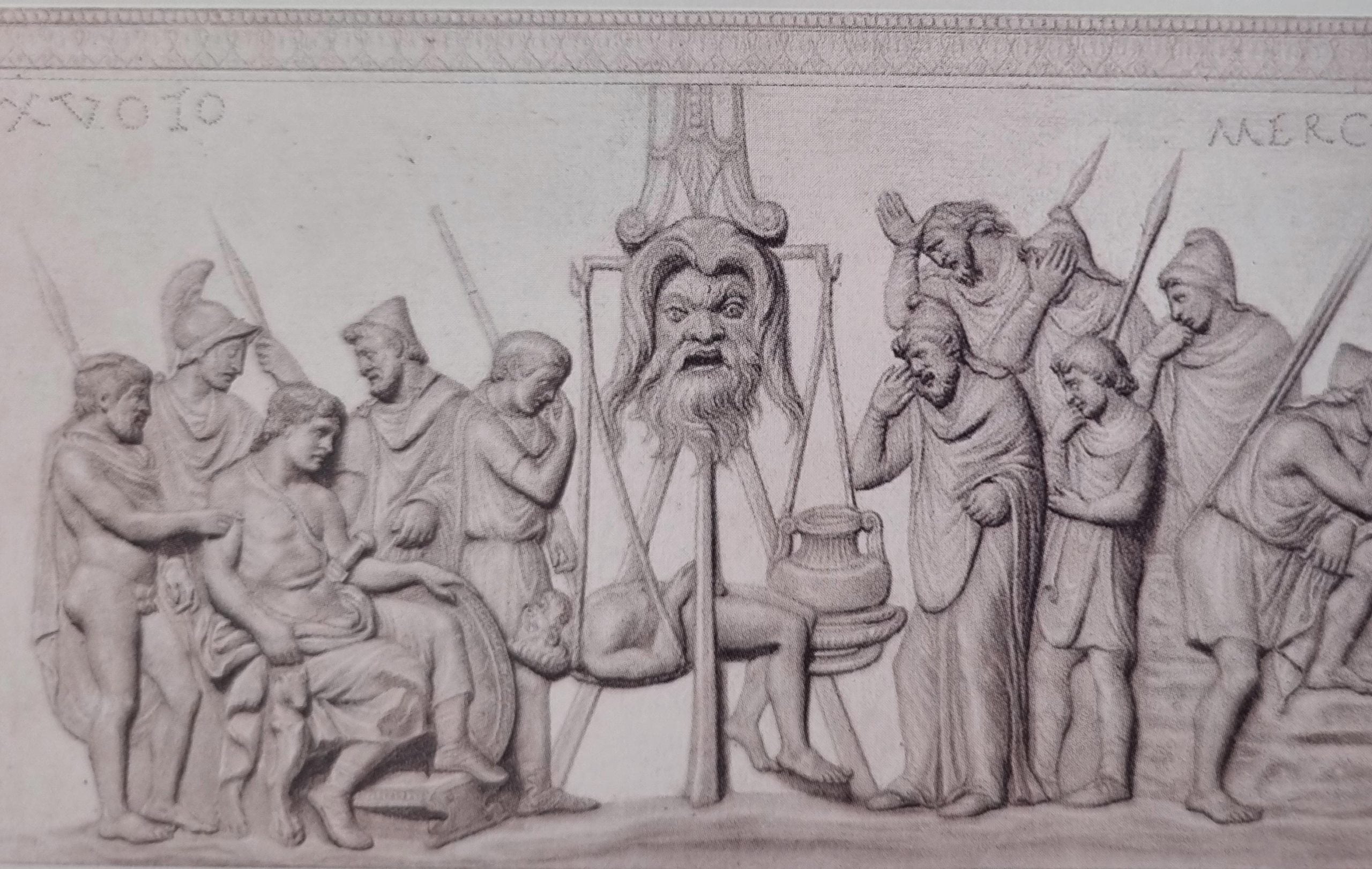
The research also reveals that the mosaic’s design cleverly combines artistic patterns long used by craftspeople across the ancient Mediterranean.
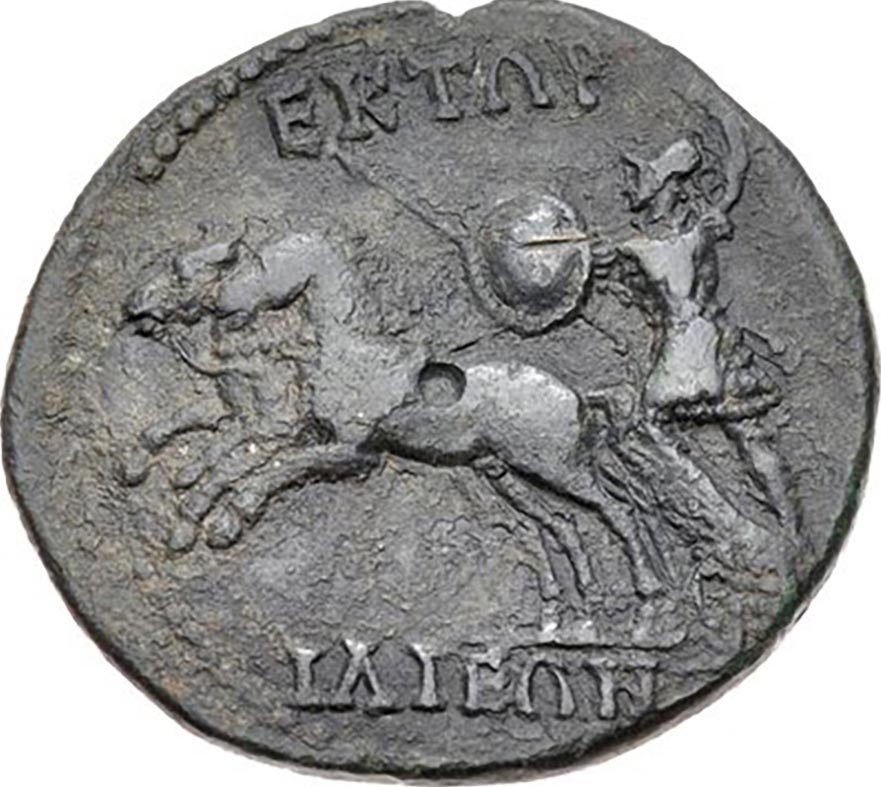
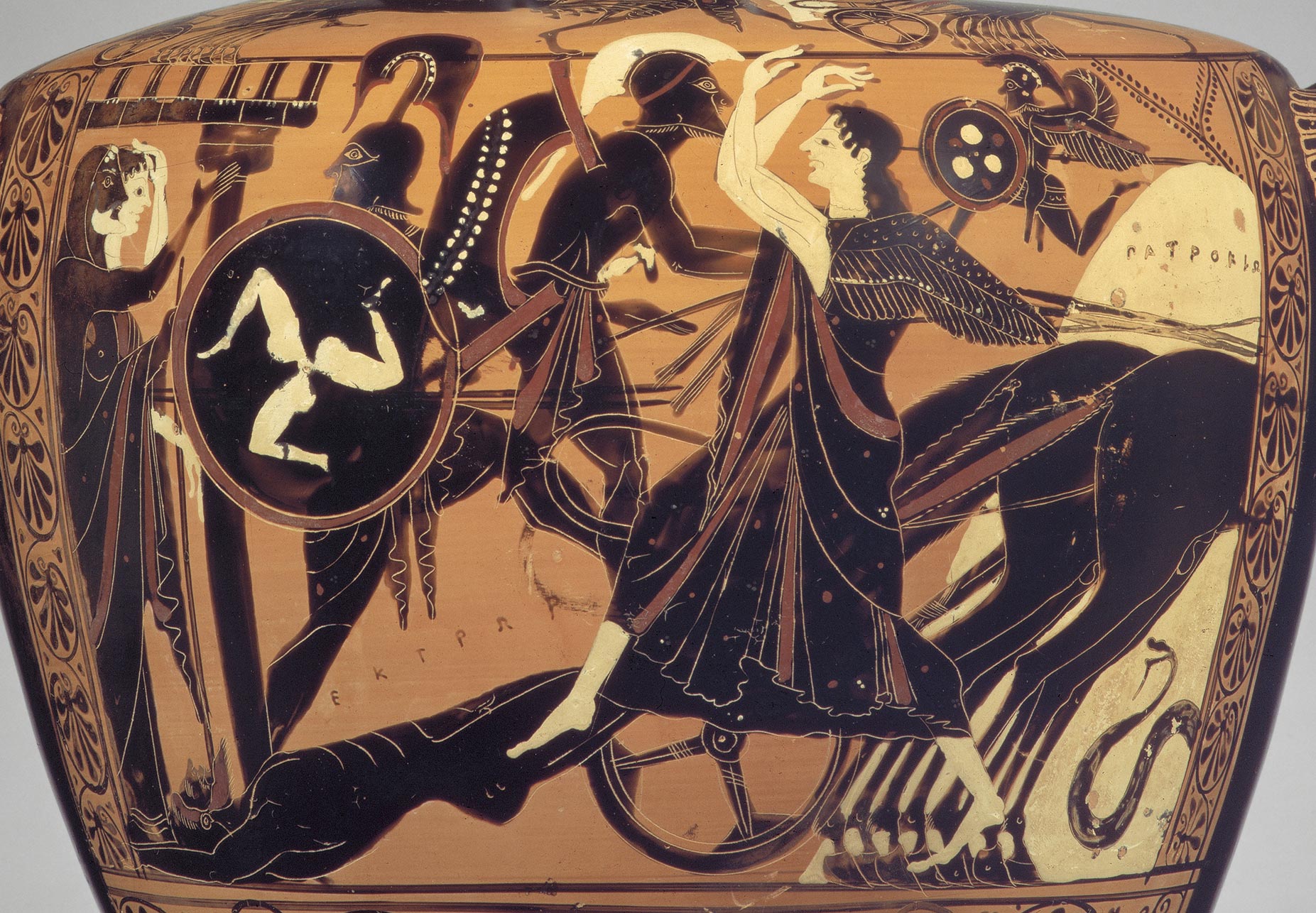
Dr Jane Masséglia, lead author of this new research and Associate Professor in Ancient History at the University of Leicester, said: “In the Ketton Mosaic, not only have we got scenes telling the Aeschylus version of the story, but the top panel is actually based on a design used on a Greek pot that dates from the time of Aeschylus, 800 years before the mosaic was laid. Once I’d noticed the use of standard patterns in one panel, I found other parts of the mosaic were based on designs that we can see in much older silverware, coins, and pottery, from Greece, Turkey, and Gaul.
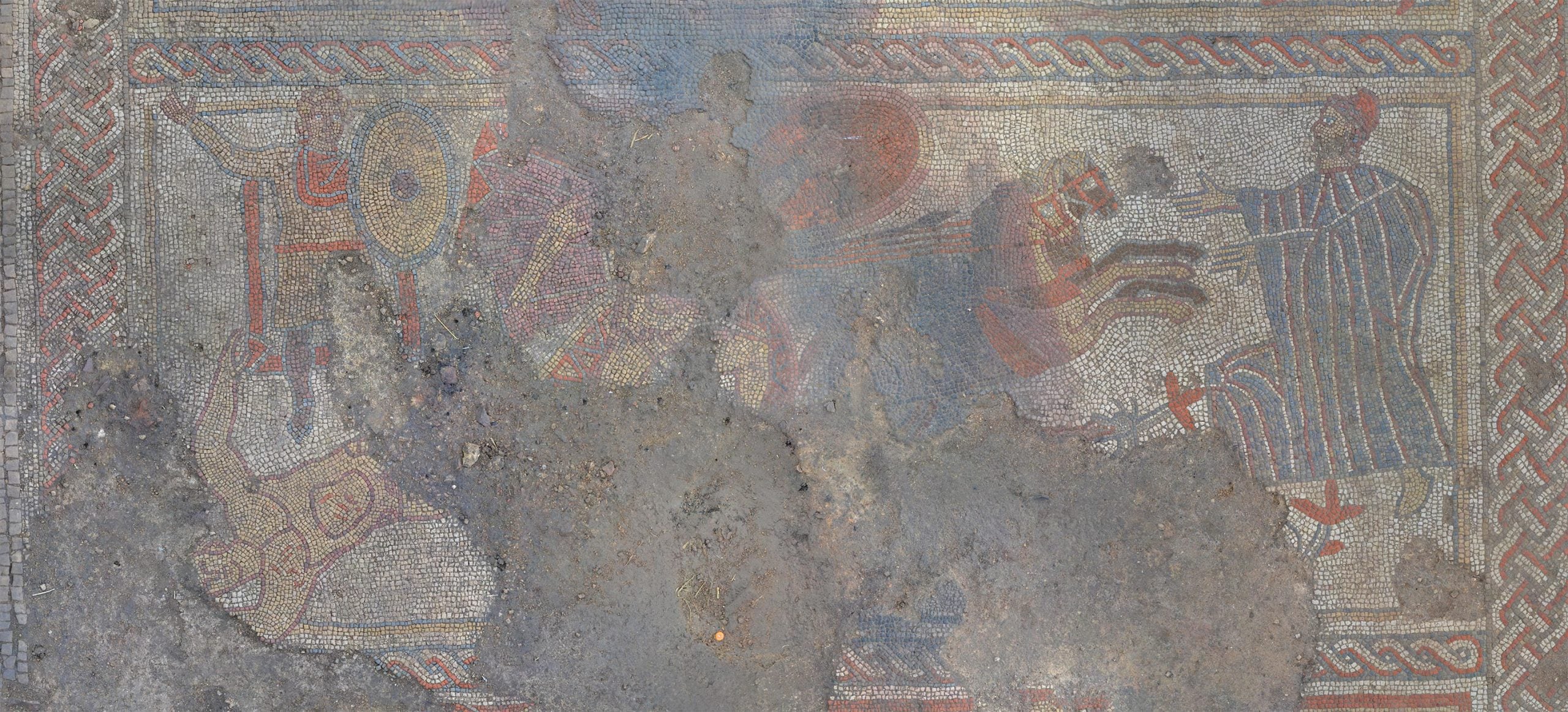
“Romano-British craftspeople weren’t isolated from the rest of the ancient world, but were part of this wider network of trades passing their pattern catalogues down the generations. At Ketton, we’ve got Roman British craftsmanship but a Mediterranean heritage of design.”
Rethinking cultural life in Roman Britain
Jim Irvine, who discovered the Ketton mosaic on his family farm in 2020, said: “Jane’s detailed research into the Rutland mosaic imagery reveals a level of cultural integration across the Roman world that we’re only just beginning to appreciate. It’s a fascinating and important development that suggests Roman Britain may have been far more cosmopolitan than we often imagine. The new paper is a suspenseful and thrilling narrative in its own right which deserves recognition.”
Rachel Cubitt, Post-Excavation Coordinator at Historic England, said: “Working in collaboration with the University of Leicester brings an added dimension to investigations at the Ketton villa site. This fascinating new research offers a more nuanced picture of the interests and influences of those who may have lived there, and of people living across Roman Britain at this time.”
Hella Eckhardt, Professor of Roman Archaeology at the University of Reading, who was not involved in the study, said: “This is an exciting piece of research, untangling the ways in which the stories of the Greek heroes Achilles and Hector were transmitted not just through texts but through a repertoire of images created by artists working in all sorts of materials, from pottery and silverware to paintings and mosaics.”
Reference: “Troy Story: The Ketton Mosaic, Aeschylus, and Greek Mythography in Late Roman Britain” by Jane Masséglia, Jennifer Browning, Jeremy Taylor and John Thomas, 3 December 2025, Britannia.
DOI: 10.1017/S0068113X25100342
Funding: Historic England
Never miss a breakthrough: Join the SciTechDaily newsletter.
Follow us on Google and Google News.
2 Comments
thanks for this
It would be interesting to know just how old the “ancient historian” mention above is.