
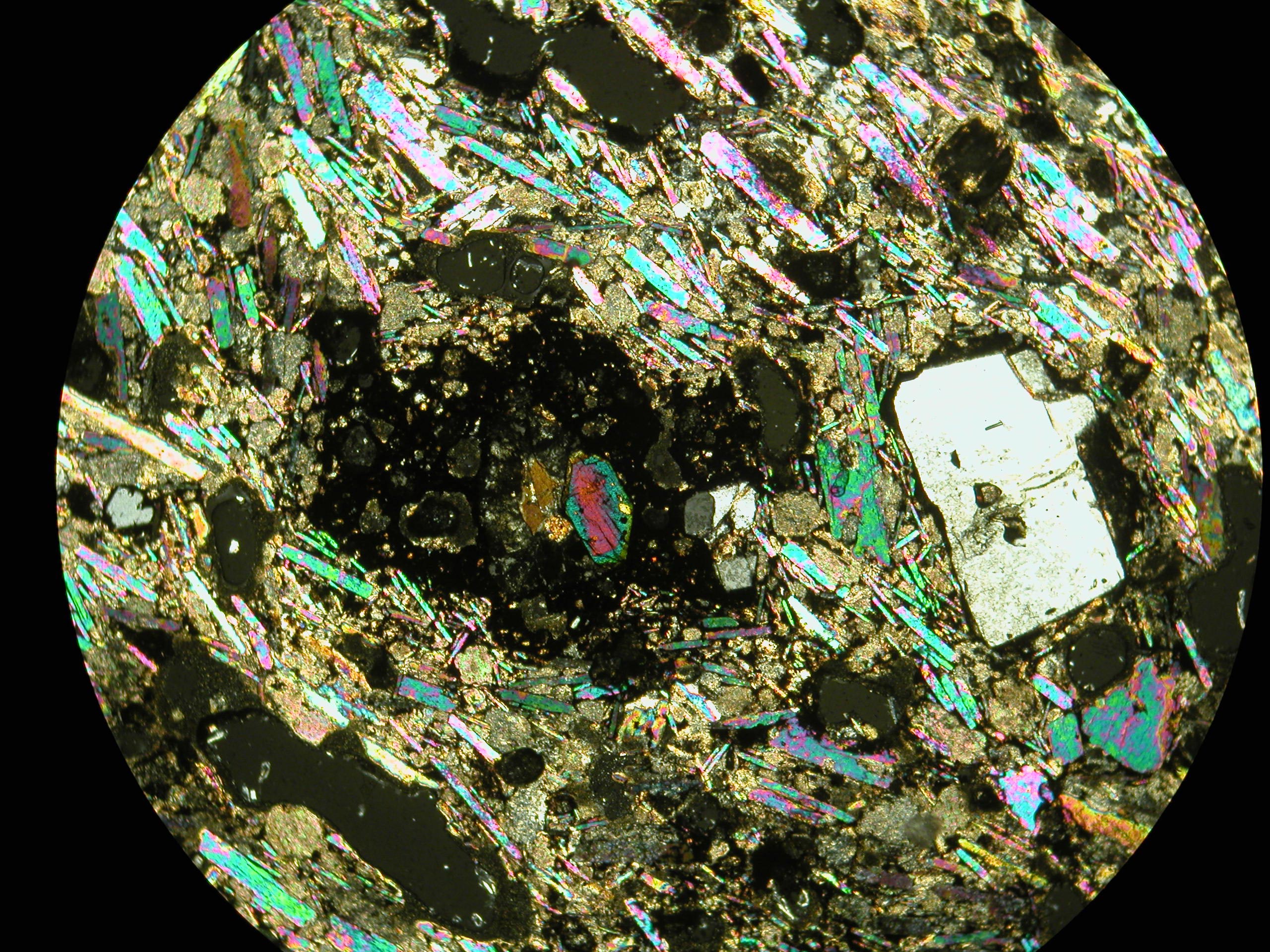
Scientists have identified a hidden deep-Earth pattern that may reveal where rare earth deposits form. The study links valuable rare earth-rich rocks to the thick ancient “roots” beneath Earth’s continents.
A new global study has uncovered a surprising pattern behind the formation of rare earth element deposits, pointing scientists toward some of the most promising places on Earth to search for these valuable resources.
Researchers from the University of Cambridge’s Department of Earth Sciences created a worldwide map of unusual CO2-rich igneous rocks, which are the primary source of rare earth elements. Their analysis showed that these rocks are closely tied to thick, ancient sections of Earth’s lithosphere, the rigid outer layer that includes the crust and upper mantle.
According to the researchers, the thickest parts of the lithosphere create ideal conditions for rare earth enrichment because they can trap molten rock deep underground for long periods of time. Over millions of years, these isolated pockets of magma slowly concentrate valuable metals.
The findings were published in the journal Nature Geoscience.
“Our research is beginning to provide a kind of predictive power for where we can expect these rocks and, by extension, their associated rare earth element deposits, to form,” said Dr. Emilie Bowman, lead author of the study from Cambridge Earth Sciences.
Rare earth elements are essential for many modern technologies, including smartphones, electric vehicles, and wind turbines. As countries seek more reliable domestic supplies of these critical materials, scientists are increasingly trying to understand how and where economically important deposits form.
Rare Earth Elements and Earth’s Deep Structure
“There is significant scientific interest in why rare earth deposits form where they do,” said Professor Sally Gibson, senior author of the study from Cambridge Earth Sciences, who currently leads a £1-million project investigating the subject.
Past research has typically focused on individual deposits or specific regions. This new work instead examined rare earth-related rocks on a global scale while also looking deep beneath Earth’s surface for larger geological patterns.
To carry out the study, Bowman gathered chemical information from roughly 9,000 igneous rock samples collected around the world. All of the rocks contained high levels of dissolved CO2, which plays an important role in helping rare earth elements become concentrated.
“Until relatively recently, this subset of igneous rocks were mere curiosities,” said Gibson. “Geologists collected them avidly; undergraduates were baffled by them in practical classes. But in recent years they have become very relevant.”
Many of the rocks have unusual mineral compositions and strange names that date back to the 19th and early 20th centuries, often reflecting the places where they were first identified.
“The terminology is so sprawling that you could almost make a new language from these rock names,” said Gibson. “This, and their scientific complexity, has added confusion, and people have tended to steer away from them.”
Earthquake Data Reveals Rare Earth Clues
The research team, which included geophysicists Professor Sergei Lebedev and Dr. Siyuan Sui from Cambridge Earth Sciences, combined the rock database with seismic imaging data showing the structure of Earth’s interior.
“Using seismic waves from earthquakes, we can create a slice-through image of the lithosphere, much like a sonar can pick out features on the seabed,” said Lebedev. “From this mapping we can see that lithospheric thickness plays a guiding role in where we find these deposits.”
The scientists found that rocks with the right chemistry for rare earth enrichment appear mainly near the steep boundaries of Earth’s oldest and thickest lithosphere.
“We needed to put together these two pieces of the puzzle, the rock chemistry and seismic data, in order to make the connection,” said Gibson. “Rocks with the right chemistry for enrichment occur only in very specific places, mainly along the steep edges of Earth’s thickest and oldest lithosphere,” she explained.
How Rare Earth Deposits Slowly Form
The researchers say thick lithosphere keeps mantle rocks under high pressure and relatively cool temperatures, which limits melting deep underground. Under these conditions, only small amounts of magma are produced.
Those small magma pockets can become trapped at the base of the lithosphere, where they cool and solidify into CO2-rich igneous rocks. Later geological activity can partially melt these rocks again, allowing rare earth elements to become even more concentrated and eventually form economically valuable deposits.
The team now plans to expand the study to include rocks older than 200 million years, which host many of the world’s major rare earth mines and deposits.
“For this work we focused initially on deposits that were formed after the main phases of breakup of Earth’s big continents,” said Gibson. She noted that older rocks have often been altered by mountain building and continental rifting, making them more difficult to study. “Now we have established this systematic behaviour exists, we can go back further in time. It’s going to be more challenging, but I’m hopeful that this will be a key step in predicting mineral occurrences.”
Reference: “The global distribution of CO2-rich magmas is determined by lithospheric thickness” by Emilie E. Bowman, Sally A. Gibson, Siyuan Sui and Sergei Lebedev, 22 May 2026, Nature Geoscience.
DOI: 10.1038/s41561-026-01990-7
Never miss a breakthrough: Join the SciTechDaily newsletter.
Follow us on Google and Google News.
1 Comment
“All of the rocks contained high levels of dissolved CO2, …”
That claim is confusing. The precursor magma that cooled to form igneous rocks may have had CO2 dissolved, but upon cooling and crystallization, the CO2 anion chemically combines with an oxygen anion and one or more cations to form a mineral in the carbonate group (CO3), such as calcite (CaCO3) or ankerite. There is no DISSOLVED CO2 in the resultant rock as is the case with sea water. Why not mention “carbonatite?” It is a valid rock name and it wouldn’t hurt to expose lay readers to a new vocabulary word once in awhile.