
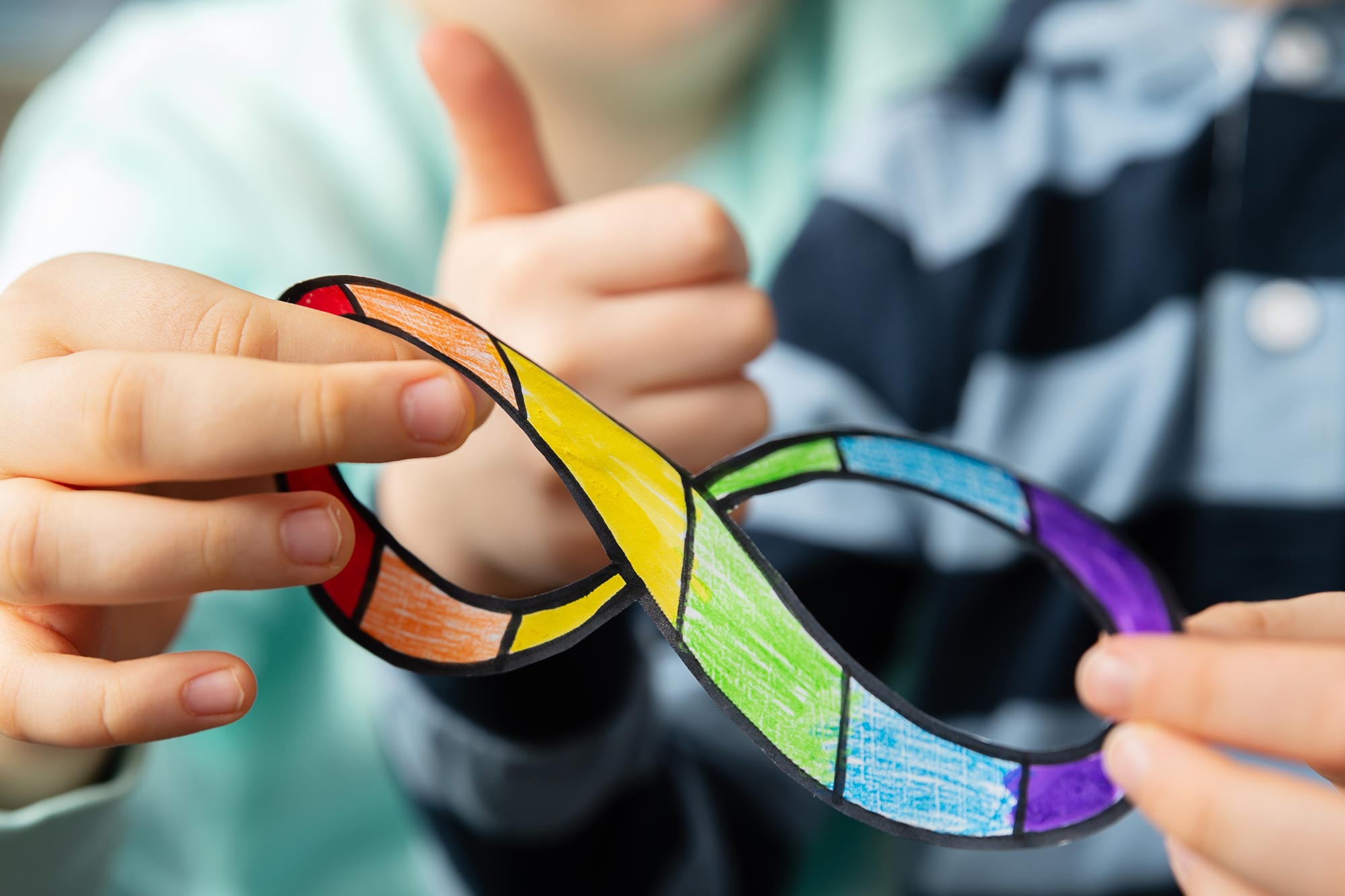
Autism diagnoses have risen dramatically as definitions have expanded, but that shift may carry unexpected consequences.
A diagnosis can open the door to understanding, treatment, and practical support. But when the same label is used for people with profoundly different abilities and needs, does it still provide enough useful information?
Dame Uta Frith, one of the most influential researchers in the history of autism science, argues that the modern definition may no longer do so. In a new editorial published in Psychological Medicine, the UCL professor warns that Autism Spectrum Disorder (ASD) has become such a broad category that it may create confusion, obscure important differences, and sometimes lead clinicians toward the wrong diagnosis.
Today, ASD can describe a person who needs lifelong, continuous care as well as someone who lives independently, has no language or learning difficulties, and is diagnosed only in adulthood. Dame Uta questions whether placing all of these experiences under one clinical label helps doctors understand what support each person actually needs.
How the Definition of Autism Expanded Over Time
“Autism wasn’t always defined this way, a sort of catch-all diagnosis for a huge variety of conditions,” she said.
“When it was first identified in the 1940s, it referred to a small group of children with severe difficulties in social interaction, communication, and behavior. Over time, the definition has widened to include people with milder traits and no language or learning problems. Today, anyone of any age or intelligence level can be diagnosed with autism if they meet certain criteria.”
A Dramatic Increase in Diagnoses
The number of recorded autism diagnoses has risen enormously. During the 1960s, about 4 in every 10,000 children in the United Kingdom were diagnosed. A large study involving more than 7 million schoolchildren later estimated that about 1 in 57 children were autistic, an increase of more than 40 times.

Improved recognition has allowed many people who might previously have been overlooked to receive an explanation and support. Reduced stigma has also made families and adults more willing to seek an assessment.
Dame Uta nevertheless argues that better recognition may not explain the entire rise. She points to several forces that may be expanding the diagnosis:
- Greater public awareness and less stigma
- Wider interpretations of the diagnostic criteria
- More people identifying with autistic experiences through online communities
- The growing influence of self-diagnosis and social media
- A cultural tendency to explain ordinary struggles through medical labels
The concern is not that people’s difficulties are imaginary. Instead, Dame Uta argues that the autism label may not always be the most accurate explanation for them.
The Scientist Who Helped Transform Autism Research
Dame Uta has studied autism for more than 50 years. Her early research helped move the field beyond descriptions of outward behavior and toward questions about how autistic people process social information, language, and context.
With her colleagues, she helped develop two major theories:
- Theory of Mind deficit (mentalizing problems): This idea proposes that some autistic people find it harder to infer what another person knows, believes, intends, or feels.
- Weak Central Coherence: This theory suggests that autistic people may pay unusually close attention to individual details while finding it more difficult to combine those details into a larger contextual picture.
During the 1990s, Dame Uta and her UCL colleagues were also among the first researchers to use emerging brain scanning technology to investigate the neural processes associated with these differences.
Childhood and Adult Diagnoses May Not Represent the Same Pattern
A major focus of the new editorial is the growing divide between people identified as autistic in early childhood and those diagnosed during adolescence or adulthood.
- People diagnosed in childhood often display noticeable developmental differences from an early age. Some also have substantial language, intellectual, or learning difficulties.
- People diagnosed later are more likely to have average or high intelligence. They may seek an assessment after experiencing social difficulties, sensory sensitivities, exhaustion, anxiety, depression, or ADHD.
Research has also raised the possibility that early- and late-diagnosed groups may differ genetically. Dame Uta argues that these findings deserve closer attention because they could indicate that the current spectrum combines multiple conditions or developmental pathways under one name.
Why Diagnostic Accuracy Matters
Dame Uta warns that an overly broad definition could produce overdiagnosis, particularly when anxiety, ADHD, depression, trauma, language difficulties, or another condition offers a better explanation.
“This matters because diagnoses shape treatment, identity, and support. A wrong diagnosis can lead to the wrong help, or no help at all,” she said.
The challenge is made harder by the absence of a definitive laboratory test. Autism is diagnosed through developmental history, observed behavior, clinical judgment, and reports from the person or their family.
Dame Uta highlights several sources of uncertainty:
- There is no biological test that can confirm autism
- Assessments depend partly on professional judgment
- Adult evaluations often rely heavily on memory and self-reporting
- Autism can overlap with anxiety, ADHD, depression, and other conditions
- The concept of “masking” (hiding difficulties) may allow autism to be diagnosed even when few outward signs are visible
When a Medical Diagnosis Becomes a Cultural Identity
Autism now exists far beyond clinics and research centers. It is widely discussed in films, online videos, social media posts, and personal communities.
She said, “Autism is no longer just a medical term; it has become part of popular culture. Social media, films, and online communities have helped people share experiences, but they have also spread simplified or misleading ideas.
“At the same time, the idea of ‘neurodiversity’ has encouraged people to see autism as a difference rather than a disorder. While this helps reduce stigma, it also creates tension: if autism is not a disorder, why use a medical diagnosis?”
A More Precise Approach to Autism Diagnosis
Dame Uta argues that assistance should be based more closely on a person’s actual difficulties instead of relying too heavily on one broad label.
The paper proposes several changes:
- Divide autism into clearer and more informative subgroups
- Describe each person’s strengths and difficulties in greater detail
- Base services on individual needs rather than diagnosis alone
- Give greater priority to people with the most substantial disabilities
- Distinguish autism more carefully from conditions with similar features
- Improve diagnostic precision to reduce inappropriate treatment and missed diagnoses
Dame Uta said, “The time has come to examine whether the autism spectrum has become too broad. Without greater precision, we risk misunderstanding people’s needs and misdirecting care.”
Reference: “Autism spectrum disorder: has it lost its meaning and is it leading to misdiagnosis?” by Uta Frith, 4 August 2026, Psychological Medicine.
DOI: 10.1017/S0033291726105376
Never miss a breakthrough: Join the SciTechDaily newsletter.
Follow us on Google and Google News.
5 Comments
I read an article today that the PhD crowd thinks dogs are autistic… where does this lunacy end?
Isn’t this the same woman who got rid of the Aspergers diagnosis and lumped it into Autism due to similarities?
Yes, I’d agree with her that the term is building a huge tent. And people labeled with the term exhibit widely symptoms to widely different degrees. If ASD is dropped as a diagnosis it must remain as a clinical finding. Now, I have leukocytosis. It’s a finding. Now we need to find why my WBC is soaring. Similarly if I am found to have Autism we still need to inventory such deficits and maybe benefits I got from it. Those are what need effort to help a person live with their bodies peculiarities. And the terms like leukocytosis or ASD can help limit how far afield one goes when looking for issues and what the treatments might involve.
{^_^}
to be honest, when someone starts building huge tents without curing the problem, thats the main issue,
as i said before labeling someone as autistic is just plain lazy. which creates huge problems for the person. its just shove it under the tent be done with them.
the thing is, i can literally say that autism maybe treatable, but not curable due to genetics. we never had autism in the 1800s but in 1911 it was diagnosed. my theory is its all the toxic waste that was dumped in the ground. things like industrial waste, cars being dumped down mountainsides, full of fuel. leaded petrol being burned. and in the 1850s there was a huge industrial revolution, im guessing all the waste from that leaked into the ground and burned into the air poisoning it, altering genetics and leaving us with larger neurological problems.
theres only hope for a cure in the future and i hope there is.
Autism diagnosis has been compromised. Because of this, autism research has been severely diluted and damaged. New autism treatments and drug discovery damaged. The DSM5 has been a colossal failure, empowering people with personality disorders to proclaim self diagnosis. This has fueled social contagion. Groupthink. An echo chamber of on line narcissists collectively wearing masks of sanity while claiming they’re masking autism. Insanity. Don’t forget the washed out playboy bunny, Beverly Hills Housewife and aging actresses with bad reputations, stealing the autism dx thru concierge driven clinicians. Sell outs who assign the dx for a pretty price and maybe a podcast appearance to generate some publicity. It’s beyond evil at this point. And it must and it will change for the sake of science, medicine and moral duty to safeguard those, whether or higher or lower functioning, on the actual.autism spectrum. We must weed the frauds, the cons and the diagnosis thieves OUT.