
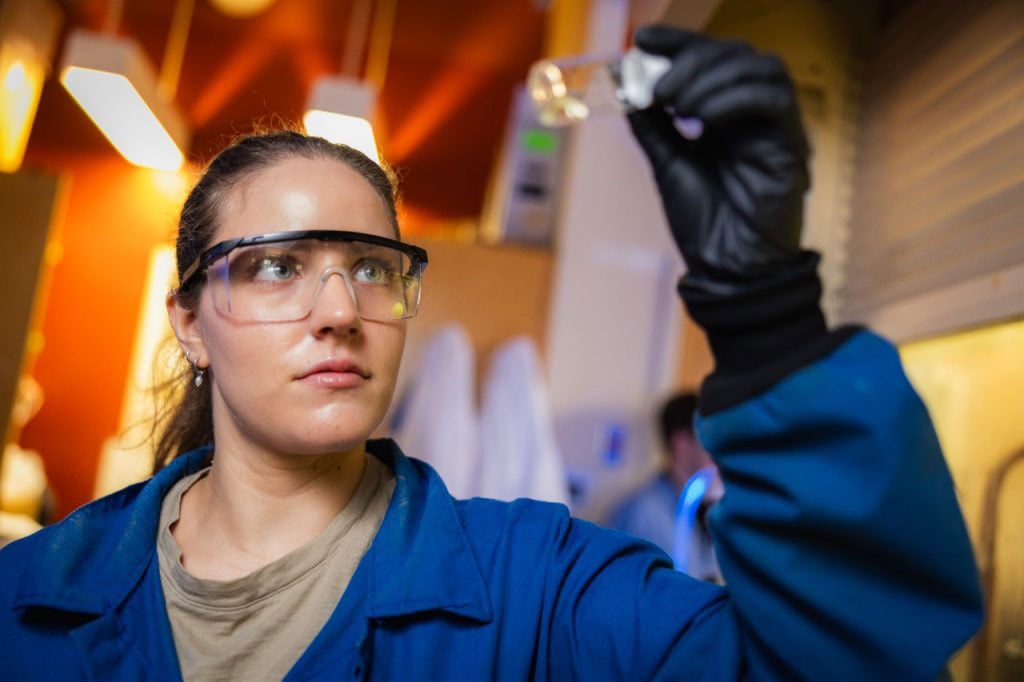
Polyvinyl chloride is one of the world’s most widely used plastics, but it is also difficult to recycle responsibly.
Discarded PVC from pipes, window frames, and even credit cards could become a useful ingredient in synthetic lubricants instead of ending up in a landfill. Virginia Tech chemist and chemical engineer Guoliang “Greg” Liu and his laboratory have developed a process that converts polyvinyl chloride (PVC) into polyalphaolefin, a major component of lubricants such as engine oil.
The work, published August 5, 2026, in Nature, could address two related environmental problems by finding a new use for one of the most difficult plastics to recycle while producing a valuable industrial material.
PVC is particularly challenging to recycle because it contains chlorine and can include different additives depending on the manufacturer. Much of the discarded material consequently goes to landfills.
Lubricants present a separate environmental challenge. Products such as engine oil are costly to produce from an environmental perspective, while demand continues to grow. Turning waste PVC into an important lubricant ingredient could therefore reduce plastic waste while creating a higher value product.
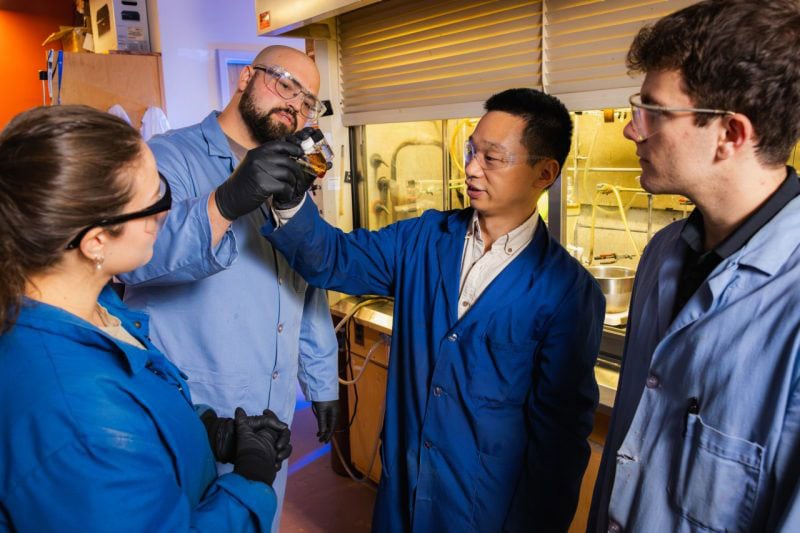
Lubricants rarely attract much attention, yet they are essential to machinery ranging from lawn mowers and passenger cars to jet engines. That makes a dependable supply of lubricant components important across many industries.
PVC waste becomes usable lubricant
To transform PVC, the researchers place material like that used in household plumbing, window structures, and credit cards into a solvent. They add aluminum trichloride and alpha-olefins, then heat the mixture to 158 degrees Fahrenheit for three hours. What they recover from the solvent is a relatively thick lubricant oil.
“Number one, we have proved that it is feasible to use plastic waste to make high-performance lubricants. Number two, these lubricants are green, and they can meet the emerging needs for sustainability by the market,” Liu said.
Earlier recycling work sparked the idea
The project grew from previous work by Liu’s group, reported in Science and Nature Sustainability, that converted other kinds of plastic waste into surfactants used in products such as soap and detergents. After that approach succeeded, the researchers began investigating PVC.
“We want to help improve the recycling and upcycling of PVC,” Liu said.
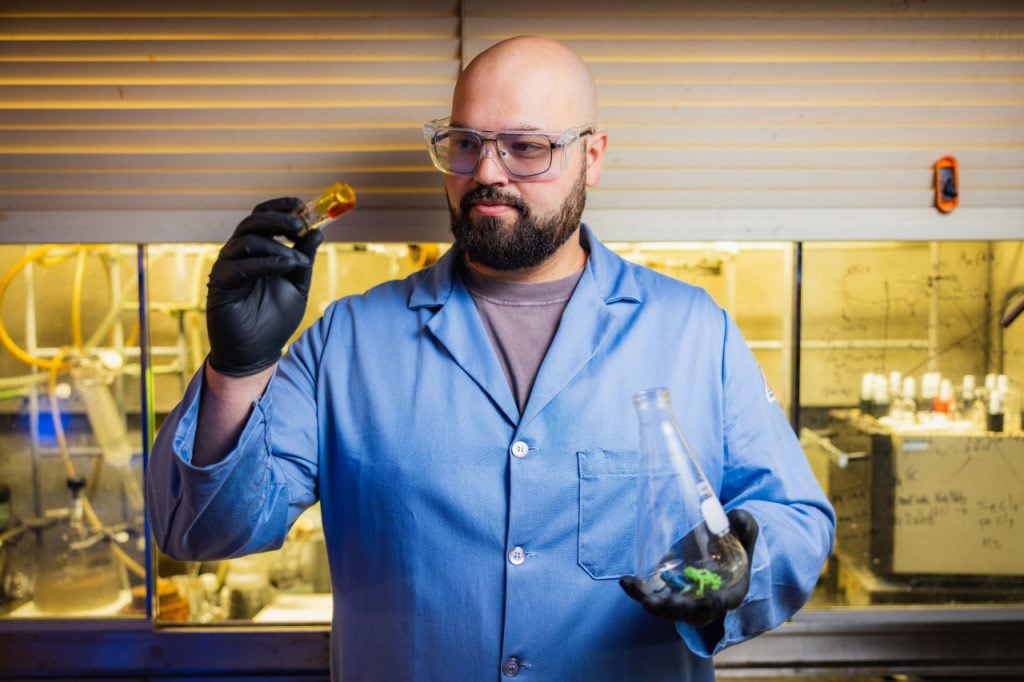
Liu assembled a group of graduate researchers to pursue the idea. Eric Munyaneza Nuwayo, then in the final year of his doctoral program, was chosen to lead the effort. Chemistry graduate student Connor S. Thompson had been working on another project before Liu suggested changing direction, and Thompson took on the new challenge.
First-year graduate student Abby Civiello also joined the group and quickly became an important contributor to the laboratory work.
“I often called them the three musketeers,” Liu said.
A soft material revealed a new path
The researchers initially experimented with ways to convert PVC molecules into different chemical structures.
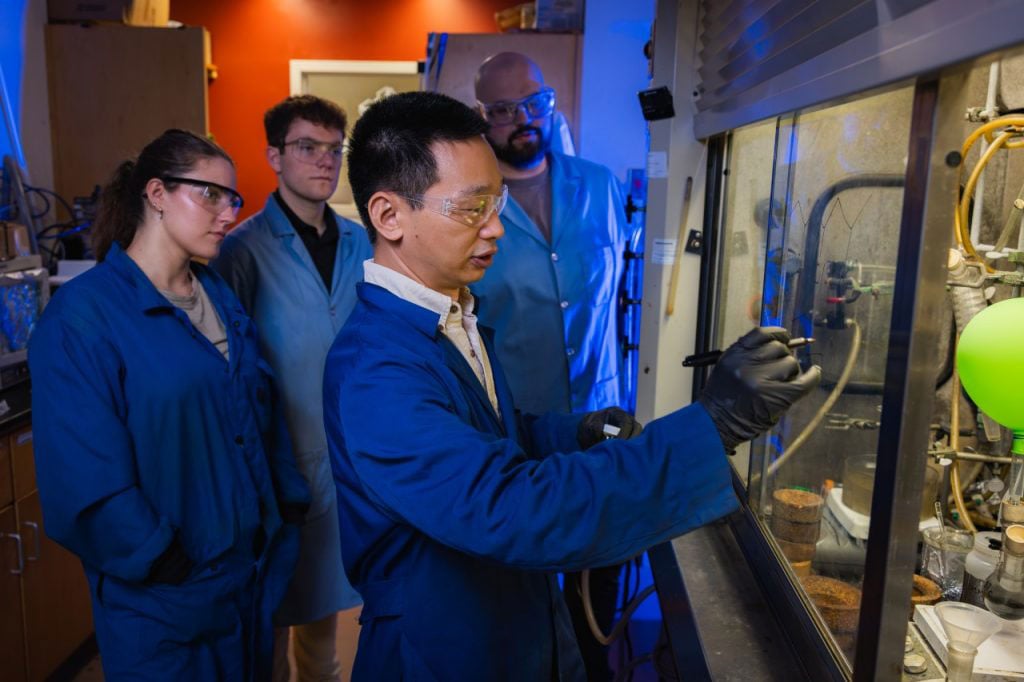
“The idea was simple. PVC, as one of the most activated forms of polyethylene, ought to be easily converted into some other molecules by replacing the chlorine atoms with other groups,” Liu said.
The early products, however, did not have useful properties. The resulting material remained soft and somewhat gooey, and its performance fell short of what the researchers wanted.
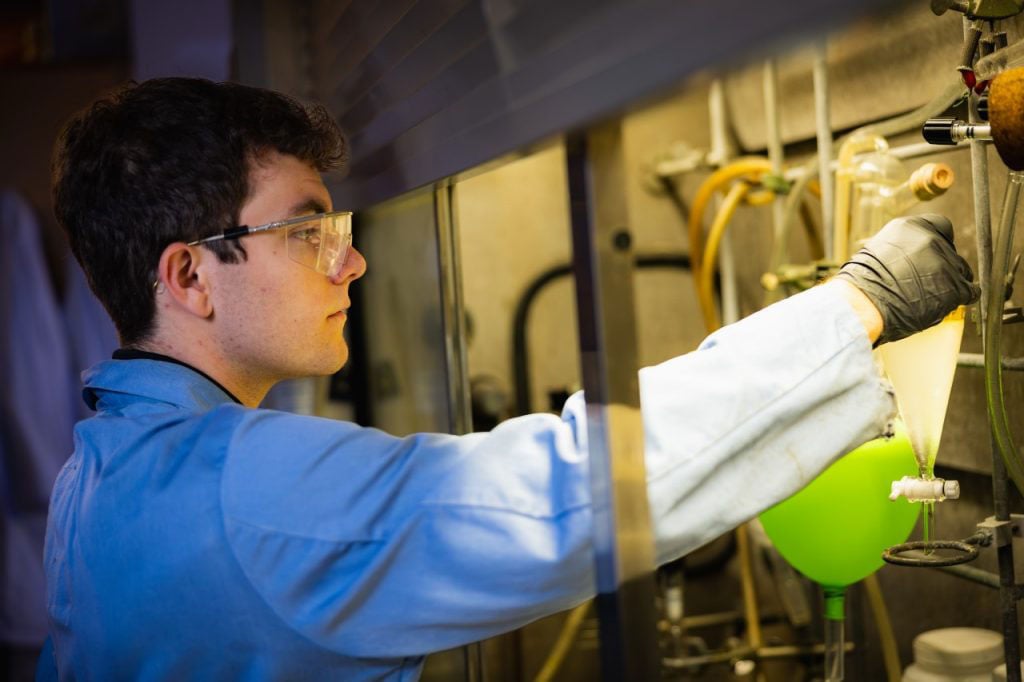
“One day I realized — if this polymer is so gooey and so soft, why don’t I just keep breaking the polymer chains down to smaller segments?” said Liu.
That realization changed the direction of the work. Instead of treating the softness as a failure, Liu considered whether continuing to shorten the polymer chains could produce something more useful.
Testing pointed to commercial potential
As the researchers refined the chemical conversion and evaluated the resulting material, Liu began to suspect they had produced something with greater value than simply another way to recycle PVC.
He sought outside expertise to determine exactly what the oil could do. Liu sent samples to Ali Erdemir at Texas A&M University, where researchers evaluated the finished material. He also collaborated with William Goddard at Caltech on chemical calculations.
Virginia Tech colleague Xi Chen examined the economic and manufacturing side of the process, developing models for how the lubricant oil might be produced at a larger scale.
Liu said the next challenge is to make the lubricant more sustainable while also increasing its accessibility.
“Lubricants are the silent hero out there. We often don’t recognize they exist, but they are out there working quietly. We want to be able to produce the oil on a larger scale to reach more people in the world,” Liu said.
Reference: “Upcycling of polyvinyl chloride into polyalphaolefin lubricants” by Eric Munyaneza Nuwayo, Connor Thompson, Abby Civiello, Adrian DiMarco, Jingtao Zhang, Seungjoo Lee, Gugyeong Sung, Tridip Das, Yue Zhang, Clark Vu, Shelby Koshak, John B. Matson, Ali Erdemir, William A. Goddard III, Xi Chen and Guoliang Liu, 5 August 2026, Nature.
DOI: 10.1038/s41586-026-10867-z
Never miss a breakthrough: Join the SciTechDaily newsletter.
Follow us on Google and Google News.
7 Comments
The real issue is potential cost. It’s no good if the price is exorbitant.
Plastic came from oil. So they are reverting to original state.
I have worked with Aluminum Trichloride in research at Dow. This process is going to be a very expensive process with a low yield of product and a lot of hazardous waste.
My Little crescendo, !!!!!+_15 V voltage only, jumbo jet !!!!!!! 110dB , sound , save hear !!!!!!!! Only 3 min . Music !!!!!!!! Save hear !!!!!!!! Secret !!!!!! [ 2× 9900 microfarad ] ×2 +_ 15V capacitors power suppply. Jumbo jet !!!!!! Only 3 min . Music Save hear !!!!!!