
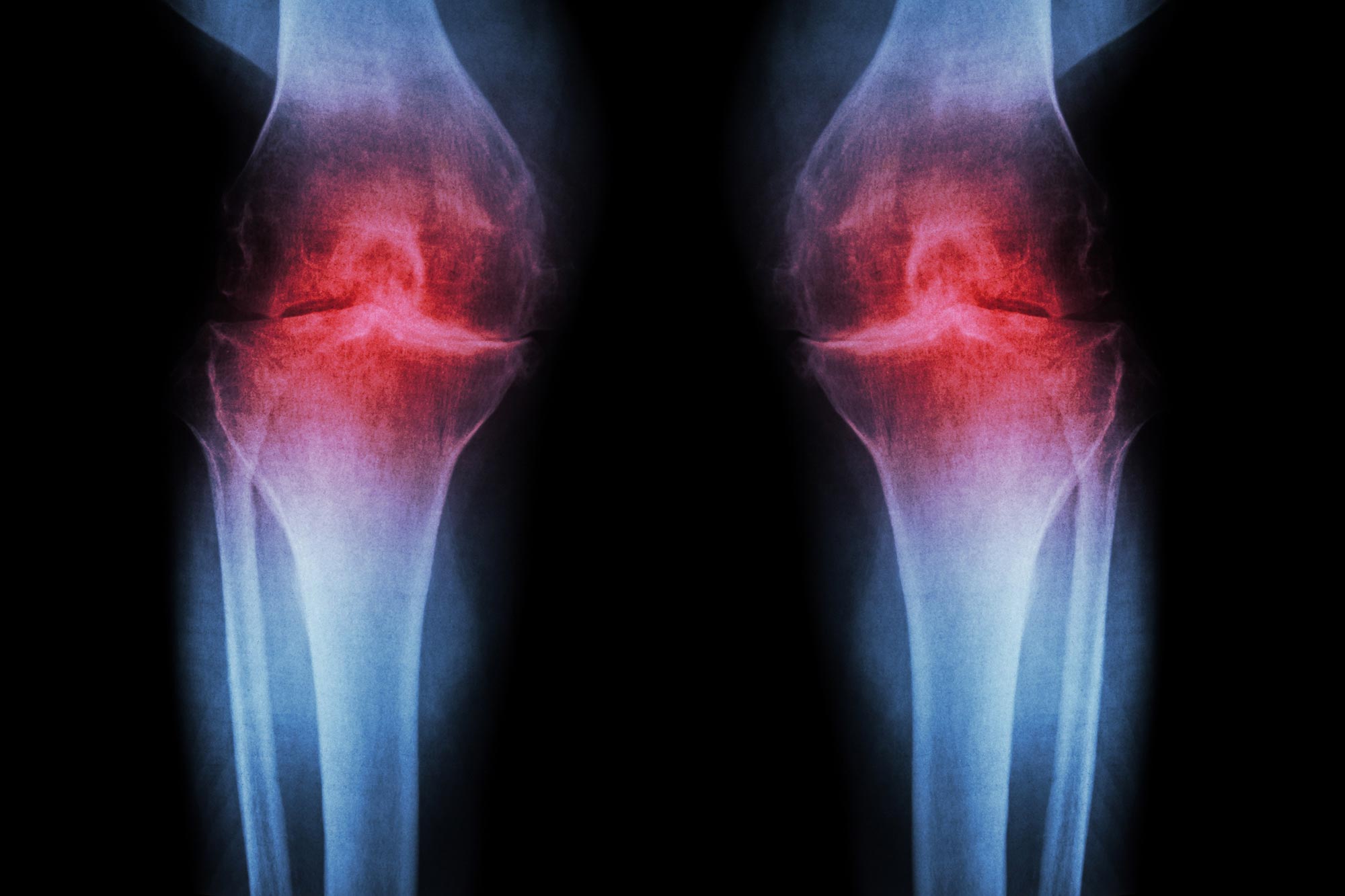
An injectable hydrogel platform forms a lubricating depot inside the joint after a single minimally invasive injection, allowing drug-loaded nanocarriers to remain in place for several weeks and release medication gradually.
Osteoarthritis (OA) is one of the world’s major causes of persistent pain and disability. Treatments injected directly into joints, including analgesics, corticosteroids, and viscosupplements, generally provide temporary symptom relief and do not consistently slow the disease itself.
One major obstacle is that small-molecule drugs and biologics can disappear quickly from synovial fluid, while poorly water-soluble therapies can be difficult to deliver at effective concentrations without exposing the rest of the body.
A depot extends local drug delivery
Researchers at the University at Buffalo have developed an injectable hydrogel platform designed to keep osteoarthritis therapies inside the joint for extended periods. After a single minimally invasive injection, the material rapidly changes from a liquid into a lubricating semi-solid depot at body temperature, allowing drugs to be released locally over several weeks.
The biocompatible system combines a polymer matrix with drug-loaded nanocarriers that can hold large amounts of poorly soluble therapeutics and uses materials with previous regulatory acceptance to help support clinical translation. Drugs are gradually released through diffusion and relaxation of the matrix, maintaining controlled exposure within the joint. The platform has been validated using a SIRT6 activator and can be adapted for other hydrophobic disease-modifying compounds.
One platform combines treatment and lubrication
The hydrogel platform could extend the therapeutic window by keeping drugs inside the joint for longer periods, potentially reducing the need for repeated invasive injections while limiting systemic side effects. It is designed to carry disease-modifying therapies that target biological processes involved in osteoarthritis, including chronic inflammation and cellular senescence.
The system also offers a dual function, acting as both a sustained-release drug delivery system and a viscosupplement. This combination could improve joint lubrication while simultaneously addressing biological mechanisms that contribute to disease progression. Its high drug-loading capacity makes it particularly suitable for poorly water-soluble compounds that are difficult to administer in conventional aqueous formulations. The platform can also be adapted for different therapeutic payloads and joint-related applications.
Never miss a breakthrough: Join the SciTechDaily newsletter.
Follow us on Google and Google News.
6 Comments
Is the hydogel currently available in newzealand? If yes please provide contact details.
Regards David
Can get it at Kaiser lets get it!
Gd bless the medical scientists for their brains and determination to create items that humanity will benefit from.
Is it available in Canada?
Injecting e-PRF (extended platelet rich fibrin) made by concentrating the growth factors of the patient’s own blood and providing a fibrin matrix to slow the release will give similar results over 4-6 months and is all natural with no side effects. See lead researcher Dr. Richard Miron and orthopedic to the US Olympic team, Dr. Robert Talac. Also used daily on recuperating soldiers at the Institute of Traumatology and Orthopedics, Kyiv, Ukraine.
Hydrogel is already approved and in use in Canada, where it’s call Arthrosamid (Google it), without any healing medication contained in or attached to it, just hydrogel. The problem is it’s 80% effective to various degrees. In the remaining patients the arthrosamid bonds with the knee tissue without creating any healing effect. But because it bonds with the tissue, it prevents any further or alternative treatments, like PRP, stem cells, or any improved forms of hydrogel containing medications from bonding to the tissue, thus giving the patient only two further choices–live with it or have the knee replaced. I’m doing PRP untill the success rate improves